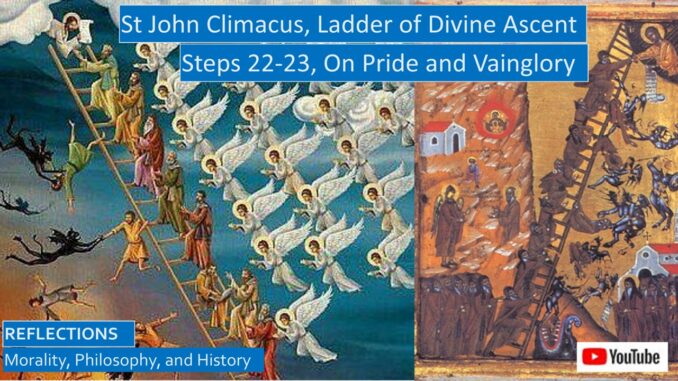
How do vainglory and pride differ? Does vainglory lead to mad pride?
How can we apply the teachings of St John Climacus to the situations we face in modern life?
Why does pride so easily work its way into the very fabric of spiritual life?
Why was pride the original sin of Satan, the reason why he was cast out of heaven?
We hear in church how pride is the original sin that breeds all other sins, how Satan was thrown out of Heaven for pride. But we often tell our children how proud we are for all their accomplishments, both large and small. What could be wrong with encouraging our children?
Does this mean there is good pride, and also bad pride? Is bad pride the mad pride St John Climacus opposes?
Video for this blog: https://youtu.be/jdHCOoC808M
DISCUSSING THE SOURCES
When reflecting on the Eastern Church Fathers, particularly the Egyptian desert Church Fathers, sometimes I wonder why I don’t just repeat what they have taught, how much can I improve this? Sometimes I can help the listener put themselves in the shoes of these monks millennia ago, allegorizing their advice to our lives as layman. Sometimes I can add helpful reflections, such as our previous reflections on fear and cowardice. Now that the Second World War is an historic memory, few people realize how deeply the world feared the poverty brought on by the Great Depression, and then the rise of fascism in Europe. The fears of these years tower over our current petty fears.
FDR’s First Inaugural Address and St John Climacus, Ladder of Divine Ascent, on Fear & Cowardice, Step 21
https://youtu.be/RfpFG6_z5Ho
https://seekingvirtueandwisdom.com/fdrs-first-inaugural-address-and-st-john-climacus-ladder-of-divine-ascent-on-fear-cowardice-step-21/
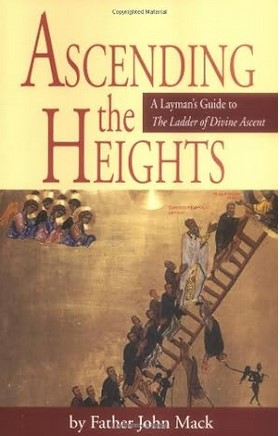
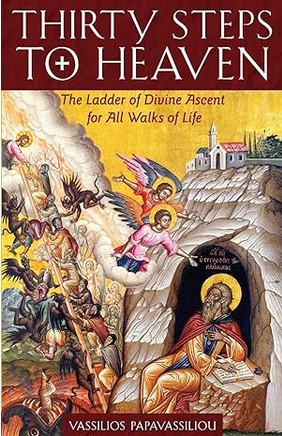
We also treasure the commentaries by Father Vassilos Papavassiliou and Father John Mack, because they reflect the spiritual wisdom they have gained by listening to confessions over their decades as a priest. This is especially true for these rungs on vainglory and mad pride. We highly encourage you to acquire these commentaries to reflect on them yourselves.
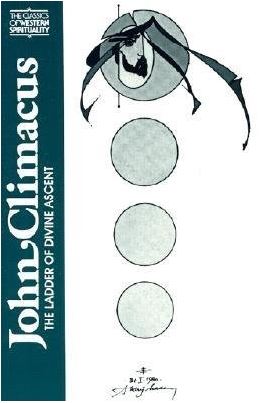
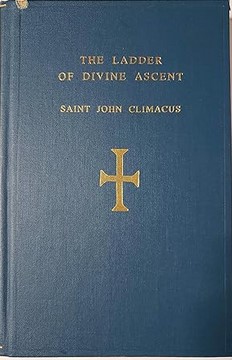
Father Mack’s commentary is out of print but in 2026, used copies are still available on Amazon. Since it may soon be unavailable, I will quote from his work more extensively than usual, as his reflections on vainglory and pride are beneficial. Both he and Father Vassilios use a more recent translation, so when we will use their translation when applicable in our reflections. Interestingly, Father Mack and Father Vassilios have little overlap in the steps they quote in their commentaries.
Father Vassilios describes the sin of pride as a rejection of the two-fold Love of God and neighbor. I would rather quote him directly than reword his teachings in my own words.
HOW DO VAINGLORY AND PRIDE DIFFER?
What is the difference between vainglory and pride? Today, vainglory is an archaic word that has not been replaced in common usage, so we usually consider them to be synonymous. Although St John Climacus concedes they are similar, except vainglory progresses to mad pride. He examines vainglory in Step 22, and mad pride in Step 23.
Let us compare the definitions:
Step 22.1. “Some like to distinguish vainglory from pride, and to give it a special place and chapter.” “The only difference between them” is like the difference “between a child and a man, between wheat and bread: for the one is the beginning and the other the end.”
Step 22.2. “With regard to its form, vainglory is a change of nature, a perversion of character, a note of blame. With regard to its quality, it is a dissipation of labors, a waste of sweat, a betrayal of treasure, a child of unbelief, the precursor of pride, shipwreck in harbor, an ant on the threshing floor which, though small, has designs upon all one’s labor and fruit. The ant waits for the gathering of the wheat, and vainglory for the gathering of the riches of virtue: for the one loves to steal and the other to squander.”
St John Climacus clearly views pride as the greater sin, which he refers to as mad pride in the heading:
Step 23.1. “Pride is denial of God, an invention of the devil, the despising of men, the mother of condemnation, the offspring of praise, a sign of sterility, flight from Divine assistance, the precursor of madness, the cause of falls, a foothold for satanic possession, a source of anger, a door of hypocrisy, the support of demons, the guardian of sins, the patron of pitilessness, the rejection of compassion, a bitter inquisitor, an inhuman judge, an opponent of God, a root of blasphemy.”
We describe the prideful as being full of themselves, and excessive arrogance can lead to a type of madness, and our saint says this can even lead to satanic possession. In modern terms, does this mean that what our saint describes as mad pride is actually dementia, schizophrenia, or other manifestations of mental illness? We will ponder this question when we reflect on Step 23 1/2.
YT
Can anyone escape vainglory and pride? St John Climacus is neither hopeful nor encouraging:
Step 22.5 “Like the sun which shines on all alike, vainglory beams on every occupation.” “I fast, and I turn vainglorious. I stop fasting so that I will draw no attention to myself, and I become vainglorious over my prudence. I dress well or badly, and I am vainglorious in either case. I talk, or I hold my peace, and each time I am defeated. No matter how I shed this prickly thing, a spike remains to stand up against me.”
Father John Mack observes that “vainglory is the congratulation of self for work well done. It is the desire for recognition from others, the love of praise,” as St John Climacus reminds us:
Step 22.3. “The consummation of vainglory is the beginning of pride; the middle is the humiliation of our neighbor, the shameless parade of our labors, self-praise in the heart, hatred of exposure; and the end is denial of God’s help, the extolling of one’s own exertions, fiendish character.”[1]
Does vainglory lead to mad pride in the same manner as envy and covetousness lead to all the other sins?
Playlist on: Do Not Covet, Do Not Envy:
https://youtube.com/playlist?list=PLJVlY2bjK8li1ULMrgL23X-iA5aCENq6i
FATHER JOHN MACK ON STEP 22: VAINGLORY
Can anyone escape vainglory and pride? St John Climacus is neither hopeful nor encouraging:
Step 22.5 “Like the sun which shines on all alike, vainglory beams on every occupation.” “I fast, and I turn vainglorious. I stop fasting so that I will draw no attention to myself, and I become vainglorious over my prudence. I dress well or badly, and I am vainglorious in either case. I talk, or I hold my peace, and each time I am defeated. No matter how I shed this prickly thing, a spike remains to stand up against me.”
Father John Mack observes that “vainglory is the congratulation of self for work well done. It is the desire for recognition from others, the love of praise,” as St John Climacus reminds us:
Step 22.3 “The spirit of despair exults at the sign of mounting vice, and the spirit of vainglory exults at the sight of the growing treasures of virtue.”
Father Mack asks: “What are the signs that we have succumbed to this passion?” “Vainglory enters our lives when we grow concerned about what other people think of us. It puts down its roots into our hearts when we begin to worry about their disapproval and be pleased by their approval. It captures our hearts when we enjoy their words of praise. It takes over our hearts when we begin to work for these words of praise which bring us such joy.
St John Climacus teaches:”
Step 22.6. “A vainglorious man is a believer and an idolater. Apparently honoring God, he actually is out to please not God but men. To be a showoff is to be vainglorious.”
Step 22.12. “Men of high spirit can endure offense nobly and willingly. But only the holy and the saintly can pass unscathed through praise.”
Father Mack asks: “How can we conquer vainglory? St John Climacus is very clear in his instructions:”
Step 22.39. “The first step in overcoming vainglory is to remain silent and accept dishonor gladly. The middle stage is to check every act of vainglory while it is still in thought. The end, insofar as one may talk of an end to an abyss, is to be able to accept humiliation before others without actually feeling it.”
Father John Mack comments: We in the modern world “have been trained to sell ourselves, to get ourselves noticed, to push ourselves forward. We are taught from an early age to dress for success,” to be self-assertive, to be “controlled by the opinions of others, and overwhelmed by the need to fit in.”
Father Mack continues: Often these attitudes affect our faith when “we live our lives to please the crowd.” We either “appear outwardly pious, saying the right things, reading the right books, making the right bows, attending the right services, keeping the right fasts, so that others will notice and say good things about us.” Or we are “motivated to back away from the full expression of our faith.”
How do we know whether vainglory reigns in our heart? To gauge this, would we answer YES to any of these questions suggested by Father Mack?
- “Does my behavior change when no one else is around?”
- “Do I find myself telling others all of my spiritual efforts and blessings?”
- “Do I find myself replaying what others have said to me or what I have said to them over and over again in my mind?”
- “Do I become discouraged and quit when no one notices what I do?”
- “Do I hide my sins and failings from others, even to the point of lying or shading the truth so that my true faults are not discovered by others?”
- “Do I become defensive when I am criticized?”
- “Do I feel the need to always make sure that everyone knows why I did something?”
FATHER JOHN MACK ON STEP 23: MAD PRIDE
Father John Mack teaches us that “pride is a vice which destroys all virtue in our lives.” As St John Climacus teaches us:
Step 23.13. “Pride loses the profits of all hard work and sweat.”
“Pride closes the ears of God to our prayers:”
Step 23.13. “They clamored but there was none to save them, because they clamored with pride. They clamored to God, and He paid no heed.”
Father Mack quotes several proverbs by St John Climacus showing how pride can corrupt our hearts:
Father Mack: “Spiritual pride manifests itself in a know-it-all, argumentative spirit:”
Step 23.6. “A proud monk argues bitterly with others. The humble monk is loath to contradict them.”
Father Mack: “Spiritual pride manifests itself in a refusal to obey, a belief that we know better than our spiritual elders:”
Step 23.7. “The cypress tree does not bend to the ground to walk, nor does the haughty monk bend to gain obedience.”
Father Mack: “Spiritual pride manifests itself in an aversion to correction, a belief that we are beyond the need for reproach and/or instruction:”
Step 23.11. “To reject criticism is to show pride, while to accept it is to show oneself free of the fetter of pride.”
Father Mack: “Spiritual pride manifests itself in a desire to lead and an innate belief that we show what needs to be done and how it needs to be done better than others:”
Step 23.8. “The proud man wants to be in charge of things. He would feel lost otherwise.”
Father Mack: “Spiritual pride manifests itself in a false humility:”
Step 23.14. “An old man, experienced in these matters, once spiritually admonished a proud brother who said in his blindness, ‘Forgive me, father, but I am not proud.’ The wise man responded: ‘My son, what better proof of your pride could you have given than to claim that you were not proud?”
Father Mack: “Spiritual pride manifests itself in a lack of awareness of our own sins and shortcomings:”
Step 23.28. “Pride makes us forget our sins, for the remembrance of them leads to humility.”
Father Mack: “Spiritual pride manifests itself in an inflated opinion of our own virtues:”
Step 23.35. “Most of the proud never discover their true selves. They think they have conquered their passions, and they find out how poor they really are only after they die.”
Father Mack: “Spiritual pride manifests itself in thinking that we have already attained salvation, in forgetting the need to finish the race and the possibility of failure:”
Step 23.17. “Do not be self-confident before judgment has been passed on you. Do not be stiff-necked, since you are a material being. Many, although holy and unencumbered by a body, were thrown out even from heaven.”[2]
This attitude expresses itself both in the opinion by lukewarm Christians and atheists alike that they need not attend church. You have no doubt heard the often-told joke: What is the difference between those who go to the beach on Sundays, and those who go to church on Sundays?
The answer is that those who go to the beach on Sundays don’t need to go to church because they don’t think they need to change, while the people who go to church on Sundays think they don’t need to change neither, because they go to church.
Do Christians Need To Go To Church? Which Type of Church Should You Attend?
https://youtu.be/LvfH9DIAVxU
https://seekingvirtueandwisdom.com/do-christians-need-to-go-to-church-which-type-of-church-should-you-attend/
FATHER VASSILIOS ON STEP 22: VAINGLORY
Father Vassilios teaches us that “vainglory, being the beginning of pride, is a spiritual sin. As such, it easily works its way into the very fabric of spiritual life. Christians are apt to make pious excuses to justify this passion and to fool themselves into thinking they are acting in the name of God rather than vainglory. As St John Climacus teaches us:
Step 22.37. “Dread vainglory urges us to pretend that we have some virtue which does not belong to us. It encourages us with Matthew 5:16: ‘Let your light so shine before men so that they will see your good deeds.’”
Father Vassilios continues: “Furthermore, we seek to disguise our sins in order that people will think us righteous, but our excuse is that we must not scandalize our brethren:”
Step 22.40. “Do not conceal your sin because of the idea that you must not scandalize your neighbor. Of course, this injunction must not be adhered to blindly. It will depend on the nature of one’s sinfulness.”
Father Vassilios remembers the behavior of his past flocks. “The notion of Christians being scandalized by the sins of others irks me a great deal. To be scandalized is, in fact, nothing more than a euphemism for being judgmental. Why should anyone be scandalized by the sins of their fellow Christians? Do we so easily forget that we too are sinners? The only sins that should scandalize us are our own!”
The favored Orthodox prayer by St Ephrem agrees that we should only judge ourselves and not our neighbors:
“O Lord and Master of my life!
Take from me the spirit of sloth,
despair, lust of power and idle talk.
But give rather the spirit of
chastity, humility, patience and love to Thy servant.
Yea, O Lord and King!
Grant me to see my own transgressions,
And not to judge my brother,
For blessed art Thou, unto ages of ages.”
Amen[3]
But Father Vassilios cautions us to have discernment. “We should bear in mind that those who are scandalized are weak Christians. However harsh and judgmental they may seem to be, we should condescend and be understanding of their weakness, just as they should condescend and be compassionate toward those who are guilty of sins of a different nature.”
Although St John Climacus teaches us that:
Step 22.23. “Vainglory induces pride in the favored and resentment in those who are slighted,” this does not mean that we should not hesitate to compliment our neighbor, just as we should not be eager to criticize him.
As Father Vassilios observes: “If we always held back on complimenting people but never on criticizing them, we would be creating a very grim world indeed! Just about everyone is vainglorious and prideful to some degree, and we must acknowledge that imperfection in others as well as ourselves.”
Father Vassilios teaches us that “vainglory is duplicitous. We act one way with one person, another way with another person, and yet another way when alone. Usually, it is when we are alone that we are our true selves, but with others we are forever putting on an act. That is why St John Climacus writes that:
Step 22.44. “Vainglory is a loss of simplicity and a hypocritical mode of behavior.”
Step 22.28. “The servant of vainglory leads a double life. Outwardly he lives with monks, but in mind and thought he is in the world.”
Father Vassilios warns us: “You cannot be saved by pretending to be righteous. You cannot be saved as a pseudo-you. God wants the real you. Better an honest sinner than a fake saint. If we want to become saints, we must offer our true selves, with all our sins and imperfections, to God. As long as we are pretending to be saintly, pretending to be someone we are not, there is no possibility of ever becoming who we are meant to be. The saints are those who have become what God wants them to be: the ones whose personalities have been purified through repentance and shedding of sin. No one who is vainglorious will ever attain sanctity.”
FATHER VASSILIOS ON STEP 23: MAD PRIDE
Father Vassilios observes: “All the time I hear people complaining that someone is ‘full of himself.’” “It is odd that the very people who reject religion and claim that it doesn’t matter what you believe and do as long as you don’t hurt anybody are the very people who criticize others for being arrogant or conceited.” “Haven’t these people shown that they believe in sin and virtue as much as anybody else?”
Father Vassilios continues: “While they may not be willing to admit it, pride is present in them also. Pride is present in all of us. The more prideful we are, the more we hate pride in others. The reason for this is simple: Pride is thinking you are better than others or that you deserve better than others. Therefore, when we ourselves are guilty of this or any other sin, we do not recognize it, or at best we justify it; but when we see it in others, we have no mercy at all.”
Father Vassilios teaches us that “pride opposes the second great commandment, ‘You shall love your neighbor as yourself.’ For the less we love others as we love ourselves, the less we will be upset that they are better, or better off, than we are.”
This is how we can be proud of our children’s accomplishments, for in encouraging our children, we are showing them that we love them.
Father Vassilios continues: “Yet we still have not reached the ultimate depths of pride. In its purest form, pride opposes not only the second great commandment, but also the first: ‘You shall Love the Lord your God with all your heart, with all your soul, and with all your strength.’”
The early Church Fathers, in particular St Augustine, emphasize that the core of the Judeo-Christian tradition is the two-fold Love of God and neighbor. We should live our lives, interpret Scripture and philosophy, and center our world-view around these two great commandments.
Hillel and Jesus, Reflections on Rabbi Telushkin’s Observations
http://www.seekingvirtueandwisdom.com/hillel-and-jesus-reflections/
Comparing Hillel and Shammai to Jesus
http://www.seekingvirtueandwisdom.com/comparing-hillel-and-shammai-to-jesus/
More Stories and Sayings of Hillel and Shammai
http://www.seekingvirtueandwisdom.com/more-stories-and-sayings-of-hillel-and-shammai/
Jesus, Hillel, and Shammai, Loving God and Neighbor
https://youtu.be/ygxn2qqGnOI
St Augustine: On Christian Teaching, aka On Christian Doctrine, How To Read Scripture
https://youtu.be/uQCnAJMPoos
http://www.seekingvirtueandwisdom.com/st-augustine-on-christian-teaching-how-to-read-scripture/
As CS Lewis explains in Mere Christianity:
“In God you come up against something which is in every respect immeasurably superior to yourself. Unless you know God as that, and therefore, know yourself as nothing in comparison, you do not know God at all.”[4]
CS Lewis’ Mere Christianity: Forgiveness, Pride, and Envy. Can Pride Ever Be Good?, Book 3
https://youtu.be/Pmu6hzU5RaQ
https://seekingvirtueandwisdom.com/cs-lewis-mere-christianity-forgiveness-pride-and-envy-can-pride-ever-be-good/
Father Vassilios explains: “That is why, according to Christian tradition, pride was the sin that brought down the devil. Most sins, particularly bodily sins, can often be attributed to weakness, to our fallen condition. The devil had no such weakness: his sin was pure unadulterated pride.”
Father Vassilios continues: “That is why pride easily works its way into the very fabric of spiritual life by wearing the guise of piety. Pride is ultimately the worship of our own selves.” “The greatest danger of religious faith is to glorify ourselves in God’s name. As St John Climacus puts it:”
Step 23.3. “At first pride does not shamelessly urge us to renounce God. I have seen people who speak aloud their thanks to God but who are in their hearts are glorifying themselves, something demonstrated by the Pharisee” who thanks God he is not like that sinful publican over there.” (Luke 18:11)
St Vassilios warns us: “Religious people are frequently guilty of such a charade. When we say, ‘It is God’s will,’ we really mean, ‘It’s my will.’” “Pride is the deadliest sin because it often disguises itself as faith.” “But if pride can condemn us, it is possible that humility alone can save us:”
Step 23.12. “Pride and nothing else caused an angel to fall from heaven. And so one may reasonably ask whether one may reach heaven by humility alone without the help of any other virtue.”[5]
MORE ON VAINGLORY AND MAD PRIDE
We have not yet exhausted the richness of St John Climacus’ teachings on vainglory and mad pride.
Praise can spiritually hazardous, as St John Climacus teaches us:
Step 22.10. “God hides from our eyes even those perfections that we have obtained. But he who praises us or misleads us, opens our eyes by his praise, and as soon as our eyes are opened, our treasure vanishes.”
When you think the best of someone, you bring out the best in him. When you think the worst, you encourage the worst in them:
Step 22.15. “When you hear that your neighbor or friend has abused you behind your back or even to your face, then show love and praise him.”
Step 23.20. “Even if we endure ten thousand deaths for Christ, even so we shall not repay all that is due.”
People often expect recognition for their charity:
Step 22.33. “He who asks God for gifts in return for his labors has laid an unsure foundation. He who regards himself as a debtor will unexpectedly receive riches.”
Step 23.25. “A (true) monk is one who is conditioned by virtues as others are by pleasure.”
Living a virtuous life is its own reward.
Step 23.31. “A proud monk has no need of a devil; he has become a devil and enemy to himself.”[6]
PAST AND FUTURE RUNGS OF THE LADDER
Each step of the Ladder of Divine Ascent builds on the prior steps, beginning with the first step, the renunciation of the world, which includes wise advice to laymen on how to live a godly life. This is followed by Detachment and Exile from the values of this sinful world, followed by the need for Obedience to the Law and the Gospel, and how we should be persistent in our Repentance, which we compared this struggle to the struggle of the Allies in fighting the Axis of Evil Fascism during World War II.
John Climacus: First Step of the Ladder of Divine Ascent
http://www.seekingvirtueandwisdom.com/st-john-climacus-first-step-on-the-ladder-of-divine-ascent/
https://youtu.be/Fco0W3bt5GA
St John Climacus, Ladder of Divine Ascent, On Detachment, Exile, and Pilgrimage, Steps 2 and 3
https://seekingvirtueandwisdom.com/st-john-climacus-ladder-of-divine-ascent-on-detachment-exile-and-pilgrimage-steps-2-and-3/
https://youtu.be/qDtrgYmaAQU
Ladder of Divine Ascent, St John Climacus, Rung 4 on Obedience
https://seekingvirtueandwisdom.com/ladder-of-divine-ascent-st-john-climacus-rung-4-on-obedience/
https://youtu.be/_bjQcNvzb-c
St John Climacus: Ladder of Divine Ascent, Step 5, Repentance, and Perseverance of Winston Churchill
http://www.seekingvirtueandwisdom.com/st-john-climacus-ladder-of-divine-ascent-step-5-repentance-and-perseverance-of-winston-churchill/
https://youtu.be/NiuWNsy4x4Q
This is followed by the steps on remembrance of death, joy-making mourning, and why we should battle despondency. We are then reminded that we should be free from anger, not holding grudges for the wrongs we suffer, and the strength of meekness. In the next step, we combat slander, lying, and gossip. In the step we reflect on gluttony and fasting, and also eating a healthy diet, which is a modern asceticism unknown to the ancient monks of Egypt.
Ladder of Divine Ascent, Remembrance of Death, Joy Making Mourning, and Despondency, Steps 6,7, & 13
https://seekingvirtueandwisdom.com/ladder-of-divine-ascent-remembrance-of-death-joy-making-mourning-and-despondency-steps-67-13/
https://youtu.be/pFwC2nDf1CQ
St John Climacus, Ladder of Divine Ascent, Freedom from Anger, Meekness, Remembrance of Wrongs, Steps 8 and 9
https://seekingvirtueandwisdom.com/st-john-climacus-ladder-of-divine-ascent-freedom-from-anger-meekness-remembrance-of-wrongs-steps-8-and-9/
https://youtu.be/2mEjh425sJk
St John Climacus in Ladder of Divine Ascent on Lying, Talkativeness, and Slander, Steps 10, 11 and 12
http://www.seekingvirtueandwisdom.com/st-john-climacus-in-ladder-of-divine-ascent-on-lying-talkativeness-and-slander-steps-10-11-and-12/
https://youtu.be/SLBIdDHRy3A
St John Climacus on Gluttony and Fasting, Ladder of Divine Ascent, Step 14, and Eating for Health: DASH diet
https://seekingvirtueandwisdom.com/eating-for-health-dash-diet-st-john-climacus-on-gluttony-and-fasting-in-ladder-of-divine-ascent/
https://youtu.be/KM0eMjE1fXc
This is followed by the steps on purity and chastity, on avarice and poverty, on insensibility, sleep, and prayer, and also on fear and cowardice.
St John Climacus on Love, Lust, and Marriage: Ladder of Divine Ascent, Step 15, on Purity and Chastity
https://seekingvirtueandwisdom.com/st-john-climacus-on-love-lust-and-marriage-ladder-of-divine-ascent-step-15-on-purity-and-chastity/
https://youtu.be/YOlrP6-6YP0
St John Climacus, Ladder of Divine Ascent, On Avarice and Non-Possessiveness, Steps 16 & 17
https://seekingvirtueandwisdom.com/st-john-climacus-ladder-of-divine-ascent-on-avarice-and-non-possessiveness-steps-16-17/
https://youtu.be/8viBLzhjMrI
St John Climacus on Insensibility, Sleep, Prayer, and Vigil: Ladder of Divine Ascent, Steps 18-20
https://youtu.be/BDojtLhnPOY
https://seekingvirtueandwisdom.com/st-john-climacus-on-insensibility-sleep-prayer-and-vigil-ladder-of-divine-ascent-steps-18-20/
FDR’s First Inaugural Address and St John Climacus, Ladder of Divine Ascent, on Fear & Cowardice, Step 21
https://youtu.be/RfpFG6_z5Ho
https://seekingvirtueandwisdom.com/fdrs-first-inaugural-address-and-st-john-climacus-ladder-of-divine-ascent-on-fear-cowardice-step-21/
[1] St John Climacus, The Ladder of Divine Ascent, translated by Lazarus Moore, updated by others (Boston: Holy Transfiguration Monastery, 1991), Step 22, p. 132 and Step 23, p. 139.
[2] Father John Mack, Ascending the Heights, Laymen’s Guide to the Ladder of Divine Ascent (Ben Lamond, California: Conciliar Press, 1999), Steps 22 and 23, pp. 111-123.
[3] https://www.oca.org/orthodoxy/prayers/lenten-prayer-of-st.-ephrem
[4] CS Lewis, Mere Christianity, in Mere Christianity and the Screwtape Letters (HarperSanFrancisco, 2003, 1952), Book 3, Chapter 8, p. 124.
[5] Father Vassilios Papavassiliou, Thirty Steps to Heaven, The Ladder of Divine Ascent for All Walks of Life (Chesterton, Indiana: Ancient Faith Publishing, 2103), Steps 22 and 23, pp. 163-177.
[6] St John Climacus, The Ladder of Divine Ascent, Steps 22 and 23, pp. 132-145.


2 Trackbacks / Pingbacks