What is the difference between transliteral and cultural translations?
Why are there three separate Hebrew manuscript traditions?
How do the patristic interpretations by the early Church Fathers differ from the historical-critical interpretations?
How do the Jewish translations of the Old Testament differ from the Christian translations?
Which translation is free from theological bias?
Was the Latin Vulgate a substandard translation of the Old Testament?
Why did the Council of Trent affirm the use of the Vulgate?
YouTube video for blog: https://youtu.be/stlcAGgLhhg
MY FAVORITE COMMENTARIES AND BIBLE TRANSLATIONS
Our reflection on Biblical Interpretation, Comparing the Ancient World to the Modern World, introduces this reflection.
Biblical Interpretation: How the Ancient World and Modern World Differ
IMPORTANCE OF BIBLICAL DEFINITIONS
In the modern world, what distinguishes philosophy and theology? Philosophy emphasizes logical thinking, whereas theology emphasizes the definitions of abstract words like love, faith, hope, meekness, and other abstract theological concepts. So let us begin by discussing Dictionaries of Biblical terms.
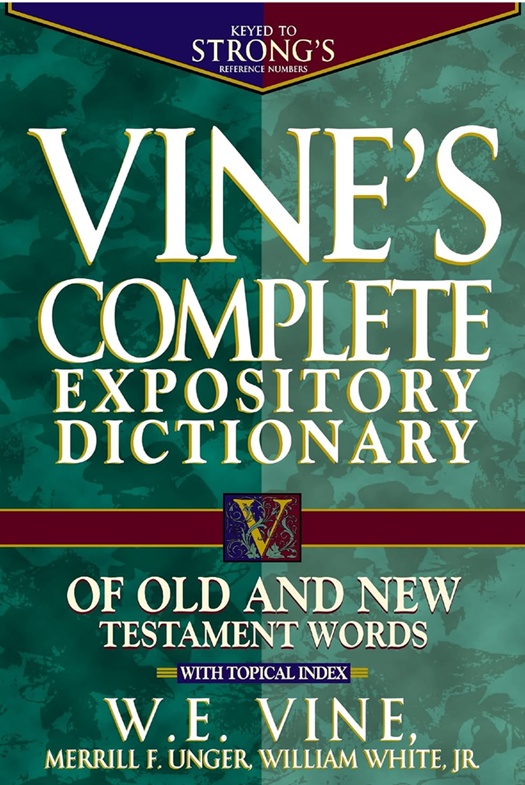
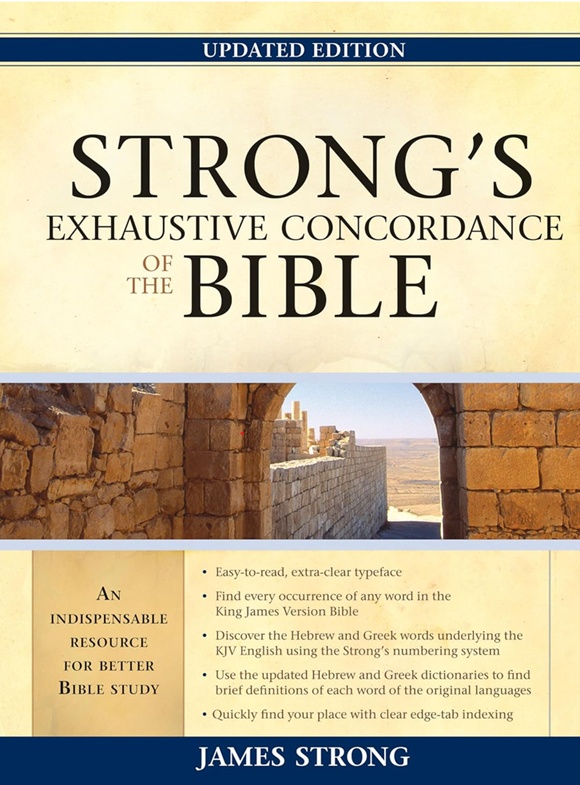
The eternal spiritual battle is this struggle: Who will influence whom? Will the culture influence the church, or will the church influence the culture? If you prefer that the culture would influence your morality, then you can ask Merriam-Webster Dictionary for the cultural definition of Biblical words. If you would prefer that the Bible influence your morality, then consult the Vine’s Expository Dictionary for Biblical definitions, quoting supporting Scriptures. Another resource is Strong’s Concordance, which tracks where each Greek and Hebrew word appears in the Bible. In addition, you can discover the Greek word for each word in each verse using an Interlinear Bible. All of these are also available online.
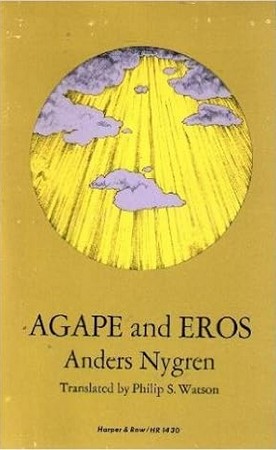
What is the meaning of the central Christian word for love? Agape and Eros by the Lutheran Theologian Anders Nygren, written between the two World Wars, traces how the meaning of LOVE, agape and eros, or divine love and carnal love, evolved from the ancient Greek philosophers and the New Testament until modern days.
Summary of Platonic Dialogues on Love and Friendship, With Commentary by Copleston and Anders Nygren
https://youtu.be/cjXRXQc6Ff4
Anders Nygren, On Christian Agape-Love and Eros-Love in Gospels and Pauline Epistles
https://wp.me/pachSU-19n
https://seekingvirtueandwisdom.com/anders-nygren-on-christian-agape-love-and-eros-love-in-gospels-and-pauline-epistles/
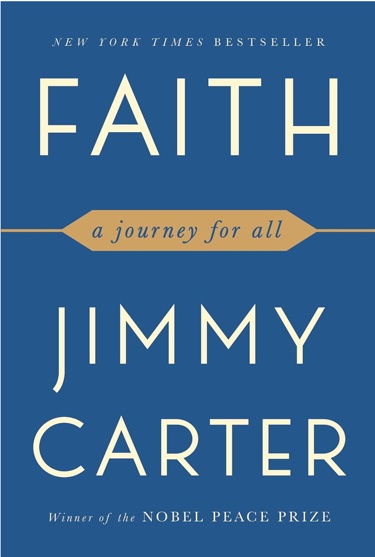
Unfortunately, there may not be a widely accepted book on faith. We plan to reflect on Jimmy Carter’s reflection on faith, as he seeks to consult both Protestant and Catholic/Orthodox sources. Popes Francis and Benedict released an Encyclical Letter on Faith in 2013.[1] We also plan to reflect on the commentaries on Romans by Karl Barth, James Boice, John Chrysostom, and other Church Fathers sometimes in late 2027 or 2028.
https://seekingvirtueandwisdom.com/summary-of-platonic-dialogues-on-love-and-friendship/
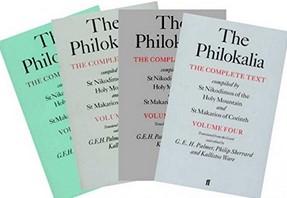
Also, the first volume of the Philokalia has an extended dictionary for terms often found in monastic writings.
The Philokalia, Classics by the Eastern Church Fathers, the Love of the Beautiful
https://youtu.be/rKVBhdHWHGI
https://seekingvirtueandwisdom.com/introduction-to-the-philokalia-the-love-of-the-beautiful/
WHICH BIBLE TRANSLATIONS DO WE RECOMMEND?
Which is my favorite translation? The Orthodox Study Bible, which updates the New King James Version with corrections from the translated Septuagint, which the Orthodox Church views as canonical. However, for Bible quotations on my channel, I use the Revised Standard Version Catholic Edition, since the Bible Gateway website does not include the Orthodox Study Bible. In part, this choice may encourage slightly more people to listen to my moral and biblical reflections.
Although the Orthodox Study Bible is an exception, the Bible Gateway website excludes biblical translations that favor a particular theological point of view while disregarding scholarly consensus on the original meaning of the text.
There are two basic types of translations: a transliteral translation, like the New King James Version, which attempts to retain as much of the word order in the original language as possible, and a cultural translation, like the NIV, or New International Version, which often rewords the Scriptures so modern readers can better understand them. James Boice teaches that you need to consult both to come as close to the original meaning of the Scriptures as possible. Transliteral and cultural are my terminology: many scholars instead use the terms formal equivalence and dynamic equivalence.[2]
The Bible Gateway website has an excellent article discussing the multitude of bible translations they include on their website.[3] You can also view how the sixty translations on Bible Gateway render a verse that is difficult to translate, using this verse from Romans as an example.[4]
Often the footnotes in the Orthodox Study Bible are enlightening, drawing from patristic writings, whereas the footnotes in translations that rely on the historical-critical approach are sometimes spiritually dry. For example, in the Crucifixion scene in John 19:34 we read: “One of the soldiers pierced Jesus’ side with a spear, and at once there came out blood and water.”[5] The NIV Study Bible footnote has a medically correct explanation: This is “the result of the spear piercing the pericardium, the sac that surrounds the heart, and the heart itself.”[6]
In contrast, the Orthodox Study Bible explores the spiritual meaning of the passage, influenced by the teachings of the early Church Fathers: “The blood and water from Christ’s body show the reality of the great sacraments. The water speaks of our baptism, which is participation in Christ’s life-giving death (Romans 3:6-11). In communion, we receive His life-giving Blood, ‘drinking from His very side.’ (John Chrysostom) It is literally the forgiveness of sins and the regeneration of mankind that poured out from our Lord’s side.”[7]
JEWISH VERSUS CHRISTIAN TRANSLATIONS OF THE OLD TESTAMENT
The Jewish translations of the Torah and the Old Testament differ greatly from the Christian translations. Whenever the English translations say Lord, Lord, the Jewish Metsudah Chumash translation uses both of the main words for God, Adonoy and Elohim. For Jews, the Tetragrammaton, or the four-letter word for God translated in English as either Jehovah or Yahweh, is so holy that it cannot be pronounced, so they substitute Adonoy. Just as the early Mount Sinai icon of Jesus shows his merciful nature on the left side of his face, and his judgmental side on the right side, so Adonoy is the merciful characteristic of God, while Elohim is the judgmental characteristic of God. So, when the Christian translation says Lord, Lord; the Jewish translation says Adonoy, Elohim.
We have previously reflected on the classical Rabbinical commentators of the Torah, or the first five books of the Old Testament. They are Rashi, Ramban or Nachmanides, and Rambam, or Maimonides, plus we consult the Book of Legends, which contains the main moral teachings of the Talmud.
Judaism is less concerned with harmonizing the contradictions in the Scriptures than Christianity, simply assuming that differing versions of events or teachings teach additional moral lessons. The rabbis rejoice in these so-called contradictions, as they reveal more moral aspects of Adonoy.
Book Reviews, Commentaries of Torah and Talmud, Medieval Rabbis and Modern Rabbis and Scholars
http://www.seekingvirtueandwisdom.com/book-reviews-commentaries-of-torah-and-talmud-medieval-rabbis-and-modern-rabbis-and-scholars/
https://youtu.be/mvstpk88TxI
We also reflect on the various Christian and Jewish sources we used on our ongoing reflections on the Decalogue, or Ten Commandments. We plan to continue this series in spite of the low number of views. We have discovered that people would rather watch videos on why their religious tradition is superior to all others than videos that teach them how to live a godly life following the commandments.
Book and DVD Reviews on the Ten Commandments, or Decalogue
https://seekingvirtueandwisdom.com/book-and-dvd-reviews-on-the-ten-commandments-or-decalogue/
https://youtu.be/KptDGFJG0TE
One key question is: Should we assume that the actions of the Jewish characters in the Old Testament are always morally right? The New Testament Book of Hebrews assumes so, as do a minority of Jewish commentators and most Islamic commentators, according to the Great Courses summary of Islam.[8] But people are people wherever you go, and you can benefit from more moral lessons when you contemplate how the characters in the Bible grow in their faith as they make mistakes, suffer from the far-ranging consequences of their actions, and finally repent and reconcile with their brothers.
Which translations are closest to the originals? We can never know. We must consult multiple accurate translations to explore the many messages that the differing manuscript traditions offer. Many of the Dead Sea Scrolls are written in the Hebrew manuscript tradition underlying the Septuagint. However, there are multiple Dead Sea Scrolls of First Samuel representing both the differing Greek Septuagint text and Jewish Masoretic text.
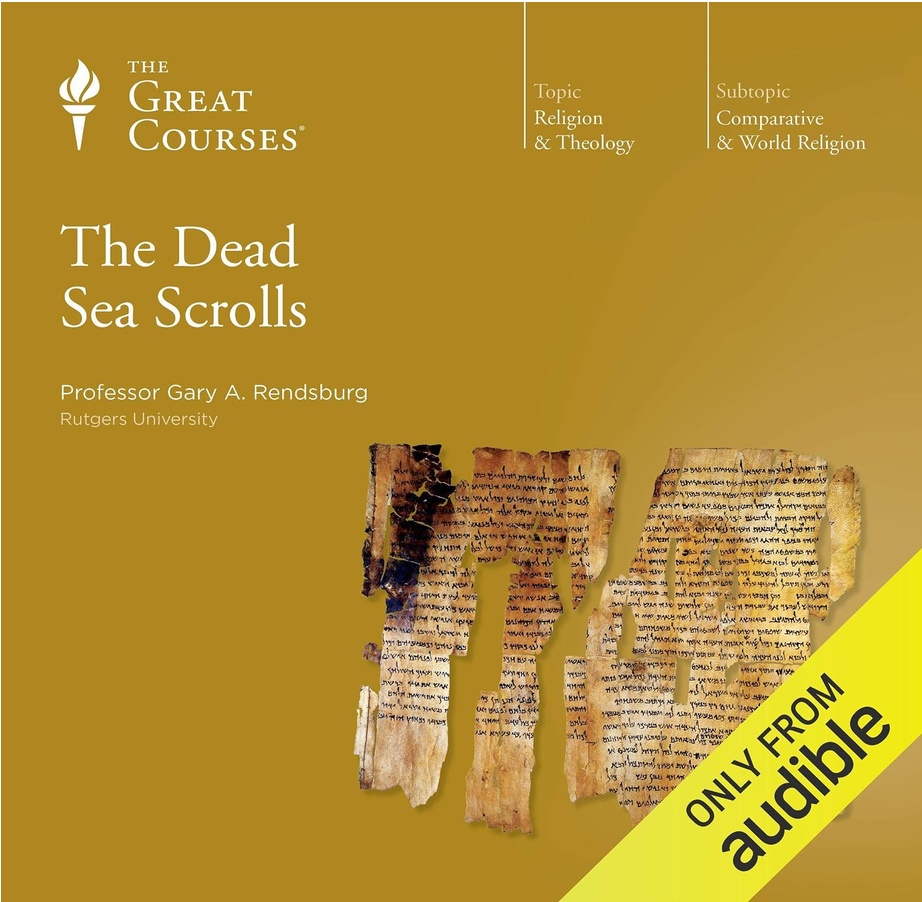
Unfortunately, the Dead Sea Scrolls agree with the main Masoretic Hebrew text that is the source of modern translations of the key word in the verse in Isaiah that states that a “young woman,” rather than Matthew’s virgin, “shall bear a son, whom you shall call Immanuel.”[9]
Differing worldviews can also affect the translation of the Bible. Nearly all ancient and medieval Jewish and Christian commentators want to believe that God created the world ex nihilo, from nothing.[10] This influenced the majority of the translators to say in the first verse of the Bible, “In the beginning, God created the heavens and the earth.”
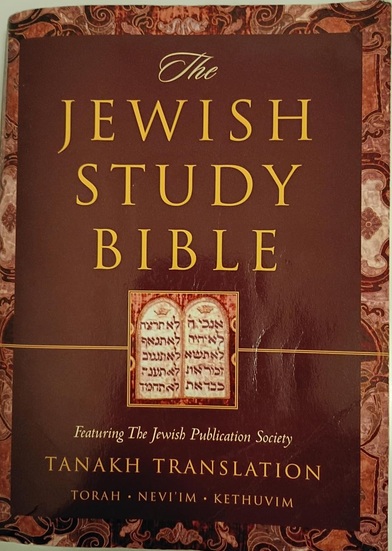
An historical-critical study of the Creation story in Genesis reveals that it was influenced by Mesopotamian cosmology, where the world was originally in a state of chaos. In the creation, God organized and separated the waters between the firmament above and the world below and separated the seas below from dry land. [11] Among the translations I consult, the Jewish Study Bible has a differing translation that recognizes this Mesopotamian cosmology: “When God began to create heaven and earth.” Their footnotes reveal that Rashi argued that this translation was valid. Experts disagree on which is the preferred translation.
I recently purchased the Jewish Study Bible on the recommendation of the Yale professor in their undergraduate courses on the Old Testament. Their footnotes are illuminating and copious. In many chapters of Genesis and Exodus, the smaller point footnotes, including summaries of Jewish commentary, take up three-quarters of the page.
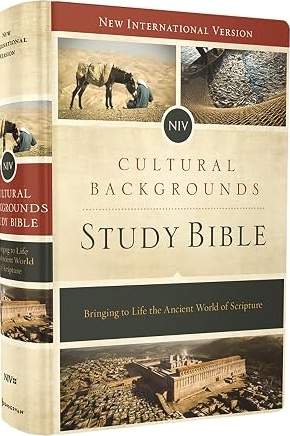
Dr Carmen Joy Imes, an evangelical professor, has an excellent series of videos on Book Reviews of Evangelical Interpretations of the Bible. She recommended the NIV Cultural Backgrounds Study Bible, which we sampled in our reflections on demons and mental illness in the Bible. These footnotes often overwhelm the text with many full-length essays. These contain excellent background information.
We consulted the NIV Cultural Backgrounds Study Bible in our reflection on whether the demons mentioned in the New Testament can be compared to the symptoms of mental illness and epilepsy in the modern world, and whether they restrict free will.
Do We Have Free Will? Mental Illness, Demons, and Free Will in the Bible and Ancient Israel, Greece, and Rome
https://youtu.be/ZdgWzU-sJds
https://seekingvirtueandwisdom.com/do-we-have-free-will-mental-illness-and-demons-in-the-bible-church-fathers-and-the-ancient-world/
In our reflection on the hymn Holy, Holy, Holy, Lord God Almighty, we reflected on the verses in Isaiah that influenced these stately verses. The standard translation quotes Isaiah before the throne of Almighty God: “Woe is me! I am lost, for I am a man of unclean lips, and I live among a people of unclean lips; yet my eyes have seen the King, the Lord of hosts!”[12]
Most commentators agree in the plain interpretation of this verse. But St Jerome differs: “Because of his virtues, Isaiah deserved to enjoy the sight of God, and, because of his awareness of his sins, he confessed that his lips were unclean. Not because he had said anything that was contrary to the will of God, but because he had held his peace, deterred either by fear or modesty, and because he had not exercised the prerogative of a prophet, of condemning a sinful nation.” “If we keep silent about the truth, we are certainly committing a sin.”[13]
Obviously, St Jerome is consulting yet a third Hebrew manuscript tradition, which has been lost in the sands of history. Admittedly, his translation is coherent, and provides a second meaning to the text that makes sense.
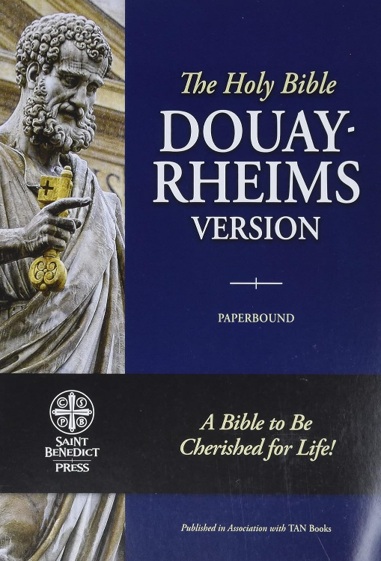
St Jerome wrote the old Latin translation, the Vulgate. What does Isaiah lament before the throne of God in the nineteenth-century Douay-Rheims translation of Isaiah 6:5? “Woe is me, because I have held my peace; because I am a man of unclean lips” among a people of unclean lips.[14]
History of Hymn: Holy, Holy, Holy, Lord God Almighty
https://youtu.be/EroetX4pOeU
https://seekingvirtueandwisdom.com/history-of-hymn-holy-holy-holy-lord-god-almighty/
Many people thought that the Council of Trent was backwards in reaffirming the Vulgate as the preferred Catholic translation. Rather, this was a legitimate scholarly opinion, although later the Catholic Church affirmed translations based on the extant Hebrew Masoretic text. Since the translation of the modern Vulgate, the Douay-Rheims translation, has not been updated for over a hundred years, it is a secondary translation that we consult. Recently, the InterVarsity Press has been publishing previously hard-to-find translations of Old Testament commentaries by St Jerome.
Although the church decided the New Testament canon by the fifth century, the Old Testament canon was not formally recognized until the Council of Trent. Martin Luther declared that certain books now called the Apocrypha should not be included in the canon, although they were spiritually beneficial.
Council of Trent, The Reform Council Foreshadowing Vatican II
https://youtu.be/Thq1blvzWHs
http://www.seekingvirtueandwisdom.com/council-of-trent-the-reform-council-foreshadowing-vatican-ii/
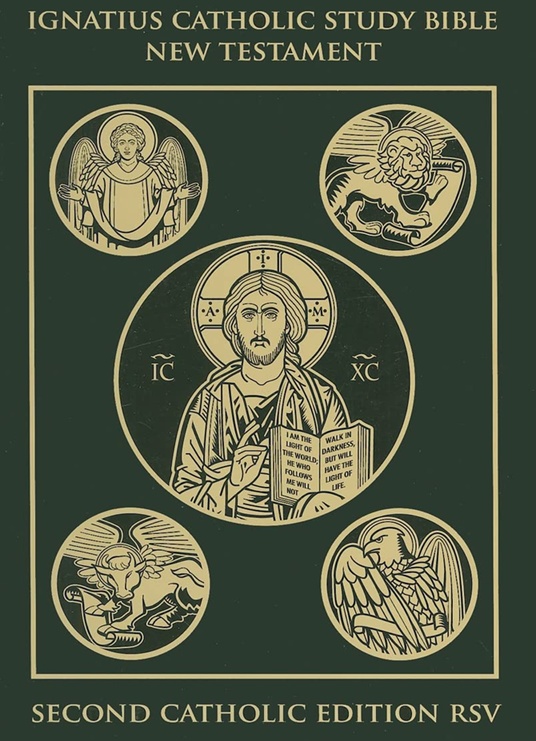
Up to now, we have reflected mainly on the Old Testament, but when we reflect on the New Testament, especially Romans and Ephesians, we look forward to reviewing the Ignatius Catholic Study Bible for the New Testament. It also has copious footnotes and is highly recommended by various Catholic podcasters.
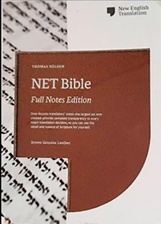
Finally, I recently discovered the recent NET Bible, or New English Translation, with sixty-thousand scholarly translation notes! When I discovered this on Amazon, I had to buy it. Although it is a fresh translation, they also consult the Vulgate translation. Dr Wikipedia states that a group of scholars at the 1995 meeting of the Society of Biblical Literature decided that a fresh translation with scholarly footnotes would be beneficial.[15] These footnotes are the most extensive of all. In some chapters of Genesis and Exodus, they take up about eighty percent of the page even with a small font.
Previously, I started to learn Greek from the Great Courses and William Mounce lectures, but I abandoned the effort. I may resume the project as these scholars’ notes help with the usage and meaning of the various Greek words.
Which translations were influenced by the beliefs of the translators? The answer is: ALL translations. This is why serious students of the Bible learn Koine Greek and/or Hebrew. Words from one language never have a one-to-one mapping to another distant language. One language may have many words that are translated into the same word in another language. Often prepositions differ among languages, and different languages often have different systems of conjugating verbs denoting tense. English and Hebrew do not have noun declensions, but Greek does. In Greek, word order does not matter, since the declension ending determines whether a noun is the subject, direct object, indirect object, or the object of a preposition, and some constructions are irregular, as usual with languages. Sometimes words with different tenses share conjugations or declensions, which means a sentence can have multiple potential meanings, which is lost in translation. And in nearly all languages, the verbs that are the most commonly used are often also the most irregular.
On Learning Attic and Koine Greek, Classical Latin, and Biblical Hebrew
https://wp.me/pachSU-Cg
http://www.seekingvirtueandwisdom.com/on-learning-attic-and-koine-greek-classical-latin-and-biblical-hebrew/
Whereas there are three Hebrew Old Testament manuscript traditions, including the lost Vulgate source, there is one generally agreed-upon Greek text for the New Testament. All New Testament translations predominantly use that Greek text.
In summary, these are the translations I consult:
- Orthodox Study Bible: New King James Version updated by Septuagint.
- Catholic New Revised Standard Version in Bible Gateway website.
- NIV Cultural Background Study Bible.
- NET Bible with scholarly footnotes.
Plus, for Old Testament readings:
- Catholic Douay-Rheims Vulgate Bible.
- Metsudah Chumash Jewish Bible.
- Jewish Study Bible.
STAND-ALONE COMMENTARIES BY CHURCH FATHERS AND REFORMERS
My favorite is the Ancient Christian Commentary series, published by InterVarsity Press, which includes commentaries for all the books in the Bible, plus the Apocrypha, by the early Church Fathers, East and West, including St Augustine and St John Chrysostom.
Many books of the Bible are included in the excellent Reformation Commentary by InterVarsity Press, including commentaries by Luther, Calvin, and other early Reformers. Although their publication was interrupted several years ago, the remaining volumes will be published beginning in 2028. Both of these series include brief biographical sketches of the contributors.
The many volumes of the Ante-Nicene Church Fathers and the Nicene and Post-Nicene Church Fathers include the main writings of these Church Fathers, both East and West, which include many commentaries on the Scriptures. They include the major works by both St Augustine and St John Chrysostom. Although the translations date from the late nineteenth century, most are easy to read, with occasional archaisms. However, we prefer the more modern translations of the key patristic writings.
Although they have been out of print for many years, these Church Father collections are available online. The best source is the Christian Book Distributors. Although their electronic versions are slightly more expensive than the other free or inexpensive options, they include complete footnotes and are properly formatted.
How To Read Ancient Works, and Book Reviews on the Apostolic Church Fathers
https://youtu.be/I_2q4BiRBlU
https://seekingvirtueandwisdom.com/book-reviews-on-apostolic-and-early-church-fathers/
My favorite modern commentator is the Presbyterian Pastor James Boice. I first heard his expositions on Scripture on the radio in a dark time of my life. He interweaves a pastoral devotional style with responsible Biblical scholarship. His commentary on Ephesians is helpful for those facing marital issues. He also composed excellent commentaries on Genesis, Psalms, the twelve Minor Prophets, John, Romans, and Philippians, plus other works. He also recorded companion sermons on cassette tape, but many of these are no longer available.
For years I have been buying the individual Old Testament volumes of the Westminster Commentaries, plus a sampling of their New Testament commentaries, published in the decades after the seventies. Some of the leading German historical-critical scholars have contributed volumes. Brevard Childs’ commentary on Exodus is outstanding: he not only comments on the historic text, he also reviews the commentary by Luther, Calvin, and other Reformation preachers, which is valuable, since the Reformation Commentary on Exodus is not due to be released until 2028 or beyond.
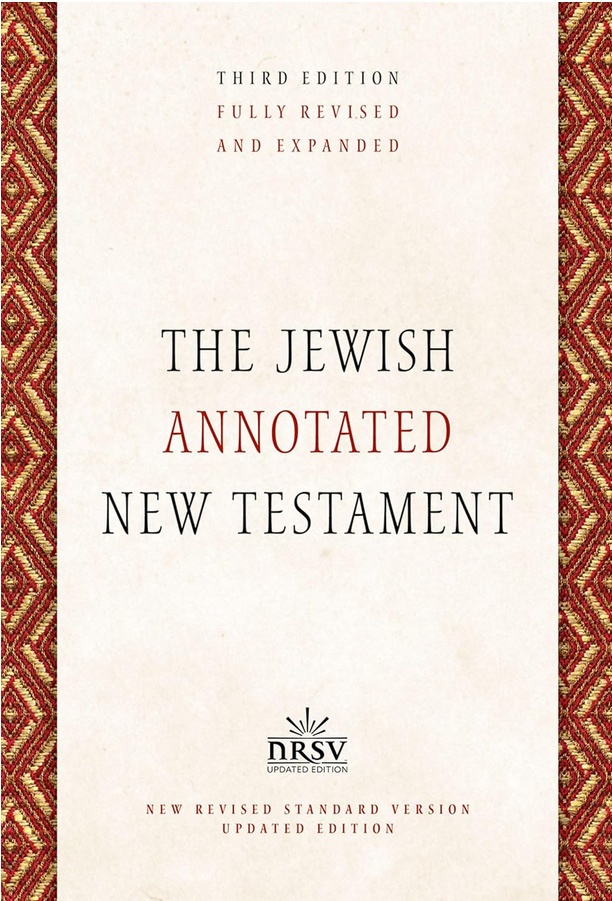
The Jewish Professor Amy-Jill Levine is known for her studies in New Testament Judaism. She and her colleague have recently published the revised Third Edition of the Jewish Annotated New Testament. She also wrote a book on the background of Jesus’ parables. The New Testament is the best surviving depiction of first-century Judaism available. She also counters anti-Semitic attitudes among Christians.
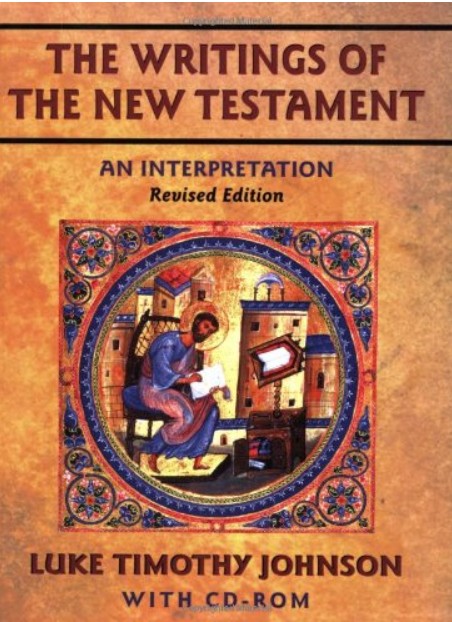
Professor Luke Timothy Johnson has an excellent book on the Writings of the New Testament, with an extensive summary of each book. My only complaint is that he includes an extensive reading list for each chapter rather than footnotes.
We are less enthusiastic about the Baptist Broadman Commentary. My series was copyrighted in the seventies, long before the Baptist seminaries were purged of suspect historical-critical professors by conservative donors. When we try to sample their views, we usually find that others have stated them more eloquently.
We want to mention the Catholic Catechism. Although it is not technically a Bible study, the American UCSSB Bishops’ Edition cross-references the quotations in the Catechism to the Bible, the writings of the early and medieval Church Fathers, and to the decrees of Trent, the First and Second Vatican Council, and other sources. Even if you are not Catholic, the Catholic Catechism provides an ideal sequential reading list for these Church Fathers.
You can also purchase a Compendium which includes the full text of all Bible verses referenced by the Catechism, and also many of the works cited in the Catechism, including many obscure texts that are difficult to find. This includes many writings cited for early, medieval, and Vatican II and Trent Church Fathers.
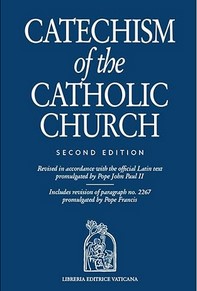
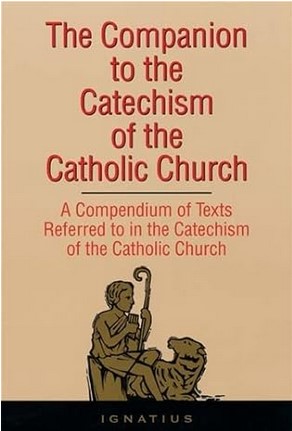
The Decalogue, Vatican II, and the Catholic and Lutheran Catechisms
https://youtu.be/i8WXS7l4OzE
http://www.seekingvirtueandwisdom.com/who-should-study-the-catholic-catechism/
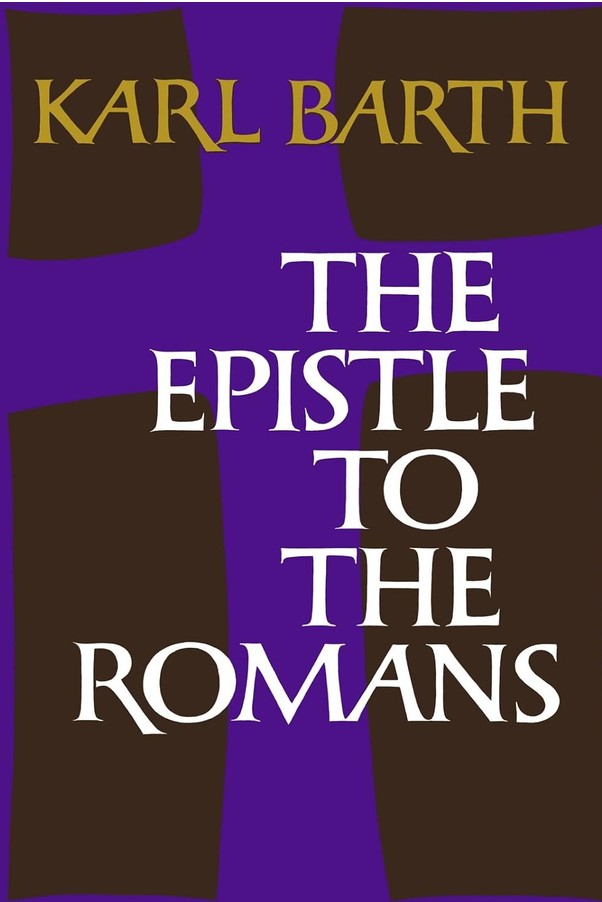
Before I die, I ask the Lord to allow me to live long enough to reflect on Karl Barth’s Commentary on the Romans. This is a tall task, since St John Chrysostom, James Boice, and many others have also written extensive commentaries on Romans. I allowed myself to be intimidated by this work many decades ago: do not make this same mistake. He is not writing only for professors: with patience, intelligent Christians can master this work.
Karl Barth is not merely commenting on Romans, but is rather commenting on the entire Christian tradition as seen through the lens of Romans. Soon afterwards I will read Hans Kung’s thesis showing how Karl Barth’s views on Justification by Faith are not that different from the classical Catholic position as expressed during the proceedings of the Council of Trent.
The ancient church historian Eusebius, in his Church Histories, discusses how various books were accepted as canonical at the time of Emperor Constantine. He also discusses the history of Christian persecutions. We reflected on his history of Christian persecutions up to the time of Emperor Marcus Aurelius and his son, the deviant gladiator Emperor Commodus. Sometime in 2027, we plan reflections on the later era of Christian persecutions and his Church Histories.
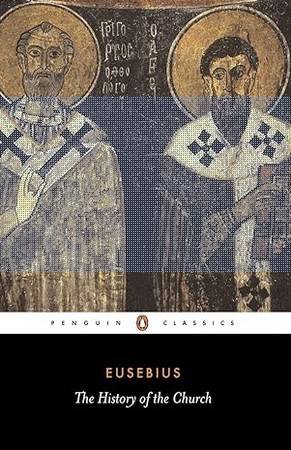
History of Christian Persecutions, New Testament Through Marcus Aurelius
https://wp.me/pachSU-S0
https://seekingvirtueandwisdom.com/history-of-christian-persecutions-new-testament-through-marcus-aurelius/
OTHER SPECIAL CASES: PSALMS, JOSHUA, JUDGES, AND REVELATIONS
Before I published this reflection, I first used many of these resources for the First Psalm, which for Christians shows how the Law can be a type of Gospel. The commentary on this Psalm is rich, as you will discover.
We also reflected on the specialized commentaries on the Psalms by CS Lewis, Luther, Calvin, Spurgeon, James Boice, Father Patrick Reardon, St John Chrysostom, Rabbi Joseph Telushkin, and others. Since the Psalms are poetry, you should NOT interpret them as closely as other books of the Bible. Individual verses cannot be treated as the Words of God, but should rather be read in context as the imperfect prayers of frustrated and despairing believers. Often the psalm will resolve this tension, but sometimes it does not.
One good example is the last unresolved verse of Psalm 137, where the Jews experiencing the Babylonian Captivity pray that they may bash the Babylonian babies’ heads against the rocks. Which means that NO, this psalm is not literally condoning bashing Babylonian babies’ heads against the rocks. Many Church Fathers, especially in the Philokalia, interpret this verse allegorically, teaching us to eliminate both large and small sins from our lives.
Psalm 1: The Law as Gospel? Church Fathers, Protestant Reformers, and Jewish Rabbis Comment
https://youtu.be/ZxSH9IoArLM
https://seekingvirtueandwisdom.com/psalm-1-the-law-as-gospel-church-fathers-protestant-reformers-and-jewish-rabbis-comment/
My Favorite Commentaries on the Psalms
https://youtu.be/kyJRf_JoGsI
https://seekingvirtueandwisdom.com/my-favorite-commentaries-on-the-psalms/
Psalm 137: Should We Bash the Babylonian Babies Against the Rocks? Spiritual and Historical Interpretations
https://youtu.be/wRT68KfvxhU
https://seekingvirtueandwisdom.com/psalm-137-should-we-bash-the-babylonian-babies-spiritual-and-historical-interpretations/
Psalm 71: Encouraging Us In Our Old Age
https://seekingvirtueandwisdom.com/psalm-71-encouraging-us-in-our-old-age/
https://youtu.be/NrzVItznE1E
Many believers are needlessly challenged by the verses in the Book of Joshua, where the Jews are commanded to kill all the men, women, and children in certain sinful cities in the Promised Land, and by the many troubling stories in the Book of Judges.
Archaeology and the historical-critical method provide no evidence of the widespread destruction described in the Book of Joshua, supporting the view that Joshua should be read allegorically.[16]
In the Book of Judges, twice we are told that in those days there was no king in Israel, and every man did what was right in his own eyes. This is a book about what happens when you do not live your life according to God’s commands, but rather according to your own personal notion of morality.[17]
Were the events in Joshua and Judges independent, or did the events in Judges follow those in Joshua? There may not be an either-or answer: possibly it was a blend of both scenarios.
After we reflect imminently on the Parable of the Good Samaritan, we will review the specialized commentaries on Jesus’ parables. We will also plan a similar review for the commentaries on the twelve minor prophets after we reflect on the Book of Amos, known for urging Social Justice.
YouTube on the Parables
We no current plans to reflect on the Book of Revelation. Historians point out that the symbolism most clearly points to the evil Emperor Nero and the Seven Hills of Rome. We recommend the Great Courses lecture series on Revelation.[18]
We have several books on the lives of ordinary people in Ancient Israel, organized by subject matter: Social World of Ancient Israel and Life in Biblical Israel, and a Dictionary of Daily Life in Biblical and Post-Biblical Antiquity, arranged alphabetically. Reading the Old Testament includes background for each of the Biblical books with cultural, geographical, and historical background.
We also reflected on Ordinary Life and Justice in Ancient Athens, Rome, and Israel.
Ordinary Life and Justice in Ancient Athens, Rome, and Israel
https://youtu.be/vl8KGL5Yx2w
http://www.seekingvirtueandwisdom.com/ordinary-life-and-justice-in-the-ancient-world/
When reading the works of the Roman Stoic Philosophers, you realize how much they resemble the sayings in the New Testament Gospels and Epistles. These are collections of essays from various scholars. Many essays compare the works of a particular Stoic philosopher to the Gospels and Epistles.
The writings of the NeoPlatonists also profoundly influenced the early Christians. St Augustine confesses he converted to NeoPlatonism before he converted to Christianity. The book, Christian Platonism, is a collection of essays.
We plan reflections on these works comparing Stoicism, Platonism, and Christianity.
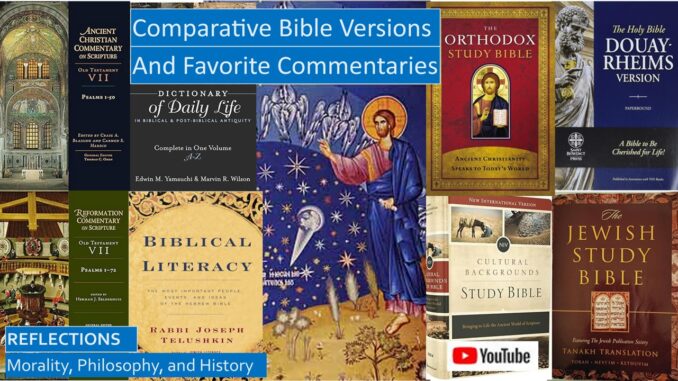
We have many books on the Bible that we have not reflected on, but rather than list all the titles, you can view them in our YouTube video. Some of these are recommended by the Christianity Today magazine.
[1] https://www.vatican.va/content/francesco/en/encyclicals/documents/papa-francesco_20130629_enciclica-lumen-fidei.html and https://en.wikipedia.org/wiki/Lumen_fidei
[2] https://en.wikipedia.org/wiki/Dynamic_and_formal_equivalence
[3] https://www.biblegateway.com/learn/bible-101/about-the-bible/bible-versions-guide/
[4] https://www.biblegateway.com/verse/en/Romans%208%3A3
[5] https://www.biblegateway.com/passage/?search=john%2019%3A34&version=RSVCE
[6] Zondervan NIV (New International Version) Study Bible (Grand Rapids, Michigan, Zondervan, 2002, 1995, 1985), p. 1669.
[7] Orthodox Study Bible (Dallas: Thomas Nelson, 2008), p. 1463.
[8] https://shop.thegreatcourses.com/great-world-religions-islam and https://amzn.to/46HNgG6
[9] https://www.biblegateway.com/passage/?search=Isaiah%207%3A14&version=RSVCE and https://www.biblegateway.com/passage/?search=matthew%201%3A23&version=RSVCE
[10] https://en.wikipedia.org/wiki/Creatio_ex_nihilo
[11] https://en.wikipedia.org/wiki/Ancient_Near_Eastern_cosmology
[12] https://www.biblegateway.com/passage/?search=isaiah%206%3A5&version=NRSVCE
[13] St Jerome, Against the Pelagians 2.24, Ancient Christian Commentary on Scripture, Old Testament, Volume X, Isaiah 6, p. 52.
[14] Holy Bible, Douay-Rheims Version (Charlotte, NC: St Benedict Press and TAN Books, 1899,1609, original Vulgate was translated into Latin in the late 300s by St Jerome), p. 765.
[15] https://en.wikipedia.org/wiki/New_English_Translation
[16] https://en.wikipedia.org/wiki/Book_of_Joshua
[17] https://en.wikipedia.org/wiki/Book_of_Judges
[18] https://shop.thegreatcourses.com/the-apocalypse-controversies-and-meaning-in-western-history and

Be the first to comment