Did the early Christians believe in free will?
How did the ancients view demons? Were some demons beneficial to mankind?
Why did demons often haunt the tombs?
How did the concept of demons differ in Ancient Israel, Greece, and Rome?
Why did the early Christians believe that demons caused epilepsy?
YouTube video for this blog: https://youtu.be/ZdgWzU-sJds
In our reflection on St John Climacus’ Ladder of Divine Ascent, he discusses demons and apparently involuntary blasphemy, which today is recognized by many as mental or neurological illness.
St John Climacus on Demons, Blasphemy, and Mental Illness: Ladder of Divine Ascent, Step 23 ½
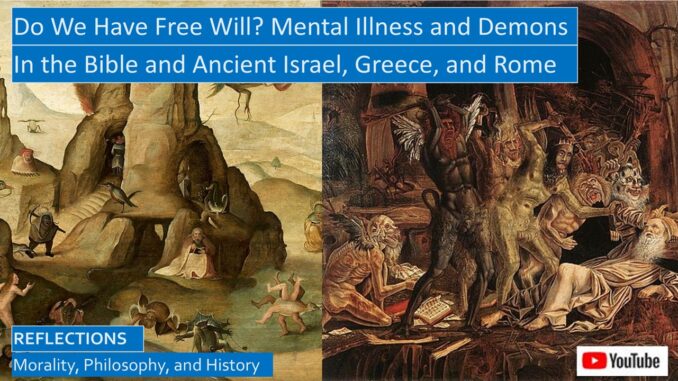
Did the early Christians believe in free will? Or could demons rob them of their free will; just as dementia and mental illness rob modern patients today? The New Testament does not discuss whether we have free will, it simply accepts that we are subject to forces in the divine realm. Jesus often heals those who have lost their minds, driving out their demons. Also, St Paul in his epistles argues for divine determination, which St Augustine later develops into his doctrine of predestination.[1]
DEMONS IN ANCIENT NEAR EAST, GREECE, AND ROME
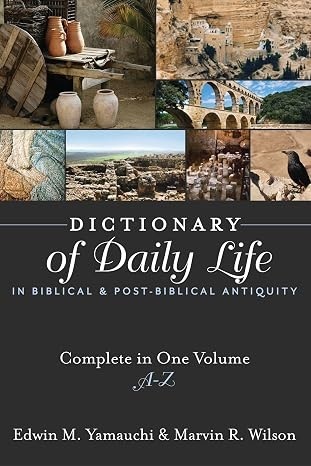
How did those living in the ancient world view demons? In the Dictionary of Daily Life in Biblical and Post-Biblical Antiquity, the editors for the section on demons note that in the Near Eastern cultures of the Old Testament, demons could be evil or benevolent, but they were mostly evil, “punishing mankind with diseases and disasters.” Many of the evil demons were “cast-off progeny of the gods.” Many bore a grudge against mankind; some attacked people in their sleep; others attacked infants and women in childbirth. Others were “ghosts of people who had died without a proper burial.”
Likewise, there were both benevolent and evil demons in ancient Greek mythology. But the Greeks also had daimons, which were more of a divine inspiration than a demon. For example, Socrates’ personal divine daimon was his intuitive conscience. His daimon never suggested a course of action but merely warned him when he started to go astray. Did this daimon speak to Socrates, or did it simply plant thoughts in his head? Or was Socrates simply talking to himself?
Pondering the Death of Socrates in Xenophon, Plato, and Aristophanes
http://www.seekingvirtueandwisdom.com/pondering-the-death-of-socrates-in-xenophon-plato-and-aristophanes/
https://youtu.be/Mip1vgRKH1E
Our editors note that there were many differing types of Greek daimons. In the plays by Sophocles and other Greek playwrights, a daimon is sometimes depicted not as a deity but as a divine force equivalent to Fate. The philosopher Empedocles thought daimons were “former gods expelled from the ranks of the immortals who had to purify themselves through a cycle of reincarnation.” Some Pythagoreans viewed them as angeloi, or messengers, intermediaries between gods and men. Other Greeks thought they could either protect or threaten humans, sometimes bringing illness, old age, and death.
In Homer’s Odyssey, Odysseus encountered many witches and magical creatures on his years-long journey home after the Greek victory in Troy. He also awakened shades sleeping in Hades so he could converse with them.
Odyssey, Blog 1, Waiting Those Very Long Years For Odysseus
http://www.seekingvirtueandwisdom.com/odyssey-blog-1-waiting-those-very-long-years-for-odysseus/
Odyssey, Blog 2, Odysseus Sings His Adventures
http://www.seekingvirtueandwisdom.com/odyssey-blog-2-odysseus-sings-his-adventures/
Odyssey, Blog 3, Odysseus Returns Home to Ithica
http://www.seekingvirtueandwisdom.com/odyssey-blog-3-odysseus-returns-home-to-ithica/
Odyssey, Blog 4, The Slaughter of the Suitors
http://www.seekingvirtueandwisdom.com/odyssey-blog-4-the-slaughter-of-the-suitors/
Odyssey of Homer: Xenia, the Need for Hospitality
https://youtu.be/bUW4ZT9zpt8
In addition, our editors note that the “Roman Stoics regarded demons as supervisory spirits. According to Epictetus, ‘Zeus has stationed by each man’s side as a guardian his particular genius, and has committed the man to his care, a guardian who never sleeps and cannot be beguiled,’” which reminds us of guardian angels, which many Christians believe in up to the present day. “Some Roman philosophers believed that certain human souls could become divine after death.”[2] The best example was Asclepius, the doctor who was deified to become the god of medicine.
DEMONS IN THE OLD AND NEW TESTAMENTS
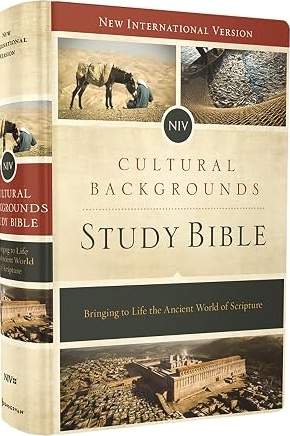
The NIV Cultural Backgrounds Study Bible notes that “ancient Near Eastern society was awash in texts containing magical incantations and amulets intended to protect people from evil spells.”
But then it states that “there are no incantations, rituals, or amulets prescribed for protecting individuals from spirits. Considering how much of the Torah is devoted to ritual and sacred objects, this is a remarkable omission.”
Although this is technically true, Deuteronomy does provide for a different type of incantation, ritual, and amulets, and a different kind of magic. Deuteronomy says this: “You shall love the Lord your God with all your heart, and with all your soul, and with all your might. And these words which I command you this day shall be upon your heart; and you shall teach them diligently to your children and shall talk of them when you sit in your house, and when you walk by the way, and when you lie down, and when you rise. And you shall bind them as a sign upon your hand, and they shall be as frontlets between your eyes. And you shall write them on the doorposts of your house and on your gates.”[3] These verses are the core of the Shema, the Jewish daily prayers.
Remember that in their last days in Egypt, the Jews were instructed to brush the blood of the Passover lamb onto their doorposts so the angel of death would pass over their house. Without a doubt, this message written on their doorpost echoes their deliverance. Common Jews viewed this doorpost message and the frontlets they wore as protection from evil spirits. But they are much more than messages and amulets: they remind the Jews, along with their daily prayers, that they are commanded to Love God, and to love their neighbors as themselves.
Hillel and Jesus, Reflections on Rabbi Telushkin’s Observations
http://www.seekingvirtueandwisdom.com/hillel-and-jesus-reflections/
Comparing Hillel and Shammai to Jesus
http://www.seekingvirtueandwisdom.com/comparing-hillel-and-shammai-to-jesus/
More Stories and Sayings of Hillel and Shammai
http://www.seekingvirtueandwisdom.com/more-stories-and-sayings-of-hillel-and-shammai/
Jesus, Hillel, and Shammai, Loving God and Neighbor
https://youtu.be/ygxn2qqGnOI
In addition, the NIV sidebar on demons adds that:
- Deuteronomy forbids God’s people to practice child sacrifice, divination, or magic, banning “charmers, mediums, wizards, and necromancers.”[4]
- “The main concern of the Old Testament writers was that people avoid seeking” “magical powers from contacting spirits.”
Regarding the New Testament:
- “Jesus has absolute power over evil spirits, as a matter of divine authority, not magic or sorcery.”
- “The New Testament mocks the claims of magicians” “unable to deal with real spirits.” The best example is the failed efforts of Simon the sorcerer in Acts.[5]
The editors of the Dictionary of Daily Life note that demons are not often mentioned in the Old Testament. Two main examples are the “lying spirit that deceived King Ahab” and the spirit that tormented King Saul after the “Spirit of the Lord had departed” from him. We previously pondered how the lack of courage crippled the spiritual and moral life of King Saul.
FDR’s First Inaugural Address and St John Climacus, Ladder of Divine Ascent, on Fear & Cowardice, Step 21
https://youtu.be/RfpFG6_z5Ho
https://seekingvirtueandwisdom.com/fdrs-first-inaugural-address-and-st-john-climacus-ladder-of-divine-ascent-on-fear-cowardice-step-21/
Many ancient Jews and Christians speculated: Do these verses from Psalm 91 refer to demons?
“You will not fear the terror of the night,
nor the arrow that flies by day,
nor the pestilence that stalks in darkness,
nor the destruction that wastes at noonday.”
In Tobit, a delightful book in the Apocrypha and a favorite of young Catholic couples, Tobias and Sarah are newlyweds who kneel and pray to God before climbing into their wedding bed, asking God to protect them from evil before they consummate their marriage.
In this story, in prior years, a demon had killed several young men who had fallen in love with Sarah. After Tobias and Sarah pray at the foot of their bed, the angel Raphael is seen binding the demon, protecting the newlyweds so they will have a long and happy marriage with many children.
In contrast, there are many more references to demons in the New Testament, and the evil angel Satan appears in person to tempt Jesus. The Greek word daimon is used only once, and none of the New Testament demons are benevolent. The Greek phrases translated as unclean spirits and demon-possessed appear dozens of times, especially in the Gospel of Mark. In four of the thirteen healing stories in Mark, mostly repeated in Matthew and Luke, Jesus exorcises, or casts out, demons. St Paul exorcises the demon that gives a slave girl powers of divination in Acts, and vividly describes the Christian struggle against the powers of the dark world. Also, the Book of James proclaims that: “You believe that there is one God. Good! Even the demons believe that, and shudder.” (James 2:19)[6]
The two representative accounts of demons we will ponder are, first, when Jesus casts out the legion of demons possessing the demoniac. Jesus assents to their possessing a herd of nearby swine, which then all stampede over a cliff and drown. Second, Jesus casts out the demon possessing the epileptic. If you are interested, Wikimedia has a complete list of Jesus’ exorcisms.[7]
JESUS CASTS OUT DEMONIAC DEMONS INTO A HERD OF SWINE
We read in Matthew: “And when Jesus came to the other side, to the country of the Gadarenes, two demoniacs met him, coming out of the tombs, so fierce that no one could pass that way. And behold, they cried out, ‘What have you to do with us, O Son of God? Have you come here to torment us before the time?’ Now a herd of many swine was feeding at some distance from them. And the demons begged him, ‘If you cast us out, send us away into the herd of swine.’ And Jesus said to them, ‘GO.’”
“So, they came out and went into the swine; and behold, the whole herd rushed down the steep bank into the sea and perished in the waters. The herdsmen fled, and going into the city they told everything, and what had happened to the demoniacs. And behold, everyone in the city came out to meet Jesus; and when they saw him, they begged him to leave their neighborhood.”[8]
In Mark, Jesus casts out the demons from one demoniac. Jesus asks the demons to reveal their name, and they respond: We are legion. In the ancient world, when you learned someone’s name, you often gained power over them.
Since a Roman legion consisted of four to six thousand soldiers, these demons were numerous, and they possessed a herd of two thousand swine. In Luke, the demoniac is naked before the exorcism but puts on clothes after he is healed.[9]
Peter Chrysologus, the fifth-century Archbishop of Ravenna, says that when Jesus said GO, “the foul-smelling animals are delivered up, not at the will of the demons, but to show how savage demons can be.” “They ardently seek to destroy and dispossess all that is, acts, moves, and lives. They seek death. Their ancient enmity of deep-seated wrath and malice is in store for the human race. Demons do not give up easily unless they are forcibly overcome. They are doing the harm they are ordered to do. Therefore, the foul-smelling animals are delivered up so that it is clear to the demons that they have permission to enter the swine but not to enter humans. It is by our vices that we empower them to do harm. Similarly, by our power of faith we tread on the necks of demons.”[10]
St Cyril of Alexandria teaches us: “The divine nature of the only begotten Son was already scorching the demons in unspeakable flames. Christ was shutting up the fiercest demons in blocked roads. He was undoing the devil’s tyranny.”[11]
JESUS CASTS OUT THE DEMON OF AN EPILEPTIC MAN
We read in Matthew: “When they came to the crowd, a man came up to Jesus, and kneeling before him said, ‘Lord, have mercy on my son, for he is an epileptic, and he suffers terribly; for often he falls into the fire, and often into the water. And I brought him to your disciples, and they could not heal him.’ And Jesus answered, ‘O faithless and perverse generation, how long am I to be with you? How long am I to bear with you? Bring him here to me.’ And Jesus rebuked him, and the demon came out of him, and the boy was cured instantly.”[12]
How is the Greek word rendered here as epileptic translated? Most translations say he was an epileptic, some say that he had seizures, some say he was a lunatic, one says he was mentally deranged, one said he was delirious and sorely vexed.[13] The translations are split on whether Jesus cast out the devil or a demon from the boy.[14]
Epilepsy was recognized by many in the ancient world as a special case, as the sufferer was perfectly normal, except when he had a seizure. Many Church Fathers, seeking simplicity, adopted St John Chrysostom’s ready condemnation: “The Scriptures show that this man is very weak in faith.”[15]
Origen recognizes that epilepsy is a special case, but also seeks to interpret this verse allegorically, with lesser success. “This disease attacks those who suffer from it at considerable intervals, during which time he who suffers from it seems in no way to differ from the man in good health, at the season when the epilepsy is not working on him. You will find some souls who are often considered to be healthy suffering from symptoms like these in their chastity and other virtues. But there comes a time when they are attacked by a kind of epilepsy, and then they seem to fall from their solid foundation and are seized by the deceits and other devices of this world.”[16]
What is epilepsy? Dr Wikipedia summarizes it: “Epilepsy is a group of neurological disorders characterized by a tendency for recurrent, unprovoked seizures. A seizure is a sudden burst of abnormal electrical activity in the brain that can cause a variety of symptoms, ranging from brief lapses of awareness or muscle jerks to prolonged convulsions. These episodes can result in physical injuries, either directly, such as broken bones, or through causing accidents.” Epilepsy can be caused by genetic factors or by trauma, or by stroke, brain tumors, and/or infections.
Most ancient people thought that epilepsy was due to spiritual causes, including demons. But the Greek Hippocrates, father of medicine, rejected this view as magic, “insisting that it was a medically treatable disease originating in the brain,” speculating it was caused by heredity. He called it the great disease, originating the modern term grand mal. However, few people in the ancient world agreed with him.
The first effective anti-seizure medication, bromide, was discovered in the 1800s, while the more effective phenytoin came into use in 1938. “In the United States, the Epilepsy Foundation is a national organization that works to increase the acceptance of those with the disorder, their ability to function in society and to promote research for a cure.”[17]
DEMONS IN LATER JEWISH AND CHRISTIAN TRADITION
The curious apocryphal Book of Enoch, which is included only in the canon of the Egyptian Orthodox Church, although it is referenced in the Epistle of Jude, has extensive references both to angels and to demons. Many fragments of Enoch have been found in the Dead Sea Scrolls, revealing their central role in that community. Many early Church Fathers both recommended and criticized the Book of Enoch, though as later Church Fathers condemned it, fewer Christians read it.
The editors of the Dictionary of Daily Life note that, in ancient Jewish culture, “demons were believed especially to haunt narrow paths, the shades of trees, rooftops, bath houses, and privies. There were morning, midday, and night demons. To protect against demons, the rabbis recommended, in addition to Torah observance, the recital of Psalm 91, the use of tefillin,” or phylacteries containing small scrolls with verses from the Torah, “the Mezuza message on the doorpost, the burning of incense, the blowing of the shofar, and amulets.”
The early Church Father St Justin Martyr, who was influenced by the Enochian tradition, “maintained that the demons” “raised up false teachers,” and “blamed the persecutions of Christian on the evil demons who hate us.” “Echoing the Book of Revelation, Justin affirms that when Christ comes again, he will send the wicked ‘into everlasting fire with the wicked devils.’”
St Justin Martyr, Blog 1, First Apology to the Emperor
http://www.seekingvirtueandwisdom.com/st-justin-martyr-blog-1-first-apology-to-the-emperor-2/
https://youtu.be/s1Gz3pwImO8
St Justin Martyr’s Second Apology to Senate, Quoting Xenophon’s Socrates, Ladies Virtue and Vice
http://www.seekingvirtueandwisdom.com/justin-martyr-second-apology-and-socrates/
https://youtu.be/-E3r8Z4IE1c
St Justin Martyr, Dialogue with Trypho, Blog 3, Justin Is Converted
http://www.seekingvirtueandwisdom.com/st-justin-martyr-dialogue-with-trypho-blog-3-justin-is-converted/
Justin Martyr, Dialogue With Trypho the Jew on Circumcision and Jesus
http://www.seekingvirtueandwisdom.com/st-justin-martyr-dialogue-with-trypho-the-jew-on-circumcision-and-jesus/
St Justin Martyr’s Dialogue With Trypho, a Jew, on Circumcision, Jesus, and Philosophy
https://youtu.be/AafwB0tA5a8
Many early Church Fathers, including St Justin Martyr, St Clement of Alexandria, and Tertullian, taught that the Greco-Roman gods were evil daimones. Origen rejected the Enochian tradition since he did not believe that the Book of Enoch was scriptural. According to Origen, “famine, blasting of the vine and fruit trees, and pestilence among men and beasts, are all caused by demons.” Tertullian agreed that demons encourage persecutions of Christians.
In the story of the early monastic Church Father St Anthony, he describes how he fought the demons when living as a hermit in solitude in the parched Egyptian desert. St Athanasius, in his Life of Anthony, “records that the devil one night even took the shape of a woman and imitated all her acts simply to beguile him. But St Anthony, his mind filled with Christ,” “quenched the coal of” Satan’s deceit.[18]
Life of St Anthony, Blog 1, Sell all you have and give to the poor
http://www.seekingvirtueandwisdom.com/life-of-st-anthony-blog-1-sell-all-you-have-and-give-to-the-poor/
Life of St Anthony, Blog 2, Living a monastic life
http://www.seekingvirtueandwisdom.com/life-of-st-anthony-blog-2-living-a-monastic-life/
https://youtu.be/2sR8OCZqzFw
CONCLUSION
Is epilepsy caused by a demon? Or is it purely a medical condition? Or can it be both? Few today would argue that epilepsy is caused by a demon, but many observe that often a mental illness can possess someone as certainly as demons did several millennia ago. Often mental illnesses are caused by chemical imbalances in the body, which can, in turn, be caused by drug and sometimes alcohol abuse. Among evangelicals, there are anecdotal stories of addicts who are cured as suddenly of their addictions as were the demoniacs whose demons were driven out by Jesus.
Do we have free will? My personal take is that Jesus wants to grant us as much free will as possible, while Satan and the demons seek to ensnare us in our passions and addictions, which rob us of our free will. Bad habits addict us to alcohol, drugs, gambling, promiscuity, and a host of other sins. Good and beneficial habits help preserve our free will, as does daily prayer.
In this series, we also reflected on the Biblical morality of deceiving those who suffer from dementia so we can help them.
Biblical Morality of Deceiving Those Who Suffer From Dementia In Order to Help Them
https://youtu.be/uukJRpH7k64
https://seekingvirtueandwisdom.com/biblical-morality-of-deceiving-those-who-suffer-from-dementia-in-order-to-help-them/
DISCUSSING THE SOURCES
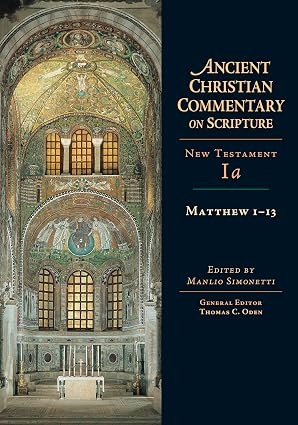
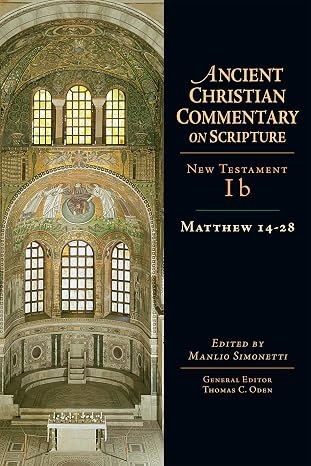
Our primary source was the entry on demons in the informative, easy-to-read Dictionary of Daily Life in Biblical and Post-Biblical Antiquity, which was a fellow podcaster recommended. Another valued source was the NIV Cultural Background Study Bible, which has extensive informative footnotes and discussions on demons and many other topics. We also consulted the Ancient Christian Commentary on Scripture. Since we were mainly interested in the insights of the early Church Fathers, we did not consult the Reformation Commentary.
[1] https://en.wikipedia.org/wiki/Free_will_in_theology quoting the Pauline expert, Troels Engberg-Pederson, and https://en.wikipedia.org/wiki/Free_will_in_antiquity#Christianity. Sometime in the future I plan to reflect on Karl Barth’s Commentary on Romans, so I can more adequately discuss such topics.
[2] Edwin Yamauchi and Marvin Wilson, Dictionary of Daily Life in Biblical and Post-Biblical Antiquity (Peabody, MS: Hendrickson Publishers, 2017), pp. 413-418.
[3] https://www.biblegateway.com/passage/?search=deuteronomy%206%3A5-9&version=RSVCE
[4] https://www.biblegateway.com/passage/?search=deuteronomy%2018%3A10-12&version=RSVCE
[5] New International Version (NIV) Cultural Background Study Bible, pp. 1626-1627, commenting on Matthew 8:16, 28-34.
[6] Yamauchi and Wilson, Dictionary of Daily Life in Biblical and Post-Biblical Antiquity, pp. 410-413, and https://en.wikipedia.org/wiki/Book_of_Tobit
[7] https://commons.wikimedia.org/wiki/Category:Exorcisms_performed_by_Jesus_in_the_Synoptic_Gospels
[8] https://www.biblegateway.com/passage/?search=Matthew%208%3A28-34&version=RSVCE
[9] https://en.wikipedia.org/wiki/Exorcism_of_the_Gerasene_demoniac
[10] Peter Chrysologus, Sermon 6.8, Ancient Christian Commentary on Scripture, New Testament, Volume Ia, Matthew 1-13 (Downers Grove, IL: InterVarsity Press, 2001), p.171, 306.
[11] St Cyril of Alexandria, Fragment 101, Ancient Christian Commentary on Scripture, New Testament, Volume Ia, Matthew 1-13, p.171.
[12] https://www.biblegateway.com/passage/?search=Matthew%2017%3A14-18&version=RSVCE
[13] https://www.biblegateway.com/verse/en/Matthew%2017%3A15
[14] https://www.biblegateway.com/verse/en/Matthew%2017%3A18
[15] St John Chrysostom, The Gospel of Matthew, Homily 57.3, Ancient Christian Commentary on Scripture, New Testament, Volume Ib, Matthew 14-28 (Downers Grove, IL: InterVarsity Press, 2002), p. 60.
[16] Origen, Commentary on Matthew 13.4, Ancient Christian Commentary on Scripture, New Testament, Volume Ib, Matthew 14-28, p. 60.
[17] https://en.wikipedia.org/wiki/Epilepsy and https://en.wikipedia.org/wiki/Epilepsy_Foundation and https://www.epilepsy.com/
[18] Yamauchi and Wilson, Dictionary of Daily Life in Biblical and Post-Biblical Antiquity, pp. 418-425, and https://en.wikipedia.org/wiki/Book_of_Enoch

1 Trackback / Pingback