Biblical Morality of Deceiving Those Who Suffer From Dementia In Order to Help Them
Biblical Interpretation

Biblical Morality of Deceiving Those Who Suffer From Dementia In Order to Help Them

Often adult children just do not want to lie to their parents. They want to empower them and involve them in the decisions about their care. They expect their parents suffering from dementia to reason with them, and that is impossible.

On rare occasions, you are compelled to tell a white lie for their own good. The commandment is not worded: Do not lie. Rather, it is worded: Do not bear false witness against your neighbor. In part, this reflects the reality that ancient jurisprudence relied heavily on eyewitness testimony, unlike modern jurisprudence that relies more on forensic evidence. […]
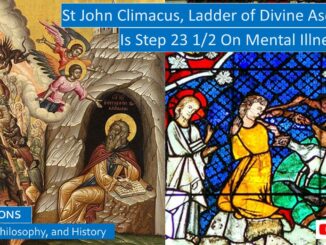
Mental Illness, Demons, and Free Will in the Bible and Ancient Israel, Greece, and Rome
Dementia and Alzheimers Disease

Do We Have Free Will? Mental Illness and Demons in the Bible, Church Fathers, and the Ancient World

Did the early Christians believe in free will? Or could demons rob them of their free will; just as dementia and mental illness rob modern patients today? The New Testament does not discuss whether we have free will, it simply accepts that we are subject to forces in the divine realm. Jesus often heals those who have lost their minds, driving out their demons. Also, St Paul in his epistles argues for divine determination, which St Augustine later develops into his doctrine of predestination. […]

St John Climacus on Demons, Blasphemy, and Mental Illness: Ladder of Divine Ascent, Step 23 ½
Ladder of Divine Ascent

St John Climacus on Demons, Blasphemy, and Mental Illness: Ladder of Divine Ascent, Step 23 ½

We reflected on a puzzling section of St John Climacus’ step on his Ladder of Divine Ascent on first vainglory, then mad pride. He ponders how highly arrogant pride can lead to a type of madness that can lead to strange behavior. He wondered: Was this caused by demons? He recounts a puzzling situation where a monk starts cursing loudly in the middle of the Divine Liturgy.
However, our saint is reluctant to make a full-throated attack, as he likely sensed that his formerly devout monk was not in his right mind. When modern readers study this, they may wonder: Could this monk be suffering from Tourette’s syndrome, which involves involuntary cursing? Could this be symptomatic of dementia, or another mental illness or condition? These are the questions we will ponder in today’s reflection. […]

Psychology

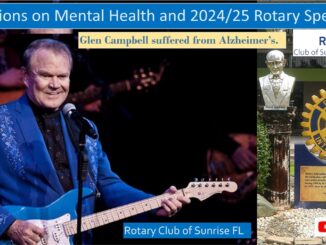
Reflections on Mental Health Awareness, and Sunrise Rotary Speakers 2024/2025

What would happen if the demented patient is turned out in the street by the eviction? If a lost and wandering dementia patient is not found within two days, there is a one in four chance they will be found face down in a ditch or canal. But if someone is not looking for a demented patient, the odds are worse. […]

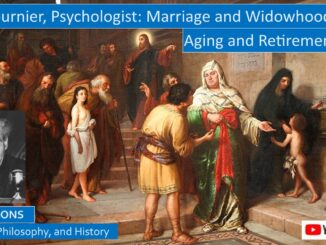
Paul Tournier, Christian Psychologist on Marriage and Widows in Old Age and Retirement
Aging

Paul Tournier, Christian Psychologist on Marriage and Widows in Old Age and Retirement

What is the ideal, according to Paul Tournier? “Growing old together, husband and wife can come to know a love which is, in a way, a prefiguration of heaven, for it is less tumultuous than the love of youth, being less directed towards selfish pleasure-seeking, and because a slow advance in mutual comprehension permits more authentic communication.” […]

Why Are Dementia Patients Who Wander So Drawn to Water? Why Do They Drown?
Dementia and Alzheimers Disease

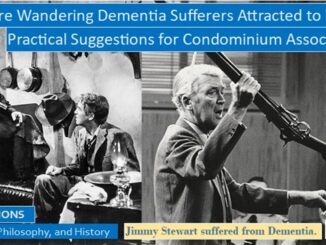
Why Are Wandering Dementia Patients Drawn to Water? Why Do They Drown?

The biggest objection property managers and association boards raised against performing health and wellness checks on their owners and residents is they are not nursing homes: they do not want to be held responsible for the welfare of their owners and residents. But even if they wanted to, they cannot take on the responsibility of care. Instead, they should call the police and request that they conduct a health and wellness check. They should inform the police about the possible foreclosure of a dementia patient, as this will better enable them to receive any care they may need. Any known family members must also be informed.
Alternatively, or additionally, they can request that the Broward County Council of Aging, or an appropriate local agency, refer the case to a professional. The Alzheimer’s Association 24/7 support hotline at 800-272-3900 is also an excellent resource. […]

Classical Christian Psychologist Paul Tournier on Old Age, Death, and Faith
Aging

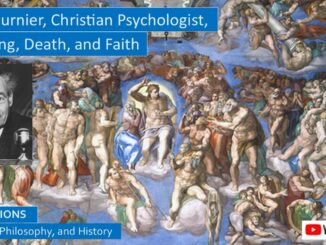
Classical Christian Psychologist Paul Tournier on Old Age, Death, and Faith

Tournier reminds us that we may experience many successes, but as we grow older, “success retreats, and escapes us, it is limited, unfulfilled.” “When one comes to the end, a man’s life is nothing much.” “Professional life is over, and it finishes unfinished. This is a prefiguration of death, in which the whole of life will finish it, too, being unfinished. That is the dramatic contradiction of death.” Quoting Robert Mehl: “An end, but not a fulfilment, that is the face of death.” […]

Paul Tournier on Aging and Retirement
Aging

Classical Christian Psychologist Paul Tournier on Old Age and Retirement

Paul Tournier notes: “Freud defined psychological health under the double heading of aptitude for love and for work.” But Paul Tournier cautions that “the superficial relationships of working life and of sexual attraction must lead to a deeper personal commitment. And I believe that no commitment can be truly personal unless it takes on a transcendent dimension and become love, in the biblical meaning of the word.”
Paul Tournier is grateful: “As an intellectual, I am specially privileged. It is true that the better educated people are, the more chance they have to enjoy their retirement. First, intellectual work” is not physically taxing. “Second, the capacity for intellectual work is retained longer than physical ability. It can even increase in old age as long as disease does not affect the mental faculties. But most of all, the more one exercises one’s mind, the more pleasure it gives to exercise it. The more one learns, the more one wants to learn, and the easier study becomes.” […]

Michael J Fox and Parkinsons: Symptoms and Struggles
Philosophy

Michael J Fox and Parkinson’s Disease: His Symptoms and Struggles

Where does Parkinson’s disease fall on the spectrum of neurological diseases? On one extreme, dementia, including Alzheimer’s disease, degrades the patient’s cognition, including memory and reasoning. Their motor functions decline only as their overall health declines. On the other extreme, ALS or Lou Gehrig’s disease degrades the patient’s motor functions, often starting with the legs, then the arms, then they have trouble breathing. […]