Originally, I was going to name my channel Reflections in Theology and Philosophy, but decided instead to name if Morality, Philosophy, and History. I added history because if you study theology and philosophy without studying history, you will lose sight of the original meaning of the texts. People may be people in any age, but culture, technology, and the very definitions of words change over time, and change drastically over millennia. Imminently, I will reflect on how I interpret the Bible, discussing how different the modern world is from the ancient world, and how history can explain many puzzling Bible verses and stories.
Are Scriptures speaking to us today, or did the Scriptures speak to the culture in which they germinated? Scriptures certainly speak to us today, but we are a secondary audience. The primary audience was the parishioners they originally addressed, and our understanding of the Scriptures is distorted if we ignore the historical issues and problems they initially addressed.
Americans are turning their backs on their history that encourages compassion. Americans are turning their backs on the history of the Civil War, Emancipation, Reconstruction, and Civil Rights. The history that makes us uncomfortable is history that improves our morals and enhances our compassion for our neighbors, regardless of the color of their skin. We forget that the white Christians of the Confederacy defended slavery and their brutal and dehumanizing version of Christianity.
YouTube video for this blog: https://youtu.be/yuZkTZToGxs
WHY I DISLIKE THE MODERN WORD: THEOLOGY
I dislike the very word theology, a word used less often by early Christians than today. During medieval times, the term theology was used more or less interchangeably with philosophy. How can one be an expert in theology, which literally means knowledge of God? How can you truly know all there is to know about the unknowable God? If you enjoy reading theology, will you consider yourself above your Christian brothers? If you have a doctorate in theology, will you be so far above the knowledgeable layman that you will not condescend to discuss theology with him? Are all who do not possess a doctorate in theology, by definition, ignorant? Are those who possess a doctorate in theology special?
The main reason why I prefer the word Morality over Theology is that today most people use theology to prove why their denomination is the true religion; and is thus superior to all other denominations, especially if they are converts. However, I am reluctant to condemn this: doesn’t everyone want to cheer their chosen football team? Don’t all fans see their chosen team in the best light, while judging all others who hopefully will be on the losing teams this next season?
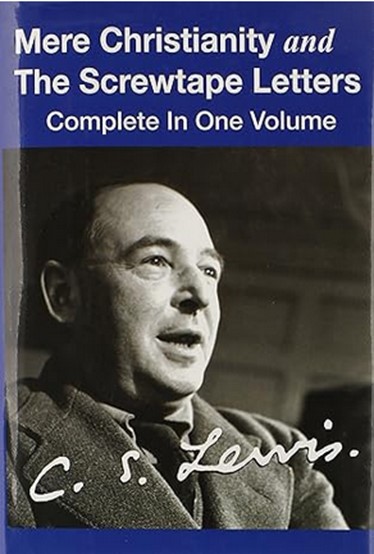
Mine is the Mere Christianity of CS Lewis. As an Episcopalian, you can be as Catholic, Orthodox, or Protestant as you want to be, it is the most ecumenical and tolerant of all the denominations, in my experience.
Once there was a public discussion on Why Did You Leave Your Religion? As expected, my answer was not welcomed, as most preferred bashing this or that denomination they recently abandoned.
What if you are pondering leaving your religious tradition for another? Unless you are leaving a dysfunctional, harmful cult, why not first really learn the history and beliefs of your ancestral religious tradition before leaving it for another? If you do, you will be reluctant to denigrate it, whether you leave or not.
Protestantism, Catholicism, Orthodoxy, and Judaism: Which Is True?
https://youtu.be/EAXyZtZpgYk
https://seekingvirtueandwisdom.com/protestantism-catholicism-orthodoxy-and-judaism-which-is-true/
Summary of CS Lewis’ Mere Christianity, WWII Ecumenical Broadcast: Morality Not Polemics
https://youtu.be/6-Hc4X0NN8k
https://seekingvirtueandwisdom.com/summary-of-cs-lewis-mere-christianity-wwii-ecumenical-broadcast-morality-not-polemics/
Our Reflections on Morality, Philosophy, and History: Ancient and Modern Classics
https://youtu.be/Si0TsO5bNr0
https://seekingvirtueandwisdom.com/our-philosophy-for-this-blog-reflections-on-ancient-and-modern-classics/
Q & A on Topic: Why Did You Leave Your Religion?
https://wp.me/pachSU-RC
https://seekingvirtueandwisdom.com/q-a-on-topic-why-did-you-leave-your-religion/
IS MORALITY MORE IMPORTANT THAN THEOLOGY?
Is morality more important than theology?
What is the core teaching of all mainline Judeo-Christian traditions?
The two-fold Love of God and neighbor is central:
- You must Love God with all of your heart and with all of your soul and all of your mind and with all of your all,
- And you must love your neighbor as yourself.
When Jesus exhorted this two-fold Love of God and neighbor, he was repeating the exhortations originally found in the Book of Deuteronomy, where the command to Love God is repeated over twenty times.
Hillel and Jesus, Reflections on Rabbi Telushkin’s Observations
http://www.seekingvirtueandwisdom.com/hillel-and-jesus-reflections/
Comparing Hillel and Shammai to Jesus
http://www.seekingvirtueandwisdom.com/comparing-hillel-and-shammai-to-jesus/
More Stories and Sayings of Hillel and Shammai
http://www.seekingvirtueandwisdom.com/more-stories-and-sayings-of-hillel-and-shammai/
Jesus, Hillel, and Shammai, Loving God and Neighbor
https://youtu.be/ygxn2qqGnOI
Medieval Jewish and Christian Commentators, My Gentile’s Defense of Judaism, Part 1
https://youtu.be/mN765l5O2f8
https://seekingvirtueandwisdom.com/medieval-jewish-and-christian-commentators-my-gentile-defense-of-judaism-part-1/
Loving God in Deuteronomy, My Gentile’s Defense of Judaism, Part 2
https://youtu.be/1f-rAs-rBI0
https://seekingvirtueandwisdom.com/loving-god-in-deuteronomy-and-a-gentiles-defense-of-judaism-part-2/
St Augustine applies this principle to Bible study. St Augustine teaches, “Whoever thinks he understands the Holy Scriptures, or any part of them, but interprets them in a way that does not build up this two-fold Love of God and love of neighbor, does not truly understand the Scriptures. If, on the other hand, a man draws a meaning from Scriptures that builds up the two-fold Love of God and love of his neighbor, although he does not precisely understand the exact meaning of the author, his error is not pernicious,” as he does not intend to deceive.
St Augustine further teaches us that if someone with a good heart and pure motives has a mistaken interpretation of Scripture, that “if his mistaken interpretation of Scripture tends to build up love,” “he goes astray in much the same way as a man who by mistake quits the high road, but yet reaches through the fields the same place to which the road leads.”[1]
St Augustine: On Christian Teaching, aka On Christian Doctrine, How To Read Scripture
http://www.seekingvirtueandwisdom.com/st-augustine-on-christian-teaching-how-to-read-scripture/
https://youtu.be/uQCnAJMPoos
I believe you should view the world through the lens of the two-fold Love of God and neighbor, and if someone says they prefer not to be “religious,” my preference is to restate this in a more NeoPlatonic form: Love and seek the Good, and love your neighbor as yourself. I also interpret moral philosophy through the lens of this two-fold Love, and I order my whole life around seeking this ideal.
Early Christians admired the moral teachings of the Roman Stoic Philosophers, especially Seneca, Epictetus, Rufus, Cicero, and even Marcus Aurelius, even though he likely tolerated the persecution of Christians. Many of their moral sayings parallel similar sayings in the Gospels and the Epistles. You can quote the Stoics when society frowns on quoting Bible verses, and quite often they are morally identical messages.
Major Roman Stoic Philosophers, My Favorite Maxims: Epictetus, Rufus, Seneca & Marcus Aurelius
https://youtu.be/E0qQgqGkoOE
https://seekingvirtueandwisdom.com/major-roman-stoic-philosophers-my-favorite-maxims-epictetus-rufus-seneca-marcus-aurelius/
Greek Stoic and Cynic Philosophers: My Favorite Maxims: Heraclitus, Antisthenes, Diogenes, and Zeno
https://youtu.be/rq3oRftjM4c
https://seekingvirtueandwisdom.com/greek-stoic-and-cynic-philosophers-my-favorite-sayings/
Modern Stoic Philosophers: My Favorite Maxims: Viktor Frankl, Nelson Mandela, and Others
https://youtu.be/rq3oRftjM4c
https://seekingvirtueandwisdom.com/modern-stoic-philosophers-my-favorite-maxims-viktor-frankl-nelson-mandela-and-others/
Summary of Platonic Dialogues on Love and Friendship, With Commentary by Copleston and Anders Nygren
https://youtu.be/cjXRXQc6Ff4
https://seekingvirtueandwisdom.com/summary-of-platonic-dialogues-on-love-and-friendship/
WHY SHOULD SENSIBLE, ORDINARY CHRISTIANS STUDY THE CHURCH FATHERS?
My deep fear is that if someone calls me a theologian, that they are implying that I am pursuing an abstract intellectual pursuit that is a great antiquarian hobby but that is totally irrelevant to a sensible, practical Christian.
Although it is true that many modern theologians and philosophers, starting roughly with Immanuel Kant, are a challenge to read, that is not true for the ancients. But if you put in the work, even these works can teach you valuable moral lessons. Kant’s teaching that there are moral categorical imperatives that you must follow regardless of the consequences is another core Christian teaching that has inspired me to stick to the moral path even when I am totally alone and criticized for my moral stand.
The ancient Church Fathers and Stoic philosophers are easy to read: they composed their works for the ordinary man. The ancients had no television or movies to watch, and no radios to listen to. Although the larger Roman cities had weekly chariot races or games in the Colosseum, and ancient Greece had periodic religious festivals with plays and public readings, the entertainment options were sparse compared to today.
This meant that when ancient Church Fathers like St Augustine and St John Chrysostom delivered their sermons, they were as entertaining as they were edifying. Indeed, the parishioners would have been disappointed if the sermons were shallow, happy messages only fifteen minutes long. They listened intently, memorizing what they could, so they could recite it later. Often, they debated the meaning among themselves. Nearly all ancient writings were meant to be read aloud, and many of the works of the early Church Fathers were transcribed sermons. The writings of the early Stoic philosophers are especially easy to understand, as is much of the New Testament writings.
My favorite modern preacher is the Presbyterian James Boice, who left behind half hour sermons and books expounding Genesis, the Psalms, the Minor Prophets, John, Romans, Ephesians, and more.
When modern readers read most English translations of the Platonic dialogues, they miss the moral sense of Platonism that influenced the lives of so many ancient Greeks and Romans. This moral sense of Plato is captured by the Robin Waterfield translations. Most translators always translate the Greek word for justice or morality as only justice, but Waterfield instead translates it either as morality or justice, depending on the context.
Plato’s Republic, Book 1, On Aging and Morality, a Better Word for Justice
https://youtu.be/JY1ILO3weZI
https://seekingvirtueandwisdom.com/platos-republic-book-1-on-aging-and-morality-a-better-word-for-justice/
The First Psalm celebrates the desire to study the Scriptures. The Church Fathers bring the Scriptures to life: they teach additional moral lessons we overlook since we have heard the stories and lessons so many times.
If you seek to Love God, if you seek to love your neighbor, why would you not seek to learn what it means to Love God, and how to love your neighbor? Why can’t we rely on the Holy Spirit to inspire us to see the true message of the Scriptures we are reading? Is that voice in our head really the Holy Spirit, or are we simply repeating to ourselves our preconceived notions of the meaning of the Scriptures? Why wouldn’t we want to challenge ourselves by reflecting on the thoughts of the Church Fathers and moral philosophers of the ages?
Psalm 1: The Law as Gospel? Church Fathers, Protestant Reformers, and Jewish Rabbis Comment
https://youtu.be/ZxSH9IoArLM
https://seekingvirtueandwisdom.com/psalm-1-the-law-as-gospel-church-fathers-protestant-reformers-and-jewish-rabbis-comment/
Are the teachings from the Church Fathers relevant? What can we learn from them that we may miss from the weekly fifteen-minute homily and our own personal reading of the Bible?
These are examples from the Decalogue of what I have learned from my study of the Ten Commandments, which have a three-fold progression: If you think virtuous thoughts, your speech will be virtuous, and if your thoughts and speech are virtuous, then your actions will be virtuous, and your motives will be pure.
All commandments can be framed in a negative or positive form, and as your faith matures, you will progress to the positive form. Stated positively, Do Not Covet can be restated as protecting your neighbor’s assets and family as if they were your own. The positive form of Do Not Murder is to love your neighbor. There is not a commandment: Do Not Lie, but rather it is stated: Do Not Bear False Witness Against Your Neighbor. The positive form is to protect your neighbor’s reputation, and Do Not Gossip. You should not tell the truth about your neighbor when speaking that truth harms them, damaging their reputation.
Playlist on: Do Not Slander:
https://www.youtube.com/playlist?list=PLJVlY2bjK8lhTnABTrLctnrK9JDtgwIZR
IS THEOLOGY MORE IMPORTANT THAN MORALITY?
You may object that St Paul himself teaches that Theology trumps Morality, since in many of his epistles he first expounds the need to believe in Jesus, and then he expounds the moral truths of Christianity. But he lived in a different world where Christianity was competing with paganism, and where many ancients were already living according to the moral codes of Stoicism and Judaism. Indeed, both Stoicism and Judaism paved the way for Christianity. Christianity advances past both. Indeed, Christianity is first Judaism clarified, and then Stoicism clarified. Furthermore, the many philosophical gymnastics of the Platonic dialogues simply collapse when you consider the two-fold Love of God and neighbor.
But in today’s modern world, we have lost our way; we no longer recognize the need to first love our neighbor, but yet we proclaim that we know and love Jesus. We even had the spectacle of our Vice-Presidential convert to Catholicism proclaiming that we should love our family and acquaintances first, and if we have any love left over, then we can love our neighbor! Pope Leo XIV demurs: That is not what St Augustine preached.
St Augustine’s Work, On Christian Teaching, and JD Vance, Order of Love
https://youtu.be/v7H684y9phs
https://seekingvirtueandwisdom.com/st-augustines-on-christian-teaching-and-jd-vance-order-of-love/
We have the spectacle of MAGA Christians cheering on ICE agents as they murder and deport innocent immigrants and citizens for the color of their skin. True, many are fools misled by the Fox News hosts who tell them these things don’t happen. But most are willingly misled, many believing that Democrats will burn in hell, and that somehow compassionate DEI policies are illegal and immoral. My argument is that if St Paul were living today, he would study the Ten Commandments backwards, starting with the commandments that teach us to love our neighbor.
Like the country song sings, you can’t Love God if you don’t love your neighbor.
Rhonda Vincent: You Don’t Love God If You Don’t Love Your Neighbor
https://www.youtube.com/watch?v=IR2rpVd5Lwo
My favorite Church Father is St Augustine because, in every major work, he explicitly teaches us that the two-fold Love of God and neighbor is the core Christian exhortation that underlines every Christian teaching. My favorite early Apostolic writing is the Didache because its very first verses proclaim the centrality of the two-fold Love of God and neighbor.
St Augustine on Catechizing the Uninstructed, Blog 1
http://www.seekingvirtueandwisdom.com/st-augustine-on-catechizing-the-uninstructed-blog-1/
St Augustine on Catechizing the Uninstructed, Blog 2
http://www.seekingvirtueandwisdom.com/st-augustine-on-catechizing-the-uninstructed-blog-2/
https://youtu.be/5Ys5lAhADg8
St Augustine on the Beatitudes from His Treatise, Our Lord’s Sermon on the Mount
https://youtu.be/xZeDjusUwPg
http://www.seekingvirtueandwisdom.com/st-augustine-on-the-beatitudes/
St Augustine on Concupiscence, Blog 1
https://seekingvirtueandwisdom.com/st-augustine-on-concupiscence-blog-1/
St Augustine on Concupiscence, Blog 2
http://www.seekingvirtueandwisdom.com/st-augustine-on-concupiscence-blog-2/
St Augustine on Concupiscence, Blog 3, Final Reflections
http://www.seekingvirtueandwisdom.com/st-augustine-on-concupiscence-blog-3-final-reflections/
Musonius Rufus on Concupiscence and Controlling the Appetites
http://www.seekingvirtueandwisdom.com/musonius-rufus-on-concupiscence-and-controlling-the-appetites/
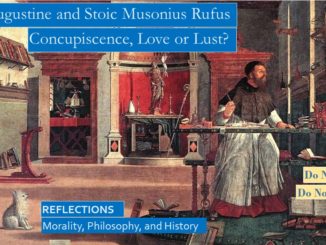
St Augustine, Stoic Musonius Rufus, & Ruth on Concupiscence: Love or Lust? Controlling the Passions
https://youtu.be/-wv6bVeG74A
Didache: Early Church Writing, Teachings of the Twelve Apostles
https://youtu.be/vcNK5_xpEh4
http://www.seekingvirtueandwisdom.com/didache-early-church-writing/
DISCUSSING THE SOURCES
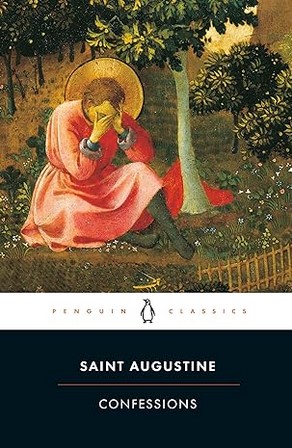
We highly recommend the books by CS Lewis, and his keystone work is Mere Christianity, which we reflected on in a series of videos and blogs. We encourage you to read a recent translation of St Augustine’s works, especially his Confessions and On Christian Teaching, as the Ante-Nicene Father translations are somewhat dated.
We have several reflections that are book reviews on the Ten Commandments, the Torah and Talmud, the history and theology of Trent and the Vatican Councils, and on the writings of the early and apostolic Church Fathers, and on the Greek and Roman historians and moral philosophers.
[1] St Augustine, “On Christian Doctrine,” In the Nicene and Post-Nicene Fathers, First Series, Volume 2, translated by Rev JF Shaw (Boston: Hendrickson Publishers, 1994, first published 1887), Book 1, Chapter 36, p. 533.

Be the first to comment