Catholic, Orthodox, Protestant, and Jewish Bibles, Commentaries, and Cultural Backgrounds
Biblical Interpretation

Catholic, Orthodox, Protestant, and Jewish Bible Translations, Commentaries, and Cultural Backgrounds

The eternal spiritual battle is this struggle: Who is going to influence whom? Will the culture influence the church, or will the church influence the culture? If you prefer that the culture would influence your morality, then you can ask Merriam-Webster Dictionary for the cultural definition of Biblical words. If you would rather that the church would influence your morality, then you should ask the Vines Expository Dictionary for the Biblical definition of Biblical words.
Although Vines is a Protestant resource, all Christians can consult its definitions, since it quotes the Scriptures that support their definitions. Another resource is Strong’s Concordance, which tracks where each Greek and Hebrew word appears in the Bible. If necessary, you can discover the Greek word for each word in each verse using an Interlinear Bible.
What is the meaning of the central Christian word for love? Agape and Eros by the Lutheran Theologian Anders Nygren, written between the two World Wars, traces how the Greek words LOVE, agape and eros, evolved from the ancient Greek philosophers and the New Testament until modern days. […]
Biblical Interpretation: How the Ancient World and Modern World Differ
Biblical Interpretation

Biblical Interpretation: How the Ancient World and Modern World Differ

St Augustine did not believe that the Bible was always literally true. He teaches: “It is a wretched slavery which takes the figurative expressions of Scripture in a literal sense,” because the Bible exhorts: “the letter kills, but the spirit gives life.” What does St Augustine mean by figurative? When the Word of God in Scripture does not, “when taken literally, refer either to purity of life or soundness of doctrine, it can be seen as figurative.” St Augustine continues, “Purity of life refers to the Love of God and our love for our neighbor, whereas soundness of doctrine refers to the knowledge of God and our neighbor.”
St Augustine agrees with Origen and many other Church Fathers, that whenever the literal reading of Scriptures, particularly the Old Testament, appears to violate the two-fold Love of God and neighbor, then it must be read allegorically. […]

Psalm 1 Law as Gospel
Biblical Interpretation

Psalm 1: The Law as Gospel? Church Fathers, Protestant Reformers, and Jewish Rabbis Comment

Rabbi Joseph Telushkin observes that, rather than describing what a “virtuous person does, the First Psalm describes what a virtuous person avoids: association with the wicked.” The assumption is “that bad companions generally assert a stronger influence than do good ones.” This psalm does not describe the righteous who avoid the wicked as good or wise. Rather, they are described as happy.” […]

My Favorite Commentaries on the Psalms
Book Reviews and Miscellaneous

My Favorite Commentaries on the Psalms

One excellent example of reading the Bible allegorically is the verse in Psalm 137 where the Jews are encouraged to bash the brains of Babylonian babies against the rocks. The Church Fathers equate these babies with our small sins, that we should strive to be perfect, even as our Heavenly Father is perfect, bashing both our large and small sins.
We must remember that the Psalms are poetry, and Hebrew poets are like poets in any language, they sometimes use obscure words for better rhythm. This means the Psalms pose more translation problems than most of the books in the Bible. If you cannot make sense of a passage, it may be that scholars are not quite sure what the original passage meant. […]

The Decalogue in the Torah and the Book of Legends, Do Not Steal
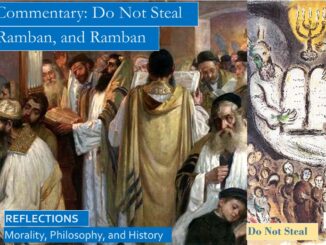
Command 7 Do Not Steal

The Decalogue in the Torah and the Book of Legends, Do Not Steal

The rabbis in the Book of Legends, which are moral excerpts from the Talmud, teach that there are four kinds of men:
The average man, like those in Sodom, who says, “Mine is mine, and your is yours.”
The ignorant man who says, “Mine is yours, and yours is mine.”
The pious man who says, “Mine is yours, and yours is yours.”
The wicked man who says, “Yours is mine, and mine is mine.” […]

Book of Ruth: Historical-Critical Commentaries. Was Ruth an Old Testament Illegal Alien?
Bible Stories and Parables

Book of Ruth: Historical-Critical, Patristic, and Rabbinical Commentaries. Was Ruth an Old Testament Illegal Alien?

Was Ruth an Old Testament version of an illegal alien? Marriages between Jews and Moabites were definitely illegal under Jewish law, and Ruth was seen as a sojourner, which is the Biblical term for immigrant, or alien. Ancient Jews were just as suspicious of Moabites just as many Americans are suspicious of Mexicans. Ruth emigrates to Judah because of economic hardship, just as hardship drives many Mexicans to seek to enter the United States.
Is the term illegal alien a misnomer? Are illegal aliens criminals because they are doing illegal things? We can all agree that someone who robs a bank or steals a car or shoots or beats his neighbor is a criminal, but is someone who is fleeing gangs who threaten their lives a criminal? Is someone who flees grinding poverty to take his chances swimming the Rio Grande truly a criminal? […]

Loving God in Deuteronomy, and a Gentile’s Defense of Judaism, Part 2
Judaism

Loving God in Deuteronomy, and a Gentile’s Defense of Judaism, Part 2

When studying the rabbinical commentaries on Deuteronomy, I was struck by the number of times the commandment to Love God was repeated in various forms, including the commandment to Fear God, which is roughly equivalent, so I decided to count them, there are about twenty repetitions. This was surprising to me as a Christian, for as St Paul exhorts, “the letter” of the law “kills, but the Spirit gives life.” […]

Medieval Jewish and Christian Commentators, My Gentile Defense of Judaism, Part 1
Judaism

Medieval Jewish and Christian Commentators, My Gentile Defense of Judaism, Part 1

At roughly the time of Jesus, an inquirer requested of both Rabbi Shammai and Rabbi Hillel, “Convert me to Judaism on condition that you will teach me the entire Torah while I stand on one foot.” Shammai pushed the man away with the building rod he was holding. Undeterred, the man then came before Hillel with the same request. Hillel responded, “That which is hateful unto you, do not do unto your neighbor. This is the whole Torah; all the rest is commentary. Now, go and study.” […]

Book Reviews and Miscellaneous

Book Reviews, Commentaries of Torah and Talmud, Medieval Rabbis and Modern Rabbis and Scholars

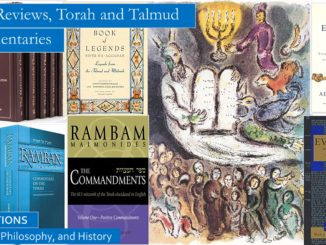
We encourage Christians to study the moral lessons of the Torah, we do not hold to the dual-covenant belief that the laws in the Torah have been superseded. St Irenaeus in his influential work, On Heresies, teaches us that the moral laws of the Torah are still binding on Christians, and that the dietary and festival laws that have been superseded can be read as teaching moral lessons allegorically. […]