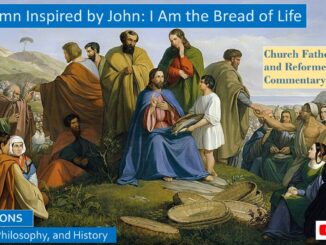
The Hymn Inspired by John I AM the Bread of Life
Bible Stories and Parables

The Hymn inspired by John, I Am the Bread of Life, with Commentary by Church Fathers and Reformed Preachers

John Chrysostom teaches us: “Jesus calls this the true bread, not because the miracle of the manna was false, but because it was a type and not the very truth itself.” “After Jesus says, ‘Moses did not give,’ he does not say, ‘I give,’ but says that the Father, and not Moses, gives.”
“When they heard this, the people replied: ‘Give us this bread to eat.’ They still thought it was something material, and they yet expected to satisfy their appetites, and so they quickly ran to him. What does Christ do? Leading them on little by little, he says, ‘The bread of God is he who comes down from heaven and gives life to the world.’” […]

Literature and Myths

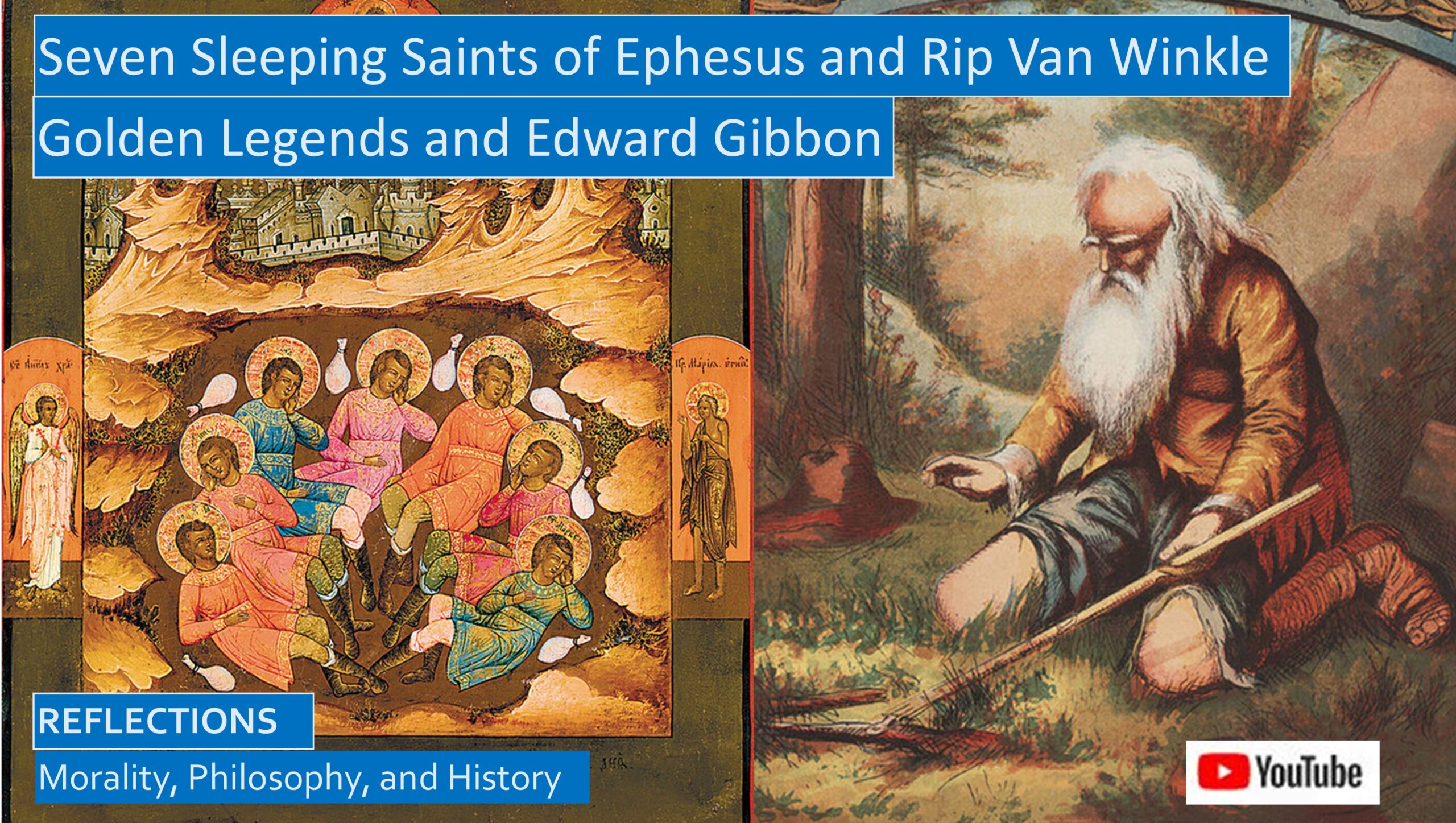
Comparing Seven Sleepers’ Saint Golden Legend to Rip Van Winkle, and Edward Gibbons’ Observations

Gibbon wonders what it would be like for eons to pass quickly by while one is asleep, especially for the “two centuries between the reigns of the pagan Decius and the Christian emperor Theodosius the Younger. During this period, the seat of government has been transported from Rome to a new city,” Constantinople, “on the banks of the Thracian Bosphorus,” with a loss of the pagan military spirit. “The throne of the persecuting Decius was filled by a succession of Christian and orthodox princes, who had extirpated the fabulous gods of antiquity. Instead, the public devotion of this new age exalted the saints and martyrs of the Catholic Church on the altars of Diana and Hercules. The union of the Roman Empire was dissolved: its genius was humbled in the dust, and armies of unknown barbarians, issuing from the frozen regions of the North, had established their victorious reign over the fairest provinces of Europe and Africa.” […]

Spiritual Proof That Jesus Lives, The Famous Hymn, He Lives in My Heart
Bible Stories and Parables

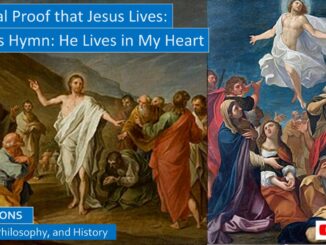
Spiritual Proof That Jesus Lives, The Famous Hymn: He Lives in My Heart

Bob De Moor, a Christian Reformed pastor, recalled an incident from many decades ago when he was a delegate to his denomination’s convention, where he was assigned to the advisory committee that evaluated which hymns should be included in their hymnal. He remembers:
“The most difficult decision, one we debated endlessly, was whether or not to advise synod to include a perennial favorite hymn, He Lives. Throughout the process, the song had been included, tossed out, reintroduced, and tossed out again. Reason? The closing line in the refrain goes like this: ‘You ask me how I know he lives? He lives within my heart.’”
Bob De Moor continues: “That line was perceived by many to be subjective, basing our belief in the resurrection on our own (subjective) experience rather than on the (objective) Word of God that clearly tells us that Jesus rose. Others argued that the hymn does not actually deny the importance of the objective truth of Scripture, but that it merely highlights the reality that the Holy Spirit also confirms the truth of the resurrection in our personal experience, or in our hearts. But, of course, the song doesn’t actually say that.” […]

Protestantism, Catholicism, Orthodoxy, and Judaism: Which Is True
christianity

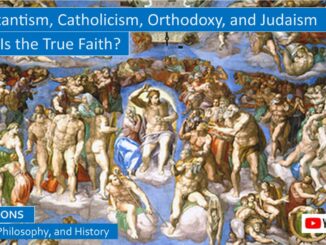
Protestantism, Catholicism, Orthodoxy, and Judaism: Which Is True?

We agree with CS Lewis when, in his Preface to Mere Christianity, he states that “the reader should be warned that I offer no help to anyone who is hesitating between two Christian denominations. You will not learn from me whether you ought to become an Anglican, a Methodist, a Presbyterian, or a Roman Catholic.” CS Lewis compares his Mere Christianity to a central hall opening up to many rooms, representative of the various denominations, saying that this hall is a place to wait while you try the different doors.
CS Lewis continues: “There is no mystery of my own position. I am a very ordinary layman of the Church of England, not especially high, nor especially low, nor especially anything else.” […]

Joys of Successful Aging, by Evangelical George Sweeting, Moody Bible Institute
Aging

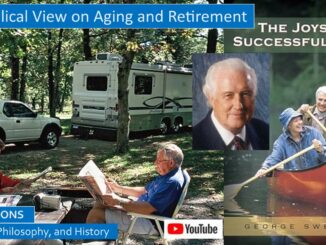
Joys of Successful Aging, by Evangelical George Sweeting, Moody Bible Institute

George Sweeting writes: “Age adds maturity and richness to life. Age smooths the rough edges of life and adds gentleness and compassion. They say: ‘The older the violin, the sweeter the music.’ Some speak of seniors as ancient, faded, frail, shriveled, senile, withered, wrinkled, and worthless!” I prefer to say seniors are “experienced, dependable, mature, patient, seasoned, steady, wise, tested, survivor, and veteran!” […]

Parable of Lazarus and the Rich Man: Church Fathers, Reformers, and Commentators
Bible Stories and Parables

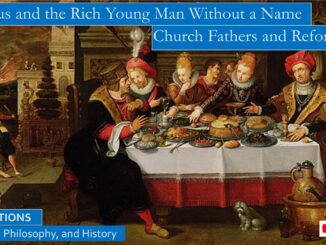
Parable of Lazarus and the Rich Man: Church Fathers, Reformers, and Commentators

James Boice teaches us: “It is true that the rich man’s riches worked to his hurt, for he lived for those and nothing else. It is hard for the rich to enter heaven, as Jesus said elsewhere in Luke. It is also true that Lazarus’ poverty worked to his spiritual good, for lacking earthly joys and comfort he turned his eyes to heaven and sought divine consolation.”
James Boice remarks on the contrasts in the parable. Spiritually, “the rich man was actually poor, and the poor man was actually rich. This contrast continues after their death: the poor rich man grew poorer, and the rich poor man grew richer.” “The final contrast is between the hopelessness of the rich man’s condition after death and the hopefulness of his condition before. After death there is no possibility of change, but in this life there is.” […]

Faith, Hope, Charity, and Love in CS Lewis’ Mere Christianity: The Theological Virtues
CS Lewis

Faith, Hope, Charity, and Love in CS Lewis’ Mere Christianity: The Theological Virtues

CS Lewis teaches us, “Charity means Love in the Christian sense. But love, in the Christian sense, does not mean an emotion. It is a state not of the feelings but of the will; that state of the will which we have naturally about ourselves and must learn to have about other people.”
“Do not waste time bothering whether you ‘love’ your neighbor; act as if you did.” Be kind to your neighbor, and often you will like and love him more. But if they do not reciprocate, or are openly hostile, love them anyway, and help them if you can. We always find it easier to love, or like, those who are courteous towards us. […]

Martin Luther, Do Not Steal, Lutheran Catechisms, and German Peasants' Revolt
Command 7 Do Not Steal

Martin Luther, Do Not Steal, Lutheran Catechisms, and German Peasants’ Revolt

Luther concludes by restating the positive and negative forms of the commandment, noting that tolerating theft by others by doing nothing also is a moral violation. “On one hand, we are forbidden to do our neighbor any injury or wrong in any way imaginable, whether by damaging, withholding, or interfering with his possession and property. We are not even to consent to or permit such a thing but are rather to avert and prevent it. On the other hand, we are commanded to promote and further our neighbor’s interests, and when he suffers want, we are to help, share, and lend to both friends and foes.” […]

Decalogue: Do Not Slander, Catholic Catechism 2465-2503, and St Thomas Aquinas
Command 8 Do Not Bear False Witness

Decalogue: Do Not Slander, Catholic Catechism and St Thomas Aquinas CCC 2465-2503

The Eight Commandment in the Catholic Catechism exhorts, “You shall not bear false witness against your neighbor.” Many people shorten this commandment to, You shall not lie, and although lying is usually sinful, this is a shallow understanding of this commandment. The positive form of the commandment is we should guard the reputation of our neighbor, it is possible to slander someone while speaking the truth about them. Gossip can be harmful whether it is truthful or not. […]

Erasmus In Praise of Folly
Catholic Middle Ages and Beyond

Erasmus, Luther’s Predecessor, The Praise of Folly

Folly reminds us of the tension between the vulgar and the devout. “The pious, since they aim primarily at what is almost alien to the crass senses, are numbed and stunned by the sensual. In contrast, the ordinary person gravitates towards them.” Thus, many negligent people value bodily sensations such as “sex, love of food, sleep, anger, pride, and envy. The pious wage a constant war against these urges, whereas the vulgar crowd considers that without them life has no real existence.” […]