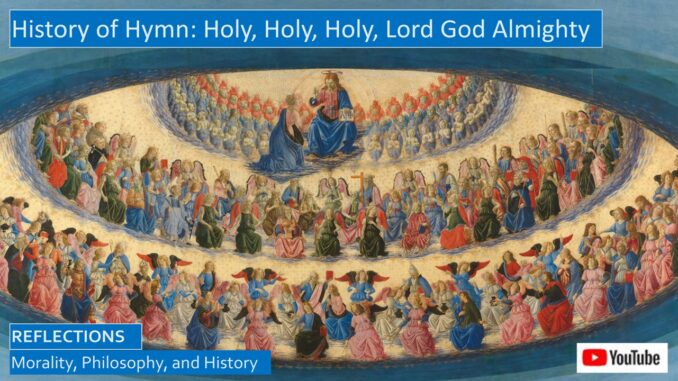
A hymn often sung during the seasons of Easter and Pentecost is:
Holy, Holy, Holy! Lord God Almighty!
Early in the morning our song shall rise to Thee;
Holy, Holy, Holy! Merciful and Mighty!
God in Three Persons, blessed Trinity![1]
This echoes the verses in Revelation 4, where the creatures surrounding the throne of God sing without ceasing:
“Holy, holy, holy,
the Lord God the Almighty,
who was and is and is to come.”[2]
Which echoes the hymns sung by creatures and angels at the throne of God in the Book of Isaiah:
“Holy, holy, holy is the Lord of hosts;
the whole earth is full of his glory.”[3]
YouTube video for this blog: https://youtu.be/EroetX4pOeU
INSPIRATIONS FROM CHURCH FATHERS AND REFORMED PREACHERS
How can the Church Fathers and Reformed preachers inspire us by their commentary on these two verses? St John Chrysostom reminds us that the Scriptures primarily inspire. “Do you think that the angels in heaven talk over and ask each other questions about the Divine Essence? By no means!”
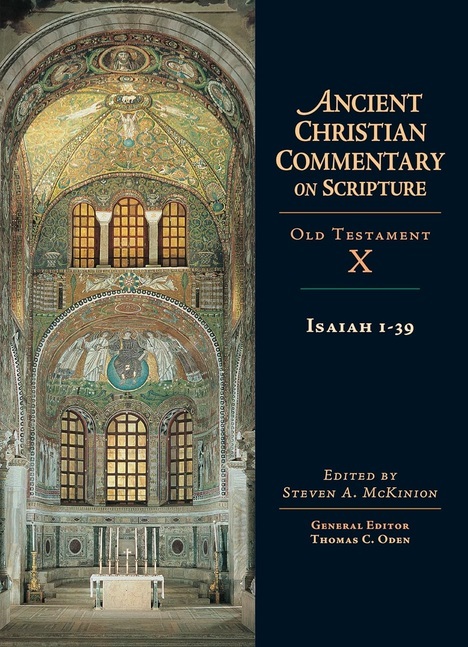
“What are the angels doing? They give glory to God, they adore him, they chant without ceasing their triumphal and mystical hymns with a deep feeling of religious awe.”[4]
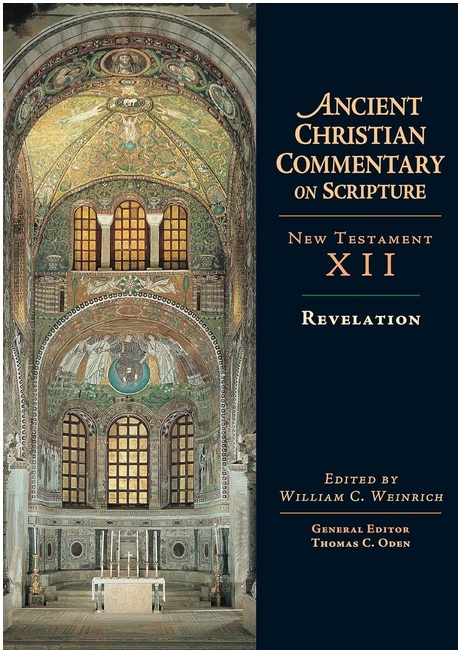
St Athanasius teaches us that the Trinity is praised when those before the throne of God “offer their praises three times, saying ‘Holy, Holy, Holy,’ proving that the three Persons are perfect, just as in say, ‘Lord God the Almighty,’ they declare the One Essence.”[5] Several other Church Fathers draw this analogy.
Tertullian teaches us: “Certainly it is right that God should be blessed in all places and at all times because it is every person’s duty to be ever mindful of his benefits, but this wish takes the form of a benediction. Moreover, when is the name of God not holy and blessed in itself, when of itself it makes others holy?”[6]
St Augustine asks us what we will do in Heaven? Will we sleep? Won’t we be bored? He answers that in heaven “there is no sleep because there is no weariness.” We must not be afraid of boredom. In heaven, “can we tired of being well?” “Will you tire of immortality?” What will we do? With the “seraphim we will say without ever getting bored: ‘Holy, holy, holy, Lord God of Hosts.”[7]
St Jerome teaches us that on the mountain, “Moses had prayed to ask the Lord to spare this sinful people who had worshiped the Golden Calf. The Lord responded: ‘I will forgive them. Yet I live, and my name lives, for all the earth will be filled with my glory.”[8]
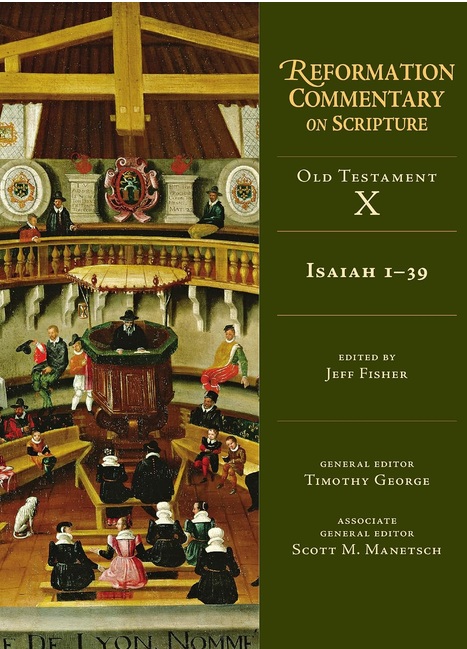
The Reformed Preacher Dietrich Schnepff addresses God: “You are holy, you are truly holiness, righteousness, and innocence itself, in a most holy Triad. You share your righteousness and holiness with all those who believe. You will plead all those things to the Father for humans who are deprived of the glory of God.”[9]
The Reformed Preacher Johannes Oecolampadius teaches us: “The Lord commanded us to pray this song when he teaches us the petition, ‘Hallowed be your name’” in the Lord’s Prayer. “The angels sing, ‘Holy, Holy, Holy, and we who confess that we are sinners pray to be sanctified.”[10]
The hymn praises the Trinity of God in three persons. How can one God be three persons? Are these rather three personalities?
This is the classical Augustinian explanation of the Trinity:
- The Father is truly God.
- The Son is truly God.
- The Holy Spirit is truly God.
- The Father is not sometimes the Son.
- The Father is not sometimes the Holy Spirit.
- Finally, God is One.
St Augustine explains that we have God the Father, God the Son, and God the Holy Spirit, but “there are not three Gods in that Trinity, but One God and one substance.” St Augustine suggests that the tree is another metaphor for the Trinity. The tree is made of roots and trunk and branches, “the root is wood, and the trunk is wood, and the branches are wood, but we do not speak of three woods, but only one tree.”[11]
St Augustine’s Treatise on the Faith and the Apostles’ Creed, De Fide et Symbolo
https://youtu.be/np21ooy5Nwg
http://www.seekingvirtueandwisdom.com/st-augustines-treatise-on-the-faith-and-the-creed/
QUICK BIOGRAPHY OF THE AUTHOR, BISHOP REGINALD HEBER
This hymn was written by the Anglican Bishop Reginald Heber. This is one of the most beloved of the roughly hundred hymns that he penned in the early 1800s, when the Anglican authorities frowned on singing hymns in church, except for the metrical chanting of Psalms. By closely reflecting the biblical verses, he sought to avoid the excessive emotionalism that Anglican authorities hoped to discourage. The Brightest and Best is another of his acclaimed hymns.
Richard Heber was the son of a cleric and wealthy landowner. He gained fame as a poet at Oxford, and like many wealthy young men of his time, he took a Grand Tour of Europe, including extended visits with royalty and officials in Central Europe, Russia, and Scandinavia. The chaos of the Napoleonic Wars prevented him from visiting France and Italy.
Heber pursued his literary interests, including composing hymns, while serving as a parish priest for many years. Later in life, he was appointed as bishop of Calcutta, India, seeking to improve the spiritual life and living conditions of his flock. He traveled the countryside, but due to his workload, the hostile climate, and his poor health, he passed away three years after his appointment in India.[12]
OTHER SPIRITUAL AND THEOLOGICAL REFERENCES IN THIS HYMN
The third stanza sings how the darkness hides the Holy Trinity:
“Holy, Holy, Holy! though the darkness hide Thee,
Though the eye of sinful man, thy glory may not see:
Only Thou art holy, there is none beside Thee,
Perfect in power in love, and purity.”
How can the darkness hide the Holy Trinity? According to the poetry of St Denis, which is St Thomas Aquinas’ appellation, who is known to scholars as Pseudo-Dionysus the Areopagite, states that the Divine light that we cannot accurately perceive is so luminous that we perceive it as darkness, as painted in his Mystical Theology, his shortest and most accessible work. Although his works are deprecated by many modern scholars, they deeply influenced medieval Catholic mystics and theologians, including St Thomas Aquinas, and continue to influence Orthodox scholars today.
Pseudo-Dionysius the Areopagite, Influence of Neo-Platonism on Mystical Christianity
https://youtu.be/wlr55ddb-lc
https://seekingvirtueandwisdom.com/pseudo-dionysius-the-areopagite-influence-of-neo-platonism-on-mystical-christianity/
He influenced St John of the Cross’ concept of the Dark Night of the Soul, which we perceive as truly a dark place, particularly when we truly feel abandoned by God during the trials we face in our lives. Mystical monastics picture their dark night of the soul as periods of spiritual aridity, when their prayers for their hearts to be touched by the Divine Light are not heard, when the spiritual joy they once experienced is subdued.
Dark Night of the Soul, by St John of the Cross, and Mystical Theology of Pseudo-Dionysus
https://youtu.be/6VffPIzfT-o
https://seekingvirtueandwisdom.com/dark-night-of-the-soul-by-st-john-of-the-cross-and-mystical-theology-of-pseudo-dionysus/
We sing in the second stanza of this hymn:
“Holy, Holy, Holy! All the saints adore Thee,
Casting down their golden crowns around the glassy sea;
Cherubim and seraphim falling down before Thee,
Which wert, and art, and evermore shalt be.”
Who are the Cherubim and Seraphim? These cryptic descriptions are further elaborated in the speculations by St Denis in his work, Celestial Hierarchy, which deeply influenced Orthodox and Medieval Scholasticism and Mysticism. The first chapter of Ezekiel has fantastic descriptions of the creatures and angels who surround the throne of the Lord,[13] and some of this imagery is duplicated in the Book of Revelation. Icons struggle to depict the more fantastical descriptions of the higher orders of angels.
Which angels are named in the Bible? Gabriel appeared to the Virgin Mary, and Michael is described as an archangel, while Raphael appears in the Book of Tobit. The Vatican has recently discouraged the faithful from assigning additional names to the Holy Angels.[14] The Orthodox Church and the Early Church teach that the pre-incarnate Jesus appears as an angel in the Old Testament.[15]
The fourth and final stanza of this hymn sings:
Holy, holy, holy! Lord God Almighty!
All thy works shall praise thy name in earth, and sky, and sea;
Holy, Holy, Holy! merciful and mighty,
God in Three Persons, blessed Trinity![16]
Here we praise God’s works in his creation, in the earth, sky, and sea. In his Confessions, St Augustine celebrates the depiction of the Creation in Genesis. Many modern readers foolishly skip these final chapters to their detriment. After St Augustine describes his conversion to the true faith, he then describes how he understands his proper understanding of the Creation story.
The Creation, for St Augustine, signifies God’s Love for man, just as sending his Son to live among us signifies his Love of man. St Augustine prays to God, “At the beginning of creation you said, ‘Let there be light, and the light began.’” “And it became light, not simply by existing, but by fixing its gaze upon you and clinging to you, the Light which shone upon it. It owes to your grace, and to your grace alone, both the gift of its very existence and the gift of a life that is lived in happiness.”[17]
Thus, the Creation is also a metaphor for us living a godly life, as Jesus exhorts us in the Sermon on the Mount, “You are the light of the world. A city set on a hill cannot be hidden. Nor do men light a lamp and put it under a bushel, but on a stand, and it gives light to all in the house.”[18]
How can the light shine in our lives? St Augustine prays, “since your Spirit moved over the waters, your mercy did not abandon us in our misery. You said, ‘Let there be light.’ You also said, ‘Repent; for the kingdom of heaven is at hand.’ You told us to repent. You commanded light to be made.” So, to St Augustine, repentance is light.”[19]
St Augustine’s Confessions, Creation in Genesis, Manicheism, and Pagan Myths, Books 11 Through 13
https://youtu.be/Ff-XsE5CuSo
https://seekingvirtueandwisdom.com/st-augustines-confessions-creation-in-genesis-manicheism-and-pagan-myths-books-11-through-13/
A more recent hymn has been coined by Don Moen in 1987:, Worthy, You Are Worthy.[20] This was inspired by the final verses in Revelations 4:
“You are worthy, our Lord and God,
to receive glory and honor and power,
for you created all things,
and by your will they existed and were created.”[21]
ISAIAH: FEARFUL OF ENCOUNTERING GOD WITH UNCLEAN LIPS
Immediately following this verse of praise, Isaiah is overcome by dreadful fear when he realizes that he, a man of unclean lips, is in the awesome presence of the perfect and righteous God.
Isaiah proclaims:
“Woe is me! I am lost, for I am a man of unclean lips, and I live among a people of unclean lips; yet my eyes have seen the King, the Lord of hosts!”
Then one of the seraphs flew to me, holding a live coal that had been taken from the altar with a pair of tongs. The seraph touched my mouth with it and said: ‘Now that this has touched your lips, your guilt has departed and your sin is blotted out.’”[22]
We slander when our lips expressly slander the reputation of our neighbor, but we also slander when we fail to correct a false slander and fail to defend the reputation of our neighbor.
Do Not SLANDER: Teachings from the Medieval Rabbis, Rashi, Rambam, Ramban, the Torah and Talmud
https://youtu.be/KvKOCyREmQA
http://www.seekingvirtueandwisdom.com/the-decalogue-in-the-torah-blog-6-do-not-bear-false-witness-against-your-neighbor/
Martin Luther, Do Not Slander, Lutheran Catechisms
https://youtu.be/jM2FrvyKsbk
https://seekingvirtueandwisdom.com/luther-on-do-not-bear-false-witness-against-your-neighbor/
Do Not Slander: Dr Laura and Her Rabbi Stewart Vogel on Ten Commandments
https://youtu.be/tlTymS2Bxxo
http://www.seekingvirtueandwisdom.com/dr-laura-and-her-rabbi-on-not-bearing-false-witness-against-your-neighbor/
St Nicodemus the Hagiorite, Do Not Bear False Witness, Do Not Slander
https://youtu.be/N7GmAMl0sDg
https://seekingvirtueandwisdom.com/st-nicodemus-the-hagiorite-do-not-bear-false-witness-do-not-slander/
Several Church Fathers agree that Isaiah feels his lips are unclean not for what he proclaimed, but for the prophecies he has not proclaimed, when he has not admonished the people of Israel for their sins.
Notably, St Jerome teaches us: “According to the Hebrew, Isaiah cries out in anguish and says, ‘Woe is me because I have held my peace,’” or in the notes, “I have kept silent.” This interpretation makes sense because Isaiah then proclaims: “I am a man of unclean lips, and I live among a people of unclean lips!”
St Jerome continues, “Because of his virtues, Isaiah deserved to enjoy the sight of God, and, because of his awareness of his sins, he confessed that his lips were unclean. Not because he had said anything that was contrary to the will of God, but because he had held his peace, deterred either by fear or modesty, and because he had not exercised the prerogative of a prophet, of condemning a sinful nation.” “If we keep silent about the truth, we are certainly committing a sin.”[23]
When, as Christians, we seek to be the personal friend of Jesus, we lose the sense of awe when standing in the presence of God. Sahdona cautions us: “Let us tremble at the magnitude of the sight of the ineffable One and at the sound that ceaselessly utters the praise of the hidden Being. And let us be filled with awe and trembling, falling on our faces in fear before him. Let us recognize our earthborn nature. Let us be aware of the base character of the dust we are made from.”[24]
St Gregory the Great teaches us: “Purity of heart and simplicity are most precious in the sight of Almighty God, who is fully pure and simple in nature. Set apart from the ways of the Lord, the servants of God are strangers to its vain talk and thus avoid disturbing and soiling their minds in idle conversation.” “Grieving that his own lips are unclean, Isaiah shows us that he contracted this defilement by living among a people with unclean lips.”[25]
St Cyril of Alexandria prays: “Let our lips be touched by the divine coal, which burns away our sins and consumes the filth of our transgressions. May it make us zealous by the Spirit.”[26]
St John of Damascus prays: “With our eyes, lips, and faces turned towards it, let us receive the divine burning coal, so that the fire of the coal may be added to the desire within us to consume our sins and enlighten our hearts.” Just as “this coal was not plain wood but wood joined with fire, may the bread of communion e not plain bread, but bread joined with the Godhead.”[27]
The Reformed Preacher Konrad Pellikan teaches us: “The coal, or fire, signifies the zealous speech of the Lord, the fervent desire to bless the faithful, and the word of rebuke to burn up the vices of the nations.”
“Like a sacrament, the angel, the minister of God, touches the lips of the prophet with a coal, while at the same time the grace of God pardons the sins of the lips, and the divine Spirit saturates the mind to receive the word of the Lord and to preach it magnanimously to the kings and nations.”[28]
Isaiah continues: “Then I heard the voice of the Lord saying, ‘Whom shall I send, and who will go for us?’ And I said, ‘Here am I; send me!’”[29]
St Jerome observes: “Isaiah offered himself for ministry by the grace of the Lord with which he was cleansed, not by his own merit.”[30]
This echoes the message that David proclaims in Psalm 51 when he is assured that the Lord will forgive him for the many sins he committed, including envy, adultery, slander, and murder, when he pursued Bathsheba:
“Create in me a clean heart, O God,
and put a new and right spirit within me.
Do not cast me away from your presence,
and do not take your holy spirit from me.
Restore to me the joy of your salvation,
and sustain in me a willing spirit.
Then I will teach transgressors your ways,
and sinners will return to you.”[31]
These are the first in a series of reflections on notable hymns that have interesting histories. We are also initiating a series of reflections on the Psalms.
Spiritual Proof That Jesus Lives, The Famous Hymn: He Lives in My Heart
https://youtu.be/qa3geXkZvzY
https://seekingvirtueandwisdom.com/spiritual-proof-that-jesus-lives-the-famous-hymn-he-lives-in-my-heart/
The Hymn inspired by John, I Am the Bread of Life, with Commentary by Church Fathers and Reformed Preachers
https://youtu.be/cFMYZtDftX0
https://seekingvirtueandwisdom.com/the-hymn-inspired-by-john-i-am-the-bread-of-life-with-commentary-by-church-fathers-and-martin-luther/
Psalm 71: Encouraging Us In Our Old Age
https://seekingvirtueandwisdom.com/psalm-71-encouraging-us-in-our-old-age/
https://youtu.be/NrzVItznE1E
Psalm 137: Should We Bash the Babylonian Babies Against the Rocks? Spiritual and Historical Interpretations
https://youtu.be/wRT68KfvxhU
https://seekingvirtueandwisdom.com/psalm-137-should-we-bash-the-babylonian-babies-spiritual-and-historical-interpretations/
DISCUSSING THE SOURCES
We have consulted both the Ancient Commentary and the Reformation Commentary on Scripture published by the Intervarsity Press. Unfortunately, the Reformation Commentary series has been discontinued with many unfortunate gaps, they have no volume for the Book of Revelation.
Who are some of the more obscure Church Fathers and Reformation Preachers quoted? Both are included in the appendices, plus we will add footnotes for whenever they are mentioned in Wikipedia.
Sahdona was a seventh-century Syrian Bishop who participated in the Myaphysite debates on whether Christ had both a divine and a human nature, or had only one nature, which is the position of the Myaphysite churches in Egypt and North Africa. He is renowned for his voluminous Book of Perfection, which we quoted from.[32] We could not locate an English copy of this forgotten classic.
Konrad Pellikan was a sixteenth-century German humanist and theologian who taught both Greek and Hebrew in a Franciscan monastery. He was a moderate who gradually converted to the theology of Erasmus and Zwingli. He was a competent, though not brilliant, theologian.[33]
Johannes Oecolampadius was a German theologian who disputed with Erasmus, Martin Luther, and Zwingli. He obtained a doctorate in theology from the University of Basel, and was closest to Zwingli.[34]
Dietrich Schmepff was a sixteen-century pastor and theologian.[35]
[1] https://en.wikipedia.org/wiki/Holy,_Holy,_Holy!_Lord_God_Almighty
[2] https://www.biblegateway.com/passage/?search=revelations%204%3A8&version=NRSVCE
[3] https://www.biblegateway.com/passage/?search=isaiah%206%3A3&version=NRSVCE
[4] St John Chrysostom, Against the Anomoeans 1.35, Ancient Christian Commentary on Scripture, Old Testament, Volume X, Isaiah 6 (Downers Grove, IL: InterVarsity Press, 2004), p. 50.
[5] St Athanasius, On Luke 22, Ancient Christian Commentary on Scripture, New Testament, Volume XII, Revelation 4 (Downers Grove, IL: InterVarsity Press, 2005), p.67.
[6] Tertullian, On Prayer 3.2-3, Ancient Christian Commentary on Scripture, New Testament, Volume XII, Revelation 4, p.67.
[7] St Augustine, Sermon 211A.2, Ancient Christian Commentary on Scripture, Old Testament, Volume X, Isaiah 6, p. 50.
[8] St Jerome, Commentary on Isaiah, Ancient Christian Commentary on Scripture, Old Testament, Volume X, Isaiah 6, p. 51.
[9] Dietrich Schmepff, Paraphrase of Isaiah 6:3, Reformation Commentary on Scripture, Old Testament, Volume Xa, Isaiah 6 (Downers Grove, IL: InterVarsity Press, 2024), p. 83.
[10] Johannes Oecolampadius, The Enchiridion, Reformation Commentary on Scripture, Old Testament, Volume Xa, Isaiah 6, pp. 83-84.
[11] St Augustine, “On Faith and the Creed,” In the Nicene and Post-Nicene Fathers, First Series, Volume 3, translated by Rev SDF Salmon (Boston: Hendrickson Publishers, 1994, first published 1887), Book 1, pp. 321-333, the Retractions are discussed in pp. 317-318.
[12] https://en.wikipedia.org/wiki/Reginald_Heber
[13] https://www.biblegateway.com/passage/?search=ezekiel%201&version=NRSVCE
[14] https://en.wikipedia.org/wiki/Angels_in_Christianity
[15] https://en.wikipedia.org/wiki/Pre-existence_of_Christ
[16] https://en.wikipedia.org/wiki/Holy,_Holy,_Holy!_Lord_God_Almighty
[17] St Augustine, Confessions, translated by RS Pine-Coffin (New York: Dorset Press, 1986, 1961, originally 400 AD), Book 13, Chapter 2, p. 313.
[18] https://www.biblegateway.com/passage/?search=matthew+5%3A14-15&version=RSVCE and St Augustine also quotes this verse in Book 13, Chapter 19, p. 327.
[19] St Augustine, Confessions, Book 13, Chapter 12, p. 319.
[20] https://www.youtube.com/watch?v=YssHEv0CYrI
[21] https://www.biblegateway.com/passage/?search=revelations%204%3A11&version=NRSVCE
[22] https://www.biblegateway.com/passage/?search=isaiah%206%3A5-7&version=NRSVCE
[23] St Jerome, Against the Pelagians 2.24, Ancient Christian Commentary on Scripture, Old Testament, Volume X, Isaiah 6, p. 52.
[24] Sahdona, Book of Perfection 5.9, Ancient Christian Commentary on Scripture, Old Testament, Volume X, Isaiah 6, p. 52.
[25] St Gregory the Great, Dialogues 3.15, Ancient Christian Commentary on Scripture, Old Testament, Volume X, Isaiah 6, p. 53.
[26] St Cyril of Alexandria, Commentary on Isaiah 1.4, Ancient Christian Commentary on Scripture, Old Testament, Volume X, Isaiah 6, p. 53.
[27] St John of Damascus, Orthodox Faith 4.13, Ancient Christian Commentary on Scripture, Old Testament, Volume X, Isaiah 6, pp. 53-54.
[28] Konrad Pellikan, Commentary on Isaiah 6.6, Reformation Commentary on Scripture, Old Testament, Volume Xa, Isaiah 6, pp. 86.
[29] https://www.biblegateway.com/passage/?search=isaiah%206%3A8&version=NRSVCE
[30] St Jerome, Commentary on Isaiah 3.6.8, Ancient Christian Commentary on Scripture, Old Testament, Volume X, Isaiah 6, p. 55.
[31] https://www.biblegateway.com/passage/?search=psalm%2051%3A10-13&version=NRSVCE
[32] https://en.wikipedia.org/wiki/Sahdona
[33] https://en.wikipedia.org/wiki/Konrad_Pellikan
[34] https://en.wikipedia.org/wiki/Johannes_Oecolampadius
[35] Reformation Commentary on Scripture, Old Testament, Volume Xa, Biographical Sketches, p. 422.

Be the first to comment