History of Hymn: Holy, Holy, Holy, Lord God Almighty
Hymns and Their Inspirations

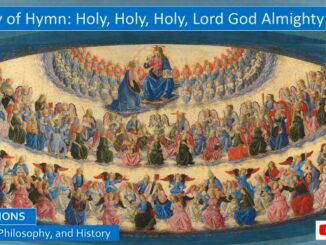
History of Hymn: Holy, Holy, Holy, Lord God Almighty

This hymn was written by the Anglican Bishop Reginald Heber. This is one of the most beloved of the roughly hundred hymns that he penned in the early 1800s, when the Anglican authorities frowned on singing hymns in church, except for the metrical chanting of Psalms. By closely reflecting the biblical verses, he sought to avoid the excessive emotionalism that Anglican authorities hoped to discourage. The Brightest and Best is another of his acclaimed hymns.
Heber pursued his literary interests, including composing hymns, while serving as a parish priest for many years. Later in life, he was appointed as bishop of Calcutta, India, seeking to improve the spiritual life and living conditions of his flock. He traveled the countryside, but due to his workload, the hostile climate, and his poor health, he passed away three years after his appointment in India. […]

Ladder of Divine Ascent, SMALL Steps 6,7, 13
Ladder of Divine Ascent

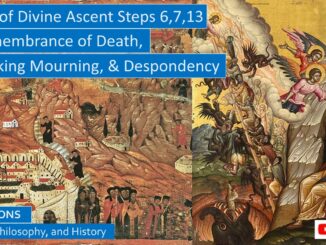
Ladder of Divine Ascent, Remembrance of Death, Joy Making Mourning, and Despondency, Steps 6,7, & 13

St John Climacus continues:
Step 6.3. “Fear of death” “comes from disobedience, but trembling at death is a sign of unrepented sins.” Those who fear death the most are the disobedient who live only to party, who live for today, who live for themselves, and do not live for others, they are the unrepentant who tremble at death’s gates. Even “Christ fears death, but does not tremble,” so He can show us that he is both God and man.
Step 6.24. “It is impossible, someone says, impossible to spend the present day devoutly unless we regard it as the last of our whole life.” […]

Ladder of Divine Ascent

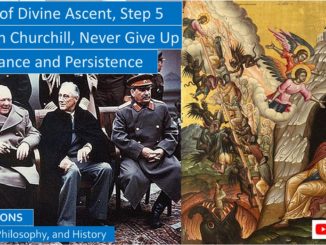
St John Climacus: Ladder of Divine Ascent, Step 5, Repentance, and Perseverance of Winston Churchill

Repentance is not merely a quick apology to St John Climacus. Repentance is not quick in the Ladder of Divine Ascent. The first four rungs, where we renounce the world, detach ourselves from worldly things, become an exile and pilgrim from the affairs of the world, and with daily discipline internalize God’s will in holy obedience, these first four rungs prepare us for the rung of repentance. Repentance is more an attitude and a process than an event. An attitude of humility and repentance will prepare us for the slow ascent up the remaining twenty-five steps of the Ladder of Divine Ascent. Without daily heartfelt repentance we cannot continue the climb to a godly life. […]