Plutarch’s Life and Works, Including His Greek and Roman Lives, and Moralia, His Stoic Sayings
Book Reviews and Miscellaneous

Plutarch’s Life and Works, Including His Noble Greek and Roman Lives, and Moralia, His Stoic Sayings

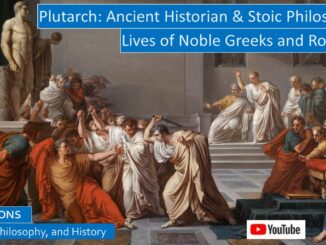
Over half of Plutarch’s Lives of Noble Romans influenced the history of the corrupt and violent last years of the Roman Republic, and the rise of the Roman Empire under Julius Caesar. Plutarch paired Greek and Roman lives based on their personalities and accomplishments. For example, Julius Caesar is paired with Alexander the Great, and the Greek companion to Cicero is Demosthenes, the renowned Greek orator who opposed Alexander the Great’s conquest of Greece. Plutarch used Xenophon as one of his sources for his lives of the Spartan Kings Agis and Agesilaus, Alcibiades, the lost life of Epaminondas of Thebes, and possibly Lycurgus of Sparta. The majority of Plutarch’s Roman lives featured the strivings of great men during the breakdown of the Roman Republic, and the subsequent struggles and civil wars that culminated in the reign of the first two emperors of the Roman Empire, Julius Caesar and Caesar Augustus, or Octavian.
Plutarch is more interested in highlighting the moral and character strengths and weaknesses of the famous men of history than he is in revealing how these great men influenced historical events. For this reason, you cannot consult only Plutarch for a complete historical review. We also consulted Will Durant’s account in his Story of Civilization, Volume 3, Caesar and Christ. Will Durant often quotes Cicero directly, and Plutarch is his primary source out of necessity. We also consulted the Wikipedia article on Cicero to fill in some background and details. […]

Pope Leo the Great, Confronting Attila the Hun, and His Role in Fourth Ecumenical Council of Chalcedon
Catholic Middle Ages and Beyond

Pope Leo the Great, Confronting Attila the Hun, and His Role in the Fourth Ecumenical Council of Chalcedon

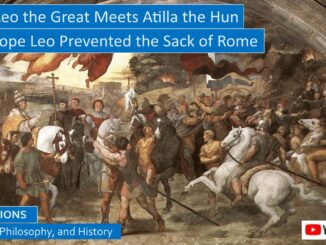
As Pope Benedict XVI writes: “The times in which Pope Leo lived were very difficult: constant barbarian invasions, the gradual weakening of imperial authority in the West, and the long, drawn-out social crisis forced the Bishop of Rome” “to play an important role in both civil and political events.”
“In a period of profound crisis, Leo the Great knew how to make himself close to the people and the faithful with his pastoral action and his preaching. He enlivened charity in a Rome tried by famines, an influx of refugees, injustice, and poverty. He opposed pagan superstitions and actions of Manichaean groups. He associated the liturgy with the daily life of Christians.” […]

Did Rome Fall, or Evolve to Barbarian Kingdoms? Sack of Rome, and Attila the Hun’s Invasions
Greek and Roman History

Did Rome Fall, or Evolve Into the Barbarian Kingdoms? Sacks of Rome, and Attila the Hun’s Invasions

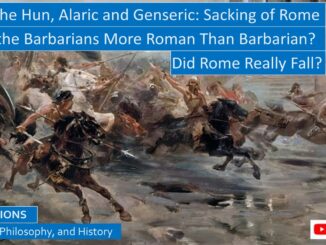
Peter Brown contends: “The Roman Empire was not violently breached by barbarian “invasions.” Rather, between AD 200 and 400, the frontier itself changed. From being a defensive region, which kept Romans and barbarians apart, it had become, instead, an extensive middle ground, in which roman and barbarian societies were drawn together. And after AD 400, it was the barbarians and no longer the Romans who became the dominant partners in the middle ground.” Indeed, after AD 400 barbarian tribes served in the army of the Huns, and barbarians from most of the tribes, including the Huns, served in the Roman armies. […]

Marcus Aurelius Biography
Greek and Roman History

Biography of Marcus Aurelius, Stoic Philosopher and Roman Emperor

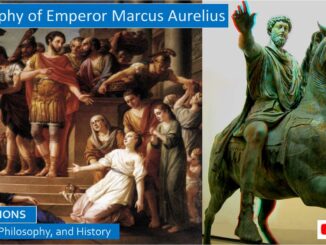
Summarizing his life, Cassius Dio tells us that Marcus Aurelius “did not display many feats of physical prowess; yet he had developed his body from a very weak one to one capable of the greatest endurance. Most of his life he devoted to beneficence, and that was the reason, perhaps, for his erecting a temple to Beneficence on the Capitol.” […]

Heraclitus, Pre-Socratic Philosopher, Inspiration for Stoics and Clement of Alexandria
Philosophy

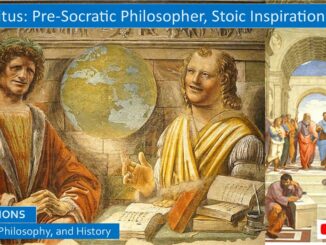
Heraclitus, Pre-Socratic Philosopher, Inspiration for Stoics and Church Fathers

What can we learn from reflecting on the surviving fragments of Heraclitus, the Pre-Socratic Philosopher? Many of his pithy sayings inspired the later Cynic and Stoic Philosophers, and the Church Fathers, including Clement of Alexandria and Hippolytus of Rome. These sayings by Heraclitus include: “God is day and night, winter […]

Greek and Roman History

Summary of the Peloponnesian Wars Between Athens and Sparta

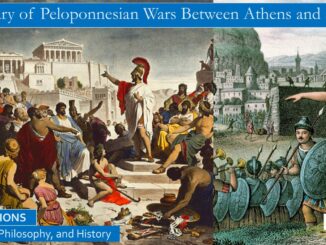
Why study the Peloponnesian wars? One main reason is: You cannot understand the Platonic dialogues without first understanding the history of the Peloponnesian Wars, because so many of the leading figures of this period are referenced in the Platonic dialogues, and we can learn many moral lessons from the war, which changed the Greek city-states forever.
The history of the war includes many interesting personalities, including Pericles, the founder of the radical democracy of Athens who died in the first years of the war, and Alcibiades, the ladies’ man and charismatic personality who was a leader of all three sides of the antagonists of the war, and we have the Spartan general Lysander who spared Athens from destruction when she lost the war. […]

Greek and Roman History

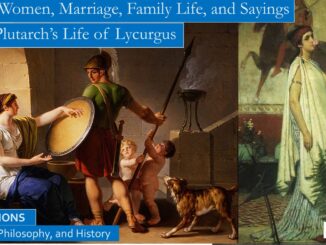
Spartan Women, Marriage, Family Life and Sayings, From Plutarch’s Life of Lycurgus

Seizing women for marriage was part of many ancient cultures. When in war a particularly hated city-state was conquered, it was common practice to slaughter the military age men and enslave the women and children, and many of the women would be enslaved as concubines. Early in the Peloponnesian Wars, Thucydides tells us the dramatic of how first the Athenian Assembly condemned the city-state of Mytilene to this fate, then changed their mind the next day, and how a furiously rowed trireme bearing this good news beat the previous day’s trireme just in the nick of time, saving the city of Mytilene!

Thucydides also tells of the siege of the Melians, whose men were executed, and her women and children sold into slavery at the hands of the Athenians late in the war, and how the Athenians worried they would suffer the same fate when they lost the war to Sparta. […]

Greek and Roman History

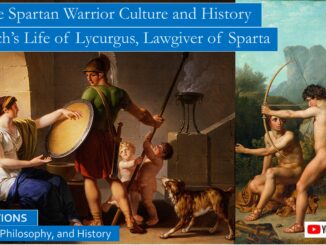
Unique Spartan Warrior Culture and History, Plutarch’s Life of Lycurgus, Lawgiver of Sparta

Sparta was the city-state that dominated the Peloponnese, the region that is separated from Athens and the rest of Greece by the narrow Isthmus at Corinth, and without that isthmus it would be an island to itself. Sparta was a traditional and conservative agricultural society that was not welcoming to foreigners, other than aristocratic guest-friends. […]

History

Thirty Tyrants Ruling Athens After Spartan Victory in the Peloponnesian Wars

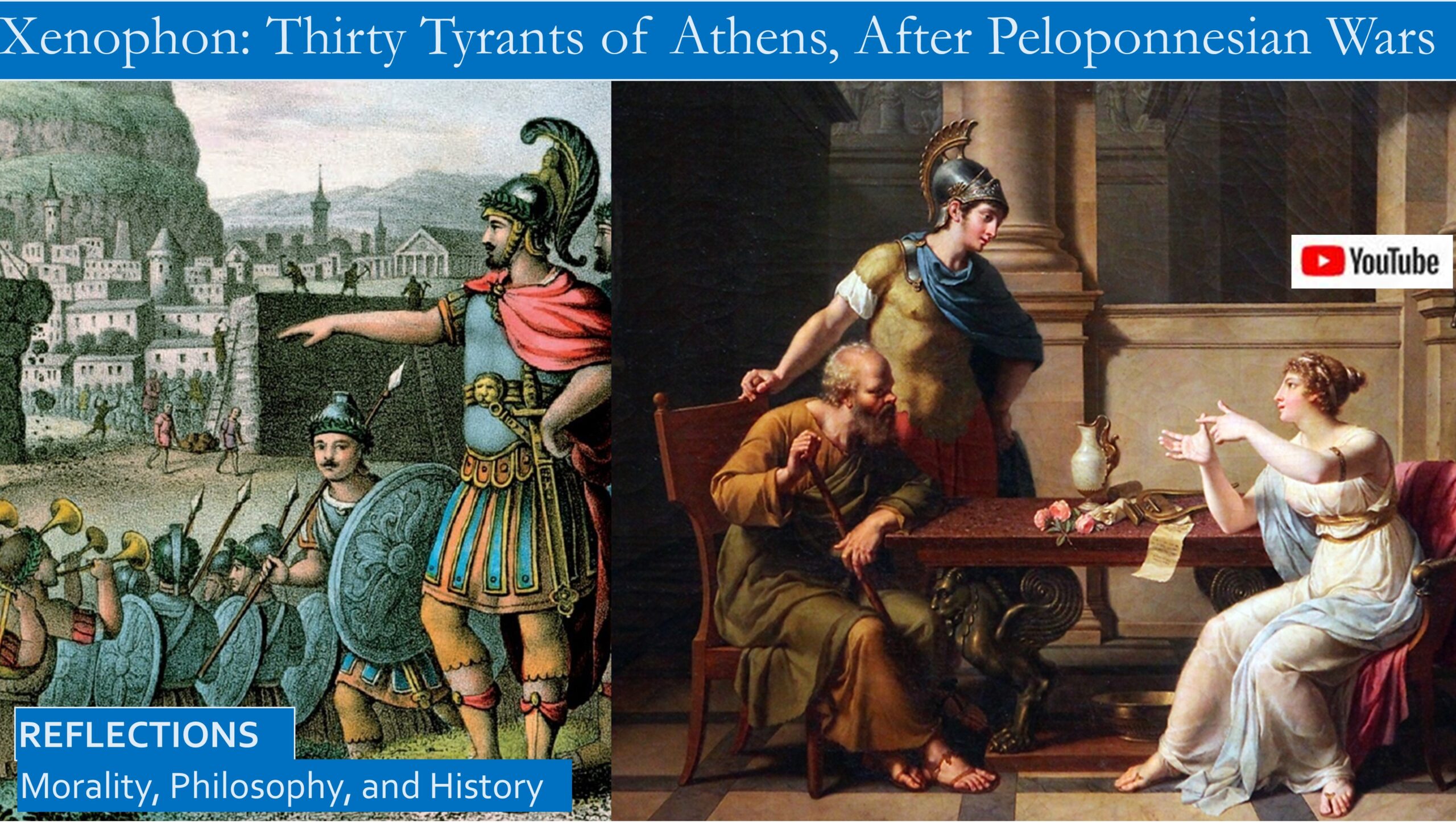
After the end of the Peloponnesian Wars, the victorious Spartan commander Lysander insisted that, as part of the terms of peace, the Athenians set up an aristocracy under the rule of the Thirty Tyrants. Although the previous tyrants in the sixth century BC were benevolent tyrants, the Thirty were Tyrants of the worst kind, dominated by the vicious Critias, a tyranny that quickly descended into an orgy of bloodshed directed first against their enemies, and then against their fellow aristocrats so they could seize their property. This misrule preceded the reestablishment of the Radical Democracy of Athens, and the events of the Thirty Tyrants cast a long shadow over Athenian history and the Platonic dialogues. […]

Greek and Roman History

Athens’ Disastrous Defeat at Syracuse in Sicilian Expedition, Peloponnesian Wars

We cannot improve on Will Durant’s summary of this ignoble defeat:
“The disaster broke the spirit of Athens. Nearly half the citizen body was enslaved or dead; half the women of the citizen class were widows, and their children were orphans.”

With modern scholarship, Professor Kenneth Harl estimates that only a quarter to a third of the male citizens of Athens were lost at Syracuse, which makes more sense, but is still a devastating blow. […]