
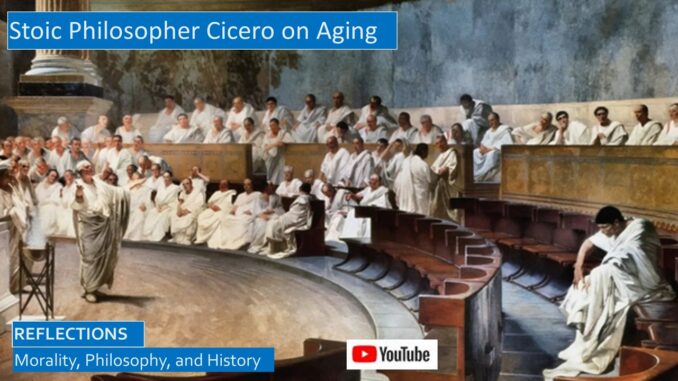
Why was Cato selected as the leading participant in Cicero’s imagined dialogue on aging?
How did Cicero, that rare self-made man in ancient Rome, rise to political prominence? Why did his political opponents assassinate him?
What are the pleasures of old age? Is the dimming of the passions in old age desirable, or undesirable?
How can we overcome the challenges of old age? How should we face death?
QUICK BIOGRAPHICAL SKETCH OF CICERO
Cicero was an intellectual light shining in the late Roman Republic. He was a contemporary of St Paul, though it is highly unlikely they met or corresponded. He was known both for his moral Stoic philosophical works as he was known for his political speeches, many of which have survived. His speeches and compositions were lauded in both the ancient and modern worlds for their superb Latin style and composition.
Cicero was that rare Roman aristocrat who was a self-made man fighting for the underdog, often representing defendants in the highly political Roman courts, where his passionate speeches led to his political advancement. Many historians note that he was not a particularly successful politician because of this advocacy, since his moral Stoic philosophy influenced his political stances. Cicero railed against violence and greed, making him unpopular in the corrupt late Roman Republic.
One translator notes that Cicero’s success stemmed from “his incomparable eloquence,” but he was “impeded by his own personality. His extraordinary talent was matched by equally conspicuous faults and weaknesses, including snobbery, vanity, extravagance, vacillation, and a too emotional tendency to make enemies by injudicious jokes.”
This eventually cost him his life. Cicero vigorously opposed the efforts of the triumvirate, including Julius Caesar and Mark Antony, to overthrow the corrupt Roman Republic, and was eventually assassinated by soldiers loyal to Mark Antony.
CICERO’S DIALOGUE BETWEEN CCATO AND HIS FRIENDS
Cicero opens his treatise, On Old Age, with an imagined dialogue between Cato the Younger and his friends. One translator notes that “the choice of Cato as principal speaker was probably not only, as Cicero said, by his” advanced age but also “by his flourishing as an old man,” and quite likely “by his courageous bearing of the loss of his child.” They both had shared life experiences.
Cicero’s Cato begins: “A person who lacks the means, within himself, to live a good and happy life will find any period of his existence wearisome. But rely for life’s blessings on your own resources, and you will not take a gloomy view of any of the inevitable consequences of nature’s laws. Everyone hopes to attain an advanced age; yet when it comes, they all complain!”
“Age does not steal upon adults any faster than adulthood steals upon children. Besides, if they were approaching eight hundred years instead of eighty, they would complain of the burden just as loudly!”
Cicero’s Cato continues: “There has to be a time of withering, of readiness to fall, like the ripeness which comes to the fruits of the trees and of the earth. But a wise man will face this prospect with resignation, for resistance against nature is as pointless as the battles of the giants against the gods.”
This refers to the mythical battle waged for a decade between the Olympian gods and their allies, led by Zeus or Jupiter, and the Titans, the giants who formerly controlled the earth.
Cicero’s Cato observes how many elderly complain how “they had lost all material pleasures, and without those, life was not life at all. They also complain that those who had once been attentive to them were now neglectful.”
In contrast, “I have known many old men who had no complaints about their age.” “If a man controls himself and avoids bad temper and churlishness, then he can endure being old. But if he is irritable and churlish, then any and every period of his life will seem to him tiresome.”
Cicero’s Cato further observes: “Old age has its own appropriate weapons: namely the study and practice of decent, enlightened living. Do all you can to develop these activities all your life, and as it draws to a close, the harvest you reap will be amazing.”
Cicero lists four reasons why many regard old age as an unhappy time:
- “Old age takes us away from active work.
- Old age weakens the body.
- Old age deprives us of practically all physical pleasures.
- Old age is not far from death.”[1]
Cato opposed Caesar’s attempt to overthrow the Roman Republic, joining the forces fighting against this takeover. We have and will reflect on Ancient Stoic and Christian reactions to his life and eventual suicide. The Stoic Seneca praises his example, but not the Stoic Epictetus. St Augustine condemns it, as do his fellow Christians, and he argues that Cato’s suicide was not excusable since it was not certain that his life was in danger, since Caesar offered to pardon him.
YOUTUBE
CICERO ON ACTIVITIES FOR THE OLD
Although Cicero concedes that though the elderly cannot keep up physically with younger men, “his contribution is much more significant and valuable than theirs. Great deeds are not done by strength or speed or physique: they are the products of thought, and character, and judgement,” “qualities that increase with age.”
Cicero continues: “An old man is well advised to favor the society of promising young men. If the young cultivate and like him, he will find age more tolerable, and youths welcome an old man’s advice, which helps them to work at living good lives.”[2]
So, the next time someone asks you how you are doing, you can say you feel like Willie Nelson did when he sang his song:
“I woke up this morning not dead yet again,
The internet said I passed away.
If I died I wasn’t there to stay,
I woke up this morning not dead again today.”
“I ride up and down the road,
Making music as I go,
They say my pace would kill a normal man.
I have never been accused of being normal anyway,
I woke up this morning not dead again today.”[3]
Both Jimmy Carter and Paul Tournier suggested many ways in which those of us who are retired can give back to the community, Jimmy Carter suggested various charities who appreciate the efforts of volunteers. Also, AARP accepts volunteers. Another way to give back to the community is to join a local Rotary Club. I also volunteered to serve as Treasurer of my over-55 Condominium Association where I caught flak for halting the foreclosure of a destitute owner who had no family, so we could have the court appoint him a guardian and place him in a humane lock-down facility. I realized that this could have happened in any over-55 community, that the public needed to be educated on this issue. We have submitted a proposed article to the Atlantic magazine and other publications, and also have been spreading the news through several local Health and Wellness seminars through Rotary.
Classical Christian Psychologist Paul Tournier on Old Age and Retirement
https://seekingvirtueandwisdom.com/classical-psychologist-paul-tournier-on-old-age/
https://youtu.be/HE3LNGB0nUA
Jimmy Carter on the Virtues of Aging and Retirement
https://seekingvirtueandwisdom.com/jimmy-carter-on-the-virtues-of-aging-and-retirement/
https://youtu.be/JozGKCnUyaI
Bruce’s reflection on: Why I Joined Rotary, History and Philosophy of Rotary
https://seekingvirtueandwisdom.com/history-and-philosophy-of-rotary-international-and-my-personal-experience/
https://youtu.be/gN6tb3YawI0
How I Halted a Foreclosure on a Destitute Owner with Advanced Dementia! We Discuss Dementia
https://seekingvirtueandwisdom.com/how-i-halted-foreclosure-on-owner-with-advanced-dementia-reflecting-on-dementia/
https://youtu.be/_uAJPCCRNQ8
Getting in the pages of the Atlantic Magazine would even be better than getting on the cover of the Rolling Stone.[4]
CICERO ON CONSOLATIONS FOR LOST STRENGTH
Cicero advises us: “Enjoy the blessing of strength while you have it, and have no regrets when it has gone, any more than young men should regret the end of boyhood, or those approaching middle age lament the passing of youth. Life’s course is invariable: nature has one path only, and you cannot travel along it more than once. Every stage of life has its own characteristics: boys are feeble, youths in their prime are aggressive, middle-aged men are dignified, while the elderly are mature. Each of these qualities is ordained by nature for harvesting in due season.”
The painting, the Triumph of Cicero, shows Cicero as the savior of the Republic after he exposed the conspiracy of Catiline, which extended the life of the late Roman Republic for a few precious years. As consul, he persuaded the Senate to intervene and thus prevent a coup d’état.
Cicero continues: “Age must be overcome; its faults need vigilant resistance. We must combat them as we should fight a disease: following a fixed regime, exercising in moderation, and consuming enough food and drink to strengthen” but not too much. “The mind and spirit need even more attention than the body, for old age easily extinguishes them, like lamps” with too little oil.
“Wrongheadedness and sensuality are more prevalent in young men than in old; yet they are not found in all young men, but only in youths of inferior character. Likewise, senile imbecility” “does not occur in all old men but only in those of feeble mind.”[5]
Today, scientists know this is not true. While some scientists speculate that those elderly who have an active intellectual life are less likely to develop dementia, many highly educated people do succumb to dementia. For example, I know of a case where a college language professor who succumbed to dementia, who spoke gibberish in seven different languages.
The odds of suffering from dementia increase dramatically with age. Those suffering from advanced dementia not only lose their reasoning ability: they lose their moral compass, they are helplessly steered by their raw unchecked emotions, sometimes striking out at caretakers. What often sadly happens quite often is that those who suffer from dementia drive away their loved ones, close associates, and neighbors by their demented behavior.
Glen Campbell Suffering from Alzheimer’s, Early Signs and Symptoms
https://seekingvirtueandwisdom.com/glen-campbell-suffering-from-alzheimers-early-signs-and-symptoms/
https://youtu.be/F9NmDiiPowI
Problems Family Caretakers Face When Caring for Loved Ones Suffering From Dementia
https://seekingvirtueandwisdom.com/problems-family-caretakers-face-when-caring-for-loved-ones-suffering-from-dementia/
https://youtu.be/VqR7y0Z8bYk
Neurological Case Studies Including the Man Who Mistook His Wife for a Hat, and the Curious Story of Phineas Gage
https://seekingvirtueandwisdom.com/case-studies-including-the-man-who-mistook-his-wife-for-a-hat-and-the-curious-story-of-phineas-gage/
https://youtu.be/tBZIs0YZ05A
Wellness Checks for Dementia: Police and Mental Illness
https://seekingvirtueandwisdom.com/wellness-checks-for-dementia-police-and-mental-illness/
https://youtu.be/z_SlPLARCxU
CICERO ON THE PLEASURES OF OLD AGE
Cicero proclaims that the pleasures of age include our gratefulness that the desire to do what is wrong has dissipated.
Cicero states: “The third allegation against old age is the lack of sensual pleasures. But if age really frees us from youth’s most dangerous failing, then we are receiving a most blessed gift.” “Mere lust, without any additional impulse, is the cause of rape, adultery, and every other sexual outrage. Nature, or a god, has given human beings a mind as their outstanding possession, and this divine gift and endowment has no worse foe than sensuality. For in the realm of the physical passions, there can be no room for self-control; where self-indulgence reigns,” there is no decent behavior.
Cicero continues: “Prolonged indulgence will plunge the whole light of the spirit into darkness.” Passionate “feelings cloud a man’s judgement, obstruct his reasoning capacity, and blind his intelligence.” Unchecked sensuality makes living a good life impossible. “When sex, ambition, rivalry, quarrelling, and all the other passions are ended, the human spirit returns to live within itself, and is well off.”
Cicero stated that when Sophocles was elderly “someone asked him if he still made love.” “‘Good heavens, no,’ he replied, ‘I have gladly escaped that barbarous, savage master.’ Covet such things, and the lack of them may well be tiresome and annoying; but if you have had enough of them and are replete, to lack becomes more pleasant than to possess! Or rather, if you do not miss their absence, you cannot be said to lack them, and that is why I say that not missing them is best of all.”
Cicero counts among the pleasures of old age the freedom from over-indulgence of rich food and drink. “Age has no banquets, no tables piled high, no cups filled again and again. So, it also avoids drunkenness, and indigestion, and sleepless nights.”
Old age is content with modest entertainment such as a dinner party with good company and interesting conversation, such as Plato’s Symposium where the guests, hung over from the previous night, opted to forgo the flute players and entertainers. All the guests, including Socrates, compose speeches on the nature of love. The party is interrupted by a drunken Alcibiades.
Xenophon and Plato, Socratic Dialogue, Symposium, Romantic and Carnal Love, Part 1
https://seekingvirtueandwisdom.com/xenophon-and-plato-socratic-dialogue-symposium-romantic-and-carnal-love-part-1/
https://youtu.be/OIe5pn2S1Ls
Xenophon and Plato, Socratic Dialogue, Symposium, Divine and Noble Love, Part 2
https://seekingvirtueandwisdom.com/xenophon-and-plato-socratic-dialogue-symposium-divine-and-noble-love-part-2/
https://youtu.be/z6X3pwVTdrc
Plato’s Dialogue of Phaedrus on Divine Love and the Heavenly Chariot, Part 2
https://seekingvirtueandwisdom.com/platos-dialogue-of-phaedrus-on-divine-love-and-the-heavenly-chariot-part-2/
https://youtu.be/BOtavup_N4g
Summary of Platonic Dialogues on Love and Friendship, With Commentary by Copleston and Anders Nygren
https://seekingvirtueandwisdom.com/summary-of-platonic-dialogues-on-love-and-friendship/
https://youtu.be/cjXRXQc6Ff4
“I enjoy cups that are small enough to bedew rather than drench,” as Xenophon says in his Symposium. Xenophon had many good memories of a rich and memorable life, such as when his band of ten thousand Greeks marched a thousand miles through Persian and other hostile territory to safety in the Greek Black Sea colonies. His account of this adventure, the Anabasis, was not only one of the most popular ancient works, but was also both an inspiration for Alexander the Great to later conquer Persia, and for the ancient historian Arrian, who also titled his history of Alexander the Anabasis. Xenophon was a student of Socrates, writing many works of history and philosophy, some mirroring Plato’s major dialogues.
Xenophon’s Anabasis: The Persian Expedition, an Ancient Adventure Story
https://seekingvirtueandwisdom.com/xenophons-anabasis-the-persian-expedition-an-ancient-adventure-story/
https://youtu.be/DBG3JvyLP1E
The Life, Adventures, and Philosophy of Xenophon, General and Student of Socrates
https://seekingvirtueandwisdom.com/the-life-adventures-and-philosophy-of-xenophon-general-and-student-of-socrates/
https://youtu.be/lU59WBQu3bc
Xenophon’s Cyropaedia, Biography of Cyrus the Great, King of Persia
https://seekingvirtueandwisdom.com/xenophons-cyropaedia-biography-of-cyrus-the-great-king-of-persia/
https://youtu.be/E4BFSIpHHGk
Thirty Tyrants Ruling Athens After Spartan Victory in the Peloponnesian Wars
https://seekingvirtueandwisdom.com/thirty-tyrants-ruling-athens-after-spartan-victory-in-the-peloponnesian-wars/
https://youtu.be/rrcwdHyvIEg
What can be the greatest pleasure of old age? Cicero likewise asks, “What about pleasures from banqueting or watching shows or consorting with mistresses? If a man is sensible and well-educated, his taste for intellectual pursuits increases with the years. Solon observed that as he grew old, he learnt much that was new every day. Surely the satisfaction of the mind is greater than all the rest!” And if you are reading this, this applies to you.[6]
CICERO LISTS HONORS AND FAULTS IN OLD AGE
Cicero declares: “To be respected is the crowning glory of old age.” He then discusses how leading senators who served as consuls, one a hero of the First Punic War facing Hannibal, were treated in their later years. “When such authority arrives, we find signs of respect:” “people making way for him and rising at his approach; escorting him to the Forum and back, asking for his advice.”
Is Cicero speaking of how Roman aristocrats are treated when they reach the glory of old age? How were elderly men of lesser status treated? Certainly, in the modern world, there is a lack of respect shown towards the elderly of lesser means, as the classical Christian psychologist Paul Tournier points out. Seneca also wrote essays on old age, retirement, and facing death heroically.
Classical Christian Psychologist Paul Tournier on Old Age and Retirement
https://seekingvirtueandwisdom.com/classical-psychologist-paul-tournier-on-old-age/
https://youtu.be/HE3LNGB0nUA
Classical Christian Psychologist Paul Tournier on Old Age, Death, and Faith
https://seekingvirtueandwisdom.com/classical-christian-psychologist-paul-tournier-on-old-age-death-and-faith/
https://youtu.be/gRaY2hTaEGk
Roman Stoic Philosopher Seneca on Old Age and Retirement
https://seekingvirtueandwisdom.com/roman-stoic-philosopher-seneca-on-old-age-retirement/
https://youtu.be/hmJoI9-s1q8
Roman Stoic Philosopher Seneca on Aging, Death, and Suicide
https://seekingvirtueandwisdom.com/roman-stoic-philosopher-seneca-on-aging-death-and-suicide/
https://youtu.be/c9JXjqRKgBE
Cicero points out that some old people are seen as “more, petulant, ill-tempered, hard to please, and sometimes avaricious. But these are faults of character, not of age.” “But the fact is that not every personality, any more than every wine, grows sour with age. Austerity in old men is proper” in moderation, absent any sourness. “But there is no point in the elderly being miserly. Is it not the height of absurdity for a traveler to think he needs more funds for his journey when it is nearly over?”[7]
Many of the paintings show Cicero discovering the tomb of Archimedes, the famous Greek scientist. In his Tusculan Disputations, Cicero tells how he discovered his tomb while he was serving as questor in Sicily. He found the grave hidden by brambles and thorns, but could clearly read the inscriptions, and found a column nearby topped by a sphere and a cylinder. The citizens of Syracuse cleared a path to the tomb so they could honor their discovered heritage.[8]
CICERO DECLARES THAT DEATH HAS NO STING
Cicero proclaims: “When a man is old, there is no doubt that death is near. Yet if, during his long life, he has failed to grasp that death is of no account, he is unfortunate indeed.”
“When the end comes, all that is gone before has vanished. All that remains is the credit you have gained by your good and right actions. Hours, days, months, and years go by. Once they have passed, they never come back again. What the future will be, we cannot tell. So, we ought to be content with whatever life has allotted to us.”
Cicero continues: “However short your life may be, it will still be long enough to live honestly and decently.” “Old age has no fixed limit: as long as a man remains able to live up to his obligations and fulfil them, reckoning death of no account, he is entitled to live on.” “Since death is an imminent possibility from hour to hour, you must not let the prospect frighten you, or you will live in a state of perpetual anxiety.”
“Indeed, if some god granted me the power to cancel my advanced years and return to boyhood, and wail once more in the cradle, I should firmly refuse. Now that my race is run, I have no desire to be called back from the finish to the starting point!” “The course my life has taken has encouraged me to believe that I have lived to some purpose.”
Unlike Seneca, Cicero does not dwell on suicide, because for him, the end was quick. For several years, Seneca anticipated that Nero’s soldiers would one day knock on his villa door, allowing him to commit suicide. In contrast, soldiers loyal to Caesar’s rival, Mark Antony, cut Cicero down as he was traveling to one of his villas, they did not give him the opportunity to die the more noble death.
Roman Stoic Philosopher Seneca on Aging, Death, and Suicide
https://seekingvirtueandwisdom.com/roman-stoic-philosopher-seneca-on-aging-death-and-suicide/
https://youtu.be/c9JXjqRKgBE
Cicero proclaims: “Even if I am mistaken in my belief that the soul is immortal, I make the mistake gladly, for the belief makes me happy, and is one which, as long as I live, I want to retain.” “When life’s last act, old age, has become wearisome, the time has come to go.”[9]
The upside of death is you no longer suffer, nor do you have problems. The opposite is also true: the upside of living, even with suffering, even with problems, is you are still alive.
DISCUSSING THE SOURCES
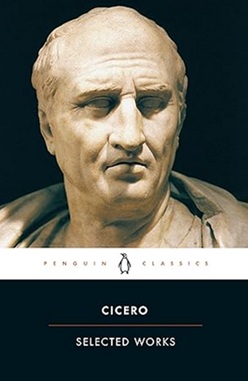
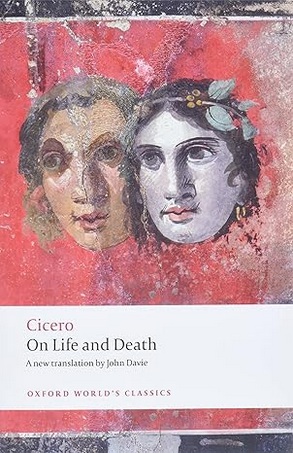
My favorite Greek translator is Robin Waterfield, but so far, I have no favorite Roman translator. I favor the Penguin, then Oxford, editions of the classics, in part because of the footnotes, which are invaluable in understanding the historical and philosophical context of their writings, especially when they refer to historical figures their audience would recognize. In contrast, many public domain versions lack footnotes.
Cicero is considered by many scholars to be a Stoic philosopher, although he was eclectic, and like most moral philosophers, his works are easy to read, and of course, are easier to read with the better translations. We found his essay on old age in the two collections, our blog referenced in our YouTube description includes the Amazon new and used book links.
Many of these modern compilations have somewhat random selections of his works. For example, in the future, we plan a reflection on his three books on Duties, but I found them spread among three different modern compilations. His Tusculan Disputations reflect on both the fear of death and immortality: we will reflect on these at a later time. Most of Cicero’s works have survived. The Wikipedia article on Cicero’s works does not mention the number of manuscripts, but they are likely more plentiful than for other writers, but not as many as modern readers would expect.[10]
One glaring exception is his Cicero’s lost work Hortensius, on the joys of studying philosophy, which converted St Augustine to NeoPlatonism, which led him to his second conversion to the Christianity of his youth. There is another WordPress blog which compiles the known fragments and references to his Hortensius.[11] We are planning a short reflection on what little we know about the Hortensius.
[1] Cicero, On Old Age, included in Selected Works, translated Michael Grant (New York: Penguin Classics, 1971, 1960, originally about 50 BC), Introduction and Chapter 1, Cato and His Friends, pp. 7-9 and 213-219 and John Davie, translator, Introduction to: Cicero, On Life and Death (Oxford University Press, 2017), p. xx and https://en.wikipedia.org/wiki/Titans and https://en.wikipedia.org/wiki/Cato_the_Younger
[2] Cicero, On Old Age, included in Selected Works, Chapter 2, Activities for the Old, pp. 220-221.
[3] https://www.youtube.com/watch?v=J34esa_aJxc
[4] https://www.youtube.com/watch?v=KuvfIePDbgY
[5] Cicero, On Old Age, included in Selected Works, Chapter 3, Consolation for Lost Strength, pp. 226-227 and https://en.wikipedia.org/wiki/Triumph_of_Cicero_(Franciabigio_and_Allori) .
[6] Cicero, On Old Age, included in Selected Works, Chapter 4, The Pleasures of Age, pp. 228-233.
[7] Cicero, On Old Age, included in Selected Works, Chapter 6, Honors and Faults, pp. 238-239.
[8] https://physics.weber.edu/carroll/archimedes/cicero.htm
[9] Cicero, On Old Age, included in Selected Works, Chapter 7, Death Has No Sting, pp. 240-242.
[10] https://en.wikipedia.org/wiki/Writings_of_Cicero
[11] https://catholicgnosis.wordpress.com/2021/11/09/hortensius-english/



4 Trackbacks / Pingbacks