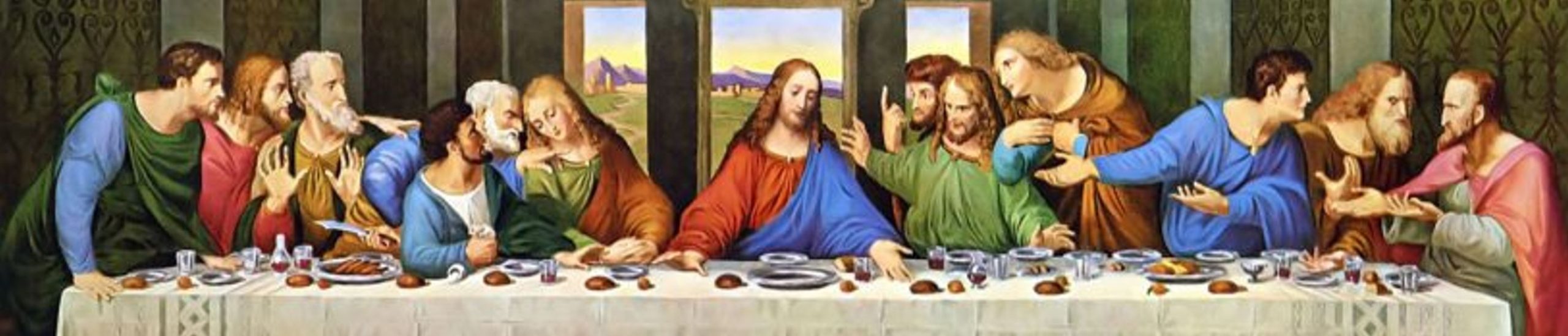

What church is the true church? How do you know which is a true church, and which is not? Is such a thing even possible?
Was CS Lewis right: that we should concentrate on Mere Christianity, the body of belief that all mainline Christian denominations have in common? What should be the core belief of Christians? Is there a place for Judaism?
Is there any harm in baptizing someone twice? Is there a limit? Why is this important? Is this important?
Should churches have stained-glass windows, candles, icons, statues, and elaborate vestments? Should churches be totally bare, except for a Bible and a pulpit?
MERE CHRISTIANITY
We agree with CS Lewis when, in his Preface to Mere Christianity, he states that “the reader should be warned that I offer no help to anyone who is hesitating between two Christian denominations. You will not learn from me whether you ought to become an Anglican, a Methodist, a Presbyterian, or a Roman Catholic.” CS Lewis compares his Mere Christianity to a central hall opening up to many rooms, representative of the various denominations, saying that this hall is a place to wait while you try the different doors.
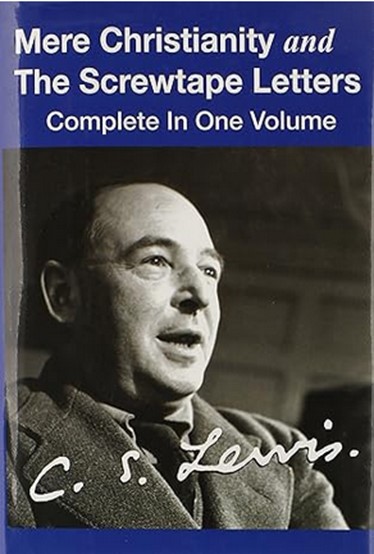
CS Lewis continues: “There is no mystery of my own position. I am a very ordinary layman of the Church of England, not especially high, nor especially low, nor especially anything else.”
These doors in his Mere Christianity are analogous to the pools in the field in his Chronicles of Narnia. In the Magician’s Nephew, he describes a field with a multitude of pools, each opening to a different world, including Earth, Narnia, and the dying world of Charn. This was the original home of the wicked White Witch who escaped to Narnia, reigning for century of perpetual winter without Christmas in the Lion, the Witch, and the Wardrobe.[1]
CS Lewis states he avoids discussions that divide, such as the controversies on the exact nature of the Virgin Mary and topics like abortion and birth control.[2]
Was CS Lewis a Closet Catholic? Reflections on Mere Christianity, Books 2-4
https://seekingvirtueandwisdom.com/was-cs-lewis-a-closet-catholic-reflections-on-his-mere-christianity/
https://youtu.be/ksWomcEg8C0
Facing the Nazi Menace: CS Lewis’ Mere Christianity and Viktor Frankl’s Memoirs on Auschwitz, Books 1-4
https://seekingvirtueandwisdom.com/facing-the-nazi-menace-cs-lewis-mere-christianity-and-viktor-frankls-mans-search-for-meaning/
https://youtu.be/x-9FeH9Gyng
Preparing the Way for Vatican II: CS Lewis’ Mere Christianity, Books 1-4
https://seekingvirtueandwisdom.com/preparing-the-way-for-vatican-ii-cs-lewis-mere-christianity/
https://youtu.be/udJQzmqst34
Summary of CS Lewis’ Mere Christianity, WWII Ecumenical Broadcast: Morality Not Polemics
https://seekingvirtueandwisdom.com/summary-of-cs-lewis-mere-christianity-wwii-ecumenical-broadcast-morality-not-polemics/
https://youtu.be/6-Hc4X0NN8k
What is the cornerstone of the Judeo-Christian tradition? The two-fold Love of God and neighbor, that we should Love God with all of our heart and with all of our soul and with all of our mind and all of our all, and that we should love our neighbor as ourselves. All else is commentary. St Augustine is our favorite Catholic saint because, in all of his major works, he explicitly repeats this core foundation of the faith.
We agree with the country song that sings: You Don’t Love God if You Don’t Love Your Neighbor.[3] These two-fold loves are intertwined; one always leads to the other.
Hillel and Jesus, Reflections on Rabbi Telushkin’s Observations
http://www.seekingvirtueandwisdom.com/hillel-and-jesus-reflections/
Comparing Hillel and Shammai to Jesus
http://www.seekingvirtueandwisdom.com/comparing-hillel-and-shammai-to-jesus/
More Stories and Sayings of Hillel and Shammai
http://www.seekingvirtueandwisdom.com/more-stories-and-sayings-of-hillel-and-shammai/
Jesus, Hillel, and Shammai, Loving God and Neighbor
https://youtu.be/ygxn2qqGnOI
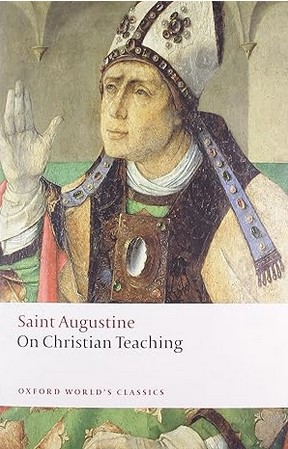
St Augustine applies this principle to Bible study. St Augustine teaches, “Whoever thinks he understands the Holy Scriptures, or any part of them, but interprets them in a way that does not build up this two-fold Love of God and love of neighbor, does not truly understand the Scriptures. If, on the other hand, a man draws a meaning from Scriptures that builds up the two-fold Love of God and love of his neighbor, although he does not precisely understand the exact meaning of the author, his error is not pernicious,” as he does not intend to deceive.
St Augustine further teaches us that if someone with a good heart and pure motives has a mistaken interpretation of Scripture, that “if his mistaken interpretation of Scripture tends to build up love,” “he goes astray in much the same way as a man who by mistake quits the high road, but yet reaches through the fields the same place to which the road leads.”[4]
St Augustine: On Christian Teaching, aka On Christian Doctrine, How To Read Scripture
http://www.seekingvirtueandwisdom.com/st-augustine-on-christian-teaching-how-to-read-scripture/
https://youtu.be/uQCnAJMPoos
In our introductory chapter reflection, I shared how I was distressed by how Martin Luther, in nearly every major theological work he penned, called the Pope the Whore of Babylon and other vulgar names, which is an odd thing for a Christian Theologian to do.
When comparing the various Christian denominations, many compare East to West, or Catholics to Protestants, but I prefer to compare sacramental traditions to evangelical traditions. This does not always fit, as there are some denominations, such as Methodism, that are in both camps.
Our Reflections on Morality, Philosophy, and History: Ancient and Modern Classics
http://www.seekingvirtueandwisdom.com/our-philosophy-for-this-blog-reflections-on-ancient-and-modern-classics/
https://youtu.be/Si0TsO5bNr0
Up to now, I have not shared my specific faith journey on the internet, since I prefer to explore how Christians and Stoics should live a godly life rather than discuss how my strain of Christianity is superior to all others. However, in a recent video on Homosexuality, the Bible, and the Church, it was beneficial to reveal that I am Episcopalian. Many of the observations I make in this video are based in part on my personal experience over the past fifty years when attending churches in Northeast and Southeast Florida.
Homosexuality, the Bible, and the Church: The Zondervan Debates
https://seekingvirtueandwisdom.com/homosexuality-the-bible-and-the-church/
https://youtu.be/jiPlfJ01Blo
MY PERSONAL FAITH JOURNEY, BORN LUTHERAN
The hagiographies of Martin Luther omit the blemishes of Luther. Central among my concerns was how Luther could be so argumentative and bitter in his denunciations of the Catholic Church. His theology is brilliant, and Luther possesses that rare ability of restating complex theology in terms that laymen can readily understand. However, in every major work, he stops and calls the pope vulgar names. Does this vulgarity make his theology suspect? In comparison, if Christ had called the high priest Caiaphas[5] names while hanging on the Cross, how would that have influenced Christianity?
This was a surprise to me. The Reformation happened five hundred years ago. Was I the only person who was bothered by this dissonance? I let this question simmer for decades, as I was not in a rush to convert. I asked my Lutheran pastor about this dissonance: he simply answered that Luther’s writings are not studied extensively in most Lutheran seminaries.
Another challenge is that Martin Luther trumpeted extremely anti-Semitic opinions, and these were so extreme that Hitler quoted him in context. Some years ago, the ELCA website actually apologized for these errant teachings of Luther, as they are indefensible. Although this page did not persist, their website does have a page condemning anti-Semitism and racism.[6]
Martin Luther’s Catechisms on Do Not Envy, and Confronting Luther’s Anti-Semitism
http://www.seekingvirtueandwisdom.com/martin-luther-large-catechism-on-decalogue-do-not-envy-and-anti-semitism/
https://youtu.be/FQmBggJAhKg
However, the Catholic Church must shoulder some blame for Luther’s radicalism. A century before, John Hus, a Catholic reformer sharing many of Luther’s concerns, traveled to the Council of Constance under a letter of safe conduct from the emperor. This was ignored by the council, and rather than giving Jon Huss a hearing, they burned him at the stake as a heretic.[7]
Luther was also under interdict after the Diet of Worms; he was not free to travel from Wittenberg for the rest of his life.[8] Did this history and his interdict prod Luther into being confrontational rather than conciliatory?
Many decades later, I discovered that Professor Phillip Cary of the Great Courses Plus illuminated many of my concerns, stating that Luther’s angry outbursts made Phillip Melanchthon and other supporters wary. Professor Cary is a Lutheran professor at an evangelical college who is an Augustinian scholar. His lectures on St Augustine and Martin Luther for the Teaching Company are highly recommended, as well as his lectures on the History of Christian Theology. His main career goal is to encourage dialogue between Protestants and Catholics. He did not abandon his Lutheran tradition.
Many Lutheran churches only have Sunday services, and many have weekday services only during Lent. The attendance is so slim on these Lenten services that some Lutheran pastors try to work in Good Friday themes in their Palm Sunday sermon, since otherwise Christ might not die before his Resurrection during Holy Week for most Lutherans.
Was the Protestant Reformation beneficial or detrimental to Christianity? Many Protestants would posit that it was beneficial, since it brought the Holy Spirit back into the church; while many Catholics and Orthodox would posit that it was detrimental, since it destroyed the unity of the Christian Church. However, it has only been five hundred years since the Protestant Reformation, and recently the Second Vatican Council took a giant step towards reconciling the various Christian denominations. This is not a long period of time according to God’s sense of time: it also took five hundred years for the Christian Church to agree on what books should be included in the New Testament. IMHO, we need to wait another five hundred years before we can answer this question.
What Happened at Vatican II, Embracing Democracy and Modernity
http://www.seekingvirtueandwisdom.com/what-happened-at-vatican-ii-embracing-democracy-and-modernity/
https://youtu.be/vHtYu6UtiuE
Pope John XXIII Opening Address to Vatican II, and Yves Congar, True and False Reform, Conclusion
https://seekingvirtueandwisdom.com/pope-john-xxiii-opening-address-to-vatican-ii-and-yves-congar-true-and-false-reform-conclusion/
https://youtu.be/ALZozpbSrM4
Yves Congar, True and False Reform, Part 1, Finding Common Ground
https://seekingvirtueandwisdom.com/yves-congar-true-and-false-reform-part-1-finding-common-ground/
https://youtu.be/yYp7yFZqc3s
Yves Congar, True and False Reform, Part 2, True Reform by Returning to Tradition
https://seekingvirtueandwisdom.com/yves-congar-true-and-false-reform-part-2-true-reform-by-returning-to-tradition/
https://youtu.be/1xqY0kN1eKk
MY EXPERIENCE IN OUR BAPTIST CHURCH
In my twenties, our family also attended a unique Southern Baptist Church for a few years, after most other families with kids left our Lutheran Church after a divisive church split. It was unique because it was that rare Baptist Church that did not have Tuesday night visitations to prospective members, including guests who attended recent services. My wife felt more at home attending a Deep South evangelical church.
This was also that rare Baptist Church that would not bug me to be rebaptized, as I believe that infant baptism is sufficient. However, several of my children were rebaptized at a summer Baptist youth camp, and I did not object. There is definitely a healthy peer pressure to find the Lord at the Baptist Youth Camp. After she was baptized, one of my daughters was worried that she wasn’t sufficiently receptive to her baptism, and that the pastor echoed her concern. My wife is not a theologian, but she told my daughter that she was sure you do not need to be baptized more than twice.
The main services were scheduled for Sunday morning, but the devout Baptists who were the bulwarks of the church attended Saturday night and Wednesday night services. On Wednesday nights, the kids attended the popular Awana program[9], and it was amazing how the kids enthusiastically responded to the Veggie Tale Bible lessons. In our Baptist Church, the baptismal pool was built into the second floor at the front of the church, and the parishioners could witness baptisms by immersion through the glass walls of the pool.
Although baptism by immersion is not explicitly required in the New Testament, an early Church writing called the Didache states that baptism in living waters, or a flowing river, is preferable, although full immersion in a pool is the next best option, followed by baptism by sprinkling, Lutheran style.
Didache: Early Church Writing, Teachings of the Twelve Apostles
http://www.seekingvirtueandwisdom.com/didache-early-church-writing/
https://youtu.be/vcNK5_xpEh4
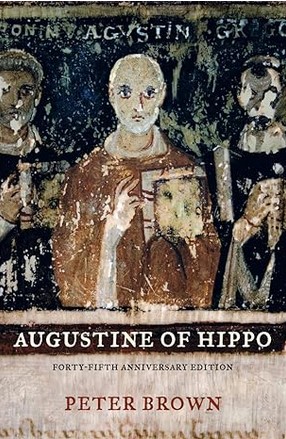
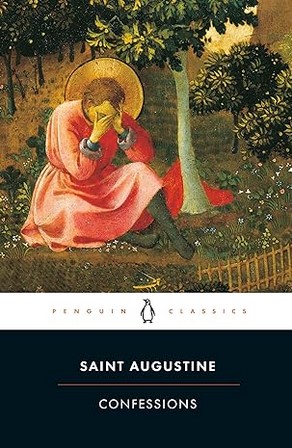
Baptisms in the Christian Roman Empire were taken more seriously than modern baptisms. Catechumens took classes for many months before they were examined to determine if they were worthy of this honor. Since many early Christians doubted that serious sins committed after baptism could be forgiven, many delayed their baptism until their deathbed, as did Emperor Constantine the Great.[10] St Augustine’s Baptism was a key event in his life, which he describes in his spiritual testimonial, the Confessions. The historian Peter Brown includes a memorable description of ancient baptisms in his biography of St Augustine.
St Augustine’s Confessions, His Conversion, Baptism, St Monica’s Death, and Philosophy, Books 8 & 9
https://seekingvirtueandwisdom.com/st-augustines-confessions-his-conversion-baptism-st-monicas-death-and-philosophy-books-8-9/
https://youtu.be/Vijtjxm3Ta0
What does the New Testament say about infant baptism? It does not explicitly discuss infant baptism, but many argue that the passage stating that the jailer in Philippi, who was immediately baptized with his family, suggests this included his young children.[11] Dr Wikipedia reports that the early Church Fathers were split: St Augustine was in favor of baptizing infants, while Tertullian supported believers’ baptism as adults. Scholars debate the stance of other early Church Fathers. Many early Christians, including the Shepherd of Hermas, favored baptizing believers late in life when it was unlikely they would commit further mortal sins.[12]
Shepherd of Hermas on Envy, Dangers of Luxury, and Salvation
http://www.seekingvirtueandwisdom.com/shepherd-of-hermas/
https://youtu.be/NFQ3fGocis0
However, IMHO, St Augustine’s logic in On Christian Teaching prevails. Teaching that baptism should be delayed until someone commits to living a godly life can only be beneficial. How can I fault someone for dedicating their life to Christ? This is not an issue I will argue, perhaps being baptized twice is the real limit. God’s grace is imparted through the sacraments, regardless of your intentions and motives. Certainly, Christ will tolerate twice if the believer is inspired to live a godly life.
This Baptist Church administered the Eucharist once a quarter during the Wednesday night service using small glasses and crackers passed around in round silver trays, with the pastor half apologizing for appearing to be religious. Although Baptists avoid prewritten prayers, preferring to be inspired by the Holy Spirit, often their pastors are inspired to pray a prayer individually composed over the years.
Likewise, I will never argue against the evangelical doctrine of “once saved, always saved.” However, I will argue that this doctrine is properly understood only when your conversion is seen as the beginning of your Christian walk, and that, from there, you will mature in faith, love, and understanding as you continue your walk down the narrow path.
What distinguishes evangelicals from sacramental Christians? Based on my experience, evangelicals teach that true Christians should never doubt their salvation, they must be certain, and they reject doubt as coming from Satan. In contrast, sacramental Christians more readily accept doubt, that salvation is continuous, that living a godly life is a daily struggle. For sacramental Christians, doubt is good, because it leads to repentance and forgiveness.
What is the spiritual danger of this evangelical striving for certainty? Can it lead to being judgmental? Or can it instead lead to confidence in their faith?
CONVERSION TO THE ORTHODOX CHURCH
Many decades after I first read Luther cursing the pope, I visited an Orthodox Church out of curiosity, wanting to witness the iconography and ceremony deeply influenced by early Church history. I expected I would encounter a sort of living museum.
What I found instead was a deeply vibrant church where a large portion of parishioners were not only converts, but many intellectual converts attracted by a theology deeply influenced by the teachings of the early Church Fathers and the fifth-century liturgy of St John Chrysostom. This Divine Liturgy is never in a rush to finish in an hour; it includes deeply reverential prayers. The creeds, the psalms, and the Lord’s Prayer are all chanted. The biggest complaint of visitors is the length of the services, as Orthodoxy values contemplation and spiritual discipline over finishing the Divine Liturgy quickly so the parishioners can go home and watch Sunday afternoon football.
If you want to visit the most impressive Orthodox service, visit the Saturday night Easter vigil service, and bring a basket of food for the feast after the service. On late Saturday night the church is darkened, candles are passed out, and there is a dour penitential service. At midnight, the congregation physically marches around the church three times, with an icon of the crucified Christ in a replica of his tomb, chanting the funeral dirge. Then the priest knocks on the church doors, and someone answers “Who is knocking on the doors?”
After a brief interchange, the doors are opened on Easter morning to bright lights and festive chanting proclaiming that Christ is risen as flowers and lit candles fill the church. This is a three-plus-hour service, but the homily is always St John Chrysostom’s short Easter homily, which is a riff on the Parable of the Vineyard workers, where the parishioners are warned not to be judgmental towards those who celebrate the Easter feast without adhering to the Lenten fasts and the Holy Week services preparing for Easter. This is by far the most popular service of the year, and the Orthodox believers do not mind if their kids sleep through the Liturgy.
St John Climacus on Gluttony and Fasting, Ladder of Divine Ascent, Step 14, and Eating for Health: DASH diet, and St John Chrysostom’s Pascha Homily
https://seekingvirtueandwisdom.com/eating-for-health-dash-diet-st-john-climacus-on-gluttony-and-fasting-in-ladder-of-divine-ascent/
https://youtu.be/KM0eMjE1fXc
Based both on my experience and my sources, Orthodoxy emphasizes the Divine Liturgy more than most Christian denominations and is less concerned with the logical consistency of its theology, preserving the mystery of the Christian faith. The doctrines that Jesus Christ is simultaneously both human and divine, and that Christ has been eternally begotten from the Father, make no logical sense from a human perspective, and is a mystery that we can never fully comprehend.
This emphasis on the Divine Liturgy is the theme of the story of why Vladimir the Great, the pagan Grand Prince of Kiev, chose to adopt Orthodoxy in his realm at the end of the first millennium. St Vladimir requested that representatives of the four religions send representatives to argue their case. He rejected Judaism, since their loss of Jerusalem showed they were abandoned by God. He rejected Islam because of their taboos against wine and pork, stating that “drinking is the joy of the Rus.” He thought there was no joy among the Muslim ambassadors. He rejected the Roman Catholics, since his emissaries thought their German churches were dark and gloomy. But when his emissaries participated in the Divine Liturgy at the Orthodox Hagia Sophia Cathedral in Constantinople, they found their ideal: “We did not know whether we were in heaven or on earth.”[13]
What immediately appealed to me about Orthodoxy is that its theology answers most of the objections raised by the Protestant reformers, especially Luther, and that many of the church abuses of the medieval Catholic Church did not apply to the Orthodox Church. If there had been more contact between Luther and the Orthodox bishops soon after his 95 Theses were nailed on the church door in Wittenberg, perhaps there would have been no Reformation. Or perhaps the Reformation was inevitable, since political issues were such a big part of the Reformation.
Confession is a core practice in Orthodoxy. Holy Scriptures exhort us to confess our sins to one another, and the early church incorporated public confession into the Divine Liturgy. Perhaps one practical reason why many early Christians were baptized on their deathbed was so they could avoid this public scrutiny. But public confession was problematic, so instead the tradition developed that the parishioners confess to the priest. Many priests discourage overly detailed confessions; often simple statements like “I have thought impure thoughts” are sufficient. In practice, in part since so many American Orthodox parishes are small, confession encourages an intimate spiritual bond between the priest and his parishioners, and I believe it causes the priests to become more compassionate.
Can you be Orthodox and not confess to your priest? Certainly, you can attend and be baptized and not confess, and the priest will not ban you from attending the Divine Liturgy. But why not be a practicing Orthodox Christian? There is not a confession a priest has not heard before. A priest who has heard confessions for many years can be a wise counselor, both spiritually and psychologically. St John Climacus teaches us that you should be reluctant to discard the spiritual advice of your church father. For this reason, he also teaches us that we should select our spiritual advisor, usually our priest, with great care, since we should be reluctant to ignore his spiritual direction.
John Climacus: First Step of the Ladder of Divine Ascent
http://www.seekingvirtueandwisdom.com/st-john-climacus-first-step-on-the-ladder-of-divine-ascent/
https://youtu.be/Fco0W3bt5GA
Another difference is that while many Protestant Churches without private confession encourage their members to include their private needs in their public prayers. This almost never happens in an Orthodox Church. Instead, the parishioners are encouraged to write down their prayer requests so the priest can share them with Jesus in silent prayer during the Divine Liturgy.
What are the spiritual dangers of this type of public prayer? On one hand, this can lead too easily to gossip and prideful declarations of your own righteousness. On the other hand, this can lead to building a caring community.
Many Orthodox would point out Confession leads to a close counseling relationship between the priest and the congregation. There are simply many people who, like me, do not want to be pressured to air their dirty laundry in public. But I can attest that during my divorce, my Orthodox priest did not judge me, but did all he could to counsel me and assist me, even recommending me for a potential job, and referring me to a counselor.
Note that we avoid, whenever possible, direct criticism of a tradition of faith. Instead, we ask: What is the spiritual danger of a particular practice? We all face spiritual dangers, which are often more prevalent in particular religious traditions. We should always focus on the two-fold Love of God and neighbor, and resist the prideful notion that we are saved and other Christians are not.
The varying religious traditions have differing spiritual dangers, based on their differing emphases. When the laity and clergy of any religious tradition strays from the two-fold Love of God and man, they distort the Christian message each in their own unique way.
Many American Catholics look forward to the day when there will be full union between the Catholic and Orthodox Churches, but the post-Vatican II popes instead encourage full communion, which means that parishioners can partake of the sacraments in both churches, which today is only permitted in emergencies, particularly Last Rites, when only one priest is available. Although historically the American Catholic Church has been hostile to Orthodox and Byzantine Catholics,[14] the post-Vatican II popes are open to Orthodox influence. For example:
- Many Byzantine Catholic bishops were invited to celebrate their Eastern liturgies during the Vatican II sessions.
- The section in the Catholic Catechism on the Sacraments opens with the main sacrament, the Sunday Mass.
- Pope Benedict XVI, when he was Cardinal Ratzinger, clearly recommends that studying the patristic commentaries is the preferred method of biblical interpretation, while most American Catholics prefer the historical-critical method.
Vatican Decree on Biblical Interpretation, Cardinal Ratzinger and the 1994 Pontifical Biblical Commission
http://www.seekingvirtueandwisdom.com/interpretation-of-the-bible-in-the-church/
https://youtu.be/6jwUNScn_sM
How do you answer the questions many questions Protestants have about Orthodoxy and Catholicism? Whenever possible, I simply point out that many of the traditions of the church reach back centuries and millennia, often long before the Protestant Reformation. I avoid debates of competing proof Bible verses.
CATHOLIC CHURCH: DIVORCE SUPPORT MINISTRIES
For many years, I was a facilitator in a Catholic divorce support ministry. At first, I intended to start a divorce support ministry in my Orthodox Church, but after discussing it with my priest, we both concluded that the church was too small to support a divorce support group, and that it would be difficult to attract people outside the parish since most people think that all Orthodox are Jewish, and are not aware of Christians who are Orthodox. During this time, I attended Mass at Catholic Churches many times as a part of the Divorce Support Ministry, with Catholic friends, and morning weekday Masses near work.
We used both the Divorce Care[15] support series and Rose Sweet’s Catholics Surviving Divorce[16] support series. Both are centered around a thirteen-DVD series with workbooks featuring Christian counselors. Both Protestant and Catholic churches implement the Divorce Care DVDs, while the Catholics Surviving Divorce also educates the participants on the Catholic Annulment process. Facilitators should not preach to the participants, as the heavy messages are delivered by the Christian counselors on the DVDs. It is the facilitator’s role to say the opening and closing prayers and encourage the participants to share. When I was a facilitator, I limited my own observations to thirty seconds.
Divorce support groups are not the time to convert participants to your brand of Christianity. If two ships are struggling to stay afloat in the ocean during a hurricane, would it be appropriate to switch to a better ship?
The Miami, Florida diocese has many active ministries, so many that, IMHO, to experience Catholicism you should participate in one or more ministries as well as attend services. They encourage volunteers to take the year-long Lay Ministry classes, which I took the same year as I took remote seminary classes at my Orthodox Church.
It is an Orthodox custom to ask the priest to bless you. Once, when attending a morning mass, I noticed that the Catholic priest was clearly upset about something. What to do? I decided to ask him to bless me, and that seemed to calm him, as if he received more of a blessing than I did. So, I ask the blessing of both Catholic and Episcopalian priests, and since it is a custom neglected in those traditions, it is more of a special blessing to both the priest and me.
When reviewing the reflections on our channel, you will note we are keenly interested in the Catholic Catechism. We don’t get many views on these videos, but we will continue them. In my view, since literally hundreds of bishops submitted suggestions when provided drafts of the Catechism, it is the most thoroughly edited and contemplated work in Christendom, other than the Bible itself. You do not need to be Catholic to follow the Catechism. You can ignore the section on indulgences; this is an historic relic. The Catechism does an excellent job of reflecting how to live a godly life when facing the challenges of the modern world, and it reflects the teaching of the decrees of the Second Vatican Council, and also the Council of Trent.
Ratzinger Report, by Future Pope Benedict XVI, Preparing for Catholic Catechism
https://seekingvirtueandwisdom.com/ratzinger-report-by-future-pope-benedict-xvi-preparing-for-catholic-catechism/
https://youtu.be/dTpbczGCAto
The Decalogue, Vatican II, and the Catholic and Lutheran Catechisms
http://www.seekingvirtueandwisdom.com/who-should-study-the-catholic-catechism/
https://youtu.be/i8WXS7l4OzE
Catholic Catechism CCC 2534-2557: Do Not Covet Your Neighbor’s Prized Possessions
https://seekingvirtueandwisdom.com/catholic-catechism-thou-shalt-not-covet-thy-neighbors-possessions-blog-4/
https://youtu.be/8QHrtKGDzKM
Decalogue: Do Not Slander, Catholic Catechism 2465-2503, and St Thomas Aquinas
https://seekingvirtueandwisdom.com/decalogue-do-not-slander-catholic-catechism-2465-2503-and-st-thomas-aquinas/
https://youtu.be/9RqsWvRZpWw
How can Catholics be true Catholics when they are constantly criticizing Pope Francis and his successor, Pope Leo XIV? Why are so many American bishops and ordinary Catholics so enamored by the SSPX heretical attitudes? How can good Catholics deny that social justice is a core Catholic tradition?
Vatican II Decree on Freedom of Religion, Embracing Democracy, Rejecting Fascism
http://www.seekingvirtueandwisdom.com/vatican-ii-decree-on-freedom-of-religion-embracing-democracy-rejecting-fascism/
Vatican II on Freedom of Religion, Dignitatis Humanae, and Pacem In Terris by Pope John XXIII
https://youtu.be/i_zGeTW9QMI
Pope Leo XIV is currently enjoying an American honeymoon, but this will not last much longer. His choice of his papal name clearly signals his admiration for Pope Leo XIII, author of the encyclical Rerum Novarum, on the rights of both capital and labor, which is the core of the Catholic Social Doctrine movement. We also reflect on the papacy of the first Pope Leo, Pope Leo the Great, who heroically marched unarmed into the camp of Attila the Hun, successfully persuading him to spare Rome from a brutal sack.
Pope Leo XIV, First American Pope, Successor to Pope Francis and Social Justice of Pope Leo XIII
https://seekingvirtueandwisdom.com/pope-leo-xiv-first-american-pope-successor-to-pope-francis-and-social-justice-of-pope-leo-xiii/
https://youtu.be/wSns5VGhtRk
Pope Leo XIII: Catholic Social Justice and Rerum Novarum, Confronting the Modern World
https://seekingvirtueandwisdom.com/pope-leo-xiii-catholic-social-justice-and-rerum-novarum-confronting-the-modern-world/
https://youtu.be/YojqhGBJtOY
Pope Leo the Great, Confronting Attila the Hun, and the Fourth Ecumenical Council of Chalcedon
https://seekingvirtueandwisdom.com/pope-leo-the-great-confronting-attila-the-hun-and-his-role-in-fourth-ecumenical-council-of-chalcedon/
https://youtu.be/4XwZYxDWAtA
Did Rome Fall, or Evolve Into the Barbarian Kingdoms? Sacks of Rome, and Attila the Hun’s Invasions
https://seekingvirtueandwisdom.com/did-rome-fall-or-evolve-to-barbarian-kingdoms-sack-of-rome-and-attila-the-huns-invasions/
https://youtu.be/0pVNIggTbnM
As you can tell from my reflections, I deeply admire both Orthodoxy and Catholicism. The modern forms of these two churches have their strengths and weaknesses. I cannot say that one is preferable to the other. Sometime in the next year, I plan a reflection on His Broken Body, which is an unbiased attempt to compare the Orthodox and Catholic theology and traditions. It also compares the modern polemic works of both traditions.
YT
MERE CHRISTIANITY IN THE EPISCOPAL CHURCH
If Donald Trump had not been elected President in 2016 and 2024, I would likely be either Orthodox or Catholic. There were other considerations, but I felt that I might be shunned by either. Life is too short for such Sunday contentions. If your church has been infected by the MAGA virus, should you stay and try to reason with them? What if the clergy are also infected?
We have pondered this question, which has no certain answer. The book of Hebrews exhorts us to not neglect meeting at church to encourage one another. How can you encourage one another if you are angrily arguing about politics?[17] Plus, how can you both respect and argue vehemently with your clergyman? My Episcopalian Church is a welcome respite from angry MAGA politics; it is split relatively evenly between black and white parishioners. Best of all, I no longer hear any contentious MAGA debates during the coffee hour after the service.
Should You Leave Your MAGA Church? Or Should You Stay?
https://seekingvirtueandwisdom.com/should-you-leave-your-maga-church/
https://youtu.be/_OqgGK6N20U
When you become a member of the Episcopalian Church, you are not asked to convert and swear by the Thirty-Nine Articles[18], which include historically polemic clauses that I do not ascribe to. Instead, to join the Episcopal church, you sign a pledge card, and plus, during the Mass, you should recite the Nicene Creed and partake of the Eucharist. The Episcopal Church has open communion, which means any Christian can partake of the Eucharist. Since I have few issues with Catholic and Orthodox theology, and since the Episcopalian Church is the most ecumenical of the denominations, I can be active in the Episcopal Church as a layman without changing my beliefs. I can be as orthodox or as catholic as I felt led to be as an Episcopalian.
What really sold me on the Episcopalian church is when we had an Orthodox visitor. Rather than trying to convert him, the pastor introduced him to me, and we discussed Orthodoxy, which is a favored topic of any Orthodox believer. In most other denominations, when there is a visitor, you would immediately try to argue why your denomination is favored above all others, and you are discouraged from saying anything that would discourage them from converting. Episcopalians truly believe, as does CS Lewis, in Mere Christianity.
Summary of CS Lewis’ Mere Christianity, WWII Ecumenical Broadcast: Morality Not Polemics
https://seekingvirtueandwisdom.com/summary-of-cs-lewis-mere-christianity-wwii-ecumenical-broadcast-morality-not-polemics/
https://youtu.be/6-Hc4X0NN8k
WHERE IS THE TRUE CHURCH?
Where is the true church? You will know when you find a church that encourages you to Love God and to love your neighbor as yourself. According to these criteria, most of the churches I have attended were a form of the true church, imperfect but true, striving to be loving. Indeed, the song is true: They will know we are Christians by our love.
Loving your neighbor means loving all your neighbors, we cannot cherry-pick between those who are more and less worthy of our love. Pope Leo XIV corrected JD Vance, that the concept of ordo amoris does not rank or prioritize whom we are to love, that we should instead follow the example of the Good Samaritan.[19]
St Augustine’s On Christian Teaching and JD Vance, Order of Love
https://seekingvirtueandwisdom.com/st-augustines-on-christian-teaching-and-jd-vance-order-of-love/
https://youtu.be/v7H684y9phs
Also, there were scandals in many of the churches and denominations I have attended, scandals over money, scandals where millions were stolen, scandals of passion, scandals of pride and jealousy. During my lifetime, I have met many Christians who were not, Christians who were eager to destroy you and defraud you while wrapping themselves up in claims of Christian stewardship. I have just as many reasons not to be a Christian as anyone else. But religion is not about them, religion is about you, whether you truly wish to be strengthened to lead a godly life.
Should you choose the church where you will be spiritually fed? Should you search out a church with a strong music ministry, where you will be entertained?
The Presbyterian preacher James Boice observed: “In this television age of ours, preachers are expected to be charming and entertaining. And so, your sermons have to be shortened because people have short attention spans, they are funny if they can be, and you have to eliminate any theological material that would cause people to think, and you most certainly do not bring up negative theological material like sin because that makes people feel uncomfortable. Preachers want to be liked, and in order to be liked today you have to be entertaining.”[20]
What if you wish to convert to a different denomination? My advice would be to first learn your own religious tradition before you convert to another. Just because you are inspired by the Church Fathers does not mean you need to convert to Orthodoxy or Catholicism. If your conversion would cause a rift in your family, perhaps you should remain where you are. It is sad when people are written off by their families because they chose to attend another church.
St John of the Cross teaches us that we should select only those close friends who increase in us our Love for God, who make us better people. Perhaps that should be the criterion for whether you should remain in your current church, whether the experience increases in your heart your Love for God and neighbor.
St John of the Cross, Dark Night of the Soul, Seven Capital Sins and Best Type of Close Friend
https://seekingvirtueandwisdom.com/st-john-of-the-cross-dark-night-of-the-soul-seven-capital-sins-and-best-type-of-close-friend/
https://youtu.be/DgL7Y5pIFAU
We have previously explored this question in another reflection posed in a group chat: Why did you leave your religion?
Q & A on Topic: Why Did You Leave Your Religion?
https://seekingvirtueandwisdom.com/q-a-on-topic-why-did-you-leave-your-religion/
https://youtu.be/h-Fs0GGxM_k
RETREATS: PROMISE KEEPERS, BILL GRAHAM, AND CURSILLO
I have also attended numerous weekend retreats over the years, including Promise Keepers. Originally, the founder Coach McCartney included a founding promise to encourage improved racial relations. As a coach, he became acquainted with the families of black recruits who lived in grinding poverty.
Promise Keepers: Black Lives Matter To These Evangelical Leaders
http://www.seekingvirtueandwisdom.com/promise-keepers-black-lives-matter-to-these-evangelical-leaders/
https://youtu.be/02MWE1ANlWo
Coach McCartney proclaimed: “My heart is broken for why I am standing here today. The church is standing on the shore while the tides are taking our brothers and sisters of color out to sea.” “We have oppressed men and women of color. We will not have revival until we have racial reconciliation.”
“But always, when I finished, there was no response, nothing. No applause. No smiles. Everyone instead looked crestfallen. In city after city, in church after church, it was the same story: wild enthusiasm while I was being introduced, followed by a morgue-like chill as I stepped away from the microphone.” This difficult message hurt attendance for the Promise Keeper events.
Coach McCartney continues: “As my speaking tour came to a close, I had an engagement at a church in Portland, Oregon. My message ended to the usual wall of silence. Yet before I could leave the podium, a black speaker at the back of the stage stood up.” “After a long delay, he finally said, ‘I never thought, that in my lifetime, I would ever hear a white man say what this man has said.’ He paused to compose himself. The church was stone silent. In a tone that broke my heart, he concluded: ‘Maybe there is hope.’”[21]
I also attended one of the last Billy Graham Crusades in Jacksonville, Florida, and several other local retreats. IMHO, when organizing the programs for a retreat, you need to ensure that every planned activity increases our Love and reverence for God, our neighbors, and the church. For example, one retreat had the attendees compose a skit to encourage active participation. Without any guidelines, many of the skits poked fun at the event and the participants.
Although this was an innocent attempt at humor, some of the skits may have drifted into mockeries, and IMHO, this broke the reverential and respectful tone of the conference. The sponsors of the event could have instead given each table a summary of three or four topics to choose from, including Jesus’ parables and the many stories in Genesis, Exodus, Samuel, Kings, Job, the Prophets, and the Exile, giving them the option of a modern adaptation or a historical rendering. Many people do not realize how humorous many of these stories are, and how some explore adult themes.
The problem with retreat weekends is ensuring that it is more than a “been there, done that” sort of experience. Quite often there attempts to organize follow-up meetings for the participants, and the most successful retreat that I have experienced is the South Florida Episcopalian Cursillo retreats, which are held from Thursday night to Sunday. Our parish has many Cursillo ministry groups that meet for prayer and encouragement periodically, although not all participants continue their involvement. Whether or not Cursillo changes your life is up to you, but you are encouraged to adopt a daily prayer and reflection discipline. Cursillo is one main reason why I will continue to attend our Episcopalian Church, although I may attend some Orthodox and/or Catholic services as well.
REFLECTING ON THE WORKS OF THE MEDIEVAL RABBIS
My Christian faith was enriched when I reflected on the medieval rabbinic commentaries on the Torah. One surprising discovery when studying these is that the theme of the Book of Deuteronomy is how we should Love God with all our heart, soul, and mind, this primary commandment is repeated in nearly two dozen formulations. The commentary by Dr Laura and her rabbi are also surprisingly beneficial. Like the Catholic Catechism, the Jewish commentaries on the Torah, the Talmud, and the Book of Legends have been enriched by the contribution of many rabbis over many centuries.
Medieval Jewish and Christian Commentators, My Gentile’s Defense of Judaism, Part 1
https://seekingvirtueandwisdom.com/medieval-jewish-and-christian-commentators-my-gentile-defense-of-judaism-part-1/
https://youtu.be/mN765l5O2f8
Loving God in Deuteronomy, My Gentile’s Defense of Judaism, Part 2
https://seekingvirtueandwisdom.com/loving-god-in-deuteronomy-and-a-gentiles-defense-of-judaism-part-2/
https://youtu.be/1f-rAs-rBI0
Do Not ENVY: Teachings from the Medieval Rabbis: Rashi, Rambam, Ramban, and the Talmud
https://seekingvirtueandwisdom.com/the-decalogue-in-the-torah-blog-4-coveting-the-sin-that-leads-to-many-other-sins/
https://seekingvirtueandwisdom.com/the-decalogue-in-the-torah-blog-5-coveting-tempts-you-to-harm-your-neighbor/
https://youtu.be/TOJr5J7N9Xc
Do Not Envy: Dr Laura and Her Rabbi Stewart Vogel on Ten Commandments
http://www.seekingvirtueandwisdom.com/dr-laura-and-her-rabbi-stewart-vogel-on-ten-commandments-do-not-envy/
https://youtu.be/4G-k8NfvZJ8
DISCUSSING THE SOURCES
We highly recommend the books by CS Lewis, and his keystone work is Mere Christianity, which we reflected on in a series of videos and blogs. We encourage you to read a recent translation of St Augustine’s works, especially his Confessions and On Christian Teaching, as the Ante-Nicene Father translations are somewhat dated. We highly recommend Father John O’Malley’s books on the Councils of Trent, Vatican II, and Vatican I, he was the leading Catholic scholar on these councils.
We have several reflections that are book reviews on the Ten Commandments, the Torah and Talmud, the history and theology of Trent and the Vatican Councils, and on the writings of the early and apostolic Church Fathers.
Book Reviews, Commentaries of Torah and Talmud, Medieval Rabbis and Modern Rabbis and Scholars
http://www.seekingvirtueandwisdom.com/book-reviews-commentaries-of-torah-and-talmud-medieval-rabbis-and-modern-rabbis-and-scholars/
https://youtu.be/mvstpk88TxI
Book Reviews, Reform Councils of Trent and Vatican II, and Vatican I
http://www.seekingvirtueandwisdom.com/book-reviews-reform-councils-of-trent-and-vatican-ii/
https://youtu.be/cuKVG24Bf78
Book Review: Early Church Fathers Library – 38 Volumes in 3 Series
http://www.seekingvirtueandwisdom.com/early-church-fathers-library-38-volumes-in-3-series/
Book Reviews on Apostolic and Early Church Fathers
http://www.seekingvirtueandwisdom.com/book-reviews-on-apostolic-and-early-church-fathers/
How To Read Ancient Works, and Book Reviews on the Apostolic Church Fathers
https://youtu.be/I_2q4BiRBlU
Book and DVD Reviews on the Ten Commandments, or Decalogue
https://seekingvirtueandwisdom.com/book-and-dvd-reviews-on-the-ten-commandments-or-decalogue/
https://youtu.be/KptDGFJG0TE
[1] https://en.wikipedia.org/wiki/The_Chronicles_of_Narnia
[2] CS Lewis, Mere Christianity, from the compilation: Mere Christianity and the Screwtape Letters (HarperSanFrancisco, 2003, 1944), Preface, pp. ii-xii.
[3] https://www.youtube.com/watch?v=IR2rpVd5Lwo
[4] St Augustine, “On Christian Doctrine,” In the Nicene and Post-Nicene Fathers, First Series, Volume 2, translated by Rev JF Shaw (Boston: Hendrickson Publishers, 1994, first published 1887), Book 1, Chapter 36, p. 533.
[5] https://en.wikipedia.org/wiki/Caiaphas
[6] https://www.elca.org/news-and-events/7896
[7] https://en.wikipedia.org/wiki/Council_of_Constance
[8] https://en.wikipedia.org/wiki/Diet_of_Worms
[9] https://www.awana.org/for-your-church/awana-clubs/
[10] https://www.americamagazine.org/good-word/2008/11/20/the-legacy-of-constantine/
[11] https://puritanboard.com/threads/what-do-baptists-do-with-acts-16-33-34.67086/ and https://www.biblegateway.com/passage/?search=acts%2016%3A25-34&version=NRSVCE
[12] https://en.wikipedia.org/wiki/Believer%27s_baptism
[13] https://en.wikipedia.org/wiki/Conversion_of_Vladimir_the_Great
[14] https://en.wikipedia.org/wiki/Orthodox_Church_in_America
[15] https://www.divorcecare.org/
[16] https://ascensionpress.com/collections/surviving-divorce?srsltid=AfmBOoqzImElxu6T3OIdgJZS1v63oOj-094KFqOUGu1p4kkDf_GBXMsL
[17] https://www.biblegateway.com/passage/?search=Hebrews%2010%3A24-25&version=NRSVA
[18] https://en.wikipedia.org/wiki/Thirty-nine_Articles
[19] https://www.politico.com/news/2025/05/09/jd-vance-pope-leo-00339790
[20] https://lifecoach4god.life/2012/04/15/dr-james-m-boice-on-whatever-happened-to-god/
[21] Bill McCartney, Sold Out (Word Publishing: 1997), pp. 179-181.

1 Trackback / Pingback