
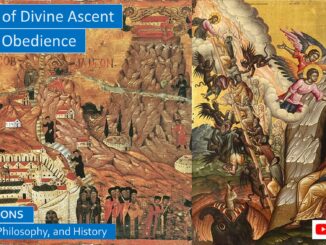
Ladder of Divine Ascent, St John Climacus, Rung 4 on Obedience
Obedience precedes repentance in the Ladder of Divine Ascent. Without obedience, there is no repentance. With repentance comes obedience. When we sinned, we did not obey; now we repent, and obey. It is interesting that in the Decalogue the commandment of honor our father and our mother, and all those in authority, connects the commands to Love God with all our heart and with all of our soul and with all of our everything to the commands to love our neighbor as ourselves.
Step 4.3 As John Climacus teaches us, in obedience we renounce our desires, what we want, what we need: “Obedience is unquestioning movement, voluntary death, a life free of curiosity, carefree danger, unprepared defense before God, fearlessness of death, a safe voyage, a sleeper’s progress. Obedience is the tomb of the will and the resurrection of humility.” […]