
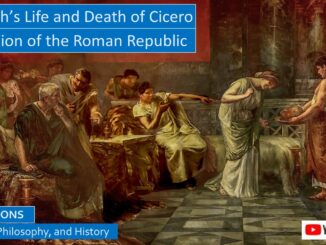
Plutarch’s Life of Cicero: Incorruptible Statesman and Stoic Philosopher in a Corrupt Roman Republic
COMPARING AND CONTRASTING CICERO AND CATO THE YOUNGER
When Cicero served as consul, the top political office in Rome, for a year, he thwarted the Catiline Conspiracy that threatened to overthrow the government. Previously, he served in other important annual offices that often preceded holding the consulship. But like Cato the Younger, Cicero was not a leading figure in the Civil Wars that led to the breakdown of the Roman Republic and the founding of the Roman Empire.
Likewise, Cato the Younger was a prominent senator who also earned renown and a Plutarch biography. Both Cato and Cicero were unique: they were morally incorruptible when blatant, rampant corruption was increasing. As consul, Cicero succumbed to violence when he summarily executed the conspirators without a trial. Although he praised the moral qualities of both, Plutarch offered greater praise for Cato the Younger.
Cicero lived during a transition. Class tensions had resulted in the Agrarian Revolt and Social War when the politics in the Roman Republic became increasingly violent. In Cicero’s youth, General Sulla had marched on Rome with his army, and although his dictatorship was not permanent, he did execute many of his political rivals, setting dangerous precedents. […]