
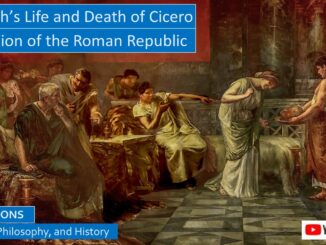
Plutarch’s Life of Cicero: Incorruptible Statesman and Stoic Philosopher in a Corrupt Roman Republic
Greek and Roman History

Plutarch’s Life of Cicero: Incorruptible Statesman and Stoic Philosopher in a Corrupt Roman Republic

COMPARING AND CONTRASTING CICERO AND CATO THE YOUNGER
When Cicero served as consul, the top political office in Rome, for a year, he thwarted the Catiline Conspiracy that threatened to overthrow the government. Previously, he served in other important annual offices that often preceded holding the consulship. But like Cato the Younger, Cicero was not a leading figure in the Civil Wars that led to the breakdown of the Roman Republic and the founding of the Roman Empire.
Likewise, Cato the Younger was a prominent senator who also earned renown and a Plutarch biography. Both Cato and Cicero were unique: they were morally incorruptible when blatant, rampant corruption was increasing. As consul, Cicero succumbed to violence when he summarily executed the conspirators without a trial. Although he praised the moral qualities of both, Plutarch offered greater praise for Cato the Younger.
Cicero lived during a transition. Class tensions had resulted in the Agrarian Revolt and Social War when the politics in the Roman Republic became increasingly violent. In Cicero’s youth, General Sulla had marched on Rome with his army, and although his dictatorship was not permanent, he did execute many of his political rivals, setting dangerous precedents. […]
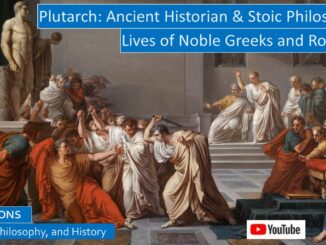
Plutarch’s Life and Works, Including His Greek and Roman Lives, and Moralia, His Stoic Sayings
Book Reviews and Miscellaneous

Plutarch’s Life and Works, Including His Noble Greek and Roman Lives, and Moralia, His Stoic Sayings

Over half of Plutarch’s Lives of Noble Romans influenced the history of the corrupt and violent last years of the Roman Republic, and the rise of the Roman Empire under Julius Caesar. Plutarch paired Greek and Roman lives based on their personalities and accomplishments. For example, Julius Caesar is paired with Alexander the Great, and the Greek companion to Cicero is Demosthenes, the renowned Greek orator who opposed Alexander the Great’s conquest of Greece. Plutarch used Xenophon as one of his sources for his lives of the Spartan Kings Agis and Agesilaus, Alcibiades, the lost life of Epaminondas of Thebes, and possibly Lycurgus of Sparta. The majority of Plutarch’s Roman lives featured the strivings of great men during the breakdown of the Roman Republic, and the subsequent struggles and civil wars that culminated in the reign of the first two emperors of the Roman Empire, Julius Caesar and Caesar Augustus, or Octavian.
Plutarch is more interested in highlighting the moral and character strengths and weaknesses of the famous men of history than he is in revealing how these great men influenced historical events. For this reason, you cannot consult only Plutarch for a complete historical review. We also consulted Will Durant’s account in his Story of Civilization, Volume 3, Caesar and Christ. Will Durant often quotes Cicero directly, and Plutarch is his primary source out of necessity. We also consulted the Wikipedia article on Cicero to fill in some background and details. […]