

Why can only the virtuous be friends? What is true friendship?
What are the greatest threats to friendship?
What can betray and destroy friendship? Should we stick up for our friends even when they are wrong?
What are the marks of a true friend?
SHORT BIOGRAPHY OF CICERO
Cicero was not only a philosopher but was also a lawyer and a statesman in the last days of the Roman Republic. He first gained public attention by protecting the rights of ordinary citizens as a lawyer, as trials were public affairs. His rhetorical eloquence won many cases and propelled him through various political offices, culminating in his appointment as consul, where he suppressed an attempted coup.

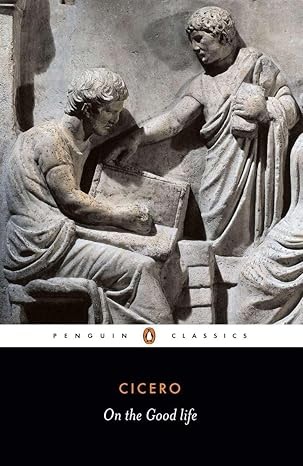
In the dying days of the Republic, Cicero supported Julius Caesar’s opponent, Pompey. Although Caesar pardoned Cicero, his political career was effectively over, although he unsuccessfully tried to make a comeback. During this time, Cicero concentrated on his literary works, including his treatise On Friendship. Mark Anthony murdered Cicero in the power struggles that followed Caesar’s assassination.
THE ANCIENT WORLD DIFFERS FROM THE MODERN WORLD
Although the advice the Stoics provide on friendship is timeless, applying to modern readers just as much as the ancients, the ancient world was very different than our modern world, and this affected how friendship was expressed.
In ancient Greece and Rome, most men married at around thirty, when they were well-established, while girls typically married at around fourteen, with little formal education. Were these young brides more like elder daughters to these men? Today, we often regard our spouse as our closest friend, but in the ancient world, men had closer friendships. Plus, today, many couples ferry their children to many extracurricular activities; but in the ancient world, children were tutored at home, and the gymnasium was one of the few extracurricular activities, where boys were ogled by old men. This, and the fact that the ancient world had few of the entertainment options we have, meant men had more time to develop friendships at symposiums, or dinner parties.
Lysis, Platonic Dialogue on Love and Friendship, Where Old Men Ogle Boys at the Gymnasium
https://seekingvirtueandwisdom.com/lysis-platonic-dialogue-on-love-and-friendship-where-old-men-ogle-boys-at-the-gymnasium/
https://youtu.be/HrSZ5SPUZ7Y
Xenophon and Plato, Socratic Dialogue, Symposium, Romantic and Carnal Love, Part 1
https://seekingvirtueandwisdom.com/xenophon-and-plato-socratic-dialogue-symposium-romantic-and-carnal-love-part-1/
https://youtu.be/OIe5pn2S1Ls
Xenophon and Plato, Socratic Dialogue, Symposium, Divine and Noble Love, Part 2
https://seekingvirtueandwisdom.com/xenophon-and-plato-socratic-dialogue-symposium-divine-and-noble-love-part-2/
https://youtu.be/z6X3pwVTdrc
In the Introduction, Thomas Habinek notes that “because the Latin word for friendship, amicitial, often had the connotation of ‘political alliance,’” Cicero was also likely “commenting on the misuse of political alliances by the various politicians in the struggles of the late Republic.”[1]
Plus, we must remember that this advice applies mostly to aristocrats, who mostly live in the cities. Our sources provide only glimpses into how the poor and rural Greeks and Romans lived.
FRIENDSHIP IS ONLY POSSIBLE AMONG THE VIRTUOUS
Cicero emphasizes: “There can be no friendship except among people who are good,” or virtuous. He is not talking about an impossible standard, but rather people who seek virtue, as no man is perfectly virtuous. He proposes that people are deemed good when their “life and conduct display reliability, integrity, fairness and generosity, and who avoid greed, sensuality and reckless conduct.”


Cicero exclaims: “Friendship is nothing other than agreement about divine and human affairs, accompanied by goodwill and affection.” In other words, they share interests in common. “Except for wisdom, I know of no better gift from the immortal gods to mankind.” “How can man be fully alive, without the serenity provided by the mutual goodwill of a friend?”
Some say that “virtue is the highest good.” It is also true that “friendship does not exist in the absence of virtue.”
Cicero adds: “Friendship shines the light of hope into the future and keeps the spirit from becoming weak or stumbling. Looking at a true friend is like seeing an image of yourself. Even when absent, friends are near; although poor, they bring riches; although weak, they are strong. What is especially hard to express is that, although dead, they live, for respect and memory,” so that we may “long to pursue their example. In this way, the dead are blessed and the living worthy of praise.”[2]
WHAT IS THE NATURE OF FRIENDSHIP?
Cicero asks: “Do we desire friendship because we are weak and helpless?”
Isn’t love another word for friendship? “Isn’t love the real force behind the sharing of goodwill?” “In real friendship, there is nothing false or simulated, only what is true and freely chosen.”
Cicero concludes: “So, it seems that friendship arises from nature rather than from need, from the inclination of the soul accompanied by a certain sentiment of love, rather than from calculation of a relationship’s potential usefulness.”
“Nothing is more lovable than virtue, and nothing more easily entices us to feel affection. We even cherish people we have never met for their virtue and integrity.”
Cicero observes: “In general, love of money is the greatest threat to friendship. Among prominent men, it is the struggle for honor and glory, which explains why the greatest political rivalries often develop between the closest friends.”
“Scipio also suggests that serious and justifiable differences arise if one friend asks another to do something wrong: for example, to help him indulge is sexual desires or commit an injustice.”
The most diabolical false friend, who made many friends among the rich and powerful, but who ruined both the lives of many young women and later many men who preyed on them with him, was Jeffrey Epstein. How many of them did he blackmail? From whom did he extract his extravagant wealth?
What can betray and destroy friendship? Cicero answers: “Doing wrong for the sake of a friend never justifies that wrong. Belief in a friend’s virtue sustains friendship. It is hard for friendship to continue once the virtue is gone.”
Cicero proposes the “following law of friendship: Don’t ask for anything shameful, and don’t do anything shameful if asked. As disgraceful and unacceptable as it is to try to excuse wrongdoing on the grounds of friendship, it is worse when someone admits to having harmed the Republic for the sake of a friend.”
Included among Cicero’s friends are his fellow politicians, though many were false friends who abandoned him during the turmoil when the Roman Republic was disintegrating.
Cicero advises us: “The first and sacred law of friendship: Seek only good from friends, do only good for the sake of friends, and don’t wait to be asked! Be always attentive! Banish hesitation! Be ready to give advice freely! Take seriously the good advice of friends. Be ready to offer it openly, even forcefully, if the occasion demands, and also be ready to follow when it has been offered.”[3]
In contrast, Antisthenes, the first Cynic philosopher who studied under Socrates, advises us: “Pay attention to your enemies, for they are the first to notice your faults.”[4] Often, friends are reluctant to tell us what we need to know, preferring to tell us what they think we want to hear.
Greek Cynic Philosophers
http://www.seekingvirtueandwisdom.com/diogenes-and-the-greek-cynic-philosophers/
https://youtu.be/zAAal5p8AX8
POOR MORALS CAN LEAD TO FALSE FRIENDS
Cicero is critical of the good weather friends who seek to “hold the reins of friendship as loosely as possible, so they can draw them tight or release them as they wish.”
Cicero is also critical of those who “say friendship is to be sought for the sake of protection and assistance, not goodwill and affection, and the less confidence and strength people have, the more aggressively they pursue friendship. This is why women seek the protection of friendship more than men, the poor more than the rich, the miserable more than those who are considered happy.”
Does this mean that those who seek friendship are weak? Cicero rejects this notion when he celebrates: “O brilliant wisdom! They might as well take the sun from the heavens when they take friendship from life! The immortal gods have given us nothing better or more enjoyable than friendship.”
Cicero states that for false friends, “in many circumstances, virtue is pliant and malleable, expanding when things go well for a friend, contracting when he is in difficulty.”
Cicero asks: “What could be so absurd as to take advantage as to take pleasure in various inanimate entities, such as honor, glory, a building, clothing, or bodily improvement, but not take pleasure in a living being endowed with virtue, who is capable of love” and reciprocated-love? It is not the advantages friendship brings “that makes us happy, but our feeling of love for our friend.” “Friendship doesn’t result from advantage, but advantage does result from friendship.”
St John of the Cross repeats this principle with clarity, when he advises us to only choose as our close friends those who increase in our heart our Love of God. This is especially true of those whom we marry.
St John of the Cross, Dark Night of the Soul, Seven Capital Sins and Best Type of Close Friend
https://seekingvirtueandwisdom.com/st-john-of-the-cross-dark-night-of-the-soul-seven-capital-sins-and-best-type-of-close-friend/
https://youtu.be/DgL7Y5pIFAU
Can tyrants have friends? Cicero responds: “Surely this is the life of tyrants: to be without trust, affection, or reliable expectation of goodwill, always anxious and suspicious about everything, with no opportunity for friendship. For who could love the person he fears, or the person he thinks fears him? Tyrants may be treated to a pretense of affection, at least for a time, but once they run into trouble, as tends to happen, it becomes obvious how few friends they have.”[5]
LIMITS AND BOUNDARIES OF FRIENDSHIP, WHEN IS A FRIEND A FALSE FRIEND?
Cicero does not agree with the common notions of the limits and boundaries of friendship:
- “We should treat a friend as we treat ourselves.”
- “Our goodwill towards friends should match and correspond to their goodwill towards us.”
- “Our friends should value us as much as we value ourselves.”
Does the first point conflict with the Christian notion that we should love our neighbors as we love ourselves, which is particularly true for our spouses and friends? The answer is that Cicero’s TREAT is not identical to the Christian LOVE. Here I wish to offer Cicero’s exact definition rather than paraphrase it, lest you learn more about my ideals than Cicero’s. Which is why we choose to quote extensively from the ancient authors.
Cicero states that the restriction that we should “apply the same energy to friends as we do ourselves is false.” Note how he subtly changes the wording.
Quoting Cicero directly: “There are many things that we would never do for our own sake, but will do for the sake of friends, such as begging and pleading with an unworthy person, or challenging or even hectoring someone. Such behavior is inappropriate in dealing with our own affairs, but perfectly appropriate in the case of friends. There are many areas in which honorable men reduce their own advantages, or let them be reduced by others, to allow a friend to benefit instead.”[6]
Why does Cicero suggest that a friend may hector someone for his friend? Perhaps this is influenced by the Roman patron-client relationship. Although the client is subservient to his patron, each party has obligations to the other. One example is that slaves who purchased their freedom were expected to be clients of their former master.
Cicero criticizes the notion that our goodwill should match our friend’s goodwill to us, because this leads to keeping a scorecard for our friends. “True friendship” “doesn’t worry about giving more than it receives; it isn’t afraid to be wasteful” in generosity. Rather, we should “let things fall by the wayside and contribute more than our share to the friendship.”
Cicero rejects the third restriction “that friends should place the same value on us as we place on ourselves, as the most destructive of all,” because this is clearly about keeping scorecards by which we judge our friends. Cicero warns that sometimes friends can be too distracted by their sufferings to show affection to their friends.
Cicero proclaims: “It is often the case that a person’s spirit is too abject or his hope of bettering his situation is too broken. It is the friend’s job not to feel the same way, but to make an effort to lift the other person’s languishing spirit and lead him to a better and more hopeful way of thinking.”
Cicero criticizes Scipio’s maxim that “we should love a friend as if someday we will hate him.” Cicero instead says that a “better guideline in building friendships is that we should be careful not to start loving someone whom we could possibly come to hate.”
Cicero confirms this when he says we should “choose as our friends those who are steady, dependable, and consistent.”
Cicero observes: “A wise man holds to these two principles in friendship:
- Never to lie or deceive.
- Always reject charges brought against a friend by someone else, not even entertaining the suspicion that the friend has done something wrong.”[7]
Does this mean we should defend our friend’s actions even when they are indefensible? For both our friends and our neighbors, we should think the best of them rather than the worst, so we can encourage the best in them, rather than the worst. Although we should be reluctant to find fault with our neighbor, particularly those who are virtuous close friends, we should not ignore hatefulness.
Cicero warns us: “We should commit to a friendship after character and lifestyle are settled and confirmed.” “Good men cannot be friends with the wicked, or the wicked with the good: there is the greatest possible difference in character and interests.”
What should we do when “our friend’s vices become apparent,” either “through actions against friends or others?” Cicero advises that “we free ourselves of such friendships by slowly withdrawing from contact,” preferring “tugging to tearing apart,” “lest we gain an enemy in losing a friend.”[8]
PRESERVING OUR FRIENDSHIPS
Cicero proclaims: “People who deserve friendship are people who show reason to be loved.” They love their neighbors, without exception.
“Each person loves himself, not to make some profit from his affection, but because he is dear to himself on his own. Unless this same feeling is transferred to a friendship, we will never find a true friend. For a friend is, in effect, another self.”
Cicero warns us: “Take care not to grow apart from your friends; but if you do, make it clear that your friendship just faded out and wasn’t clubbed to death.”
Stable friendships require that our friends be stable. Cicero warns that some needy people “seek from friends what they themselves do not provide. It is only fair to first be a good man, then to look for another like yourself.” A stable friendship is formed from good friends who are both good and who “will take control of the very desires that enslave everybody else: they will rejoice in fairness and justice, they will always be on the lookout for the other,” watching their back, and “they will never demand from each other anything wrong or dishonorable. They will cherish, love, and even revere each other. Indeed, to take away reverence from friendship is to remove its most precious jewel.”
Cicero warns us: “It is a dangerous mistake to think that a friendship provides a license for any sort of lust or sin. Nature created friendship as an aide to virtue, not a comrade to vice, because virtue cannot achieve its highest goals in isolation, but only when joined and linked with that of another.”
“You must judge before loving, not love before judging. We often pay for our negligence, and most of all in choosing and cultivating friends.”
Cicero warns: “Truth is destructive if, in fact, it causes the hatred which poisons friendship. Much more destructive is deference or acquiescence that indulges the sins of a friend and permits reckless behavior. But the biggest mistake is to dismiss the truth and succumb to other people’s flattery.”
The positive form of the commandment: “Do not bear false witness against your neighbor,” is to protect the reputation of your neighbor, avoiding gossip, even when the gossip is true.
The Decalogue in the Torah, Blog 6, Do Not Bear False Witness Against Your Neighbor
http://www.seekingvirtueandwisdom.com/the-decalogue-in-the-torah-blog-6-do-not-bear-false-witness-against-your-neighbor/
Do Not SLANDER: Teachings from the Medieval Rabbis, Rashi, Rambam, Ramban, the Torah and Talmud
https://youtu.be/KvKOCyREmQA
Martin Luther, Do Not Slander, Lutheran Catechisms
https://seekingvirtueandwisdom.com/luther-on-do-not-bear-false-witness-against-your-neighbor/
https://youtu.be/jM2FrvyKsbk
Do Not Slander: Dr Laura and Her Rabbi Stewart Vogel on Ten Commandments
http://www.seekingvirtueandwisdom.com/dr-laura-and-her-rabbi-on-not-bearing-false-witness-against-your-neighbor/
https://youtu.be/tlTymS2Bxxo
Decalogue: Do Not Slander, Catholic Catechism 2465-2503, and St Thomas Aquinas
https://seekingvirtueandwisdom.com/decalogue-do-not-slander-catholic-catechism-2465-2503-and-st-thomas-aquinas/
https://youtu.be/9RqsWvRZpWw
Cicero warns that “if a person’s ears are closed to the truth, so much so that he can’t hear it from a friend, he is a lost cause anyway.” He quotes Cato: “For some men, bitter enemies do a greater service than friends who might seem sweet: the former often tell the truth, the latter never.”
“Giving and taking criticism is the mark of a true friendship: giving cheerfully, not harshly, and accepting patiently, not reluctantly. There is nothing more destructive of friendship than flattery, sweet-talk, or constant affirmation.”
Cicero warns us: “Hypocrisy is a vice under any circumstances because it blurs our capacity to assess what is real. It is especially at odds with friendship as it destroys the truth, without which friendship is meaningless. For the power of friendship derives from the fact that several souls become one.”
Cicero proclaims: “Virtue creates and preserves friendships. Virtue is the source of compatibility, reliability, and consistency. When virtue advances, extending its torch, and sees and recognizes itself in someone else, it moves in that direction and receives in exchange what it finds in the other. From this encounter, both love and friendship blaze forth. To love means nothing other than to cherish the one you love without pursuing your needs or your advantage. Advantage blossoms in friendship anyway, just like a flower, even though you did not seek it.”
Cicero concludes: “Because human affairs are frail and fleeting, we need to be always on the lookout for people to love and be loved by. If life is deprived of affection and goodwill, all pleasure vanishes also.” “Strive for virtue, without which friendship is impossible, and to recognize that other than virtue, nothing is preferable to friendship.”[9]
We have previously reflected on Cicero’s treatise On Aging, we are planning one or more reflections on his three essays On Duties.
Roman Stoic Philosopher and Politician Cicero on Aging and Death
https://seekingvirtueandwisdom.com/roman-stoic-philosophers-cicero-on-aging-and-death/
https://youtu.be/ne9T2N2mvZY
DISCUSSING THE SOURCE
The early church fathers considered Cicero to be a virtuous pagan, and many of his works and speeches survived, presumably in multiple manuscripts. His essays On Friendship, his three essays On Duties, and his essay on Aging were written in 44 BC, the year before his murder by the forces of Mark Anthony. Thomas Habinek’s translation is easy to read, and Cicero is known for his elegant Latin.[10]
[1] Thomas Habinek, Introduction to Cicero, On Friendship, p. xviii.
[2] Cicero, On Friendship, included in compilation, On Living and Dying Well, translated by Thomas Habinek (New York: Penguin Books, 2012, originally 44 BC), pp. 81-83.
[3] Cicero, On Friendship, p. 85-90.
[4] Diogenes Laertius, Lives of Eminent Philosophers, translated by Pamela Mensch, (New York: Oxford University Press, 2018), Book on the Cynic Philosophers, Book 6: 12, p. 264.
[5] Cicero, On Friendship, pp. 90-93.
[6] Cicero, On Friendship, p. 94.
[7] Cicero, On Friendship, pp. 94-97.
[8] Cicero, On Friendship, pp. 98-99.
[9] Cicero, On Friendship, pp. 100-108.




Be the first to comment