Why was Pope Leo I also known as Pope Leo the Great? What were his accomplishments? Why was he declared a saint?
How was Pope Leo the Great able to persuade Attila the Hun to refrain from sacking Rome?
Why was Pope Leo the Great unable to persuade King Genseric not sack Rome a few months later? What concessions did this barbarian king grant?
How did Pope Leo the Great influence the Fourth Ecumenical Council of Chalcedon with his Tome for Flavius?
YouTube video for this blog: https://youtu.be/4XwZYxDWAtA
SHORT BIOGRAPHY OF POPE LEO THE GREAT
In Butler’s Lives of the Saints, we read: “St Leo’s family was probably Tuscan, but he seems to have been born in Rome, as he always speaks of it as his ‘patria.’ Of his early years and” his “priesthood there are no records. It is clear from his writings that he received a good education, although it did not include Greek.” When he was a deacon,” his position led him to correspond directly with St Cyril, who would play a leading role in upcoming ecumenical councils.[1]
Pope Leo first became a deacon in the church in AD 430, and while he was on a difficult diplomatic mission to resolve disagreements between several Roman generals in Gaul, he was consecrated pope in 440. As the first pope to be called great, and the first pope named Leo, he greatly strengthened the papacy by both his teachings and his actions. Not only did Pope Leo meet the challenges of ruling Rome, but he also inspired his flock with his preaching and teaching. Although he was not a profound thinker, his hundreds of sermons and letters addressed concerns of ordinary Christians and theologians.
As Pope Benedict XVI writes: “The times in which Pope Leo lived were very difficult: constant barbarian invasions, the gradual weakening of imperial authority in the West, and the long, drawn-out social crisis forced the Bishop of Rome” “to play an important role in both civil and political events.”
Pope Benedict XVI continues: “In a period of profound crisis, Leo the Great knew how to make himself close to the people and the faithful with his pastoral action and his preaching. He enlivened charity in a Rome tried by famines, an influx of refugees, injustice, and poverty. He opposed pagan superstitions and actions of Manichaean groups. He associated the liturgy with the daily life of Christians.”
Pope Benedict XVI also notes that Pope “Leo the Great taught his faithful, and his words still apply to us today, that the Christian Liturgy is not the memory of past events, but the actualization of invisible realities which act in the lives of each one of us.” He sought to “combine the practice of fasting with charity and almsgiving.”[2]
The Catholic professor William O’Malley notes that “Pope Leo the Great carried Pope Damasus’ claims for the papacy to a new level. Leo was a renowned preacher, and in his sermons, he hammered home Peter’s mystical presence in Rome and presented himself to act with Peter’s authority. He wrote long letters to bishops of Africa, Gaul, Spain, and Italy admonishing them, settling disputes, and letting them know he expected them to follow Roman customs. When Bishop Hilary of Arles began to behave as if his see were a patriarchate independent of Rome, Leo got a rescript from Emperor Valentinian III confirming that he had jurisdiction over all the western provinces.”[3]
Pope Benedict XVI was conciliatory in his history: Pope Leo “intervened in various circumstances in the West as in the East, with caution, firmness, and lucidity through his writings and legates. In this manner, he showed how exercising the Roman Primacy was as necessary then as it is today to serve communion, a characteristic of Christ’s one church, effectively.”[4]
What did the pope mean by “serving communion?” Benedict wrote the original in German, which means this is a translation. Perhaps this phrase refers to how many post-Vatican II popes sought not a formal union between the Catholic and Orthodox Churches, but rather full communion between these churches, which means they honor each other’s sacraments in all circumstances.[5] Currently, priests can administer the last rites to non-Catholics when they are near death.
POPE LEO PERSUADES ATTILA THE HUN TO SPARE ROME
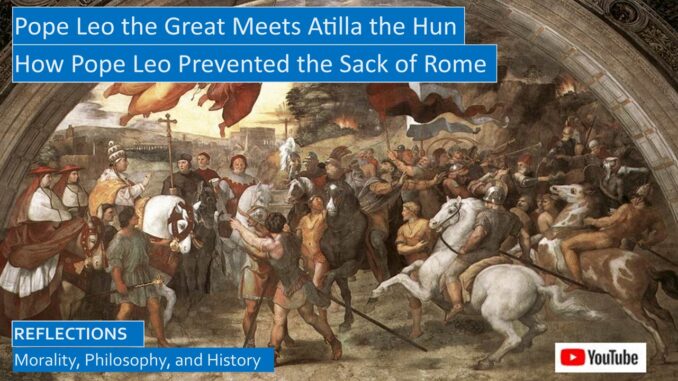
In the year 452, Pope Leo, with a Roman delegation, met Attila, chief of the Huns, and dissuaded him from continuing the war of invasion by which he had already devastated the northeastern regions of Italy.
The medieval Golden Legends of the saints has this exaggerated account: “At that time, Attila was devastating Italy. Saint Leo spent three days and nights in prayer in the church of the apostles and then said to his associates: ‘If any of you wish to follow me, come along!’ He went out of the city and moved toward Attila and his band. The Hun, seeing the blessed pope, dismounted, knelt at his feet, and begged him to ask for anything he wanted. Leo asked him to withdraw from Italy and to set his prisoners free. Attila’s people protested: ‘Was the conqueror of the world to be conquered by a priest?’”

In this Golden Legend, “Attila answered them: ‘I acted for my own good and yours! I saw standing at his right side a mighty warrior with his sword drawn, who said to me: Unless you obey this man, you and your people will perish!’”[6]
Perhaps medieval peasants would have believed that Attila the Hun would have knelt at the feet of Pope Leo the Great, as that is the proper manner in which ordinary people would greet the pope. However, if Attila the Hun had knelt at the pope’s feet in front of his warriors, he would have lost their respect.
We cannot appreciate this remarkably courageous encounter between Pope Leo the Great, armed only by his majestic presence and his papal robes, and Attila the Hun, ravager of much of Europe, unless we study the history. We reflected on the circumstances and events leading up to this famous encounter, reflecting on how barbarian soldiers and generals played an increasingly important role in the Roman army and society. Attila did not simply ride off the steppes of Asia to conquer the Roman Empire; rather, he was deeply embedded in Roman society. The leading Western Roman general Aetius grew up serving as a hostage in first the Visigoth court, and then in the Hun court. Later, he led armies partially staffed by Huns in defense of the Roman Empire. Attila the Hun did not win all his battles, and sometimes general Aetius fought him to a draw.
Forty years before Attila the Hun agreed to spare Rome, the Visigoth general Alaric, who had served in the Roman army, sacked Rome for the first time in eight centuries.
Sacks of Rome Over the Millennia
- Sack of Rome (390 BC) following the Battle of the Allia, by Brennus, king of the Senone Gauls.
- Sack of Rome (410), by the Visigoths under King Alaric I.
- Attila the Hun (452), dissuaded from sacking Rome by Pope Leo the Great.
- Sack of Rome (455), by the Vandals under King Gaiseric.
- Siege of Rome (472), by the Western Roman general Ricimer.
- Sack of Rome (546), by the Ostrogoths under King Totila.
- Siege of Rome (549–550), also by Totila.
- Raid of Rome (846), by the Arabs.
- Sack of Rome (1084), by the adventurer Robert Guiscard’s Normans.
- Sack of Rome (1527), by mercenary troops of the Holy Roman Emperor Charles V.[7]
We also reflected on the curious incident when the Roman princess Honoria promised her ring to Attila the Hun to escape the repressive atmosphere at court after she became pregnant with a wayward court official. Although this was not likely a cause for Attila invading Italy, it was certainly an excuse.
Did Rome Fall, or Evolve Into the Barbarian Kingdoms? Sacks of Rome, and Attila the Hun’s Invasions
https://seekingvirtueandwisdom.com/did-rome-fall-or-evolve-to-barbarian-kingdoms-sack-of-rome-and-attila-the-huns-invasions/
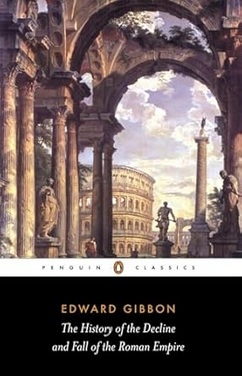
How was Pope Leo the Great able to dissuade Attila the Hun from sacking Rome? At the time, the Roman general Aetius had insufficient troops to challenge Attila. Edward Gibbon, the English historian writing around the time of the American Revolution, imagined that after the Roman delegation, led by Pope Leo the Great, entered the tent of Attila, that he “listened with favorable, even respectful, attention. The deliverance of Italy was purchased by the immense ransom, or dowry, of the princess Honoria.” Gibbon imagines that “their martial spirit was relaxed by the wealth and indolence of a warm climate” and the rich Italian food and wine.
Attila warned that the princess Honoria should be delivered to his ambassadors when promised, but he died suddenly after a hard night of feasting and drinking when celebrating the addition of his new young wife Ildico to his harem. His sons could not hold together his fragile alliance of barbarian tribes and raiders, and his mighty kingdom crumbled.
Gibbon was also influenced by the prejudices of his age. He imagined that Attila’s compatriots warned him “that Alaric had not long survived the conquest of the eternal city,” that superstitions may have dissuaded him. Plus, he imagined that “the pressing eloquence of Leo, his majestic aspect, and sacerdotal robes, excited the veneration of Attila for the spiritual father of the Christians. The apparition of the two apostles, St Peter and St Paul, who menaced the barbarian with instant death if he rejected the prayer of their successor, is one of the noblest legends of ecclesiastical tradition.”[8]
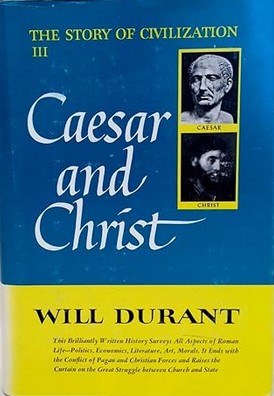
While Gibbon credited superstition, the historian Will Durant seeks more practical explanations for the withdrawal of Attila the Hun. After “Valentinian III fled to Rome, he sent to the Hun King a delegation composed of Pope Leo I and two senators. No one knows what happened at the ensuing conference. Leo was an imposing figure and received most of the credit for the bloodless victory. History only shows that Attila retreated. Plague had broken out in his army, food was running short, and the Eastern Emperor Marcian was sending reinforcements from the East.”[9]
The famous fresco painted by Raphael in the Vatican shows St Peter and St Paul threatening the barbarian army with their swords. This is reminiscent of the Elisha story told in 2 Kings, where the King of Aram marched his army against the Jews.
Quoting from the Old Testament: When Elisha’s attendant woke up, he saw “an army with horses and chariots surrounding the city. He said, ‘Alas, master! What shall we do?’ Elisha replied, ‘Do not be afraid, for there are more with us than there are with them.’ Then Elisha prayed: ‘O Lord, please open his eyes that he may see.’ So, the Lord opened the eyes of the servant, and he saw; the mountain was full of horses and chariots of fire all around Elisha.” Then Elisha prayed that the Lord blind them all. Elisha then led the blinded soldiers back to Samaria.[10]
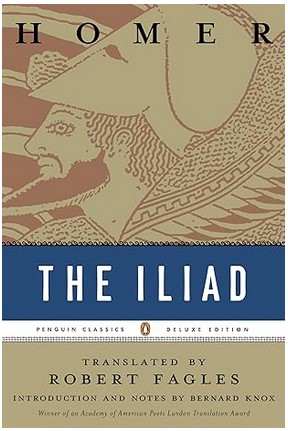
Quite likely the main reason why Pope Leo the Great was able to dissuade Attila the Hun from sacking Rome was the courage Leo displayed marching unarmed, showing no fear, into the enemy camp bristling with fierce armed Hun warriors. This courage mirrors similar events described in the Greek classic, the Iliad, which opens with the unarmed Trojan priest Chryses marching into the Greek camp asking for the return of his daughter Chryseis. When King Agamemnon disrespects this courageous request, the god Apollo sends a plague, killing many Greek soldiers.
In a more successful camp meeting story, the unarmed Trojan King Priam rides into the Greek camp to bargain with the mighty warrior Achilles for the body of his son Hector. This is a successful camp meeting story, Achilles abandons his rage against Hector for killing his close friend Patroclus in battle, as he is touched by the humble courage of this mighty king seeking the body of his dead son, Hector. Achilles insists that King Priam stay and break bread with him as a sign of reconciliation.
There are numerous successful camp meeting stories among the American Indian tribes in the Tales of the Northwest. In one story, a half-breed father’s family is massacred while he is away hunting, except for his teenage daughter. When he courageously enters the hostile Indian camp unarmed, he walks past poles on which are swinging the scalps of his dead wife and children. Impressed by his stoic bravery, he is invited to share dinner with the chief and his braves, and his reunited daughter. Likewise, in another story, an Indian brave marches into the camp of the hostile tribe who kidnapped his wife many months earlier. Impressed by his bravery, he is reunited with his wife, and their two tribes declare a peace, becoming close allies.
Iliad, Blog 1, Why Should a Christian Read the Iliad?
http://www.seekingvirtueandwisdom.com/iliad_blog01/
The Iliad, the Basis of Greek Culture and the Western Philosophical Tradition
https://youtu.be/DpmuhZJUJn0
Iliad Blog 2, Captured Concubines in the Iliad and the Torah
http://www.seekingvirtueandwisdom.com/iliad_blog02/
The Iliad, blog 4, Briseis, Chryseis, Aren’t all Concubines the Same?
http://www.seekingvirtueandwisdom.com/the-iliad-blog-4-briseis-chryseis-arent-all-concubines-the-same/
Concubines in the Iliad, Old Testament and Christian Tradition
https://youtu.be/bGHHD7XTvr0
Iliad, Blog 3, Visiting the Enemy Camp, Greeks vs Indians
http://www.seekingvirtueandwisdom.com/iliad-blog-3-visiting-the-enemy-camp-greeks-vs-indians/
The Warrior Cultures of the Iliad and the American Indian, Bravely Visiting the Enemy Camp
https://youtu.be/ynIx-AVI2f8
The Iliad Blog 5, the Tide of Battle Turns Against the Greeks
http://www.seekingvirtueandwisdom.com/the-iliad-blog-5-the-tide-of-battle-turns-against-the-greeks/
The Iliad Blog 6, Embassy to Achilles, Oration, Failed Meeting
http://www.seekingvirtueandwisdom.com/the-iliad-blog-6-embassy-to-achilles-oration-failed-meeting/
The Iliad Blog 7, the deaths of Patroclus and Hector
http://www.seekingvirtueandwisdom.com/the-iliad-blog-7-the-deaths-of-patroclus-and-hector/
The Iliad of Homer: Glory, Honor, Madness and Futility of War
https://youtu.be/7lI2ZQ50wRc
The world had changed since the days of the ancient Greek city-states and the even earlier era of the Trojan War. In these simpler times, a brave hero could sit down for a simple dinner with an opposing monarch. These dinners were an integral part of these camp meeting stories in these simpler times. Indeed, it took courage to calmly eat a meal with an enemy, where an angry warrior could cut you down in an instant. Indeed, in our first Indian tale, the chief gently persuaded the warrior to loosen the draw on his bow and allow his brave guest to finish his simple meal.
But, by the waning years of the Western Roman Empire, this obligatory warrior meal was no longer possible. Emperor Diocletian had greatly increased the pomp and splendor of his imperial court, increasing the distance between the monarch and his subjects, who were now bidden to bow at his feet in his presence as if he were a god, an Eastern potentate.
What would a dinner with Attila the Hun be like? Edward Gibbon imagines the scene when Attila the Hun had invited Roman ambassadors to his banquets, likely using the ancient historian Priscus as his source. “The royal table and couch, covered with carpets and fine linen, was raised by several steps in the middle of the hall; and a son, an uncle, or perhaps a favorite king, were admitted to share the simple and homely repast of Attila.”
Gibbon continues: “Two lines of tables, each of which contained three or four guests, were ranged in order on either side; the right was esteemed the most honorable, but the Romans ingenuously confess, that they were placed on the left.” “The Barbarian monarch received from his cup bearer a goblet filled with wine, and courteously drank to the health of the most distinguished guest.” “Two Scythians stood before the couch of Attila, and recited the verses which they had composed, to celebrate his valor and his victories.”[11]
Since Attila the Hun had sufficiently respected the immense courage of Pope Leo the Great, who entered his camp unarmed and unafraid, to grant his wishes and spare the city of Rome from sacking; he likely would not have asked Leo, out of respect, to compromise his dignity with a dinner like this.
BUT ROME IS SACKED BY THE VANDAL KING GENSERIC
Pope Benedict notes that in “the spring of 455, Leo did not manage to prevent Genseric’s Vandals” “from invading the undefended city of Rome that they plundered for two weeks. However, the gesture of the Pope, who, defenseless and surrounded by clergy, went forth to meet the invader to implore him to desist, nevertheless prevented Rome from being burned and assured that the Basilicas of Saint Peter, Saint Paul, and Saint John, in which part of the terrified population sought refuge, were spared.”[12]
We discussed this Sack of Rome in our prior reflection. In a future reflection, we will explore the papacy of Pope Leo III, who crowned Charlemagne as Holy Roman Emperor, as he could not count on the Eastern Roman Emperor to protect his realms. The only problem was that the kingdom of Charlemagne, King of the Franks, was on the wrong side of the Alps. To better enable the pope to protect himself and Rome, his father, Pepin the Short, transferred the Frankish Italian lands that he won from the Lombards to the papacy, so the pope could command an army to defend Rome.[13] In the centuries between the papacies of Pope Leo the Great and Pope Leo III, Rome would be sacked several more times.
YOUTUBE
FOURTH ECEUMENICAL COUNCIL OF CHALCEDON
The ancient world lacked the entertainment options available today; there was no radio, no television, no movies, and infrequent public games. In an autocratic Roman Empire, ordinary citizens did not discuss politics. Thus, the church did not have to compete as much for attention as today. In the ancient world, sermons were followed closely, as were the proceeding of the church councils. The third, fourth, and fifth Ecumenical Councils discussed the human and divine natures of Christ, and Pope Leo the Great played a leading role at the Fourth Ecumenical Council at Chalcedon.
The Catholic scholar, Eamon Duffy,[14] points out that although he was unable to attend the Fourth Ecumenical Council of Chalcedon personally, Pope Leo the Great responded with the Tome to Flavian, where he “restated the paradoxes of the New Testament in starkly simple yet eloquent language. All talk of a mixed nature in Jesus, Leo insisted, was just a poisonous muddle which turned the Son of God into some sort of monstrous hybrid. Jesus was indeed a single person, but in him two natures, human and divine, coexisted without confusion and cooperated for the salvation of the world. Jesus was perfectly human, but he was also fully divine.”
Eamon Duffy reasons that “the Christianity of the Latin West was muscular and down to earth, concerned with clean living and plain thinking, not much given to speculation. In the more subtle and sophisticated East, however, conflicting theories about Christ’s divine nature leaked out of the lecture halls and libraries into the pubs and marketplaces, and were regularly debated there, sometimes with the help of fists and broken bottles. One particularly influential theologian, Eutyches, came up with the theory that in Jesus the human and divine natures had somehow become fused into a unique single new nature, higher than merely human, and a little less than divine.”[15]
One the other hand, the balanced account of the Orthodox scholar John Anthony McGuckin[16] notes that the Tome to Flavian was not penned by Pope Leo the Great, but was rather “a pastiche of Christological opinions and phrases from the second-century Tertullian and the early fifth-century Augustine of Hippo, neither of whom had an sense of the mid and late fifth-century arguments” being debated at the fourth Ecumenical Council.
The Tome had been studied and rejected two years previously at the Second Council of Ephesus, also known as the Robber Council. A number of bishops had walked out of this council, and its decisions were not endorsed by the Council of Chalcedon.
McGuckin states: “Rome was determined at all costs to elevate Leo’s Tome as the last word of Roman doctrinal teaching on the issue of the Christological union, but both the Byzantine Chalcedonians and the Egyptian and Syrian Miaphysites thought it was a poorly conceived document. The Byzantines thought it was orthodox” because Tertullian and Augustine’s writings were part of Church tradition. But these Eastern Christians thought “it was excessively rigid in its distinction of the two natures of Christ, as if they were spheres of operation, while the Miaphysites thought it bordered on the heretical in its refusal to speak of a real and decisive union having taken place in those natures so as to make them a unitary reality.”
In Leo’s Tome, “Christ is one single, divine person, in harmony with St Cyril’s insistence; but equally, this one person presides over two quite distinct natures. This blows a hole in St Cyril’s insistence that what happens in the incarnation is a henosis, or spiritual union, of the natures once separate.”
The distinctions between these two competing theologies are subtle, and many people, McGuckin included, have difficulty understanding and distinguishing all the differences between these two positions. We can never be totally sure of the exact definition of the technical Greek theological terms used in these ancient debates. The Byzantine Churches wanted to affirm the validity of Leo’s Tome, since it valued his input, but the Egyptian and Syrian Miaphysite Churches objected so strongly to Leo’s Tome that they eventually split from the Byzantine Church.[17] Today these Miaphysite Churches are known as the Coptic Church and the Oriental Orthodox Churches. Today, the biggest hurdle to reunification between the Eastern Orthodox and Oriental Orthodox Churches is that they each excommunicated many of the other’s saints, hurling anathemas at each other.[18]
This also had political implications: the newly formed Arab Muslims were on the march and were threatening the Middle East, Egypt, and Catholic North Africa. The acceptance of Pope Leo’s Tome and the decision at Chalcedon threatened the unity of the Eastern Byzantine Roman Empire.
The Byzantine Emperor Justinian called the Fifth Ecumenical Council at Constantinople to try to resolve this impasse. The Council reemphasized the Christology of St Cyril and deemphasized Leo’s Tome. This did not heal the rift with the Egyptian and Syrian Churches, while the Latin Church and the Papacy accepted the formulations of this council reluctantly.[19]
The Catholic historian William O’Malley notes that “Leo had to face the same problem Pope Damasus faced with an earlier council. In a disciplinary decree, canon 28, the Council of Chalcedon, despite the protests of Leo’s legates, accorded Constantinople the same patriarchal status as Rome. Both were imperial cities. As did Damasus, Leo found this utterly unacceptable and, despite his triumph at Chalcedon, he withheld for a time his approval of it.”[20] This was in spite of the fact that, decades before, the capital of the Western Roman Empire had been transferred first to Milan,[21] then to Ravenna.[22]
Pope Leo, in his Sermon 64, quoted from Scriptures how Peter professed to Jesus: “You are the Christ, the Son of the living God.” And so it is that God and man together “are not foreign to the human race but are instead alien to sin.”[23]
GOLDEN LEGEND OF POPE LEO THE GREAT
The medieval Golden Legends of the saints tells this fanciful story: “One day, when Pope Leo was offering Mass” “and distributing communion to the faithful, a woman kissed his hand, and he experienced a violent temptation of the flesh. The man of God, taking cruel vengeance on himself that same day, secretly cut off the hand that had scandalized him, and threw it away.”
The story continues: “In time, the people began to murmur at the pope for not celebrating the divine mysteries as usual. Then Leo turned to the Blessed Virgin and committed himself totally to her care. She quickly appeared at his side and with her holy hands put back his hand and made it firm, ordering him to proceed as before and offer sacrifice to her Son. Leo proclaimed to all the people what had happened to him and showed the restored hand to everyone.”[24]
In this medieval tale, our beloved Pope Leo talks directly to the Virgin Mary, and she visibly responds with magic!
This story is clearly referring to the lesson in Matthew’s Sermon on the Mount, where Jesus exhorts us: “You have heard that it was said, ‘You shall not commit adultery.’ But I say to you that everyone who looks at a woman with lust has already committed adultery with her in his heart. If your right eye causes you to sin, tear it out and throw it away; it is better for you to lose one of your members than for your whole body to be thrown into hell. And if your right hand causes you to sin, cut it off and throw it away; it is better for you to lose one of your members than for your whole body to go into hell.”[25]
Both the Church Fathers and modern preachers discourage us from taking this passage literally.
When else did the people murmur against their leaders? The Israelites constantly murmured against Moses after the Exodus, when they endured hardships in the desert in their forty-year march to the Holy Land. In the King James Version, Moses said to the people: “When the Lord shall give you in the evening flesh to eat, and in the morning bread to the full,” “He hears your murmurings which you murmur against God.” “Your murmurings are not against us, but against the Lord.”[26]
CONCLUSION
Pope Benedict XVI and Pope Leo the Great teach us that “the Creator enlivened, with the breath of rational life, man formed from the dust of the ground. After the original sin, he sent his Son into the world to restore to man his lost dignity and to destroy the dominion of the devil through the new life of grace.”
Pope Benedict XVI emphasizes: “Through the force of his Christological faith, Pope Leo the Great was a great messenger of peace and love. He thus shows us the way: in faith we learn charity. Let us therefore learn with Saint Leo the Great to believe in Christ, true God and true man, and to implement this faith every day in action for peace and love of neighbor.”[27]
DISCUSSING THE SOURCES
We have many sources for this reflection, and all of our sources are fascinating and enjoyable to read, painting for us in livid colors a world long gone that is the foundation of both our faith and our civilization. We have a separate reflection on the fascinating lives of the saints and popes, in both ancient and modern sources.
Book Reviews: Golden Legend, Butler’s, OCA, and Pope Benedict XVI’s Lives of Saints
https://seekingvirtueandwisdom.com/book-reviews-golden-legend-oca-and-butlers-lives-of-the-saints/
https://youtu.be/RFUeBLPMyqI
We briefly discussed John Anthony McGuckin’s history of the first millennium of the church in our book review of the Apostolic Fathers. Also, Volume 12 of the Post-Nicene Fathers, which is available as an eBook, contains many sermons and letters of Pope Leo the Great and St Gregory the Great.
Book Review: Early Church Fathers Library – 38 Volumes in 3 Series
http://www.seekingvirtueandwisdom.com/early-church-fathers-library-38-volumes-in-3-series/
Book Reviews on Apostolic and Early Church Fathers
http://www.seekingvirtueandwisdom.com/book-reviews-on-apostolic-and-early-church-fathers/
How To Read Ancient Works, and Book Reviews on the Apostolic Church Fathers
https://youtu.be/I_2q4BiRBlU
We discussed the Iliad and Odyssey by Homer, and the American Indian Tales of the Northwest in our book reviews of Greek History and Philosophy.
Book and Lecture Reviews of Ancient Greek History and Philosophy
http://www.seekingvirtueandwisdom.com/book-and-lecture-reviews-of-ancient-greek-history-and-philosophy/
https://youtu.be/472aVKkPsk8
We also reflected on the histories of the Western Roman Empire in our prior reflection as it evolved into the barbarian kingdoms that, in turn, evolved into the modern states of Europe.
Did Rome Fall, or Evolve Into the Barbarian Kingdoms? Sacks of Rome, and Attila the Hun’s Invasions
https://seekingvirtueandwisdom.com/did-rome-fall-or-evolve-to-barbarian-kingdoms-sack-of-rome-and-attila-the-huns-invasions/
[1] Butler’s Lives of the Saints (Harper San Francisco, 1991, 1956, originally 1759), November 10th, St Leo the Great, p. 369.
[2] Pope Benedict XVI, Great Christian Thinkers, translated by the Vatican Press (Minneapolis, Fortress Press, 2011), St Leo the Great, pp. 119-121, and Pope Benedict XVI, Church Fathers and Teachers, From Saint Leo the Great to Peter Lombard, translated by L’Osservatore Romano, or the Vatican Press (San Francisco, Ignatius Press, 2010), St Leo the Great, pp. 7-11. Both are identical.
[3] John O’Malley, A History of the Popes, From Peter to the Present (New York: Sheed and Ward, 2010), Chapter 4, Prosperity to Crisis, Damasus and Leo the Great, p. 38.
[4] Pope Benedict XVI, Great Christian Thinkers, St Leo the Great, p. 119, and Pope Benedict XVI, Church Fathers and Teachers, From Saint Leo the Great to Peter Lombard, St Leo the Great, p. 10.
[5] https://www.usccb.org/committees/ecumenical-interreligious-affairs/pope-benedict-xvi-and-ecumenism-retrospective and https://www.usccb.org/committees/ecumenical-interreligious-affairs/pope-benedict-xvi-and-ecumenism-retrospective and https://theimaginativeconservative.org/2023/01/benedict-xvi-communio-saints-roland-millare.html and https://en.wikipedia.org/wiki/Full_communion
[6] Jacobus de Voragine, The Golden Legend, Volume 1, Chapter 88, St Leo, Pope, p. 339.
[7] https://en.wikipedia.org/wiki/Sack_of_Rome
[8] Edward Gibbon, The History of the Decline and Fall of the Roman Empire, abridged by David Womersley, (New York: Penguin Books, 2000, originally 1776), Chapter XXXV, pp. 420-421.
[9] Will Durant, The Age of Faith, Chapter II, The Triumph of the Barbarians, Section IV, The Barbarian Flood, p. 40.
[10] https://www.biblegateway.com/passage/?search=2%20kings%206&version=NRSVCE
[11] Edward Gibbon, The History of the Decline and Fall of the Roman Empire, abridged by David Womersley, Chapter XXXIV, pp. 388-389. His source was likely the ancient author Priscus: https://en.wikipedia.org/wiki/Priscus
[12] Pope Benedict XVI, Church Fathers and Teachers, From Saint Leo the Great to Peter Lombard, pp. 8-9 and Pope Benedict XVI, Great Christian Thinkers, St Leo the Great, p. 120.
[13] https://en.wikipedia.org/wiki/Donation_of_Pepin
[14] https://en.wikipedia.org/wiki/Eamon_Duffy
[15] Eamon Duffy, Ten Pope Who Shook the World (New Haven: Yale University Press, 2011), pp. 43-44.
[16] https://en.wikipedia.org/wiki/John_McGuckin
[17] John Anthony McGuckin, The Path of Christianity, the First Thousand Years (Downers Grove, IL: InterVarsity Press, 2017), Part 1, Chapter 6, Remaking Society, p. 463, and Chapter 8, The Rise of the Ecumenical Conciliar System, pp. 557-559.
[18]https://en.wikipedia.org/wiki/Joint_Commission_of_the_Theological_Dialogue_Between_the_Orthodox_Church_and_the_Oriental_Orthodox_Churches
[19] John Anthony McGuckin, The Path of Christianity, the First Thousand Years, Appendix 1, The Seven Ecumenical Councils, pp. 1151-1154.
[20] John O’Malley, A History of the Popes, From Peter to the Present (New York: Sheed and Ward, 2010), Chapter 4, Prosperity to Crisis, Damasus and Leo the Great, p. 39.
[21] https://en.wikipedia.org/wiki/Milan
[22] https://en.wikipedia.org/wiki/Ravenna
[23] Pope Benedict XVI, Great Christian Thinkers, St Leo the Great, pp. 119-121, and Pope Benedict XVI, Church Fathers and Teachers, Saint Leo the Great, pp. 7-11.
[24] Jacobus de Voragine, The Golden Legend, Volume 1, Chapter 88, St Leo, Pope, p. 339.
[25] https://www.biblegateway.com/passage/?search=matthew%205%3A27-30&version=NRSVCE
[26] https://www.biblegateway.com/verse/en/Exodus%2016%3A8
[27] Pope Benedict XVI, Great Christian Thinkers, St Leo the Great, p.121, and Pope Benedict XVI, Church Fathers and Teachers, Saint Leo the Great, p. 11.

Be the first to comment