Modern Catholic Popes

Was Pope Benedict XVI proactive in the pedophile priest sex scandal?

Penance is what Christians do; Christians repent. Unfortunately, many secular media interpreted these gestures by Pope Benedict as an admission of personal guilt.
During this time Cardinal Ratzinger confessed, “The greatest persecution of the Church comes not from her enemies without but arises from sin within the Church.” “The Church has a deep need to relearn penance, to accept purification, to learn forgiveness on the one hand, but also the need for justice.”
The media can be unfair at times. Pope Benedict XVI said that “we must be grateful for every disclosure. The truth, combined with love rightly understood, is primary. The media could not have reported these incidents had there not been evil in the Church herself.” […]

Modern Catholic Popes

Milestones: Memoirs of Cardinal Joseph Ratzinger, Future Pope Benedict XVI

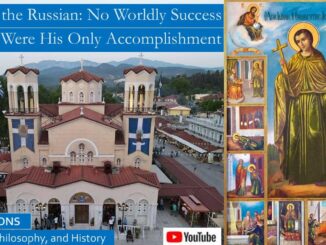
Archbishop Ratzinger teaches us that “this psalm from the wisdom tradition shows the straits of faith that comes from the absence of earthly success. When you stand on the side of God, you do not necessarily stand on the side of success.” “When the psalmist stands in before God, in the presence of God, he grasps the ultimate insignificance of material wealth and success and recognizes what is truly necessary and what brings salvation.” […]

Biblical Interpretation

Blessed Are the Poor, Woe to the Rich, and Other Woke Compassionate Bible Verses

Among the Church Fathers, St Ambrose teaches us,
“Blessed are the poor. Not all the poor are blessed, for poverty is neutral. The poor can be either good or evil,” unless he is the blessed pauper described by Proverbs 19:22, “’A righteous poor man is better than a rich liar.’ Blessed is the poor man in whom the prince of this world finds nothing. Blessed is the poor man who is like that poor Man who, although he was rich, became poor for our sake,” […]

Abortion

Regarding Abortion, Should Christians Be Pro-Compassion? Answering Questions, Further Reflections

How should we, as Christians, approach moral problems? This is similar to a related question; How should we interpret the Scriptures and Church teaching to guide us to live a godly life? St Augustine, in his seminal work, On Christian Teaching, or On Christian Doctrine, teaches us that “whoever thinks he understands the Holy Scriptures,” “but interprets them in a way that does not build up this two-fold Love of God and love of neighbor, does not truly understand the Scriptures.” […]

Abortion

Supreme Court Dobbs Case Overruling Roe v Wade: Should Christians be Pro-Compassion? Pro-Doctors?

There are some really heart-breaking situations involving abortion. Should abortion be allowed if the mother’s and/or the baby’s life is in danger? Should abortion be allowed in case of rape or incest? Should abortion be permitted if it is likely the mother would otherwise commit suicide? Should abortion be permitted to reduce the number of deaths caused by botched abortions by coat hangers or Lysol? […]

Biblical Interpretation

Do Christians Need To Go To Church? Which Type of Church Should You Attend?

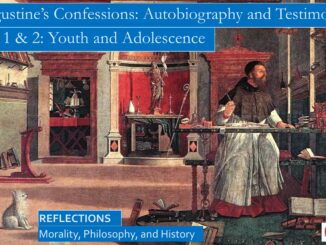
St Augustine’s memorable reflection on our question appear in his Confessions, which is really one of the first testimonials. St Augustine tells us the story of Victorinus, a philosopher who studies the Gospels and the Church Fathers but declines to attend services, asking “Do the walls of the Church make you a Christian?” Victorinus was a learned man, an erudite pagan Platonic philosopher, the Word of the Lord spoke directly to him from the page, perhaps he felt intellectually superior to many simple Christians he knew.

In the words of St Augustine, in his studies Victorinus became “resolute, he was seized by the fear that Christ might deny him before the holy angels if he was too faint-hearted to acknowledge Christ before men, and he felt himself guilty of a great crime in being ashamed of the sacraments instituted by the Word of God in his lowly state.” […]

Bible Stories and Parables

Elisha Cures Naaman of Leprosy, Not With Mighty Deeds, But By Simply Washing in the Jordan

Naaman, in the story, is not asked to perform mighty deeds by Elisha, as befits an ancient warrior and hero, but rather to perform the rather simple task of washing in the shallow, muddy Jordan River.

Ancient readers living in their ancient warrior culture would pick up on this contrast immediately, but modern readers often totally miss it. Which makes this one of my favorite stories, since one of the themes of this channel is that, when interpreting the Old Testament stories, you must always remember that most ancient peoples lived in a warrior culture much like that of the Iliad, where life was uncertain, when armies could appear over the horizon, slaughter all the men of military age, and enslave the women and children. […]