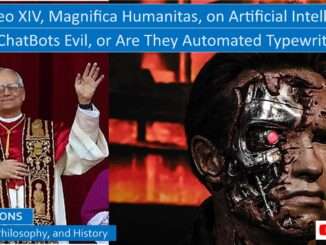
Pope Leo XIV Encyclical, Magnifica Humanitas, on Artificial Intelligence and Social Justice
Morality

Pope Leo XIV Encyclical, Magnifica Humanitas, on Artificial Intelligence and Social Justice

Artificial intelligence both causes and enables varying types of theft. Surprisingly, when you do a word search on the encyclical, the words PLAGIARISM and THEFT are not found at all, while the word STEAL is used once. In a few sections, there are some euphemistic phrases that hint at theft, but it does not explicitly name the sin.
Winding through the courts are many lawsuits alleging plagiarism filed against the companies who created the various chatbots. Should these companies copy text into their databases without permission, and without paying royalties? Why can’t these companies always list their sources, with the option to show the original content? […]
Hesiod Works and Days
Philosophy

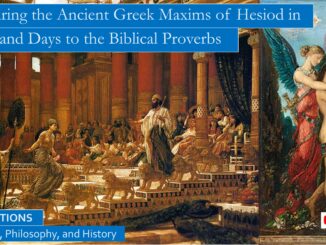
Hesiod: Works and Days, Early Greek Moral Philosophy

Hesiod is a grouchy old farmer who mistrusts ‘lords’” but does not advocate changing the society. “He believes in justice, honesty, conventional piety, self-reliance, self-denial, foresight, and above all, WORK. He dislikes city folk, the sea, women, gossip and LAZINESS. He delivers a maxim like ‘Don’t urinate where the Sun can see you’ with the same earnest convict that he advises judges not to take bribes, his brother to avoid pride, and the farmer to get two nine-year-old oxen and a forty-year-old hired hand. […]

Pinocchio
Literature and Myths

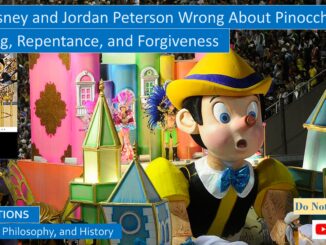
The Original Pinocchio, Deeply Repentant, Unlike the Disney and Jordan Peterson Pinocchio

The original Pinocchio was very different from the happy-go-lucky Disney and Jordan Peterson Pinocchio. Although the Disney movie included the most memorable most memorable stories of the original, the short length of the movie fails to render the deeply penitential tone of the original, which emphasizes how daily struggle is needed to replace bad habit with good habits, how salvation and spiritual growth is never instantaneous but is rather a life long-term process, where for every two steps forward we take one step backwards. The original rebellious Pinocchio was much more of a rogue than the pleasant Disney, he is a juvenile delinquent from the moment he has been carved. […]

Apeleius Golden Ass
Literature and Myths

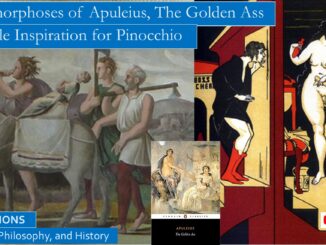
Metamorphosis of Apuleius, the Golden Ass, Possible Inspiration for Pinocchio

The basic plot of the book is our young man Lucius spies a witch who has learned to transform herself into various types of birds. When she is gone, he tries out the same potions, but by grabbing the wrong flask, he is turned into a donkey, not a talking donkey, but a braying donkey who has kept his human intelligence and human tastes. Though there are scattered penitential regrets, mostly our donkey is able to spy on the crimes and indiscretions of both robbers and cheating lovers to provide the reader with many titillating tales. In the final chapter, the goddess Isis appears to him in a dream, telling him what he needs to do to be transformed back into a human. […]