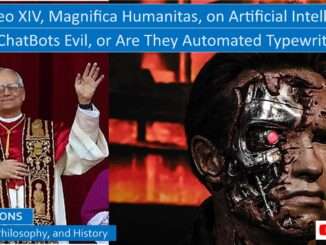
Pope Leo XIV Encyclical, Magnifica Humanitas, on Artificial Intelligence and Social Justice
Morality

Pope Leo XIV Encyclical, Magnifica Humanitas, on Artificial Intelligence and Social Justice

Artificial intelligence both causes and enables varying types of theft. Surprisingly, when you do a word search on the encyclical, the words PLAGIARISM and THEFT are not found at all, while the word STEAL is used once. In a few sections, there are some euphemistic phrases that hint at theft, but it does not explicitly name the sin.
Winding through the courts are many lawsuits alleging plagiarism filed against the companies who created the various chatbots. Should these companies copy text into their databases without permission, and without paying royalties? Why can’t these companies always list their sources, with the option to show the original content? […]
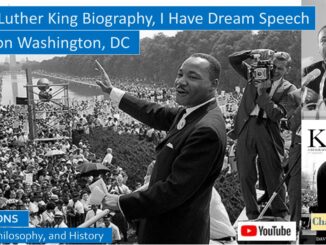
Martin Luther King, I Have a Dream Speech, March on Washington DC, Biography
Civil Rights

Martin Luther King, I Have a Dream Speech, March on Washington DC, Biography Chapter 8

MLK’s I Have a Dream Speech begins: “Five score years ago, a great American, in whose symbolic shadow we stand today, signed the Emancipation Proclamation. This momentous decree came as a great beacon light of hope to millions of Negro slaves who had been seared in the flames of withering injustice. It came as a joyous daybreak to end the long night of their captivity.” […]

History

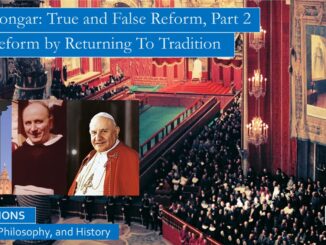
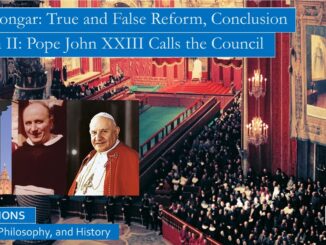
Pope John XXIII Opening Address to Vatican II, and Yves Congar, True and False Reform, Conclusion

Pope John Paul XXIII opens his speech with:
“A positive proof of the Catholic Church’s vitality is furnished by every single council held in the long course of the centuries.” “And now the Church must once more reaffirm that teaching authority of hers which never fails but will endure until the end of time.”
This echoes Congar’s sentiments that true reform must rediscover the ancient traditions of the church, that the moral teachings never change, but history itself does change, and the church must change with history. […]

History

Yves Congar, True and False Reform, Part 2, True Reform by Returning to Tradition

Yves Congar reflects: Who were the successful reformers? Who were the divisive reformers? Successful reformers are those reformers who respect the tradition of the church, whose reforms seek to return the church to its ancient traditions recently forgotten, to return to the ancient sources of the faith. These successful reformers include St Francis of Assisi, and St Thomas Aquinas, and he contrasts them with reformers who broke with the church, including Peter Waldo and Luther, while being careful to acknowledge when these divisive reformers did provide valuable spiritual and practical insights. […]