
Erasmus In Praise of Folly
Catholic Middle Ages and Beyond

Erasmus, Luther’s Predecessor, The Praise of Folly

Folly reminds us of the tension between the vulgar and the devout. “The pious, since they aim primarily at what is almost alien to the crass senses, are numbed and stunned by the sensual. In contrast, the ordinary person gravitates towards them.” Thus, many negligent people value bodily sensations such as “sex, love of food, sleep, anger, pride, and envy. The pious wage a constant war against these urges, whereas the vulgar crowd considers that without them life has no real existence.” […]

Philosophy

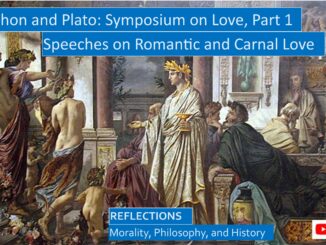
Xenophon and Plato, Socratic Dialogue, Symposium, Divine and Noble Love, Part 2

Both of these commandments are the Divine Love that Plato describes in the Symposium. Like the country song suggests, If you don’t love your neighbor, you don’t Love God. As we learned from St John of the Cross, if our love for our neighbor or our love does not increase in us our Love of God, then it is not love at all. Which means that you cannot talk about two types of love, one mortal, one divine, as do the speakers like Agathon in the Symposium, though you could talk about love and lust, love being unselfish, and lust being selfish, caring only about yourself, not caring about the well-being of your partner or friend. […]

Catholic Middle Ages and Beyond

St John of the Cross, Dark Night of the Soul, Seven Capital Sins and Best Type of Close Friend

Before you can truly deepen your interior life of prayer and communion with God, you must first purify your soul by combating your spiritual capital vices, strengthening your inner virtues, which are revealed by how you think of your neighbor, what you say about your neighbor, how you act towards your neighbor, and how eagerly you seek to forgive and overlook the shortcomings of your neighbor. […]

AntiSemitism

Our Reflections on Morality, Philosophy, and History: Ancient and Modern Classics

To a Stoic Philosopher, the question of Theodicy, or why God permits bad things to happen to good people, why God permits suffering, is simply absurd. The fact is, we do suffer, we will face injustices, we will suffer illnesses and death, and the rain falls on both the good man and the bad man. God will not shield us from suffering and injustice, but God will provide us with the strength to endure the challenges of this life. […]

Greek and Roman History

Draco, Solon, and Cleisthenes, Democracy and Justice in Ancient Greece

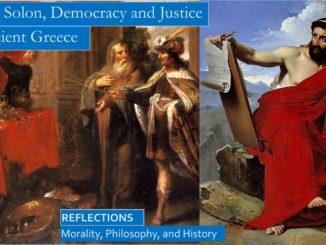
Homer’s Odyssey depict the deep Greek past where might makes right, where brave soldiers fight for justice, where grievances and murders are settled by blood feuds. As Greek emerged from its Dark Ages in the seventh century, the Greeks in Athens sought to establish a more systematic system of justice with laws governing the state. Draco was appointed by the ruling aristocracy to be a lawmaker to codify new laws to replace justice by feuds, now the Senate of the Areopagus would hear cases of homicide. […]

Book Reviews and Miscellaneous

On Learning Attic and Koine Greek, Classical Latin, and Biblical Hebrew

You would only want to learn these ancient languages if you are truly a serious student, and want to read the Scriptures and classics in their original language, and so you will not miss the word plays and puns that you can only catch in the original language. When reading epic poems of Homer and the Greek playwrights, or the Psalms in Old Testament, or the elegant works of Cicero, you can experience the rhymes and rhythms of the original language, as poetry can be incredibly difficult to translate. When we cut the video for a play by Aeschylus on the Battle of Salamis in the Persian Wars, the various translations we encountered were RADICALLY different. Personally, I am tempted not to read any more Greek plays until I learn how to read Attic Greek. […]