
Plutarch’s Life and Works, Including His Greek and Roman Lives, and Moralia, His Stoic Sayings
Book Reviews and Miscellaneous

Plutarch’s Life and Works, Including His Noble Greek and Roman Lives, and Moralia, His Stoic Sayings

Over half of Plutarch’s Lives of Noble Romans influenced the history of the corrupt and violent last years of the Roman Republic, and the rise of the Roman Empire under Julius Caesar. Plutarch paired Greek and Roman lives based on their personalities and accomplishments. For example, Julius Caesar is paired with Alexander the Great, and the Greek companion to Cicero is Demosthenes, the renowned Greek orator who opposed Alexander the Great’s conquest of Greece. Plutarch used Xenophon as one of his sources for his lives of the Spartan Kings Agis and Agesilaus, Alcibiades, the lost life of Epaminondas of Thebes, and possibly Lycurgus of Sparta. The majority of Plutarch’s Roman lives featured the strivings of great men during the breakdown of the Roman Republic, and the subsequent struggles and civil wars that culminated in the reign of the first two emperors of the Roman Empire, Julius Caesar and Caesar Augustus, or Octavian.
Plutarch is more interested in highlighting the moral and character strengths and weaknesses of the famous men of history than he is in revealing how these great men influenced historical events. For this reason, you cannot consult only Plutarch for a complete historical review. We also consulted Will Durant’s account in his Story of Civilization, Volume 3, Caesar and Christ. Will Durant often quotes Cicero directly, and Plutarch is his primary source out of necessity. We also consulted the Wikipedia article on Cicero to fill in some background and details. […]
Xenophon’s Cyropaedia, Biography of Cyrus the Great, King of Persia
Greek and Roman History

Xenophon’s Cyropaedia, Biography of Cyrus the Great, King of Persia

During his first hunt, Cyrus the Great eagerly pressed his horse to chase a great stag. His horse slipped, going to his knees, nearly throwing him, but “the boy managed to keep his seat, and the horse recovered its footing,” and shortly “Cyrus let fly his javelin, and the stag fell dead, a beautiful big creature.” When they were dismounted, admiring the slain stag, Cyrus sprang back on his horse when he heard a “frenzied wild boar charging down on them. He charged to meet it, drawing his bow with the surest aim possible, struck the beast in the forehead, and laid him low.” Cyrus would later display this brave coolness when under fire in battle. […]

History

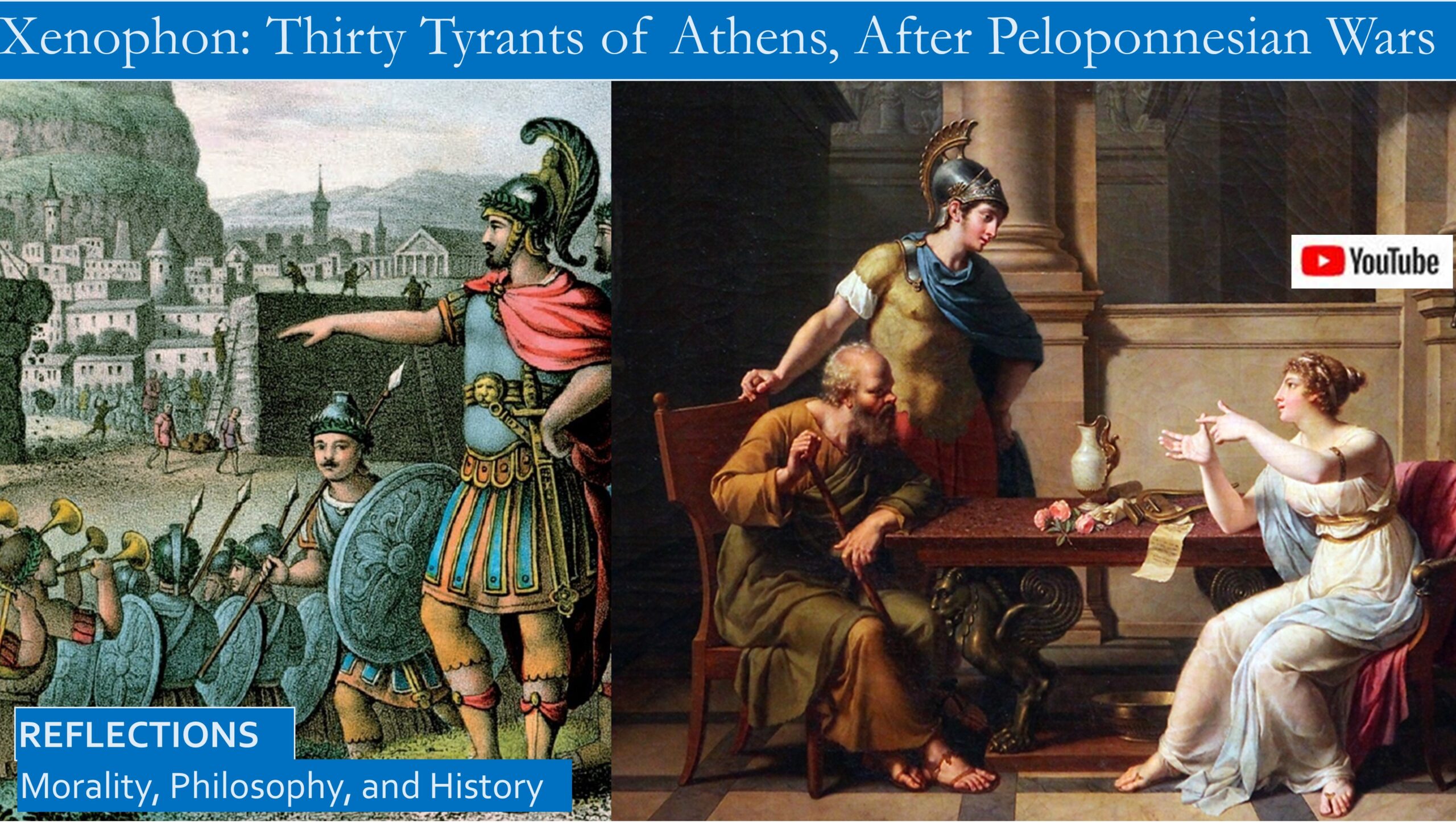
Thirty Tyrants Ruling Athens After Spartan Victory in the Peloponnesian Wars

After the end of the Peloponnesian Wars, the victorious Spartan commander Lysander insisted that, as part of the terms of peace, the Athenians set up an aristocracy under the rule of the Thirty Tyrants. Although the previous tyrants in the sixth century BC were benevolent tyrants, the Thirty were Tyrants of the worst kind, dominated by the vicious Critias, a tyranny that quickly descended into an orgy of bloodshed directed first against their enemies, and then against their fellow aristocrats so they could seize their property. This misrule preceded the reestablishment of the Radical Democracy of Athens, and the events of the Thirty Tyrants cast a long shadow over Athenian history and the Platonic dialogues. […]