
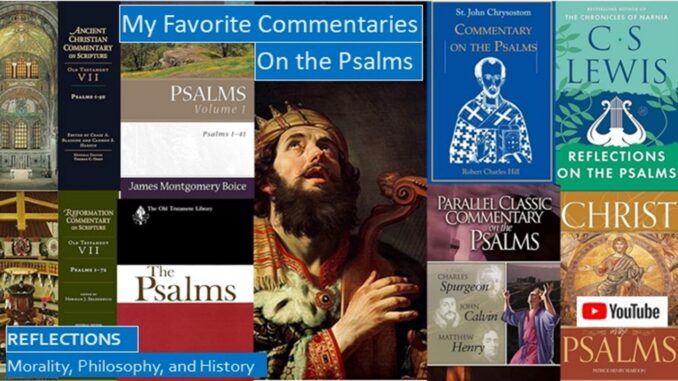
These are my favorite commentaries on the Psalms. Many of our reflections are, in essence, book reviews, since we prefer to quote the classical and modern authors to encourage our listeners and readers to study and reflect on these classics.
The YouTube video for this blog is: https://youtu.be/kyJRf_JoGsI
Before we reflect on the Psalms, we must get back to basics. What is the cornerstone of the Judeo-Christian tradition? The two-fold Love of God and neighbor, that we should Love God with all of our heart and with all of our soul and with all of our mind and all of our all, and that we should love our neighbor as ourselves. All else is commentary.
Hillel and Jesus, Reflections on Rabbi Telushkin’s Observations
http://www.seekingvirtueandwisdom.com/hillel-and-jesus-reflections/
Comparing Hillel and Shammai to Jesus
http://www.seekingvirtueandwisdom.com/comparing-hillel-and-shammai-to-jesus/
More Stories and Sayings of Hillel and Shammai
http://www.seekingvirtueandwisdom.com/more-stories-and-sayings-of-hillel-and-shammai/
Jesus, Hillel, and Shammai, Loving God and Neighbor
https://youtu.be/ygxn2qqGnOI
St Augustine applies this principle to Bible study. St Augustine teaches, “Whoever thinks he understands the Holy Scriptures, or any part of them, but interprets them in a way that does not build up this two-fold Love of God and love of neighbor, does not truly understand the Scriptures. If, on the other hand, a man draws a meaning from Scriptures that builds up the two-fold Love of God and love of his neighbor, although he does not precisely understand the exact meaning of the author, his error is not pernicious,” as he does not intend to deceive.
St Augustine further teaches us that if someone with a good heart and pure motives has a mistaken interpretation of Scripture, that “if his mistaken interpretation of Scripture tends to build up love,” “he goes astray in much the same way as a man who by mistake quits the high road, but yet reaches through the fields the same place to which the road leads.” [1]
St Augustine teaches, “It is a wretched slavery which takes the figurative expressions of Scripture in a literal sense,” for the Bible exhorts, “the letter kills, but the spirit gives life.” What does St Augustine mean by figurative? When the Word of God in Scripture does not, “when taken literally, refer either to purity of life or soundness of doctrine, it can be seen as figurative.” [2]
St Augustine: On Christian Teaching, aka On Christian Doctrine, How To Read Scripture
http://www.seekingvirtueandwisdom.com/st-augustine-on-christian-teaching-how-to-read-scripture/
https://youtu.be/uQCnAJMPoos
One excellent example of reading the Bible allegorically is the verse in Psalm 137 where the Jews are encouraged to bash the brains of Babylonian babies against the rocks. The Church Fathers equate these babies with our small sins, that we should strive to be perfect, even as our Heavenly Father is perfect, bashing both our large and small sins.[3]
We must remember that the Psalms are poetry, and Hebrew poets are like poets in any language, they sometimes use obscure words for better rhythm. This means the Psalms pose more translation problems than most of the books in the Bible. If you cannot make sense of a passage, it may be that scholars are not quite sure what the original passage meant.
INTRODUCTIONS TO THE PSALMS
We begin with the introductions to the Psalms, each of these works are under a hundred pages long. They teach us how to pray and contemplate the Psalms.
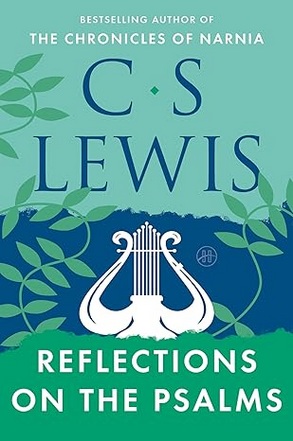
CS Lewis discusses the various types of psalms, responding to the questions many raise when they pray the Psalms. How can some psalms curse our enemies? Forgiveness is hard. What do the psalms say about death and judgement? Why are some psalms upbeat with praises, while other psalms are laments?
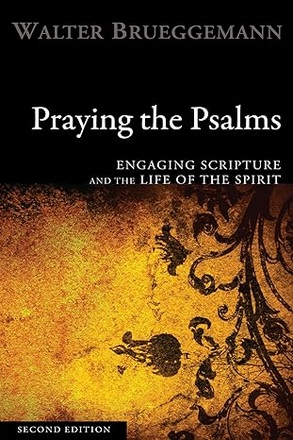
Likewise, Walter Brueggemann also reviews the various types of psalms, giving us a guideline when praying the Psalms.
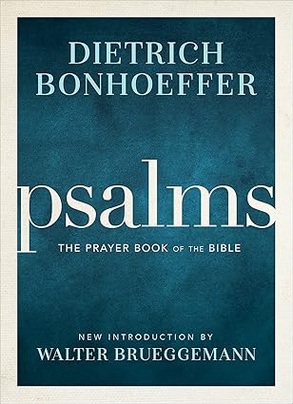
Dietrich Bonhoeffer reflects on the Psalms, the prayer book of the Bible. How do you pray? The Psalms can teach us to pray. This is a shorter introduction, with chapters on the creation, the law, holy history, the Messiah and the Church, life, suffering, guilt, our enemies, and facing the end of our lives.
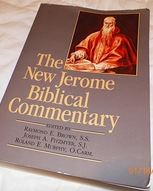
The New Jerome Commentary has a scholarly discussion of the various types of psalms, which is less inspiring. Also, the introductions of our commentaries also discuss the overall themes of the Psalms.
COMMENTARIES ON THE PSALMS
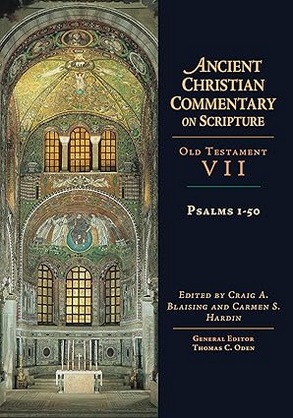
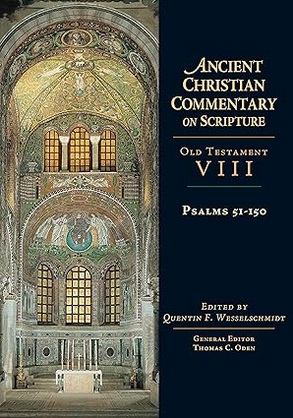
The Intervarsity Press has published a series of selected commentaries by the ancient Eastern and Western Church Fathers, including many excerpts from St Augustine, and St Ambrose, who baptized him. This is one of the first commentaries I consult when I study the Bible, because I prefer the Patristic commentary. The translations are excellent.
The appendix includes brief biographies of the ancient sources.
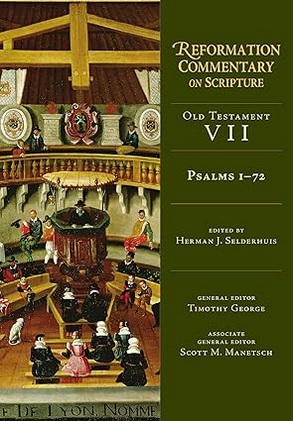
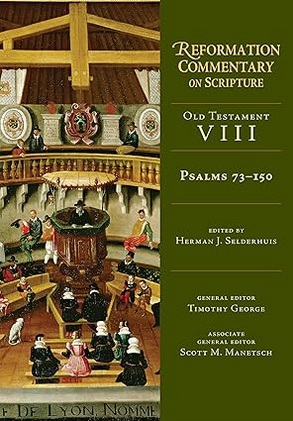
The Intervarsity Press has published a series of selected commentaries by the early Reformation theologians and preachers. Not only are the giants of the Reformation quoted, like Martin Luther, Melancthon, and John Calvin, but comments from now obscure preachers and theologians are quoted.
The translations are excellent. The appendix includes brief biographies, which are helpful for the more obscure sources.
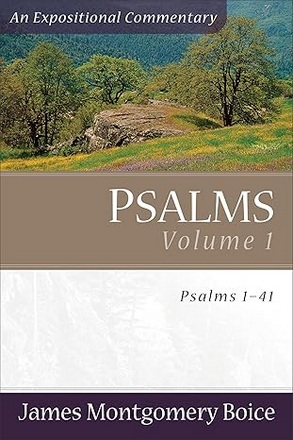
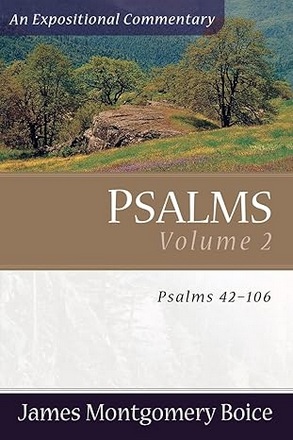
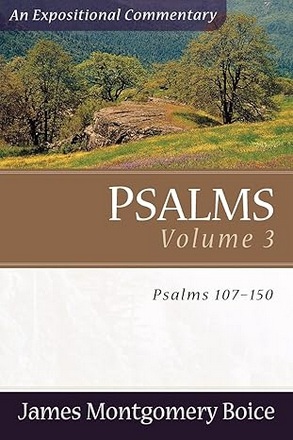
James Boice’s commentaries on the Psalms are among my favorites. He is both a superb scholar and preacher, applying his interpretation to the daily lives of his readers.
For example, in his commentary on Psalm 40, he reflects: “Maybe you are caught in the webs of sin. Perhaps one sin has led to another. You know what is happening, but cannot get out of it. That is no surprise. Sin is like that.”
I first heard James Boice’s sermons on all the psalms many decades ago on cassette tapes. You can listen to some of these on YouTube and elsewhere, but I cannot find a complete set on the internet. He likely wrote his commentaries while he was delivering his sermons, or shortly thereafter, as they have a conversational quality.
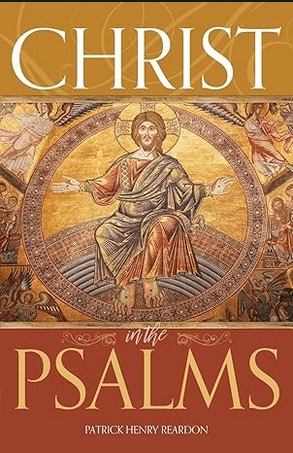
Another favorite is the Orthodox Father Patrick Henry Reardon’s Christ in the Psalms. For instance, for Psalm 40, he comments: “the obedience of Christ our Lord is central to the New Testament. Christ Himself declared that He came, not to seek his own will, but the will of the Father who sent Him,” quoting John 5:30.
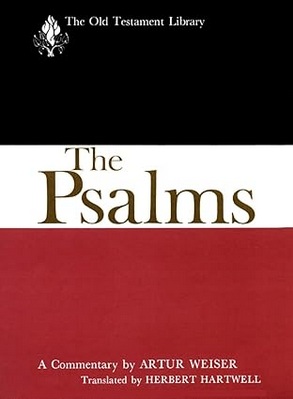
Artus Weiser was a German scholar, his historical-critical method commentary was published around 1950 and was translated into English. Although it is written for academics, he has some inspiring comments that can deepen out faith.
For example, for Psalm 40 Weiser notes that “it is God and his revelation and not man that is at the center of the cult; so, man can only listen and obey.”
Although the footnotes in the Orthodox Study Bible are terse, they reveal the role each Psalm played in the ancient liturgies of the Church. This translation begins with the New King James Version, correcting it with the Septuagint, which the Orthodox Church reveres.
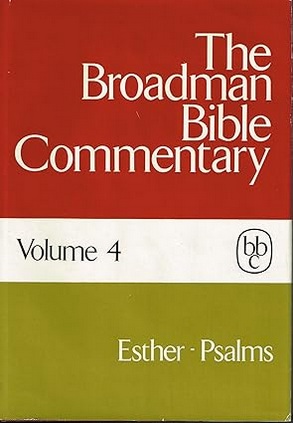
We aways like to consult the Baptist Broadman Bible Commentary, my 1970s edition was printed before the conservative takeover of their seminaries. Much of this commentary simply paraphrases the Bible verses, but occasionally there are jewels of expression.
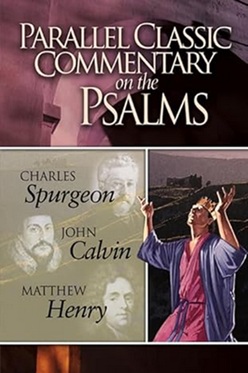
You can purchase a collection of John Calvin’s commentary of the Psalms, but why not purchase his best along with Charles Spurgeon and Matthew Henry?
St John Chrysostom, archbishop of Constantinople, was know as Golden Mouth for his preaching, and is one of the five Catholic doctors of the church. Most of his works are dictations from his many sermons expounding the meaning of Scripture.
While St. John Chrysostom may have commented on all 150 psalms in the Psalter, commentary has survived on only 58 Psalms: Psalms 4-13, 44-50, and 109-150, with the exception of the long Psalm 119 (Western numbering). Unfortunately, the commentary for many key Psalms are lost, including 1, 23, 40, 51, and 71. Robert Charles Hill offers a fresh translation, with extensive footnotes.
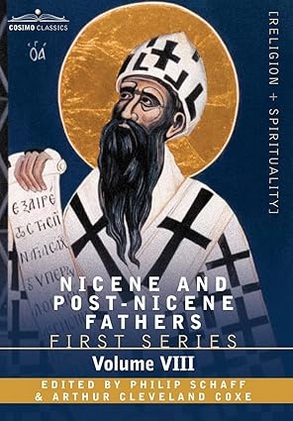
St Augustine’s Expositions on the Psalms took up six volumes in the Oxford translation, which was condensed into Volume 8 of the Nicene and Post-Nicene Church Fathers. The Ancient Christian Commentary has updated translations of excerpts from this work.
Dr James Boice complained about St Augustine’s commentary, and it is true our saint can be quite long-winded. But he makes many interesting observations in his commentary.
The original volumes are out of print, we have not sampled this reprint. You may wish to purchase the eBook version from the Christian Book Distributors at https://www.christianbook.com/.
Some of his commentary on the Psalms is off point because St Augustine was using an archaic Latin translation. St Jerome was his contemporary, they often corresponded. His Vulgate, the updated Latin translation of the original Hebrew, was not completed until later in their lives. Sometimes this older translation leads St Augustine to interesting interpretations, but more often the awkward translation causes distorted interpretations.
Another source is Rashi’s footnotes to each of the Psalms, which you can access on the www.Chabad.org website. Be sure to click to SHOW Rashi’s commentary.
Rashi is a revered medieval Rabbinic commentator. Although his comments on the five books of the Torah are more useful, as they have comments on his commentary, we consult his comments for the Psalms. You can see his comments for the First Psalm are interesting.
FUTURE REFLECTIONS ON THE PSALMS OTHER BOOK REVIEWS
As part of our series of reflections on aging, we will soon reflect on Psalms 40, 70, and 71. While there are many stories of aging patriarchs, Psalm 71 is one of the few chapters in the Bible that dwells on the anxieties of aging.
Psalms 40 and 70: Deliver Both Young and Old from Suffering and Trials
https://seekingvirtueandwisdom.com/psalms-40-and-70-deliver-both-young-and-old-from-suffering-and-trials/
Psalm 71: Encouraging Us In Our Old Age
https://seekingvirtueandwisdom.com/psalm-71-encouraging-us-in-our-old-age/
Plus, these are two of our dozen reflections on aging.
Roman Stoic Philosopher Seneca on Old Age and Retirement
https://seekingvirtueandwisdom.com/roman-stoic-philosopher-seneca-on-old-age-retirement/
https://youtu.be/hmJoI9-s1q8
Classical Christian Psychologist Paul Tournier on Old Age and Retirement
https://seekingvirtueandwisdom.com/classical-psychologist-paul-tournier-on-old-age/
https://youtu.be/HE3LNGB0nUA
We cut another reflection on book reviews of the commentaries on the Torah by the great medieval rabbis, Rambam, Ramban, and Rashi. Rambam is also known as Maimonides, and Ramban, Nachmanides. We also review other books covering the Torah, including the Book of Legends, a collection of moral teachings from the Talmud, and many other mostly Jewish sources, and they are all in English.
Book Reviews, Commentaries of Torah and Talmud, Medieval Rabbis and Modern Rabbis and Scholars
http://www.seekingvirtueandwisdom.com/book-reviews-commentaries-of-torah-and-talmud-medieval-rabbis-and-modern-rabbis-and-scholars/
https://youtu.be/mvstpk88TxI
These sources, and Christian sources, are included in our book reviews on the Decalogue.
Book and DVD Reviews on the Ten Commandments, or Decalogue
https://seekingvirtueandwisdom.com/book-and-dvd-reviews-on-the-ten-commandments-or-decalogue/
https://youtu.be/KptDGFJG0TE
Plus, we have book reviews that are the basis for our reflections on the writings of the Apostolic Church Fathers, Greek philosophy and history, lives of the saints, and the decrees and history of the Second Vatican Council.
Book Review: Early Church Fathers Library – 38 Volumes in 3 Series
http://www.seekingvirtueandwisdom.com/early-church-fathers-library-38-volumes-in-3-series/
Book Reviews on Apostolic and Early Church Fathers
http://www.seekingvirtueandwisdom.com/book-reviews-on-apostolic-and-early-church-fathers/
How To Read Ancient Works, and Book Reviews on the Apostolic Church Fathers
https://youtu.be/I_2q4BiRBlU
Book and Lecture Reviews of Ancient Greek History and Philosophy
http://www.seekingvirtueandwisdom.com/book-and-lecture-reviews-of-ancient-greek-history-and-philosophy/
https://youtu.be/472aVKkPsk8
Book Reviews: Golden Legend, Butler’s, OCA, and Pope Benedict XVI’s Lives of Saints
https://seekingvirtueandwisdom.com/book-reviews-golden-legend-oca-and-butlers-lives-of-the-saints/
https://youtu.be/RFUeBLPMyqI
Book Reviews, Reform Councils of Trent and Vatican II, and Vatican I
http://www.seekingvirtueandwisdom.com/book-reviews-reform-councils-of-trent-and-vatican-ii/
https://youtu.be/cuKVG24Bf78
[1] St Augustine, “On Christian Doctrine,” Book 1, Chapter 36, p. 533.
[2] St Augustine, “On Christian Doctrine,” Book 2, Chapter 6, pp. 537.
[3] https://www.biblegateway.com/passage/?search=psalm+137&version=RSVCE

Be the first to comment