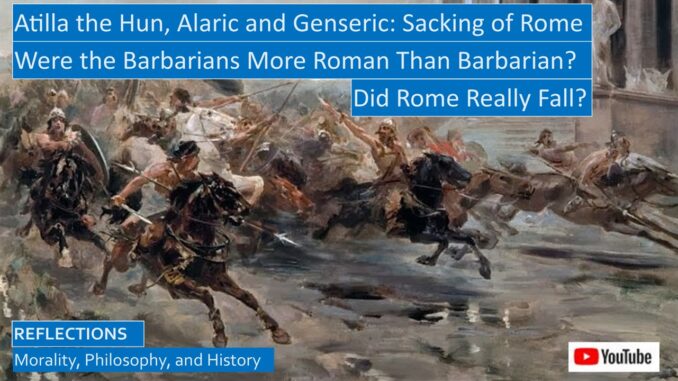
Why did the fifth-century Romans rely on barbarian tribes to supply their soldiers and their generals? How different were the barbarians from the Romans?
Was the term barbarian simply a later Roman ethnic slur, which was adopted by historians like Gibbon who instinctively supported European colonialism?
Did the Western Roman Empire truly fall? Or did it gradually evolve into the various barbaric kingdoms, which in turn evolved into the modern countries of Europe?
What changed for the inhabitants of the Empire after the reign of the last Western Roman Emperor?
POPE LEO THE GREAT, THE FALL OF ROME, AND THE BARBARIANS
Our current pope has chosen the name of Pope Leo XIV, signaling that he plans to continue the policies of his predecessor, Pope Francis, by honoring the Catholic Social Justice proclivities of the late-nineteenth-century Pope Leo XIII, who issued the groundbreaking encyclical, Rerum Novarum, protecting the rights of the working class. Will he also reflect the conservative tendencies of that pope? Time will tell.
Pope Leo XIV, First American Pope, Successor to Pope Francis and Social Justice of Pope Leo XIII
https://seekingvirtueandwisdom.com/pope-leo-xiv-first-american-pope-successor-to-pope-francis-and-social-justice-of-pope-leo-xiii/
https://youtu.be/wSns5VGhtRk
Pope Leo XIII: Catholic Social Justice and Rerum Novarum, Confronting the Modern World
https://seekingvirtueandwisdom.com/pope-leo-xiii-catholic-social-justice-and-rerum-novarum-confronting-the-modern-world/
https://youtu.be/YojqhGBJtOY
Pope Francis’ Autobiography: Be Compassionate to the Poor and Marginalized
https://seekingvirtueandwisdom.com/pope-francis-autobiography/
https://youtu.be/6QDyiu3wwbc
St Augustine’s On Christian Teaching and JD Vance, Order of Love
https://seekingvirtueandwisdom.com/st-augustines-on-christian-teaching-and-jd-vance-order-of-love/
https://youtu.be/v7H684y9phs
Did the name chosen by both these popes also imply they wish to honor the accomplishments of the first Pope Leo the Great, who bravely marched unarmed into the camp of Attila the Hun, persuading him to refrain from sacking Rome? How about Pope Leo III, who famously crowned Charlemagne as the first Holy Roman Emperor more than four centuries later?
The stories of these early popes also shed light on other misleading impressions many modern believers have about how the relationship between the early church and the Roman Empire evolved. One common misconception is that the church strayed from its pure origins when it became corrupted by secular concerns. We plan to reflect on the true nature of the church under the Roman Empire, and in Rome in particular, how the church was compelled to govern when civil authority crumbled, and how the barbarian invasions influenced these trends. Did the church in these early years react to events it could not control as best as she could, or did the church and the state lose their way, tolerating corruption, rather than tending to the needs of the flock?
DISCUSSING THE SOURCES
Usually, we discuss our sources at the end of our reflections, but in this case, understanding the sources helps us to evaluate the history. We are using three main sources. Edward Gibbon’s The History of the Rise and Fall of the Roman Empire, written at the time of the American Revolution, and Will Durant’s Age of Faith, written soon after World War II, depend heavily on the classic historians of the past millennia, while Durant augments this with economic analyses and archeological discoveries.
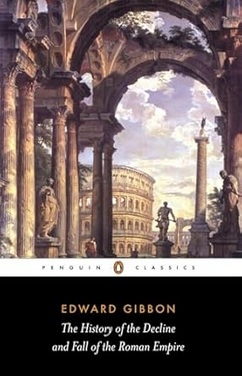
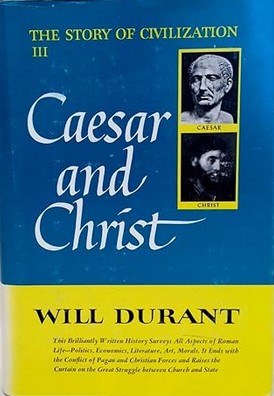
How well has Gibbon’s history aged over the past two centuries? The Great Courses Plus has a series of college lectures discussing his history and how it has aged well.[1] Gibbon is quotable, though he uses an exaggerated and verbose style typical of his age. He adopts the anticlericalism of the French Enlightenment of his time, and has a knee-jerk hostility towards monasticism, although he is quite willing to recognize the courage of believers like Pope Leo the Great.
Will Durant shares the goal of many ancient historians: he seeks moral lessons from the history of the past, and is quite quotable, with extensive footnotes. Usually, we quote more from ancient sources than modern sources, but here we will quote mainly from these two modern sources, in part because the ancient sources are not that quotable.
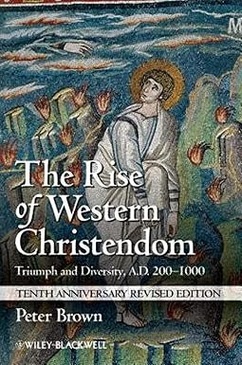
Peter Brown’s more recent histories use later archeological and scientific discoveries, as well as both classical and modern histories, to ponder whether the Fall of Rome was a cataclysmic event, or was a gradual process extending over centuries, or whether Rome fell at all, perhaps it merely evolved into the beginnings of our modern European states.
Who were the ancient historians these modern historians used as their sources? The Byzantine historian Procopius wrote the History of the Gauls, which did not cover Attila the Hun’s conquests, and included the Eastern Emperor Justinian’s later temporary reunification of the Roman Empire. This history is accessible through public domain internet sites. Procopius is also known for a scandalous, exaggerated biography of Justinian.[2] The Byzantine historian Jordanes also wrote a history of the Goths, which used the now-lost history of Cassiodorus as a source. Some scholars speculate that this history was a propaganda piece supported by Justinian’s court.[3] Both of these histories were written in the sixth century. Gibbons praises the accuracy of Ammianus’ history, although most of his histories have been lost.[4]
CHALLENGES IN STUDYING THE HISTORY OF BARBARIANS IN ROME
Some of the major challenges in studying the role of Barbarians in the Roman Empire are understanding the true role of barbarians in ancient Rome, untangling modern assumptions from our understanding of ancient history, and realizing how truly complex any history of clashing cultures can be.

Before we assume that the brigandage in the Roman provinces during the fifth century was a relatively recent occurrence, we must ask the question: Was travel in the provinces of ancient Rome ever truly safe? Were the ancient Romans concerned with ensuring the safety of its rural citizens?
One clue is in Jesus’ Parable of the Good Samaritan, set in the Roman province of Galilee. Here, our unfortunate traveler is robbed and beaten and left for dead on the side of the road. A priest and a Levite pass him by, until finally a Samaritan takes care of him.[5]
Today, what would we do if we found a traveler beaten and left for dead on the side of the road? We would call the police. But this is a modern response, the modern criminal justice system evolved over the past two or three hundred years.[6] In ancient Rome, the government was far more concerned with preventing rebellion and collecting taxes than with controlling criminals, although it did seek to drive pirates out of business, as they interfered with commerce. Perhaps the rural areas surrounding the towns where Roman legion veterans settled were somewhat safer, we just do not know.
Most Roman emperors either sought to expand the Roman Empire through bloody conquest or they wasted their reigns in riotous and drunken abandon. Hadrian was the rare Roman Emperor who chose to tour and consolidate the Roman Empire to address provincial concerns and complaints, and many places he only visited once, so vast was the Roman Empire.
Roman Emperors Before Marcus Aurelius
https://seekingvirtueandwisdom.com/roman-emperors-before-marcus-aurelius/
https://youtu.be/6i–hVIpg1k
The Golden Ass, a second-century Roman novel, revealed that brigands ruled the connecting roads even in rural Italy. This novel relates the imagined story of a man mistakenly turned into a donkey by magic, whose traveling band is waylaid by a gang of robbers who prey on helpless rural villagers. If it wasn’t safe to travel the countryside in rural Italy in second-century Rome, why would it be surprising that Gaul and Spain would be dangerous places a few centuries later? Was the Roman Empire ever truly unified?
So rather than ask why society started to unravel in the provinces during the time of the barbarians, we should instead ask: Why did the civil disorder in the empire worsen during the time of the barbarians?
Metamorphosis of Apuleius, the Golden Ass, Possible Inspiration for Pinocchio
https://seekingvirtueandwisdom.com/metamorphosis-of-apuleius-the-golden-ass-possible-inspiration-for-pinocchio/
https://youtu.be/PZuFkxhfOaI
Among the Roman Emperor Marcus Aurelis’ predecessors, Emperor Trajan and Emperor Hadrian were both born in Spain, although they had Italian roots. Afterwards, many Roman emperors were raised up not by the Senate but by their soldiers, and many lacked significant Latin ancestry. The Eastern Emperors rarely had Latin roots. Why were they not considered barbarians?
What was different about the third and fourth centuries was the evolution of barbarian kingdoms within the borders of the Roman Empire, which reduced the Roman tax base and control. We also know that in the early Roman Empire, Italian senators served as governors in the provinces. We also know that due to limited communications, the provinces were governed largely independent of Rome. The provinces became more independent with the passage of time, though history only hints at the details.
In the latter years of the Western Roman Empire, the Mongols and the Huns pushed other barbarian tribes like the Goths and Vandals westward, where their tribes sought refuge in the Roman Empire. In return for settling remote regions, these barbarians offered soldiers and generals to serve in the Roman military. The German tribes were threatening Italy as early as the reign of Marcus Aurelius, and he accepted Germanic soldiers of tribes who surrendered into the Roman Army, which had a smaller percentage of Italian soldiers and officers in each succeeding century.
Peter Brown contends: “The Roman Empire was not violently breached by barbarian “invasions.” Rather, between AD 200 and 400, the frontier itself changed. From being a defensive region, which kept Romans and barbarians apart, it had become, instead, an extensive middle ground, in which roman and barbarian societies were drawn together. And after AD 400, it was the barbarians and no longer the Romans who became the dominant partners in the middle ground.”[7] Indeed, after AD 400 barbarian tribes served in the army of the Huns, and barbarians from most of the tribes, including the Huns, served in the Roman armies.
Another factor was the prejudice many Romans demonstrated towards their barbarian neighbors in the closing centuries of the historical Western Roman Empire. Often, when Rome promised aid to barbarian tribes who agreed to settle Roman frontiers, the local officials cheated the local barbarians out of the aid they were promised, sometimes stealing it outright, which caused barbarian families to go hungry or starve in their new lands. Out of desperation, often they revolted. This happened even when the barbarians volunteered to serve in the Roman army, and this reflection has several instances where barbarian Roman generals were murdered out of envious suspicion.
Peter Brown notes: “The emergence of ethnicity as the basis of a new ruling class in the post-imperial West was exactly the opposite of the process which had led to the formation of a Roman imperial civilization in the first centuries of the empire.” “Different barbarian groups insisted on their separate identities, as Goths, Franks, and Vandals,” as did Romans.
It became increasingly difficult to Romand and barbarians them apart solely by appearance, and the barbarian regiments in the Roman army often welcomed recruits from other tribes, even native Romans. Although Huns were likely not Christian, most of the other barbarian tribes were Christian, though many belonged to the Arian sect, which many Nicaean Roman Christians regarded as heretical.[8]
FIRST SACK OF ROME IN OVER EIGHT HUNDRED YEARS
Forty years before Attila met with Pope Leo the Great, the Gothic King Alaric had sacked Rome, a humiliation that last occurred about eight hundred years previously. Alaric was also a general in the Roman Army whose efforts were neither rewarded nor adequately appreciated. The Eastern Emperor Theodosius had paid these Goths an annual tribute as allies, but his successor discontinued this practice, dismissing his Gothic troops.
Sacks of Rome Over the Millennia
- Sack of Rome (390 BC) following the Battle of the Allia, by Brennus, king of the Senone Gauls.
- Sack of Rome (410), by the Visigoths under King Alaric I.
- Attila the Hun (452), dissuaded from sacking Rome by Pope Leo the Great.
- Sack of Rome (455), by the Vandals under King Genseric.
- Siege of Rome (472), by the Western Roman general Ricimer.
- Sack of Rome (546), by the Ostrogoths under King Totila.
- Siege of Rome (549–550), also by Totila.
- Raid of Rome (846), by the Arabs.
- Sack of Rome (1084), by the adventurer Robert Guiscard’s Normans.
- Sack of Rome (1527), by mercenary troops of the Holy Roman Emperor Charles V.[9]
Why was Rome such a tempting target? By this time, Rome was just another provincial town; it had not been the capital of the Western Roman Empire for a century and a half. The center of power had shifted eastward to Constantinople in today’s Turkey, it made more sense for the capital of the Western Roman Empire to be located on the Western coast of Italy, accessible to the sea. In AD 286, Emperor Diocletian moved the capital of the Western Roman Empire to Mediolanum, or today’s Milan, near Italy’s West coast in the Northern Po Valley.[10] In AD 401, Emperor Honorius again moved the capital to Ravenna, a port on the West coast of Italy.[11]
Rome was still remembered as the historic capital of the Western Roman Empire, and still retained much of the wealth it had accumulated when it was the center of the Empire. In his Confessions, St Augustine tells us that when he left Hippo in North Africa as a young man to seek his fortunes, he first went at Rome to begin his teaching career. Later, he served as a teacher in the court of the emperor in Ravenna, where he was converted to Christianity after listening to the sermons of Bishop and later Saint Ambrose.
St Augustine’s Confessions: Manichaeism, NeoPlatonic Philosophy, and Monica’s Prayers, Books 3, 4, and 5
https://seekingvirtueandwisdom.com/st-augustines-confessions-manichaeism-neoplatonic-philosophy-and-monicas-prayers/
https://youtu.be/ydskqlgZSrE
St Augustine’s Confessions: Mother Monica, Concubine, Marriage, and Philosophy, Books 6 & 7
https://seekingvirtueandwisdom.com/st-augustines-confessions-mother-monica-concubine-marriage-and-philosophy-books-6-7/
https://youtu.be/AjGbBozIReY
St Augustine’s Confessions, His Conversion, Baptism, St Monica’s Death, and Philosophy, Books 8 & 9
https://seekingvirtueandwisdom.com/st-augustines-confessions-his-conversion-baptism-st-monicas-death-and-philosophy-books-8-9/
https://youtu.be/Vijtjxm3Ta0
Summary of St Augustine’s Confessions of Faith and Repentance
https://seekingvirtueandwisdom.com/summary-of-st-augustines-confessions-of-faith-and-repentance/
https://youtu.be/sIpx5qJMGvw
Will Durant explains: “The idle Gothic warriors craved money and adventure. Their new leader, Alaric, asked them: “Why should the proud and virile Goths submit to be hirelings for effete Romans, instead of using their courage and arms to cut out from the dying Empire a kingdom of their own?”
In AD 401, Alaric’s forces invaded Italy, but was defeated by the legendary General Stilicho, who was himself a Vandal warrior. Soon afterwards, the Western Roman Emperor Honorius was convinced that Stilicho was plotting to place his son on the throne, so he had Stilicho, who had defended the Roman Empire for decades, executed.[12] Soon after, he also slaughtered thousands of Stilicho’s Vandal followers, including leaders of his barbarian Roman legions.
Complaining that the promised tribute of four thousand pounds of gold had not been paid, Alaric marched across the Alps a decade later in AD 410, pillaging several Northern Italian cities, and then headed to Rome. A slave opened the city gates to Alaric and his Gothic army. Since Alaric was an Arian Christian, there was not totally indiscriminate slaughter.
Will Durant continues: “For three days Rome was subjected to an indiscriminate pillage that left the churches of St Peter and St Paul untouched and spared the refugees who sought sanctuary in them. But the Huns and slaves in his army of forty thousand men could not be controlled. Hundreds of rich men were slaughtered; their women were raped and killed; it was impossible to bury all the corpses that littered the streets. Thousands of prisoners were taken,” and doubtless many of them were sold into slavery, or ransomed, Durant does not say. Later that year Alaric died of a fever, his successors founded the Visgothic Kingdom of Gaul, theoretically subject to Rome, but it was, in reality, an independent realm.[13]
RELATIONSHIP OF ATTILA THE HUN AND BARBARIAN ROMAN GENERAL ATEIUS
The Huns were originally from the steppes of Central Asia; they and the Mongols were likely distinct tribes, although their exact origin is lost in the sands of history. Like the Mongols, they were fierce warriors, skilled at shooting arrows on horseback at a full gallop. Historians estimate that they first settled in the Volga River region in Russia around AD 370, pushing the Gothic tribes westward.[14] The Huns settled in Europe to stay, forging relationships with their Roman neighbors, enlisting in the Roman army.
During their lifetimes, Attila and Aetius were the most powerful rulers in the Western Roman Empire. Gibbon writes: “Attila’s alliance with the Romans of the West was cemented by his personal friendship for the great Aetius, who was always secure of finding, in the Barbarian camp, a hospitable reception, and a powerful supporter.” Sometimes they were allies, sometimes they were enemies.
When Rugilas, the ruler of the Huns, died, his throne passed to his nephews, Attila and Bleda. Bleda soon died, perhaps he was murdered at Attila’s orders.[15] Although Attila was a highly effective military leader, so was Aetius. Early in his career, Aetius once commanded Hun troops, but later he fought against his friend Attila and his allies. Atilla could field an army of half a million men, his loose confederation included not only Huns, but also Ostrogoths, Alans, and Gepids tribesmen. After his death, many of these other tribesmen rejected the rule of his successors.[16]
How did Atilla and Aetius become frenemies? In his youth, Aetius was an honored hostage of first the Visigoths, then the Huns. In the ancient world, princes were often held hostage as promised in peace treaties, just as princesses were promised in marriage to ensure peace with neighboring kingdoms. These hostage sons were not confined; instead, they were encouraged to form friendships among the foreigners who furthered their education. As a hostage, Aetius also learned the military ethos of both the Visigoths and Huns during his stay and became a lifelong frenemy of Attila. When the Roman court politics turned against him, he sought refuge among the Huns at least once, which did not prevent him from later defeating Attila in battle.
Gibbon describes Aetius as average in height for the time, and “his manly limbs were strong, beautiful, and agile; and he excelled in” “managing a horse, drawing a bow, and darting a javelin. He could patiently endure lack of food and sleep,” with great endurance. “He possessed genuine courage that despised not only dangers but also injuries; and it was impossible to corrupt, deceive, or intimidate the firm integrity of his soul.” The neighboring Barbarians “respected the faith and valor of the patrician Aetius.”
Gibbon continues: “Aetius assiduously cultivated the alliance of the Huns. While he resided in their tents as a hostage, or an exile, he had familiarly conversed with Attila himself,” “and the two famous antagonists” shared “a personal and military friendship, which they afterwards confirmed by mutual gifts, frequent embassies, and the education of Carpilio, the son of Aetius, in the camp of Attila.” Quite likely, Carpilio was a next-generation hostage. Did this friendship result in a reduction of the tribute paid by the Western Roman court to Attila?
The Gothic historian Jordanes describes Attila: “He was haughty in his walk, rolling his eyes hither and thither, so that the power of his proud spirit appeared in the movement of his body. He was indeed a lover of war, yet restrained in action; mighty in counsel, gracious to supplicants, and lenient to those who were once received under his protection. He was short of stature, with a broad chest and a large head; his eyes were small, his beard was thin and sprinkled with gray. He had a flat nose and a swarthy complexion, revealing his origin.”
Will Durant adds to this his overly romantic depiction: “Attila differed from the other barbarian conquerors in trusting to cunning more than to force. He ruled by using the heathen superstitions of his people to sanctify his majesty; his victories were prepared by the exaggerated stories of his cruelty, which perhaps he had himself originated; even his Christian enemies called him the ‘scourge of God,’ and were so terrified by his cunning that only the Goths could save him.” Of course, Attila encouraged the perceptions of his cruelty, but his horrible cruelty could not be easily exaggerated.
Will Durant continues: “Attila could neither read nor write, but this did not detract from his intelligence. He was not a savage; he had a sense of honor and justice, and often proved himself more magnanimous than the Romans.” Durant seems overly fond of Attila; Attila and the Romans were more like each other than either would admit.
“Attila lived and dressed simply,” which we can believe, but then Durant claims that he “ate and drank moderately,” which is hard to believe, especially since he drank himself to death. But this description is likely directly from his sources: “Atilla’s palace was a huge longhouse with elegantly carved or polished wood, and reinforced with carpets and skins to keep out the cold.”[17]
Gibbon notes: “After the death of his rival Bonafice,” the general he fought for control of the Roman army, “Aetius had prudently retired to the tents of the Huns; and he was indebted to their alliance for his safety and restoration. Instead of the suppliant language of a guilty exile, he solicited his pardon at the head of sixty thousand Barbarians,” which was granted by the fearful Empress Placidia.
Gibbon continues: “The fortunate Aetius, who was immediately promoted to the rank of patrician, and thrice invested with the honors of consulship, assumed, with the title of master of the cavalry and infantry, the whole military power of the state; and he is sometimes styled, by contemporary writers, the Duke, or General, of the Romans of the West. His prudence, rather than his virtue, engaged him to leave the grandson of the Eastern Emperor Theodosius in the possession of the purple; thus, Western Emperor Valentinian III was permitted to enjoy the peace and luxury of Italy, while this patrician appeared in the glorious light of a hero and a patriot, who supported for nearly twenty years the ruins of the Western empire.”[18]
ATTILA INVADES BYZANTIUM, THEN GAUL, THEN ITALY
Will Durant writes that in AD 444, both the Eastern and Western Roman emperors paid Attila tribute as a bribe to peace, disguising it “as payments for services rendered by a client king. Able to put into the field an army of 500,000 men, Attila saw no reason why he should not make himself master of all Europe and the Near East. After his generals and troops crossed the Danube,” they captured many cities in the Balkans, “and threatened Constantinople itself.” The city bought peace by “raising its yearly tribute from 700 to 2,100 pounds of gold.”
The Huns then entered Thrace, Thessaly, and Scythia, now southern Russia, “sacked seventy towns,” enslaving thousands. “These Hun raids ruined the Balkans for four centuries. The Danube ceased for a long time to be a main avenue of commerce between East and West, and the cities on its banks decayed.”
Will Durant continues: “Having bled the East to his heart’s content, Attila turned to the West and found an unusual excuse for war. Honoria, sister of Emperor Valentinian III, having been seduced,” became pregnant “by one of her chamberlains. She had been banished” to a convent in Constantinople, where she reluctantly did penance. “Snatching at any plan for escape, she sent her ring to Attila with an appeal for aid. The subtle king, who had his own brand of humor, chose to interpret the ring as a proposal of marriage; he forthwith laid claim to Honoria and to half the Western Empire as her dowry.” Attila’s real motivation “was that Marcian, the new emperor of the East, had refused to continue payment of tribute, and Valentinian had followed his example.”[19]
What was it like to survive in a city conquered by the Huns? Inhabitants of the city were assembled in a plain outside the city, where they were divided into three parts, according to Gibbon. “The first class consisted of the soldiers of the garrison, of the young men capable of bearing arms; and their fate was instantly decided: they were either enlisted among the Moguls, or they were massacred on the spot by the troops, who, with pointed spears and bended bows, had formed a circle round the captive multitude.”
Gibbon continues: “The second class, composed of the young and beautiful women, of the artificers of every rank and profession, and of the more wealthy or honorable citizens, from whom a private ransom might be expected, were split into proportionate lots.” Those who were not ransomed were often sold into slavery. “The remainder, whose life or death was of no concern to the conquerors, were permitted to return to the city, which had been stripped of its valuable furniture; and a tax was imposed on those wretched inhabitants for the indulgence of breathing their native air.”[20]
Attila then invaded Gaul, or modern-day France. The Huns were more brutal than the armies of the other Barbarian chieftains. Will Durant states that “Theodoric, aged King of the Visigoths, came to the rescue of the Empire; he joined the Romans under Aetius, and the enormous armies met” “in one of the bloodiest battles of history: 162,000 men are said to have died there, including the heroic Gothic King. The victory of the West was indecisive; Attila retreated in good order, and the victors were too exhausted, or too divided in policy, to pursue him.”
Will Durant continues: “In the following year, Attila invaded Italy.” One town was destroyed, several others merely defeated, Milan was spared with massive tribute. “The road to Rome was now open to Attila; Aetius had too small an army an army to offer substantial resistance.”[21]
Will Durant observes: “Valentinian III fled to Rome, and thence sent to the Hun King a delegation composed of Pope Leo I and two senators. No one knows what happened at the ensuing conference. Leo was an imposing figure and received most of the credit for the bloodless victory. History only shows that Attila retreated. Plague had broken out in his army, food was running short, and the Eastern Emperor Marcian was sending reinforcements from the East.”
Pope Leo the Great, Confronting Attila the Hun, and the Fourth Ecumenical Council of Chalcedon
https://seekingvirtueandwisdom.com/pope-leo-the-great-confronting-attila-the-hun-and-his-role-in-fourth-ecumenical-council-of-chalcedon/
Will Durant wrties: “Attila marched his horde back over the Alps to his Hungarian capital, threatening to return to Italy in the next spring unless Honoria should be sent him as his bride. Meanwhile, he consoled himself by adding to his harem a young lady named Ildico.” “He celebrated the wedding with an unusual indulgence in food and drink. On the morrow, he was found dead in bed beside his young wife; he had burst a blood vessel, and the blood in his throat had choked him to death.”
Will Durant continues: “His realm was divided among his sons, who proved incompetent to preserve it. Jealousies broke out among them; the subject tribes refused their allegiance to a disordered leadership; and within a few years the empire that had threatened to subdue the Greeks and Romans, the Germans and the Gauls, and to put the stamp of Asia upon the face and soul of Europe, had broken to pieces and melted away.”[22]
Attila was powerful, ruthless, and terrifying, but unlike Alexander the Great, his armies were at least fought to a draw several times: they failed to breach the walls of Constantinople, and they fought to a draw in the bloody battle in Gaul. Both Rome and the Huns knew the military tactics of the other, and although Attila was greatly feared, his armies were not seen as invincible. But Attila posed the greatest threat to the Roman Empire during his lifetime.
VANDAL KING GENSERIC SACKS ROME
Once again, once the danger had passed, another emperor executed the barbarian general who had saved the Western Roman Empire. Will Durant tells us: “Emperor Valentinian III had no son and resented the desire of Aetius to espouse his son to Valentinian’s daughter Eudocia. In a mad seizure of alarm, the emperor sent for Valentinian and slew him with his own hand.” A member of his court warned Valentinian: “Sire, you have cut off your right hand with your left.” A few months later, Valentinian was slain in a palace intrigue.
The next year, a mere three years after Attila turned away from the walls of Rome, the Vandal King Genseric set sail from Carthage to Ostia, a port near Rome, possibly at the invitation of Valentinian’s widow. Will Durant tells us this sad tale: “Only an unarmed Pope, accompanied by his local clergy, barred his way between Ostia and Rome. Leo was not able this time to dissuade the conqueror, but he secured a pledge against massacre, torture, and fire. For four days, the city was surrendered to pillage; Christian churches were spared, but all the surviving treasures of the temples were taken to Vandal galleys; the gold tables, seven-branched candlesticks, and other sacred vessels of Solomon’s Temple, brought to Rome by Titus four centuries before, were included in the spoils. All precious metals, ornaments, and furniture in the imperial palace were removed, and whatever remained of value in the homes of the rich. Thousands of captives were enslaved; husbands were separated from wives, parents from children.”
DID ROME FALL, OR DID ROME SIMPLY FADE AWAY?
Valentinian III had ruled as emperor for thirty years, leaving the Western Roman Empire in a weakened state. As was typical after an emperor was murdered, many emperors succeeded Valentinian, nine emperors in twenty-one years, some serving a few months, others serving up to four years. Often, the Roman generals were more powerful than the emperors. Rome was sacked once again in AD 472.
The Barbarian King Odoacer deposed and pensioned off the child emperor Romulus Augustus in AD 476, sending the imperial standards of Rome to the Eastern Roman Emperor Zeno. Will Durant tells us that the cowed Roman Senate offered Zeno “sovereignty over all the Empire, provided that Odoacer serve as his Patricius in governing Italy. Zeno consented, and the line of Western emperors came to an end.”
At the time, no one saw this as the “fall of Rome.” Instead, contemporaries saw it as the reunification of the Roman Empire. “The Germanization of the Italian army, government, and peasantry, and the natural multiplication of Germans in Italy, had proceeded so long that the political consequences seemed to be negligible shifts on the surface of the national scene. Odoacer ruled Italy as a king, with small regard for Zeno.”[23]
The Roman Senate, which was already a weak institution in the late Republic, had declined under the emperors. After the reforms of Diocletian, the Roman Senate survived as purely a local institution. The Roman Senate continued to function under Odoacer and his successors, and was somewhat restored after the Eastern Emperor Justinian temporarily reconquered much of the Western Roman Empire in AD 554.[24] Contemporaries sensed no changed in governance when the standards of the last Western Roman Emperor were sent to Constantinople.
CONCLUSIONS
What can we conclude? That history is complex, particularly when various peoples and traditions mix in unexpected ways. The view that the Western Roman Empire fell to barbarian attacks is absurdly simplistic and misleading. The barbarians had integrated so deeply into Roman society and the Roman army, and had adopted so many Roman customs, that they were often indistinguishable from Romans. Their tribal settlements were often what distinguished them from the Romans.
Indeed, the latter emperors depended on the barbarian generals Stilicho and Aetius to defend the late Western Roman Empire. They weakened their defenses when they assassinated these leading generals when they became jealous of their power. General Aetius’ armies defending the empire often included a sizable contingent of Huns. Attila the Hun had been a frenemy with Aetius since childhood, and had extensive contacts, outside of warfare, with his Roman neighbors. There were several quasi-independent barbarian kingdoms inside the borders of Rome. These factors meant that many battles during the dying days of the Western Roman Empire were more like an internal civil war than an external invasion. Plus, the Roman Empire, and most ancient empires, were never cohesive entities guaranteeing the security of their citizens as do modern developed countries, which means there really wasn’t a cohesive West Roman Empire that “fell.”
When searching for images for this reflection, we discovered this icon of Saint Servatius baptizing Attila the Hun. If this did happen, it certainly did not cure his blood-thirstiness. Since by this time many barbarians had been Christian for generations, we can assume that Attila was familiar with Christianity. That may have been a factor in his respect for the courageous entreaties of Pope Leo the Great for him to refrain from sacking Rome.
We can also conclude that the growing civil responsibilities that the Roman Pope was assuming were due to necessity, since the city of Rome was no longer a capital city at the center of the empire, but was merely a backwater provincial city which was no longer effectively protected by the empire.
[2] https://en.wikipedia.org/wiki/Procopius
[3] https://en.wikipedia.org/wiki/Getica
[4] https://en.wikipedia.org/wiki/Ammianus_Marcellinus
[5] https://en.wikipedia.org/wiki/Parable_of_the_Good_Samaritan
[6] https://en.wikipedia.org/wiki/History_of_criminal_justice
[7] Peter Brown, The Rise of Western Christendom, Triumph and Diversity, AD 200-100 (Oxford: Wiley-Blackwell, 2013, 1996), The Laws of Countries, p. 51.
[8] Peter Brown, The Rise of Western Christendom, Triumph and Diversity, AD 200-100, Christianity and Empire, pp. 104-105.
[9] https://en.wikipedia.org/wiki/Sack_of_Rome
[10] https://en.wikipedia.org/wiki/Milan
[11] https://en.wikipedia.org/wiki/Ravenna
[12] Will Durant, The Age of Faith (New York: Simon and Schuster, 1950), Chapter II, The Triumph of the Barbarians, Section II, The Savior Emperors, p. 27.
[13] Will Durant, The Story of Civilization, Volume V, The Age of Faith, Chapter II, The Triumph of the Barbarians, Section IV, The Barbarian Flood, pp. 35-37.
[14] https://en.wikipedia.org/wiki/Huns
[15] Edward Gibbon, The History of the Decline and Fall of the Roman Empire, abridged by David Womersley, (New York: Penguin Books, 2000, originally 1776), Chapter XXXIV, pp. 366-367.
[16] https://en.wikipedia.org/wiki/Attila
[17] Will Durant, The Story of Civilization, Volume V, The Age of Faith, Chapter II, The Triumph of the Barbarians, Section IV, The Barbarian Flood, pp. 38-39, his footnote: Jordanes, #168.
[18] Edward Gibbon, The History of the Decline and Fall of the Roman Empire, Chapter XXXV, pp. 395-396.
[19] Will Durant, The Age of Faith, Chapter II, The Triumph of the Barbarians, Section IV, The Barbarian Flood, p. 39.
[20] Edward Gibbon, The History of the Decline and Fall of the Roman Empire, Chapter XXXIV, pp. 375-376.
[21] Will Durant, The Age of Faith, Chapter II, The Triumph of the Barbarians, Section IV, The Barbarian Flood, p. 40 and https://en.wikipedia.org/wiki/Battle_of_the_Catalaunian_Plains .
[22] Will Durant, The Age of Faith, Chapter II, The Triumph of the Barbarians, Section IV, The Barbarian Flood, pp. 40-41.
[23] Will Durant, The Age of Faith, Chapter II, The Triumph of the Barbarians, Section V, the Fall of Rome, pp. 41-43.


1 Trackback / Pingback