Morality

St. Mark the Ascetic, Writings on the Spiritual Law

You cannot cherry-pick which commandments you should follow and which ones you should ignore. Little sins vs whoppers, scrupulously avoiding small penny sins to save up for the whoppers you need to be forgiven for when you hide thousands of dollars of defects when selling your house or when you need to ruin someone financially to steal their business. St Mark the Ascetic teaches us, “Those who do not consider themselves under obligation to perform all of Christ’s commandments study the law of God in a literal manner, ‘understanding neither what they say nor what they affirm.’ (1 Tim 1:7) Therefore the think they can fulfill the law by their own works.”(34)
“Do not seek the perfection of the law in human virtues. . . Perfection is hidden in the Cross of Christ.(31) The law of freedom by true knowledge, and is understood through the practice of the commandments, and is fulfilled through the mercy of Christ.”(32)
“Fulfilling a commandment is one thing, and virtue is another, although each promotes the other.(193) Fulfilling a commandment means doing what we are enjoined to do; but virtue to do it in a manner that conforms to the truth.”(194) […]

History

History of the Jesuits

The Jesuits shares with the medieval orders the vows of poverty, chastity, and obedience, but in addition the Jesuits take a fourth vow. O’Malley emphasizes this fourth vow is not a vow of loyalty to the pope, as many think it, but rather the fourth vow is a vow to go on “mission anywhere in the world, to be ready to travel among the Turks, or to the New World, or to the Lutherans, or to any others whether infidels or faithful.” They looked to the pope to send them out on mission, or to the superior general of the Jesuit order. The Jesuits also differed from the older religious orders in that they did not wear a distinctive habit, they did not give up their family name, and they were not be required to meet for group prayer several times a day.

The Jesuits started a modern ministry, the RETREAT, based on Loyola’s major work, the Spiritual Exercises. Weekend retreats today are common, Jesuit retreats can be longer, and are times of self-reflection similar to Loyola’s time of self-reflection when he asked for God’s guidance. Many in the sixteenth century criticized these retreats for under emphasizing the sacramental and penitential life and over emphasizing the direct communication of the individual believer with God, which many felt was a false mysticism. Indeed, Loyola’s Constitutions, the rule for Jesuits, does not prescribe penances or austerities for the brothers. […]

Morality

St Diadochos of Photiki, Blog 2, On Spiritual Knowledge

St Diadochos teaches that when “the energy of the Holy Spirit is within us,” “the soul is kindled into Love for God and, free from all fantasy and image, moves untroubled by doubt towards Him, drawing the body with it into the depths of that ineffable love. The Love which comes from the Holy Spirit so inflames the soul that all its parts cleave ineffably and with utter simplicity to the delight of its love and longing for the divine.” […]

Morality

St Diadochos of Photiki, Blog 1, On Spiritual Knowledge

Like the Didache, this beatitude by St Diadochos begins with love. St Diadochos teaches us, “All spiritual contemplation should be governed by faith, hope, and love, but most of all by love. Faith and hope teach us to detach ourselves from visible delights, but love unites the soul with the excellence of God, searching out the Invisible by means of intellectual perception.” […]

Facism

Mandela Talking with the Enemy and Freedom, Blog 4

This chapter Mandela titles “Talking with the enemy.” Indeed, the ruling National Party was starting to realize that majority rule was inevitable. They were coming under increasing political and financial pressure, new sanctions were imposed by the UN, US, and other countries, more companies closed their operations in South Africa, banks and investors decreased their holdings in the country, ANC acts of sabotage increased, protests and riots and bloodshed on both sides kept increasing, the days of apartheid were numbered. […]

Facism

Mandela, Decades Spent In Prison, blog 3

Prison made Mandela a living martyr. Mandela had the good fortune to be the first military director of the ANC just as it started its campaign of sabotage, which meant he was that rarest of generals, the general who had no blood on his hands. His blood free hands allowed him to successfully make the transition to majority rule after apartheid was abandoned.
Mandela was a stoic. He echoes Epictetus when he writes, “prison and the authorities conspire to rob each man of his dignity. No man or institution can rob me of my dignity because I refuse to part with it for any price or pressure. I never seriously considered the possibility that I would not emerge from prison one day.” […]

Facism

Mandela as a Reluctant Revolutionary, Blog 2

Mandela was a reluctant revolutionary. He recalls his thoughts at the time, “I began to suspect that both legal and extra-constitutional protests would soon be impossible. In India, Gandhi had been dealing with a foreign power that was more realistic and farsighted, unlike the Afrikaners in South Africa. Non-violent passive resistance is effective as long as your opposition adheres to the same rules as you do. But if peaceful protest is met with violence, its efficacy is at an end. For me, nonviolence was not a moral principal but a strategy; there is no moral in using an ineffective weapon.” […]

Facism

Nelson Mandela, Blog 1, A Childhood in Transition

Although Mandela never mentions stoicism, his public and private life demonstrates stoic qualities. Mandela in his law practice and later in his politics strives to work for the public good, avoids strong emotions, lives in spartan simplicity, accepts his present lot in life, is tolerant and forgiving in his relationships with both friends and enemies, always keeping open lines of communication with bitter enemies, but never avoiding the difficult decisions thrust upon us both by events and by those close to us who disappoint us. […]

Morality

St Maximus the Confessor and St Augustine, Discussing Problem of Self Love

In his day, St Maximus faced problems of definition when describing the Trinity and the Incarnation. Today we have a different problem. Rather than letting the Scriptures or the Church Fathers define key spiritual words such as love, we understand concepts like love using definitions formulated by psychologists. Sadly, we do not even realize when there is discordance between them. In nearly all of the writings of St Maximus, self-love and perfect love are polar opposites, and self-love is the mother of all passions and vices. […]

History

Ordinary Life and Justice in Ancient Athens, Rome, and Israel

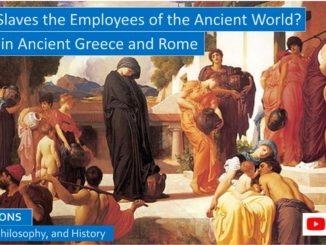
The ancient world is very different from the modern world. We in the modern world view life is sacred, today we expect our children to survive until old age, because modern medicine ensures a long healthy life to most of us. If I had lived in the ancient world, I would have died as a teenager from appendicitis. In the ancient world, parents often did not name their children until they were a few weeks old due to the high infant mortality rate. Only half of children survived to adulthood, some scholars estimate that only one in ten survived to a ripe old age.
[…]