Greek and Roman History

Summary of the Peloponnesian Wars Between Athens and Sparta

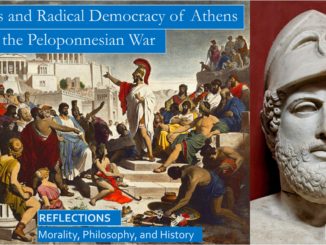
Why study the Peloponnesian wars? One main reason is: You cannot understand the Platonic dialogues without first understanding the history of the Peloponnesian Wars, because so many of the leading figures of this period are referenced in the Platonic dialogues, and we can learn many moral lessons from the war, which changed the Greek city-states forever.
The history of the war includes many interesting personalities, including Pericles, the founder of the radical democracy of Athens who died in the first years of the war, and Alcibiades, the ladies’ man and charismatic personality who was a leader of all three sides of the antagonists of the war, and we have the Spartan general Lysander who spared Athens from destruction when she lost the war. […]
Greek and Roman History

Plutarch: Lives of Aristides and Cimon, Formation of the Delian League After the Greco-Persian Wars

Why did the Ionian Greeks reject the Spartan leadership under the Pausanius, and why did they plead for Athens to take up the liberation of the Asian Greek colonies from the Persians, leading to the founding of the Delian League? Simply put, the Delian allies were impressed by both the military acumen and integrity of the two Athenian generals Aristides the Just, and Cimon. Also, the Spartans embarrassed Cimon, who sought to reconcile Athens and Sparta, which contributed to the outbreak of the Peloponnesian Wars. […]

Greek and Roman History

Thucydides and Plutarch: Pericles and the Beginning of the Peloponnesian War Between Athens and Sparta

This is second video and blog where we examine both history and Plutarch’s moral biographies of the key Athenian leaders before and in the first years of the war. In the first video we reflected on Pericles and his reforms leading to the Radical Democracy of Athens in the years […]

Greek and Roman History

Draco, Solon, and Cleisthenes, Democracy and Justice in Ancient Greece

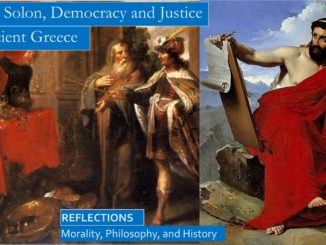
Homer’s Odyssey depict the deep Greek past where might makes right, where brave soldiers fight for justice, where grievances and murders are settled by blood feuds. As Greek emerged from its Dark Ages in the seventh century, the Greeks in Athens sought to establish a more systematic system of justice with laws governing the state. Draco was appointed by the ruling aristocracy to be a lawmaker to codify new laws to replace justice by feuds, now the Senate of the Areopagus would hear cases of homicide. […]

Greek and Roman History

Herodotus, Histories of Persia: Egypt and Scythia Before the Greco-Persian Wars

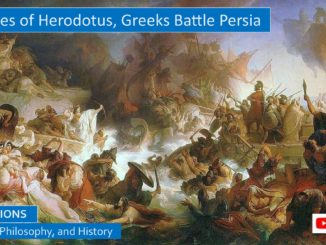
Why did Herodotus write his Histories? Herodotus tells us in his first paragraph, “so that human achievements may not be forgotten in time, and great and marvelous deeds, some displayed by Greeks, some by barbarians, may not be without their glory; and especially to show why the two peoples fought with each other.” Just as in the Iliad, the Greek soldiers and sailors in the Histories of Herodotus fight for cleos, or glory, and warriors in these warrior societies are immortalized by their great and marvelous deeds on the battlefield. Herodotus is interested in recording any mighty deeds of both the Greeks and the Persians, although the glory was earned mostly by the Greeks. […]