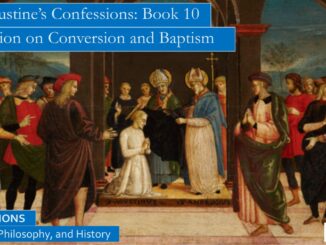
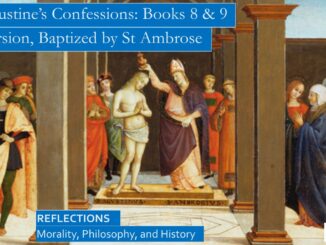
Baptism and confession in ancient Rome were very viewed much more seriously in the ancient world than they are today, as the Christian persecutions were in living memory. St Augustine was baptized in the year 387 while the former Emperor Constantine the Great started favoring Christianity in the year 312, putting to an end the vicious persecution of Christians under the preceding Emperor Diocletian, which was only seventy-five years ago.
Although the severe Diocletian persecutions were fading into history, many Christians had parents or grandparents who suffered and martyred for their Christian faith. There was a strong feeling among the Christians that they needed to be serious about baptism, that committing mortal sins after baptism could endanger their immortal soul. Constantine was baptized on his deathbed since he feared damnation for those enemies that were killed on the battlefield. Monica had delayed her son’s baptism because she was not sure he could repent of the inevitable sins teenagers with raging hormones would commit, and he declined to be baptized until he left the Manichean heresy in his middle age. Many Christians in the time of St Augustine desired to be as serious about their faith as the martyrs were about the faith that they sacrificed their life for.
This explains Augustine’s anxieties as he prepares himself for the challenge of living as perfect a Christian life as possible after his baptism. His anxiety was that he could not control his passions, a common concern in a Roman world so deeply influenced by Stoic philosophy. St Augustine tells us several conversion stories that were shared with him before his own conversion story. […]