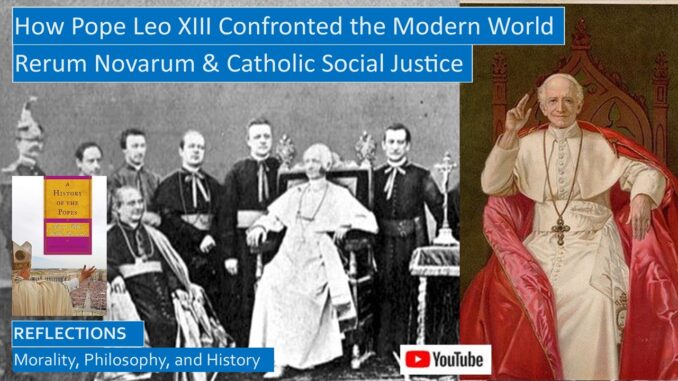
How could a conservative pope be known for the progressive encyclical, Rerum Novarum, that promoted the Catholic Social Justice movement? Why was Pope Leo XIII known as the Workers’ Pope?
What conservative causes did he champion? Why did he oppose democracy and freedom of religion?
Why did Catholicism flourish in the late nineteenth century?
Why did Pope Leo XIII promote the theology of St Thomas Aquinas?
YouTube video for this blog: https://youtu.be/YojqhGBJtOY
THE PAPACY AFTER THE COUNCIL OF TRENT AND THE FRENCH REVOLUTION
When we learned that the new American pope chose to be named Pope Leo XIV, signaling his respect for the nineteenth-century Pope Leo XIII, we wanted to provide a short biography of this past pope in the context of the history of the Church after the Council of Trent.
Pope Leo XIV, First American Pope, Successor to Pope Francis and Social Justice of Pope Leo XIII
https://seekingvirtueandwisdom.com/pope-leo-xiv-first-american-pope-successor-to-pope-francis-and-social-justice-of-pope-leo-xiii/
https://youtu.be/wSns5VGhtRk
Quoting our author, John O’Malley: After the Council of Trent, the implementation of the decrees “of Trent became an ongoing part of the pope’s job description.”[1]
Council of Trent, The Reform Council Foreshadowing Vatican II
http://www.seekingvirtueandwisdom.com/council-of-trent-the-reform-council-foreshadowing-vatican-ii/
https://youtu.be/Thq1blvzWHs
In our prior reflection, we covered the popes from the Council of Trent to Vatican I, including the papacies of Pope Pius VI and Pope Pius VII, who shepherded the church both through the French Revolution and Napoleon.
Catholic Popes from Trent to French Revolution and Napoleon to Vatican I
https://seekingvirtueandwisdom.com/popes-from-trent-to-french-revolution-and-napoleon-to-vatican-i/
https://youtu.be/XkmuUvrDWNg
The 1815 Congress of Vienna tried to turn the clock back by reestablishing the monarchies of Europe, including restoring the Papal States to the papacy, but Europeans would never forget the heady freedoms experienced as a result of the French Revolution and under Napoleon, including his conquests of Italy.
Initially, Pope Pius IX was a liberal, but after being chased out of Rome during the Revolutions of 1848, he transitioned to a reactionary conservative. But the papacy lost the Papal States to the forces of King Victor Emmanuel III, who championed the Risorgimento, or unification of Italy.
When Pope Pius IX’s military and political influence was at its lowest, his spiritual authority was at its zenith, when he called the First Vatican Council into session.
Initially the French troops of Napoleon III guarded Rome, but when he faced reverses in the Franco-Prussian War, he was compelled to withdraw his troops from Rome, leading to the defeat of the papal troops. Simultaneously, the First Vatican Council declared that, under rare circumstances, the pope’s formal ex cathedra pronouncements were deemed infallible. Pope Pius IX refused to negotiate with the new rulers of Rome, announcing that he was a ‘Prisoner of the Vatican.’
Pope Pius IX, 1848 Revolutions and First Vatican Council
https://seekingvirtueandwisdom.com/pope-pius-ix-1848-revolutions-and-first-vatican-council/
For the next fifty years, the popes following Pope Pius IX continued their isolation as self-proclaimed ‘prisoners of the Vatican.’ They also continued the ban on Italian Catholics engaging in politics in the new Italian state. All the while, the Italian state permitted the papal administration to function as the head of the Catholic Church worldwide.
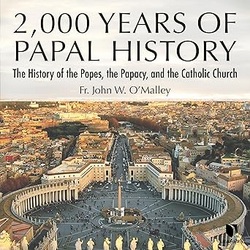
But the devout supported the papacy spiritually in its hour of need. Our author John O’Malley tells us that: “in almost every Catholic country, vocations to the priesthood climbed to pre-Revolutionary levels. The religious orders of men and women, some of which were virtually extinct in 1800, rebounded at an astounding rate, and a strikingly large number of new congregations of nuns were founded. Pilgrimages” “revived mightily, due in part to easier travel by railroads. Missionary activity in Asia and Africa flourished, sometimes supported by anticlerical governments, as missionaries were expected to carry and brandish their national flag.”
Primary and secondary Catholic schools flourished, as did parish catechetical instruction. Many religious magazines were published. A few Catholics explored new methods of Biblical interpretation and experimented with the liturgy.
When Pope Pius IX was on his deathbed, the Italian government and the papacy compromised. Before his death, the pope absolved the king of his sins, while the government guarded the funeral procession while discouraging signs of Vatican political independence during the event.
POPE LEO XIII, SEARCHING FOR SOLUTIONS
Why did the new pope select the name of Pope Leo XIII? He said that he had admired Pope Leo XII’s interest in education and his skill in foreign affairs in the early 1800s. Perhaps these modern Leos remembered the pontificate of the first Pope Leo, Pope Leo the Great who, unarmed, bravely marched into the enemy camp, dissuading Attila the Hun from attacking Rome. This early pope had little political power but had tremendous spiritual authority, exhibiting courage that impressed the warlord Attila the Hun, echoing the several brave camp meeting stories in the Iliad.
Ancient Warrior Societies, Blog 1, The Warrior Ethos of Ancient Greece, Rome, and Israel
https://seekingvirtueandwisdom.com/ancient-warrior-societies-blog-1-the-warrior-ethos-of-ancient-greece/
https://youtu.be/7QAZ_s6zw4E
Pope Leo XIII was sixty-eight years old when crowned, surprising everyone by living for another twenty-five years. The Italian government was nervous that a grand ceremony would ignite the pro-papal sentiments of the crowd. However, the coronation took place in the small Sistine Chapel, and he did not appear on the balcony to the adulation of the crowds of the faithful. He was photogenic and popular with ordinary Catholics.
Like the other prewar popes, Pope Leo XIII both looked forward and backward, confirming the conservatism of his predecessors, while embracing modern ideas that later would influence the Second Vatican Council. On his conservative side, he was a firm supporter of the Syllabus of Errors and clung to the notion that one day the Papal States would be restored to the papacy. He condemned Americanism and its belief in the separation of church and state. He discouraged the use of modern methods of biblical interpretation.
Like the popes who succeeded him, Pope Leo XIII promoted the study of the scholastic philosophy and theology of St Thomas Aquinas. Although they thought this would lead inevitably to a conservative theology, his writings were far more intellectually stimulating than they suspected, since he used both Aristotle, St Augustine, and many other Church Fathers as sources.
Previously, by 1866, the French priest and scholar Jacques-Paul Migne oversaw the publication of a massive 383-volume publication of all available Greek and Latin writings from the late first century until 1439. Although Scholastic theology drew from these sources, there were differences. This encouraged a scholarly movement to return to the sources, which also contributed to the Second Vatican Council.
RERUM NOVARUM AND CATHOLIC SOCIAL JUSTICE DOCTRINE
Pope Leo XIII was progressive in his issuance of the famous papal encyclical Rerum Novarum, On the Condition of the Working Class, which strengthened the Catholic Social Justice movement. This was issued during the abusive early years of the Industrial Revolution, where child labor was rampant, where workers labored twelve hours a day, six days a week, under unsafe conditions, working for slave wages. Although Catholic conservatives often sympathized with the factory owners, Pope Leo XIII did not want to lose workers to socialist or communist ideologies; he felt the church had to address the problems the workers faced.
Although Pope Leo XIII condemned both socialism and communism, late in his pontificate, he condoned the Christian Socialist movements and parties, affirming that Catholicism and democracy were compatible. Later, after the extremes of Stalin’s Russia, the overwhelming majority of socialists opposed communism.
O’Malley writes: “Rerum Novarum is a long encyclical. It reaffirms previous papal condemnations of socialism and communism. But its tone throughout is serene, and free from rant.” “While it proclaimed private property as a natural right, it insisted it had its limits. If private property was a right, so was the right of the worker to a just wage and to humane working conditions. Most remarkably, the encyclical endorsed the right of workers to organize” in unions “in order to obtain and secure their rights.”
Pope Leo XIII was known as the Social Pope and the Pope of Workers since he endorsed the necessity of paying workers a living wage that enables the worker to feed, clothe, and house his family with dignity. Rerum Novarum encouraged the formulation of social justice doctrine, leading to the Catholic concept of the preferential option for the poor. Subsequent popes endorsed the theology of this encyclical: Pope Pius XI issued the encyclical Quadragesimo Anno, Pope Paul VI issued Octagesima Adveniens, and Pope John Paul II issued Centesimus Annus on the fortieth, eightieth, and hundredth anniversary of Rerum Novarum. In addition, Pope John XXIII issued Mater Et Magistra on social justice.
This was likely the inspiration for FDR’s later New Deal policies, and the Four Freedoms issued during the War, which declared that people everywhere in the world should enjoy:
- Freedom of speech and expression.
- Freedom of worship.
- Freedom from want.
- Freedom from fear.
Other progressive actions of Pope Leo XIII prepared the way for the reformist Second Vatican Council after World War II. In the early days of his pontificate, he promoted the distinguished English convert and theologian John Henry Newman to the cardinalate. This was controversial because many conservatives rejected his influential work, Essay on the Development of Christian Doctrine. Catholic theologians have always proclaimed, as a matter of faith, that Catholic dogma is everlasting, while church historians study how doctrines evolve over time. This acceptance helped make the reforms of Vatican II possible.
Pope Leo XIII also opened the Vatican archives to approved scholars of all denominations. Historically, the Council of Trent was seen as reactionary, and the implementation of its decrees was certainly reactionary. To forestall unwarranted Protestant polemics, the post-Trent popes had wisely closed the archives, but once they were opened, scholars discovered that the Council participants intended it to be a reforming council. The implication is that the Second Vatican Council was a continuation of the intended reforms of the Council of Trent.
Council of Trent, The Reform Council Foreshadowing Vatican II
http://www.seekingvirtueandwisdom.com/council-of-trent-the-reform-council-foreshadowing-vatican-ii/
https://youtu.be/Thq1blvzWHs
In the long run, the loss of the Papal States was beneficial to the papacy. Although it lost a substantial revenue source, as the centuries passed the meager papal army was less and less able to protect Rome from invading armies. Now the papacy could concentrate on spiritual matters rather than having to administer the Papal States. No longer would it need to harm its reputation when putting down citizen rebellions. Plus, the secular European governments no longer concerned themselves with papal elections and appointments of bishops and abbots, finally granting the Catholic Church this freedom from state interference into the administration of the papacy.[2]
We will also reflect on brief biographies of the remaining popes through the two Great Wars in the twentieth century:
- Pope Pius X, who succeeded Pope Leo XIII, was the reactionary pope who encouraged greater piety among the faithful.
- Pope Benedict XV and Pope Pius XI, who guided the Catholic Church during the trying times of first World War I, then World War II.
- We also reflected on David Kertzer’s biographies and histories of Pope Pius XI and Pope Pius XII, the two popes who guided the Catholic Church during the perilous Second World War. This reflection includes more details on how Pope Pius XI negotiated the Lateran Treaty with Mussolini.
Each of these popes prepared the church for the Second Vatican Council in their own way.
Pope Pius X, Promoting Piety, Rejecting Modernism
https://seekingvirtueandwisdom.com/pope-pius-x-promoting-piety-rejecting-modernism/
Pope Benedict XV and Pope Pius XI: Confronting World War I and World War II, and Fascism
https://seekingvirtueandwisdom.com/pope-benedict-xv-and-pope-pius-xi-confronting-world-war-i-and-world-war-ii-and-fascism/
Mussolini’s Fascist Regime and the Catholic Church
http://www.seekingvirtueandwisdom.com/mussolinis-fascist-regime-and-the-catholic-church/
https://youtu.be/LvNynEdZFuM
After Pope Francis opened the Vatican archives for the wartime years, David Kertzer updated his biography and history of Pope Pius XII during the Second World War.
Pope Pius XXII: Back Channel Between Hitler and the Pope
https://seekingvirtueandwisdom.com/world-war-ii-back-channel-between-hitler-and-pope-pius-xii/
https://youtu.be/6xdxvchkWyY
Pope Pius XII, Wartime Pope, Axis Powers March Across Europe
https://seekingvirtueandwisdom.com/pope-pius-xii-wartime-pope-axis-powers-march-across-europe/
https://youtu.be/L1bkOQNrlzg
Pope Pius XII, Wartime Pope, Allied Powers Turn the Tide of War
https://seekingvirtueandwisdom.com/pope-pius-xii-wartime-pope-allied-powers-turn-the-tide-of-war/
https://youtu.be/pjMa3JdjW48
Pope Pius XII, Wartime Pope, Could the Pope Have Done More To Save the Jews?
https://seekingvirtueandwisdom.com/pope-pius-xii-wartime-pope-could-the-pope-have-done-more-to-save-the-jews/
https://youtu.be/ONnAcLLBNog
The Second Vatican Council is unimaginable without the experiences of the Catholic Church as it survived World War II. These experiences led it to embrace the American form of democracy and freedom of religion, and to restate the Catholic faith of Trent in a positive manner, seeking dialogue with all Christians and also with all faith traditions.
Vatican II Declaration on Freedom of Religion, Embracing Democracy, Rejecting Fascism
http://www.seekingvirtueandwisdom.com/vatiJcan-ii-decree-on-freedom-of-religion-embracing-democracy-rejecting-fascism/
https://youtu.be/i_zGeTW9QMI
Vatican II Decree on Freedom of Religion, Embracing Democracy, Rejecting Fascism
http://www.seekingvirtueandwisdom.com/vatican-ii-decree-on-freedom-of-religion-embracing-democracy-rejecting-fascism/
https://youtu.be/i_zGeTW9QMI
Pope John XXIII Opening Address to Vatican II, and Yves Congar, True and False Reform, Conclusion
https://seekingvirtueandwisdom.com/pope-john-xxiii-opening-address-to-vatican-ii-and-yves-congar-true-and-false-reform-conclusion/
https://youtu.be/ALZozpbSrM4
Council of Trent, The Reform Council Foreshadowing Vatican II
http://www.seekingvirtueandwisdom.com/council-of-trent-the-reform-council-foreshadowing-vatican-ii/
https://youtu.be/Thq1blvzWHs
DISCUSSING THE SOURCES
The Jesuit priest and professor John O’Malley specialized in the study of the Council of Trent and the First and Second Vatican Councils. He is an excellent writer, and this book is geared towards educating the layman on this history, and all his books are easily accessible to laymen. John O’Malley is one of our favorite authors.
Plus, we have a separate reflection of book reviews of the many sources for our reflections of the Councils of Trent, the First Vatican Council, and the Second Vatican Council.
Book Reviews, Reform Councils of Trent and Vatican II, and Vatican I
http://www.seekingvirtueandwisdom.com/book-reviews-reform-councils-of-trent-and-vatican-ii/
https://youtu.be/cuKVG24Bf78
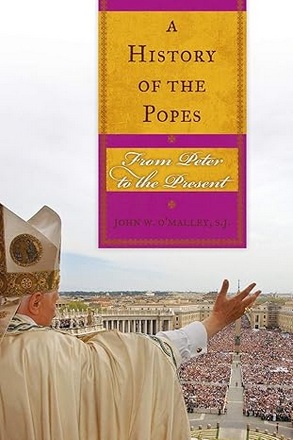
[1] John O’Malley, A History of the Popes, From Peter to the Present (New York: Sheed and Ward, 2010), Chapter 21, The New Rome, p. 209.
[2] John O’Malley, A History of the Popes, From Peter to the Present, Chapter 25, Leo XIII: Searching for Solutions, pp. 251-260 and https://en.wikipedia.org/wiki/Pope_Leo_I and https://en.wikipedia.org/wiki/Pope_Leo_XIII and https://en.wikipedia.org/wiki/Rerum_novarum and John O’Malley, What Happened At Vatican II (Cambridge: Belknap Press of Oxford University Press, 2008), Chapter 2, The Long Nineteenth Century, pp. 62-64,71 and https://en.wikipedia.org/wiki/Four_Freedoms

1 Trackback / Pingback