How did the Catholic faith of JRR Tolkien influence his classic trilogy, Lord of the Rings?
How did the experiences of JRR Tolkien and CS Lewis in the trenches during World War I and as English citizens living near London in World War II influence their writings?
How did JRR Tolkien’s interest in ancient Icelandic languages and culture influence the Lord of the Rings?
Did the legends of Achilles in Homer’s Iliad and the Old Testament stories influence Tolkien’s Lord of the Rings?
YouTube video for this blog: https://youtu.be/jqBbckMEyGA
INSPIRATIONS FOR TOLKIEN’S LORD OF THE RINGS
What inspirations did JRR Tolkien draw from for his best-selling series The Lord of the Rings, and the Hobbit? Like his friend CS Lewis, Tolkien was an English Professor specializing in medieval and ancient literature and languages. When CS Lewis was contemplating whether to return to his Episcopalian roots, abandoning his youthful agnostic views, Tolkien argued that he should convert to Catholicism. CS Lewis resisted these pleas. IMHO, though CS Lewis was conducive to Catholicism, and may have even confessed his sins to a priest, he likely thought he would be more effective evangelizing through his books as an Episcopalian. Indeed, he is one of the few apologetic authors whose writings are read by Catholics, Protestants, and Orthodox Christians.
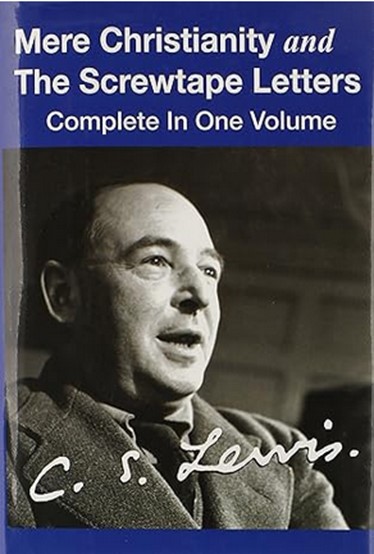
Both JRR Tolkien and CS Lewis fought in the trenches in France as British soldiers during World War I, they both lost many friends who fought beside them: they both experienced the horrors of war. Both were too old to serve in World War II, but this struggle against the evils of Naziism directly influenced CS Lewis’ Mere Christianity and Tolkien’s Lord of the Rings, which were both released shortly after the war.
Facing the Nazi Menace: CS Lewis’ Mere Christianity and Viktor Frankl’s Memoirs on Auschwitz, Books 1-4
https://seekingvirtueandwisdom.com/facing-the-nazi-menace-cs-lewis-mere-christianity-and-viktor-frankls-mans-search-for-meaning/
https://youtu.be/x-9FeH9Gyng
Preparing the Way for Vatican II: CS Lewis’ Mere Christianity, Books 1-4
https://seekingvirtueandwisdom.com/preparing-the-way-for-vatican-ii-cs-lewis-mere-christianity/
https://youtu.be/udJQzmqst34
Was CS Lewis a Closet Catholic? Reflections on Mere Christianity, Books 2-4
https://seekingvirtueandwisdom.com/was-cs-lewis-a-closet-catholic-reflections-on-his-mere-christianity/
https://youtu.be/ksWomcEg8C0
Summary of CS Lewis’ Mere Christianity, WWII Ecumenical Broadcast: Morality Not Polemics
https://seekingvirtueandwisdom.com/summary-of-cs-lewis-mere-christianity-wwii-ecumenical-broadcast-morality-not-polemics/
https://youtu.be/6-Hc4X0NN8k
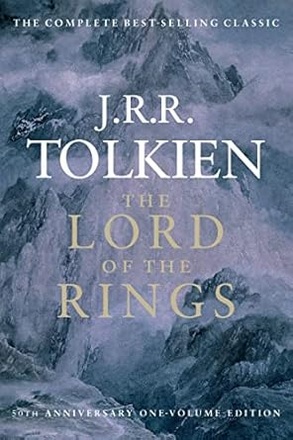
Unlike CS Lewis, Tolkien specialized in ancient Nordic languages, creating elfen and dwarf alphabets and scripts, as well as elaborate back-story histories for the creatures of Middle Earth. Tolkien drew heavily from the Icelandic myths for some of the characters and especially names for the elven and dwarf heroes for these epic novels.[1] CS Lewis also had creatures inspired by these Nordic myths in his novels of Narnia.
After the European Vikings were converted to Christianity, over-zealous monks destroyed much of the Viking literature in Europe. However, the Vikings in Iceland were both more distant and peaceful, and their scholars preserved many of the ancient myths while also adopting Christianity. The works that preserved these traditions, which Tolkien consulted, include the Poetic Edda, a compilation of ancient oral epic poetry, and the Prose Edda, a compilation of Norse mythology by Snorri Sturluson in 1220.[2]
There is a cottage industry of liberal arts professors writing erudite papers on the influence of Catholicism and the Icelandic traditions on the Lord of the Rings. Many of these papers quote Tolkien on these origins, he states that his goal is not to restate these ancient myths but rather to use these Icelandic sources to create the cultural environment of Middle Earth. Although a few plot elements were borrowed from the Icelandic sources, and possibly Catholic and Homeric sources, since all English schoolboys in their days studied the Iliad, often in the original Greek, most of the grand plots were imagined by Tolkien himself.
Just as World War I was sparked by the assassination of obscure Balkan royalty, so does Tolkien show how events in the lowly Hobbit shire affect all of Middle Earth. He may have borrowed mythological elements from the King Arthur and the Round Table legends for the small Company of the Ring accompanying Frodo.[3] Rather than simply borrow from these ancient myths, which are more concerned with explaining the weather and geological features like the vastness of the oceans, Tolkien seeks to construct a modern mythology for the English-speaking peoples of the modern world.
Tolkien’s memories of the brutal WWI trenches that he fought in as a soldier influenced his depiction of the battlefields of Mordor, as did his memories of the mines, ironworks, smoke, and spoil heaps of the Black Country, near Tolkien’s childhood home.[4]
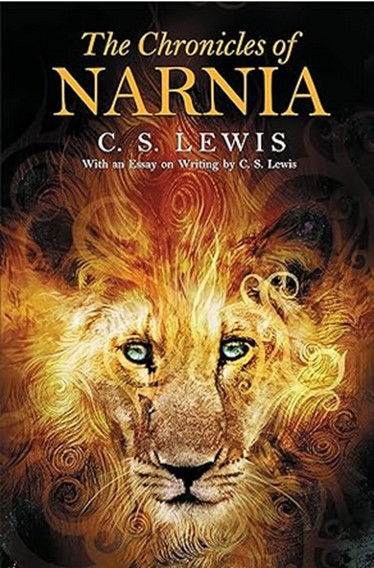
Tolkien did borrow from Icelandic mythology many elements of the ancient Balrog monster that Gandalf fought in the Two Towers. Although these ancient myths describe how heroes battled the Balrog, the hero does not gain mythic power by his vanquishing the monster, whereas our wizard’s power is multiplied as the experience transforms him from Gandalf the Grey to the brilliant Gandalf the White.[5] Likewise, many have compared the all-powerful elfen One Magic Ring[6] to the magic wealth-making machine Sampo in the Finnish epic poetry compiled in the Kalevala in the 1800s.[7]
One Icelandic tour guide informs is that “Gandalf himself is definitely influenced by the Norse god Odin,” who, like the Greek god Zeus, heads the Nordic pantheon. “Gandalf’s character’s name appears in the Poetic and Prose Eddas. Odin is often described in the old texts as The Wanderer, an old man with one eye, a long white beard, and a broad hat, wearing a cloak and wielding a spear. He is the promoter of knowledge, truth, insight, and justice.” “Tolkien even wrote in a letter in 1946 that he thought of Gandalf as an ‘Odinic wanderer.’”[8]
There are a couple of interesting statements in the Wikipedia entry for “Sauron.”
First: “Tolkien stated in his Letters that although he did not think ‘Absolute Evil’ could exist as it would be zero, ‘in my story Sauron represents as near an approach to the wholly evil will as is possible.’ He explained that, like ‘all tyrants, Sauron had started out with good intentions but was corrupted by power,’ and that he ‘went further than human tyrants in pride and the lust for domination, being in origin an immortal (angelic) spirit.’”
Second: “The classicist J. K. Newman comments that “Sauron’s Greek name” makes him “the Lizard”, from Ancient Greek σαῦρος (sauros) ‘lizard or reptile’.” [9]
COMPARING THE QUEST OF THE RING TO THE WORLD WARS
The opening scene in the Fellowship of the Ring, the first book in the Lord of the Rings trilogy, is Bilbo Baggins eleventy-first birthday celebration, which occurs in Frodo Baggin’s thirty-third year. We know that the ages and number of years are significant, because JRR Tolkien tells us they are in his dialogue: “Together we score one hundred and forty-four. Your numbers were chosen to fit this remarkable total.”[10]
Perhaps the age of Bilbo Baggins, or 111, symbolizes the Trinity: Father, Son, and Holy Ghost. What is the possible significance of the sum of the ages of Bilbo and Frodo, or 111 + 33 = 144? Perhaps this is twelve squared, or 12 X 12. This likely refers to the number of the tribes of Israel, as well as the number of the disciples of Christ.
Many commentators view Frodo as a type of Christ that saves humanity, but perhaps this twelve-squared suggests he is a type of Moses, who is also seen as a type of Christ. Frodo is definitely seen as a reluctant prophet.
Gandalf himself states that “there was something else at work, beyond any design of the Ring-Maker. Bilbo was meant to find the Ring, and not by its maker. In which case you,” Frodo, “also were meant to have it. And that may be an encouraging thought.”
But Frodo disagrees, he is not encouraged by the awesome responsibility of carrying the ring, just as Moses was a reluctant prophet when facing the Burning Bush.[11]
Gandalf reveals to Frodo his destiny:
You must “find the Cracks of Doom in the depths” “of the Fire-Mountain” in Mordor, “and cast the Ring in there, if you really wish to destroy it, to put it beyond the grasp of the Enemy forever.”
But Frodo responds like a reluctant Moses: “I do really wish to destroy it! Or, well, to have it destroyed. I am not made for perilous quests. I wish I had never seen the Ring! Why did it come to me? Why was I chosen?”
“Such questions cannot be answered,” said Gandalf. “You may be sure that it was not for any merit that others do not possess: not for power or wisdom, at any rate. But you have been chosen, and you must therefore use such strength and heart and wits as you have.”[12]
What could be the significance of Frodo celebrating his thirty-third birthday? Although modern Christians view heaven as a Platonic spiritual place, in the New Testament, and in early and medieval Christianity, the physical resurrection of the body is not only stressed, but it is also a core Christian belief.
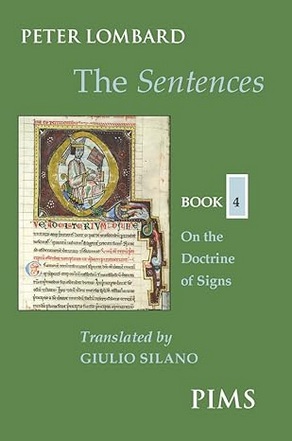
Peter Lombard references St Augustine’s City of God when he states that when our bodies are resurrected, “each one will receive his own bodily size of his youth, even if he died an old man.” His “age will that which Christ reached, or the youthful one, of about thirty years.” “For the age of Christ at His resurrection was thirty-two years and three months.”[13]
But after Bilbo’s birthday, when Frodo is but thirty-three, Frodo stays in the Hobbit Shire until a few years short of his fiftieth birthday. What is the significance of the number of years spent waiting in the Shire, until he departs on the quest to destroy the Ring in the molten mountain of Mordor?
What is the significance of this seventeen-year gap? Is seventeen a biblical number? But what we do know is that: 1918 + 17 = 1935
Let us review the calendar:
November 1918: End of World War I, Hitler was a corporal.
January 1933: Hitler becomes Chancellor of Germany under Paul Hindenburg, President.
March 1933: Enabling Act, Hitler is now Fuhrer, Dictator of Germany. Many good men are deceived into trusting Hitler to defend Germany from communism.
July 1934: Night of the Long Knives, the SA leadership and Hitler’s enemies are murdered in cold blood.
And the seventeen-year gap ends in 1935.
August 1936: Berlin Summer Olympics, the calm before the storm.
March 1938: Anschluss, German Annexation of Austria.
September 1938: Munich Agreement, clearing the way for German Annexation of Czechoslovakia.
November 1938: Kristallnacht, Night of Broken Glass, SS Storm Troopers and the Gestapo initiate the looting and burning of Jewish synagogues, stores, and homes, while ordinary Germans look the other way. This is the second watershed event when the dark character of Nazi Germany is revealed.
September 1939: Nazi Germany invades Poland, which begins of World War II in Europe.
The Fellowship of Rings was originally published in 1954, soon after CS Lewis published his Mere Christianity and his Chronicles of Narnia, when the memories of the Great War, when Kaiser Wilhelm’s Germany was defeated in World War I, the defeat of Nazi Germany in World War II, and the nuclear annihilation of Hiroshima and Nagasaki were still very vivid and fresh.
The Dark Riders from Mordor ruthlessly searching for the master Ring hanging on Frodo’s neck would have reminded the first readers of the Lord of the Rings of the SS Storm Troopers and Gestapo in their ominous dark uniforms, which were also inspired by pagan Nordic mythology.
Facing the Nazi Menace: CS Lewis’ Mere Christianity and Viktor Frankl’s Memoirs on Auschwitz, Books 1-4
https://seekingvirtueandwisdom.com/facing-the-nazi-menace-cs-lewis-mere-christianity-and-viktor-frankls-mans-search-for-meaning/
https://youtu.be/x-9FeH9Gyng
WHO IS THE ENIGMATIC FIGURE OF TOM BOMBADIL?
In their initial journey from the Hobbit Shire to the elfen palace in Rivendell, they are rescued by Tom Bombadil. Who is this enigmatic magical character? Tom Bombadil has no clear antecedent in either Nordic Myths or the Old Testament, or any other tradition such as the Iliad.
Dr Wikipedia tells us that “Tolkien stated that he invented Tom Bombadil in memory of his children’s Dutch doll.” He first appeared in his 1934 poem titled “The Adventures of Tom Bombadil.” Tolkien commented further that “even in a mythical Age there must be some enigmas, as there always are. Tom Bombadil is one.”
“Tolkien said little of Tom Bombadil’s origins, and the character does not fit neatly into the categories of beings Tolkien created. Bombadil calls himself the ‘Eldest’ and the ‘Master.’ He claims to remember ‘the first raindrop and the first acorn’, and that he ‘knew the dark under the stars when it was fearless—before the Dark Lord came from Outside.’”
“When Frodo asks Goldberry, his companion, just who Tom Bombadil is, she responds simply by saying ‘He is.’” Some critics have taken this dialogue as a reference to God’s statement ‘I Am that I Am’ in the Book of Exodus, an idea which Tolkien denied as an influence.
Dr Wikipedia continues, “In response to a letter, Tolkien described Tom in The Lord of the Rings as ‘just an invention’ and ‘not an important person to the narrative,’ even if ‘he represents something that I feel important, though I would not be prepared to analyze the feeling precisely. I would not, however, have left him in, if he did not have some kind of function.” Tolkien invented Tom Bombadil to add to the adventures experienced by Frodo and his hobbit companions, as Dr Wikipedia’s footnotes explain.[14]
Who is Tom Bombadil’s fairy companion Goldberry? She appeared in Tolkien’s 1934 poem, Adventures of Tom Bombadil, where she drags Tom Bombadil into the river. He escapes, only to capture her as his bride.[15] Marriage compelled by kidnapping was common in the ancient and medieval world, and was forbidden by several church councils, including the Council of Trent.
Council of Trent, The Reform Council Foreshadowing Vatican II
http://www.seekingvirtueandwisdom.com/council-of-trent-the-reform-council-foreshadowing-vatican-ii/
https://youtu.be/Thq1blvzWHs
Like Tom Bombadil, she doesn’t easily fit into the races of Middle Earth in Tolkien’s trilogy. Goldberry is either a river goddess or a water nymph, or something similar. Frodo suggests this when he cried out to his companions:
“Goldberry! My fair lady, clad all in silver green! We have never said farewell to her, nor seen her since the evening!”
They looked, and “there on the hill-brow she stood beckoning to them: her hair was flying loose, and as it caught the sun, it shone and shimmered. A light like the glint of water on dewy grass flashed from under her feet as she danced.”[16]
Did this echo the flaming hair of Achilles in the Iliad that frightened the Trojans? Perhaps, but the context differs. Tolkien, like all well-educated British schoolchildren, would have read the Iliad.
Homer, in the Iliad, tells us that the goddess Iris brings a message to Achilles that he should dally in camp no longer, that he should march out to battle with this fellow Greeks. Achilles reminds her that he has no armor, and that he cannot fit into the armor donned by any other Greek. His mother, the goddess Thetis, informs him that she asked the god Hephaestus to forge him a suit of armor befitting the gods, but this armor will not be ready for him before the morning light. What should Achilles do that day at dusk?
Homer, in the Iliad, sings:
“Quick as the wind the goddess had a plan:
‘We know, we too, they hold your famous armor.
Still, just as you are, go out to the broad trench
and show yourself to the Trojans. Struck with fear
at the sight of you, they might hold off the attack.”
In one of the most famous scenes of Western literature, as Achilles climbed up to the top of the ramparts surrounding the Greek camp:
“the goddess swept a golden cloud to crown his head
and from it she lit a fire to blaze across the field.”
“Achilles rose and loosed an enormous cry
and off in the distance the god Pallas shrieked too
and drove unearthly panic through the Trojans.”
Poets picture the mighty Achilles, larger than life, thundering on the ramparts, hair ablaze, lighting up the dusk of the seashore as the sun sets in the east,[17] much as Goldberry appears in the dusk to the hobbits.
Neither Tom Bombadil nor Goldberry are in the movie, quite likely because the movie could not include everything in the book, as this is a side adventure of the Hobbits.
FRODO SURVIVES THE RAGING RIVER, BUT NOT THE NIGHT RIDER HORSES
In the first book of the Fellowship of the Ring, Frodo and his hobbit band of friends, joined by Ranger warrior Strider whom they encounter in the village of Bree, travel to the elfen sanctuary in Rivendell, evading the cloaked evil Black Riders riding black horses. These Black Riders on horseback are drawn to Frodo, the bearer of the One Magical Ring. In a skirmish en route, the leader of the Night Riders wounds Frodo with a cursed blade, causing him to feel ill, sapping his strength. Pursued by the Black Riders, Frodo and his companions start hurrying across the Ford of Bruinen on the border of Rivendell.[18]
Our author Tolkien narrates: “There came a roaring and a rushing: a noise of loud waters rolling many stones. Dimly Frodo saw the river below him rise, and down along its course there came a plumed cavalry of waves. White flames seemed to Frodo to flicker on their crests, and he half fancied that he saw amid the water white riders upon white horses with frothing manes. The three riders that were still in the midst of the ford were overwhelmed: they disappeared, buried suddenly under angry foam. Those that were behind drew back in dismay.”
Tolkien continues: “With his last failing senses Frodo heard cries, and it seemed to him that he saw, beyond the Riders that hesitated on the shore, a shining figure of white light; and behind it ran small shadowy forms waving flames, that flared red in the grey mist that was falling over the world.”
“The black horses were filled with madness and leaping forward in terror they bore their riders into the rushing flood. Their piercing cries were drowned in the roaring of the river as it carried them away. Then Frodo felt himself falling, and the roaring and confusion seemed to rise and engulf him together with his enemies. He heard and saw no more.”[19]
After Frodo recovered after several days of healing rest in the elfen palace, Gandalf told him that though the Dark Riders likely survived, their horses perished, which temporarily slowed their pursuit.
This is a rare instance in the Lord of the Rings where the gods are mentioned. But I do not recall the book mentioning any of the more powerful gods.
“Who made the flood?” asked Frodo.
“Elrond” the river god “commanded it,” answered Gandalf. “The river of this valley is under his power, and it will rise in anger when he has great need to bar the Ford. As soon as the captain of the Ringwraiths rode into the water the flood was released. If I may say so, I added a few touches of my own:” “some of the waves took the form of great white horses with shining white riders; and there were many rolling and grinding boulders.”[20]
This is a rare instance in the Lord of the Rings where the gods are mentioned, but I don’t recall any mention of powerful gods in this novel.
FLOOD OF BRUINEN COMPARED TO THE PARTING OF THE RED SEA
This flooding of the Black Riders at the Flood of Bruinen is clearly similar to how the Israelites escaped the pursuing army of Pharoah in the Exodus, though there are many dissimilarities.
Exodus witnesses: “Then Moses stretched out his hand over the sea; and the Lord drove the sea back by a strong east wind all night, and made the sea dry land, and the waters were divided. And the people of Israel went into the midst of the sea on dry ground, the waters being a wall to them on their right hand and on their left. The Egyptians pursued and went in after them into the midst of the sea, all Pharaoh’s horses, his chariots, and his horsemen. And in the morning watch the Lord in the pillar of fire and of cloud looked down upon the host of the Egyptians, and discomfited the host of the Egyptians, clogging their chariot wheels so that they drove heavily; and the Egyptians said, “Let us flee from before Israel; for the Lord fights for them against the Egyptians.”
Then the Lord said to Moses, “Stretch out your hand over the sea, that the water may come back upon the Egyptians, upon their chariots, and upon their horsemen.” So, “Moses stretched forth his hand over the sea, and the sea returned to its wonted flow when the morning appeared; and the Egyptians fled into it, and the Lord routed the Egyptians in the midst of the sea.”[21]
There are similarities, but there are also differences in the two narratives. Elrond, the river god, assisted by the wizard Gandalf, yields the flood waters like a weapon, but the waters threaten to drown both the hero and the villains, although both. But God in the Exodus account easily overwhelms Pharaoh and his armies, drowning them with ease.
Unlike the hobbits and the elves, after they crossed the Red Sea, the Israelites sing a song of praise to the warrior god who saved them from Pharaoh’s chariots. Scholars suspect this is one of the most ancient sections of the Bible.
Moses and the people of Israel sang this song to the Lord, saying,
“I will sing to the Lord, for he has triumphed gloriously;
the horse and his rider he has thrown into the sea.
The Lord is my strength and my song,
and he has become my salvation;
this is my God, and I will praise him,
my father’s God, and I will exalt him.”
“The Lord is a man of war;
the Lord is his name.
“Pharaoh’s chariots and his host he cast into the sea;
and his picked officers are sunk in the Red Sea.
The floods cover them;
they went down into the depths like a stone.
Thy right hand, O Lord, glorious in power,
thy right hand, O Lord, shatters the enemy.”[22]
These verses remind us that the ancient Greek and Israelite cultures were warrior cultures, where every able-bodied citizen assisted in defending the city-state, for if they were defeated by a hostile enemy, that conquering army would burn and plunder everything, slaughter the men, and enslave the women and children. There were no conscientious objectors in the ancient world.
Ordinary Life for Romans Under Stoic Emperor Marcus Aurelius
https://seekingvirtueandwisdom.com/ordinary-life-for-romans-under-stoic-emperor-marcus-aurelius/
https://youtu.be/9hgSbcgbCJw
Ordinary Life and Justice in Ancient Athens, Rome, and Israel
http://www.seekingvirtueandwisdom.com/ordinary-life-and-justice-in-the-ancient-world/
https://youtu.be/vl8KGL5Yx2w
Ancient Warrior Societies, Blog 1, The Warrior Ethos of Ancient Greece, Rome, and Israel
https://seekingvirtueandwisdom.com/ancient-warrior-societies-blog-1-the-warrior-ethos-of-ancient-greece/
Ancient Warrior Societies, Blog 2, Greek and Roman Armies and Navies
https://seekingvirtueandwisdom.com/ancient-warrior-societies-blog-2-greek-and-roman-armies-and-navies/
Ancient Warrior Societies, Blog 3, World of the Old Testament
https://seekingvirtueandwisdom.com/ancient-warrior-societies-blog-3-world-of-the-old-testament/
Ancient Warfare in Ancient Greece, Rome, and Israel. Did Joshua Massacre Pagans in Promised Land?
https://youtu.be/9xKxqAbJ2qY
FLOOD OF BRUINEN COMPARED TO ACHILLES BATTLING THE RIVER GOD
We previously compared the apparent fire appearing on the head of Achilles to the bright shining visage of Goldenberry. Did the Flood of Bruinen also find inspiration from Homer’s description in the Iliad of how the river god Scamander battled Achilles with his raging waters? This river god was offended by how Achilles, in his senseless rage in battling the Trojans, tossed innumerable Trojan corpses into the river, polluting its waters. It was sacrilege in ancient Greece to abuse corpses, all brave warriors deserved to be buried with honors so they could safely proceed to the Underworld.
Homer recalls that when Scamander, the River god, “heard that
Achilles the famous spearman, leaping down from the bluff,
plunged in the river’s heart and the river charged against him,
churning, surging, all his rapids rising in white fury
and drove the mass of corpses choking tight his channel,
the ruckus Achilles killed: Scamander heaved them up
and bellowing like a bull the river flung them out
on the dry land but saved the living, hiding them down
the fresh clear pools of his thundering whirling current
but thrashing over Achilles’ shoulders raised a killer wave,
the tremendous thrust of it slammed against his shield.”
“Achilles dashed for the plain, his feet flying in terror
but the great god would not let up, hurling against him,
Scamander looming into a murderous breaker, dark, over him,
dead set on stopping the brilliant Achilles’ rampage here.”
Homer continues:
“Again and again the brilliant swift Achilles whirled,
trying to stand and fight the river man-to-man and see
if all the immortal gods who rule the vaulting skies
were after him, putting him to rout: again and again
the mighty crest of the river fed by the rains of Zeus
came battering down his shoulders, down from high above
but Achilles kept on leaping, higher, desperate now
as the river kept on dragging down his knees, lunging
under him, cutting the ground from under his legs.”[23]
Achilles struggled to the dry plain, pursued by the waters of the river god, until the floods are countered by fires brought by Hephaestus, the god of fire and blacksmiths who forged Achilles’ replacement armor. In the Iliad, some of the gods assisted the Greeks, while other gods assisted the Trojans.[24]
In this battle, Achilles fought the river god, while the river god Elrond fought on the side of the hobbits and their quest. Though there are more similarities between these two stories, there are differences.
Many of the stories in CS Lewis’ Narnia stories have direct parallels to Biblical stories, but IMHO, there are not any direct parallels between the Biblical stories and the tales in the Lord of the Rings. JRR Tolkien strove to construct narratives that, though they borrowed elements from both Christianity and Nordic mythology, contained totally original events and plots.
GANDALF AND FRODO FORGIVE THE PITIFUL CREATURE GOLLUM
Many of the stories reflect distinctly Christian values, such as when Gandalf and Frodo show mercy and pity when they forgive the evil creature Gollum. Centuries before Gollum had murdered his relative to possess the Ring, whom he called his Precious. The One Ring’s power extended his life by centuries as it twisted his mind and his body. But he lost the ring, which was found by Bilbo, a hobbit, who passed it down to Frodo.[25] It was agreed that to destroy the power of the ring, Frodo would need to throw it in the flowing lava of Mount Doom in Gondor where it was originally cast. Gollum followed Frodo, sometimes assisting, sometimes hindering this quest.
Early in the first book of the trilogy, after hearing the history of the creature Gollum, Frodo confronted Gandalf: “Do you mean to say that you, and the Elves, have let him live on after all those horrible deeds? Now at any rate he is as bad as an Orc, and just an enemy. He deserves death.”
Gandalf responds: “Deserves it! I daresay he does. Many that live deserve death. And some that die deserve life. Can you give it to them? Then do not be too eager to deal out death in judgement. For even the very wise cannot see all ends. I have not much hope that Gollum can be cured before he dies, but there is a chance of it. And he is bound up with the fate of the Ring. My heart tells me that he has some part to play yet, for good or ill, before the end.” “In any case we did not kill him: he is very old and very wretched.”[26]
In the Return of the King, the last book of the trilogy, Frodo and his friend Sam, trailed by the ever more desperate Gollum, sneak into Gondor so Frodo can cast the evil ring down into the lava-filled abyss in the core of Mount Doom.
But when standing at the edge of the searing abyss, looking down at the molten lava at the heart of Mount Doom in Gondor, Frodo lost his way to the wiles of the One Beguiling Ring, surprising his friend Sam by proclaiming, “I have come, but I do not choose now to do what I came to do. I will not do this deed. The Ring is mine!” “And suddenly, as he set it on his finger, he vanished from Sam’s sight. Sam gasped.”
The evil towers of Mordor shook, and the Dark Lord now could see Frodo wearing the Mighty Ring at the edge of the abyss. Gollum caught up to them, knocking Sam down, his head hitting the rock floor, as Gollum rushed Frodo to claim his Precious for himself.
Tolkien’s narration continues: “The fires below awoke in anger, the red light blazed, and all the cavern was filled with a great glare and heat. Suddenly Sam saw Gollum’s long hands draw upwards to his mouth; his white fangs gleamed and then snapped as they bit. Frodo gave out a cry, and there he was, fallen upon his knees at the chasm’s edge. But Gollum, dancing like a mad thing, held aloft the ring, a finger still thrust within its circle. It shone now as if verily it was wrought of living fire.”
“’Precious, precious, precious!’ Gollum cried. ‘My precious! O my Precious!’ And with that, even as his eyes were lifted up to gloat on his prize, he stepped too far, toppled, wavered for a moment on the brink, and then with a shriek he fell. Out of the depths came his last wail, ‘Precious,’ and he was gone.”
With that, flames leaped up, the towers fell, and the evil empire of Gondor collapsed. The armies outside, led by Strider and Gandalf, sensing that the Ringbearer had fulfilled his quest, thrusting the One Ring into the bubbling lava of Mount Doom, easily conquered the demoralized armies of evil orcs.
Relieved, Frodo reminded his friend Sam, “Do you remember Gandalf’s words? ‘Even Gollum may have something yet to do?’ But for him, Sam, I could not have destroyed the Ring. The Quest would have been in vain, even at the bitter end. So let us forgive him! For the Quest is achieved, and all is over.”[27]
This last story has no parallel in the ancient myths, and I do not recall any passage in the Old or New Testament where someone faces a temptation they cannot resist with assistance from the grace of God. However, there are multiple stories where people’s actions are ascribed to demons that possessed them, until Jesus cast them out.
DISCUSSING THE SOURCES
JRR Tolkien’s Hobbit, and especially his trilogy, the Lord of the Rings, are compelling reads where an alternate ancient universe is constructed with many races of people, elves, dwarves, orcs, and even walking and talking trees. But trying to suss out the direct Catholic influences is a little like looking for patterns in the clouds and the canals on Mars: you can find them if you want to find them.
There is a cottage industry of professors who write papers on the symbolic significance of the works of Tolkien as an academic hobby. But I just don’t see many direct correlations outside of the first chapter of the Fellowship of the Ring. The flood at the Ford of Bruinen is very similar to both the Exodus crossing and Achilles fighting the river god, but there are also dissimilarities.
Currently, I do not plan to reflect further on the events in the final two books of Tolkien’s trilogy. If you are interested, you can read the professorial papers published on this topic.
The Marvel comic universe includes some characters who are either gods or have god-like powers. Like Thor and Storm, they may harness the energy of the universe, but they do not directly cause ordinary weather events. But on the other hand, their immense powers are a reflection of the nuclear age where weapons are massively destructive. However, the Marvel Thor does not battle the serpent circling the Earth as does the mythic Thor. Tolkien’s superhero characters resemble more the Marvel characters than they do the gods in the ancient myths.
Often scholars are too eager to speculate on what influenced the classical works and philosophies. One example is the question: Did Stoicism influence early Christianity, or did Christianity influence Stoicism? Perhaps a better narrative is that Stoicism and Christianity both contributed to and drew from the intellectual culture of the Roman Empire.
Musonius Rufus on Concupiscence and Controlling the Appetites
http://www.seekingvirtueandwisdom.com/musonius-rufus-on-concupiscence-and-controlling-the-appetites/
St Augustine on Concupiscence, Blog 1
https://seekingvirtueandwisdom.com/st-augustine-on-concupiscence-blog-1/
St Augustine on Concupiscence, Blog 2
http://www.seekingvirtueandwisdom.com/st-augustine-on-concupiscence-blog-2/
St Augustine on Concupiscence, Blog 3, Final Reflections
http://www.seekingvirtueandwisdom.com/st-augustine-on-concupiscence-blog-3-final-reflections/
St Augustine, Stoic Musonius Rufus, & Ruth on Concupiscence: Love or Lust? Controlling the Passions
https://youtu.be/-wv6bVeG74A
Did the Stoic Roman Emperor Marcus Aurelius Actively Persecute the Christians?
https://seekingvirtueandwisdom.com/did-the-stoic-roman-emperor-marcus-aurelius-actively-persecute-the-christians
https://youtu.be/7xEeggL9wKs
Seneca, Moral Epistles, Blog 1, Living Well, Dying Well
http://www.seekingvirtueandwisdom.com/seneca-moral-epistles-blog-1-living-well-dying-well/
Seneca, Moral Epistles, Blog 2, Stoicism and Living a Godly Life
http://www.seekingvirtueandwisdom.com/seneca-moral-epistles-blog-2-stoicism-and-living-a-godly-life/
Seneca, Moral Epistles, Blog 3, Loving Philosophy, Loving God, Loving our Neighbor
http://www.seekingvirtueandwisdom.com/seneca-moral-epistles-blog-3-loving-philosophy-loving-god-loving-our-neighbor/
Seneca, Moral Epistles, Blog 4, Stoic Concepts of Virtue and the Good
http://www.seekingvirtueandwisdom.com/seneca-moral-epistles-blog-4-stoic-concepts-of-virtue-and-the-good/
Seneca, Moral Epistles, Blog 5, On the Benefits of Friends and Keeping Score
http://www.seekingvirtueandwisdom.com/seneca-moral-epistles-blog-5-on-the-benefits-of-friends-and-keeping-score/
Seneca, Moral Epistles, Blog 6, Stoicism and the Golden Rule
http://www.seekingvirtueandwisdom.com/seneca-moral-epistles-blog-6-stoicism-and-the-golden-rule/
Seneca, Moral Epistles, Blog 7, Precious Stoic Nuggets of Wisdom
http://www.seekingvirtueandwisdom.com/seneca-moral-epistles-blog-7-precious-stoic-nuggets-of-wisdom/
Seneca the Younger, Roman Stoic Philosopher, Short Biography and Sayings
https://youtu.be/wgD8skYi3I0
Seneca: Stoic Sayings on Virtue, Friendship, Pleasure, Joy, and Philosophy
https://youtu.be/m4mcP2F9c4w
Epictetus, Stoic Philosopher
http://www.seekingvirtueandwisdom.com/epictetus-discourses-blog-1/
http://www.seekingvirtueandwisdom.com/epictetus-discourses-blog-2/
https://youtu.be/Dhd543kov-E
Likewise, in literature, we have the question:
Was the story of the puppet that was turned into a donkey in Pinocchio inspired by the man who was turned into a donkey in the ancient Roman novel, the Golden Ass, by Apuleius, as many scholars speculate?
While Pinocchio was a story of how this mischievous puppet finally earned the right to be turned into a real boy after he repented of his many misfortunes caused by poor life choices, and formed good life habits, the Golden Ass is a ribald novel with many risqué stories witnessed by the mute but intelligent donkey. Pinocchio was turned into a boy at the end, as the hero in the Golden Ass was turned back into a young man.
The Original Pinocchio, Deeply Repentant, Unlike the Disney and Jordan Peterson Pinocchio
https://seekingvirtueandwisdom.com/the-original-pinocchio-deeply-repentant-unlike-the-disney-and-jordan-peterson-pinocchio/
https://youtu.be/SsnZamvvhdw
Metamorphosis of Apuleius, the Golden Ass, Possible Inspiration for Pinocchio
https://seekingvirtueandwisdom.com/metamorphosis-of-apuleius-the-golden-ass-possible-inspiration-for-pinocchio/
https://youtu.be/PZuFkxhfOaI
I feel the same way about Tolkien’s Lord of the Rings, and the question of whether they were influenced by either Catholicism or Nordic or other ancient myths, the influences are just too tenuous. If you are interested, you can read the professorial papers published on this topic.
We quoted briefly from the fourth volume of Peter Lombard’s Sentences, which he compiled in the twelfth century. Many medieval theology students were required to comment on Peter Lombard’s Sentences, which were a compilation of biblical texts and excerpts from the Early Church Fathers. Many medieval theologians published commentaries, but St Thomas Aquinas’ commentaries were so highly regarded that the study of the Sentences was deprecated. However, many modern scholars, including Dorsey Armstrong of the Great Courses Plus, posit that you would benefit from studying the Sentences before studying the works of St Thomas Aquinas, and they are much easier, and less boring, to read.[28] We will reflect on the Sentences sometime in the future.
[1] https://yourfriendinreykjavik.com/norse-mythology-inspired-tolkien/
[2] https://en.wikipedia.org/wiki/Edda and https://en.wikipedia.org/wiki/Poetic_Edda and https://en.wikipedia.org/wiki/Prose_Edda
[3] https://en.wikipedia.org/wiki/Company_of_the_Ring
[4] https://en.wikipedia.org/wiki/Mordor
[5] https://en.wikipedia.org/wiki/Balrog
[6] https://en.wikipedia.org/wiki/One_Ring
[7] https://en.wikipedia.org/wiki/Kalevala
[8] https://yourfriendinreykjavik.com/norse-mythology-inspired-tolkien/
[9] https://en.wikipedia.org/wiki/Sauron
[10] JRR Tolkien, Fellowship of the Ring, included in the One Volume Lord of the Rings (New York: Houghton Mifflin Harcourt, 1954, 2004), Book 1, Chapter 1, A Long-expected Party, p. 30.
[11] JRR Tolkien, Fellowship of the Ring, Book 1, Chapter 2, The Shadow of the Past, p. 56.
[12] JRR Tolkien, Fellowship of the Ring, Book 1, Chapter 2, The Shadow of the Past, p. 61.
[13] Peter Lombard, The Sentences, Book 4, On the Doctrine of Signs, translated by Giulio Silano (Toronto: Pontifical Institute of Mediaeval Studies, 2010, originally 1160’s), Distinction XLIV, Chapter 1, Chapter 251, p.239.
[14] https://en.wikipedia.org/wiki/Tom_Bombadil
[15] https://en.wikipedia.org/wiki/Goldberry
[16] JRR Tolkien, Fellowship of the Ring, Book 1, Chapter 8, Fog on the Barrow Downs, p. 135.
[17] Homer, “The Iliad,” translated by Robert Fagles (New York: Penguin Books, 1990), Book 18, pp. 468-475.
[18] https://en.wikipedia.org/wiki/The_Fellowship_of_the_Ring
[19] JRR Tolkien, Fellowship of the Ring, Book 1, Chapter 12, Flight to the Ford, pp. 212-215.
[20] JRR Tolkien, Fellowship of the Ring, Book 2, Chapter 1, Many Meetings, p. 224.
[21] https://www.biblegateway.com/passage/?search=Exodus%2014%3A21-27&version=RSVCE
[22] https://www.biblegateway.com/passage/?search=Exodus%2015%3A1-10&version=RSVCE
[23] Homer, the Iliad, Book 21, Achilles Fights the River, sections 260-300, pp. 527-528.
[24] https://en.wikipedia.org/wiki/Iliad
[25] https://en.wikipedia.org/wiki/Gollum
[26] JRR Tolkien, Fellowship of the Ring, Book 1, Chapter 2, The Shadow of the Past, pp.59-60.
[27] JRR Tolkien, Return of the King, Book 6, Chapter 3, Mount Doom, pp. 945-947.

Be the first to comment