JRR Tolkien’s Lord of the Rings: How Was It Influenced by Nordic Mythology and Catholicism
History

JRR Tolkien’s Lord of the Rings: Was It Influenced by Nordic Mythology, Homer’s Iliad, and Catholicism?

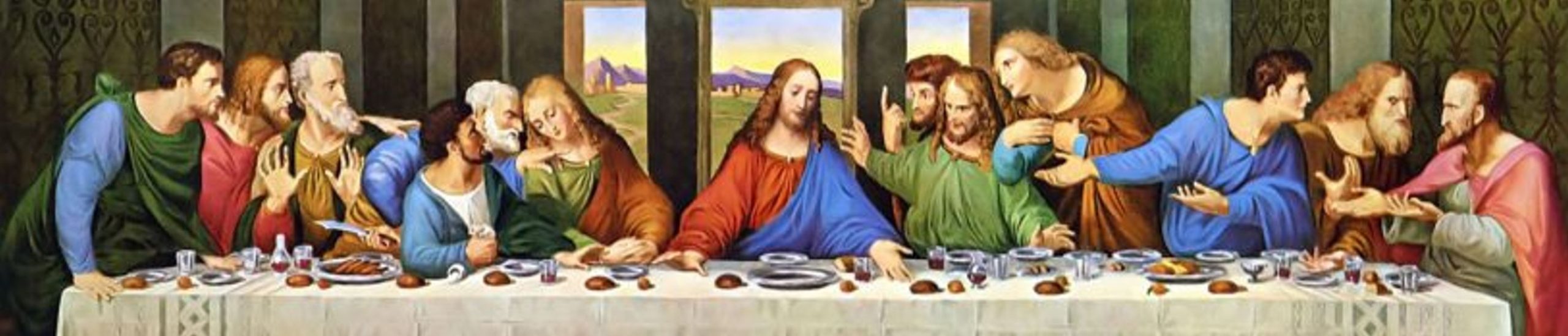
What inspirations did JRR Tolkien draw from for his best-selling series The Lord of the Rings, and the Hobbit? Like his friend CS Lewis, Tolkien was an English Professor specializing in medieval and ancient literature and languages. When CS Lewis was contemplating whether to return to his Episcopalian roots, abandoning his youthful agnostic views, Tolkien argued that he should convert to Catholicism. CS Lewis resisted these pleas. IMHO, though CS Lewis was conducive to Catholicism, and may have even confessed his sins to a priest, he likely thought he would be more effective evangelizing through his books as an Episcopalian.
Both JRR Tolkien and CS Lewis fought in the trenches in France as British soldiers during World War I, they both lost many friends who fought beside them: they both experienced the horrors of war. Both were too old to serve in World War II, but this struggle against the evils of Naziism directly influenced CS Lewis’ Mere Christianity and Tolkien’s Lord of the Rings, both released shortly after the war. […]
Summary of Homer’s Iliad: Warrior Culture of Ancient Greece
History

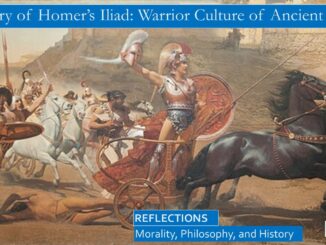
Summary of Homer’s Iliad: Warrior Culture of Ancient Greece

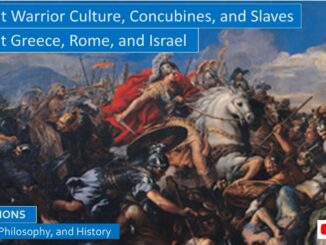
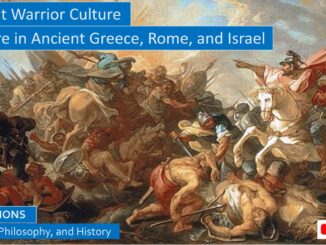
All ancient cultures were warrior cultures, out of necessity. War was a deadly business, if an ancient city-state lost the war the city would be plundered, often the military age men would be slain, and the women and children would be sold into slavery. In ancient Athens, a quarter of the population were slaves, and in ancient Rome about forty percent of the population were slaves. Most of these slaves were either born into slavery or were captured during war, some were captured and sold by pirates. […]

Ancient Warrior Culture - Ancient Greece, Rome, Israel
History

Ancient Warrior Societies, Blog 3, Warfare in the Old Testament

Warfare is mentioned over three hundred times in the Old Testament, swords four hundred times. Ancient Israel was caught in many of the ancient wars since it was in the cross-roads of trade routes between Mesopotamia and Egypt. Since Judah was mountainous, its armies relied heavily on infantry, but the Bible mentions that King Ahab of the Northern Kingdom had chariots, and that he was felled by arrow probably shot by a composite bow. Assyria and Babylon had cavalry archers on horseback, but not Egypt or Israel. An Israeli chariot had three horses pulling three men, a driver with a spear, an archer, and a shield bearer. We know from our Sunday School stores King David slew Goliath with a sling, but the ancient slings were not the puny toys we imagine, the sling in the ancient world was a deadly combat weapon. A skilled slinger could sling a rock over 120 miles per hour, faster than the fastest fast ball. […]

Ancient Warrior Culture - Ancient Greece, Rome, Israel
History

Ancient Warrior Societies, Blog 2, Ancient Greek and Roman Armies and Navies

The Greek innovation to ancient warfare was their hoplite warrior phalanx, a formation eight to ten rows of a hundred or more warriors, sometimes extending a quarter of a mile. The shields of the front row would interlock, and the entire formation would press upon the enemy, the soldiers would first throw their spears then jab with their swords from behind their shields, strictly maintaining their position. This required training and practice, the Athenians expected their nobles to drill during the year, the Spartans had a year-round military the practiced year-round. […]

Ancient Warrior Culture, Slavery, Concubines, Ancient Greece, Rome, and Israel
History

Ancient Warrior Culture, Blog 1, War, Slaves, and Concubines in Ancient Greece, Rome, and Israel

The Greeks were the most formidable fighting force in the Near East. The mighty Persian empire loaded their army on ships to fight what they thought would be an easy victory, but were decisively defeated by Athens and Sparta and their allies both on land and on sea in two separate wars. This established the reputation of the Greeks, later a Persian prince, Cyrus the Younger, hired a Greek hoplite infantry army to fight for the crown of Persia. The Greeks dominated the battle, but Cyrus was killed in the fighting. Losing their patron, the Greeks were forced to fight their way through the Persian Empire back to the Black Sea and then to Greece. This showed that the mighty Persians were vulnerable, later Alexander the Great of Macedon would conquer all of Persia and some of India also.

The Greeks may have been the founders of Western Civilization, but they were first and foremost a warrior society. If the Greeks weren’t formidable warriors they would have been conquered by the mighty Persian Empire, which means that there would be no Socrates, no Plato, no Xenophon, the Greeks would not have been able to leave us a cultural legacy. […]

Heraclitus, Pre-Socratic Philosopher, Inspiration for Stoics and Clement of Alexandria
Philosophy

Heraclitus, Pre-Socratic Philosopher, Inspiration for Stoics and Church Fathers

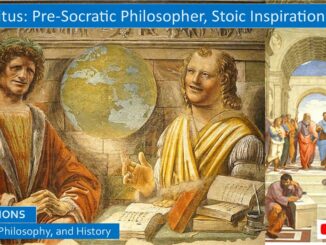
What can we learn from reflecting on the surviving fragments of Heraclitus, the Pre-Socratic Philosopher? Many of his pithy sayings inspired the later Cynic and Stoic Philosophers, and the Church Fathers, including Clement of Alexandria and Hippolytus of Rome. These sayings by Heraclitus include: “God is day and night, winter […]

The Life, Adventures, and Philosophy of Xenophon, General and Student of Socrates
Greek and Roman History

The Life, Adventures, and Philosophy of Xenophon, General and Student of Socrates

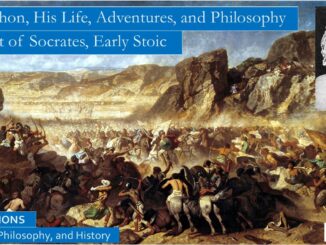
Was Xenophon a warrior, a historian, or a philosopher? Xenophon is one of the rare ancient authors whose entire corpus of major works have survived, putting him in the company of Plato and St Augustine, he was highly regarded among ancient and medieval scholars, though hyper-critical modern scholars tend to deprecate him. He was a student of Socrates and wrote several works featuring Socrates, including a fascinating collections of his Stoic-like sayings in the Memorabilia. […]

Hesiod Works and Days
Philosophy

Hesiod: Works and Days, Early Greek Moral Philosophy

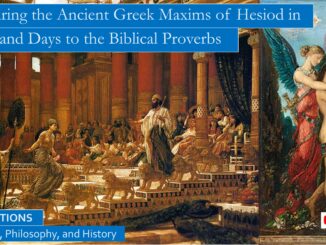
Hesiod is a grouchy old farmer who mistrusts ‘lords’” but does not advocate changing the society. “He believes in justice, honesty, conventional piety, self-reliance, self-denial, foresight, and above all, WORK. He dislikes city folk, the sea, women, gossip and LAZINESS. He delivers a maxim like ‘Don’t urinate where the Sun can see you’ with the same earnest convict that he advises judges not to take bribes, his brother to avoid pride, and the farmer to get two nine-year-old oxen and a forty-year-old hired hand. […]

Erasmus In Praise of Folly
Catholic Middle Ages and Beyond

Erasmus, Luther’s Predecessor, The Praise of Folly

Folly reminds us of the tension between the vulgar and the devout. “The pious, since they aim primarily at what is almost alien to the crass senses, are numbed and stunned by the sensual. In contrast, the ordinary person gravitates towards them.” Thus, many negligent people value bodily sensations such as “sex, love of food, sleep, anger, pride, and envy. The pious wage a constant war against these urges, whereas the vulgar crowd considers that without them life has no real existence.” […]