How did the Catholic Church survive the French Revolution, the conquests of Napoleon, and the Revolutions of 1848?
Was the Second Vatican Council a continuation of Vatican I?
Was Pope Leo XIII, who issued Rerum Novarum, the social justice encyclical that sympathized with the working man, a conservative or a progressive pope?
How did the nineteenth-century popes and the early twentieth-century popes prepare the way for the Second Vatican Council?
How did the Catholic experiences during World War II affect the decrees and attitudes of the Second Vatican Council?
Much of this summary is condensed from our series of reflections on Trent and Vatican II, plus our reflections on the popes serving in the years between these two reforming councils.
WAS THE COUNCIL OF TRENT A REFORMING COUNCIL?
Although Martin Luther had nailed the 95 Theses on the church door in Wittenberg in 1517, the Council of Trent, which addressed his challenges to the Catholic faith, was not called for nearly three decades, near the end of Luther’s life. Just as the Second Vatican Council sessions were held during the reign of two popes, the Council of Trent was held in three sessions under three different popes over a lengthy period of twenty years.
Before Vatican II, all church councils addressed the specific problems currently facing the church, but since Luther and other Protestants challenged so many Catholic practices, the agenda for the Council of Trent was quite broad, split between reform issues and doctrinal issues.
The most important reform item addressed was the question of whether bishops should reside in their diocese, which would also mean they could only hold one bishopric. This had always been the rule, but corrupt popes had too readily granted dispensations to exempt bishops from this rule. Improved education for priests was encouraged.
What were the doctrinal issues addressed by the Council of Trent?
- While Luther emphasized the ascendance of Scripture alone, Trent held that Scripture and Church Tradition, including the teachings of the church fathers, are both authoritative.
- Trent reaffirmed that there were seven sacraments rather than two, and that infant baptism was permitted. The Catholic belief in the real presence of Christ in the Eucharist through transubstantiation was reaffirmed.
- Trent preferred the wider Old Testament canon favored by St Augustine, which included the deuterocanonical books written in Greek, which are called the Apocrypha by Protestants, while the Protestant preferred the narrower canon excluding these Greek books favored by St Jerome.
- There was a perceived difference between the Lutheran and Catholic doctrines of Justification by Faith, although a joint Catholic-Lutheran statement issued after the Second Vatican Council concluded these doctrines were essentially similar.
- The Catholic doctrines on Purgatory, Indulgences, Fasting, and the Missal and breviary were reaffirmed.
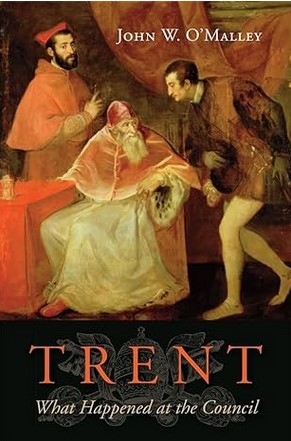
John O’Malley makes a strong argument that Trent is a forward-looking reforming council, and that the decrees of Vatican II largely adopt the theology of Trent.
Council of Trent, The Reform Council Foreshadowing Vatican II
http://www.seekingvirtueandwisdom.com/council-of-trent-the-reform-council-foreshadowing-vatican-ii/
https://youtu.be/Thq1blvzWHs
Why does the Council of Trent have the reputation of a backward-looking reactionary council?
The Trent decrees followed the ancient practice of condemning contrary opinions as ANATHEMA. On the other hand, the Second Vatican Council instead restated all the Catholic doctrines in less confrontational and more pastoral and conciliatory language.
There was a polemic war waged between Catholics and Protestants. In response, Pius V, the first pope after the Council, closed the archives of the Trent Council debates so Protestants wouldn’t cherry-pick the history to attack the heritage of the council. He formed a reactionary Congregation of Council to interpret the decrees of Trent and did not allow anyone to write histories of the Council of Trent. This very conservative implementation included mandating the Latin Vulgate Bible and the Latin Mass, and forbidding laymen from reading the Bible on their own. The laity was denied the cup during the administration of the Eucharist. Trent did not intend to forbid these practices. On the positive side, the Catholics issued a catechism to instruct the faithful, to counter the Lutheran Catechism.
O’Malley states that the Church “tried to strengthen the authority of bishops, and in its wake a generation of strong bishops appeared, led by Charles Borromeo.” Popes were more careful in their appointment of bishops. “A devout personal life was now the ideal that prelates, including the popes, wanted to project. To have fathered illegitimate children began to impede advancement in an ecclesiastical career,” and if children were born, “they were not publicly acknowledged nor were they loaded with favors.”[1]
REFLECTION ON POPES FROM TRENT TO FIRST VATICAN COUNCIL
On the surface, the papacy and the Catholic Church appeared to thrive over the next two centuries, but problems were developing that would challenge the church. However, the institution of the papacy fell into a comfortable mediocrity. The Holy Roman German emperor and the kings of France and Spain and continued to interfere in the appointment of church offices and the selection of the pope.
After the Reformation, educated laymen doubted whether the Church was the guardian of true belief, since both Catholics and Protestants claimed they were the true Christians, and that their opponents were heretics.
This doubt encouraged the rise of the Enlightenment, which valued reason over faith. The French Enlightenment was personified by the philosopher Voltaire, who was rabidly anticlerical, anti-Christian, and anti-Catholic. Religion and monarchy were accused of shackling the human spirit: the philosophers sought to replace faith and tradition with reason.
Inspired by the American experiment, freedom of religion and freedom of the press were sought for all citizens. Modernists sought liberty, equality, and fraternity, the catchwords of the coming revolution. As for Voltaire’s opinion of the Catholic Church, he proclaimed: “Obliterate the dreadful thing!” “Let Reason reign supreme, let dogma disappear!”
Catholic Popes from Trent to French Revolution and Napoleon to Vatican I
https://seekingvirtueandwisdom.com/popes-from-trent-to-french-revolution-and-napoleon-to-vatican-i/
https://youtu.be/XkmuUvrDWNg
St John Chrysostom, Voltaire, and Leibniz Ask: Why Would a Loving God Permit Earthquakes?
https://seekingvirtueandwisdom.com/st-john-chrysostom-voltaire-and-leibniz-ask-why-would-a-loving-god-permit-earthquakes/
FRENCH REVOLUTION TARGETS CATHOLIC CHURCH
John O’Malley proclaims: “In 1789, the French Revolution broke out. It changed everything. Pope Pius VI’s other problems suddenly seemed trivial in comparison.”
Although Pope Pius VI was hostile to the French Revolution, he initially was unsure how to respond. John O’Malley writes: “Things were going from bad to worse. To save itself from bankruptcy, the new government in France confiscated the entire property of the French church and began a massive sell-off of church property, not only sacred vessels, paintings, and furnishings, but also real estate. Churches were sacked; some were left in ruins.”
O’Malley rues: “As the Revolution devolved into ever more radical excesses, recalcitrant clergy were guillotined or drowned in punishment for their treason. Thousands upon thousands of clergy fled the country.”
“Liberty, Equality, Fraternity, the battle-cry of the Revolution, became anathema to devout Catholics, and to no one more anathema than to the pope.”
These experiences led many Catholics to condemn democracy, and some Catholics broke away from the Catholic Church when Vatican II favored democracy over totalitarianism. Conservative Catholics could no longer support monarchism since most monarchs had abdicated as a result of the two World Wars.
O’Malley recounts more disastrous events. “In 1796, French troops under the command of Napoleon Bonaparte,” who was not yet the supreme ruler of France, “invaded Italy. When Pius VI refused to rescind his condemnation of the Civil Constitution, they marched on the Papal States and defeated the papal army.”
O’Malley continues: “When Pius VI refused to renounce his headship of the Papal States, the French declared him deposed” and forced him into a monastery.
Later, the French transferred him to a French citadel close to Avignon in France. Pope Pius VI died six weeks later, at the age of eighty-two. The local clergy had bowed to the pressure and signed the Civic Oath, and now they refused him a Christian burial. O’Malley writes: “His death was recorded in the town hall of Valence simply as that of ‘Citizen Brashci. Occupation: pontiff.”[2]
POPE PIUS VII NEGOTIATES WITH NAPOLEON
Would the papacy survive these trials? Many wondered. In the year Pope Pius VI died, Napoleon was named First Consul; Napoleon was now the effective dictator of France. In short order, he defeated the Austrians, gaining control over Northern Italy. The papal enclave selected the politically astute Pope Pius VII, who assumed the name of his predecessor to indicate he would continue his policies.
John O’Malley writes: “Pope Pius VII was a realist who knew he had to negotiate with Napoleon. The First Consul was also a realist, and he knew that most of the inhabitants of France were Catholic, some of them more fervent than ever in reaction to the excesses of the Republic. He needed the church as badly as the church needed him.”
Negotiations for a Concordat between France and the Pope dragged on for thirteen months and over two dozen drafts. What were the terms of the concordat finally signed in 1801? Although it acknowledged that most French were Catholics, there was freedom of religion, and Catholicism was not the state religion of France. In the next century, the Catholic Church would negotiate with Mussolini to update this Concordat with the Lateran Treaty, creating Vatican City.
O’Malley notes: “The buildings and real estate seized from the church during the Revolution were to remain in the hands of the new owners, but cathedrals and churches needed for worship were put at the disposal of clergy as needed. The clergy, who must swear to uphold the government, were paid by the state, which is the first time in history for such a provision.” It reaffirmed that “the state had the right to nominate bishops, subject to the approval of the papacy.”
O’Malley states that several years later, “In 1804, the French Senate declared Napoleon Emperor of the French. To solemnize the ceremony, Napoleon invited Pope Pius VII to Paris.”
A millennium previously, Pope Leo III may have surprised Charlemagne when he crowned him emperor, binding his fortunes closer to the papacy. But Napoleon did not want to appear subservient to the pope, so he snatched the crown from his hand and crowned himself.
However, in the next year, French troops invaded Rome and placed the pope under house arrest in his palace. O’Malley writes: “The French annexed the rest of the Papal States. Finally, on June 10, 1809, Pope Pius VII excommunicated Napoleon. When Napoleon heard the news, he ordered that the ‘raving lunatic’ be locked up” until Napoleon abdicated in 1814.
O’Malley writes about how the old regimes were restored. “The Congress of Vienna met for nine months, 1814-1815, to set things back to where they ought to be.” “The major powers” “set the pace, and they restored the legitimate monarchs everywhere, including the Papal States and even in France. The ideals of the French Revolution were now officially repressed.”[3]
PAPACY OF POPE PIUS IX, CALLING OF FIRST VATICAN COUNCIL
Three conservative popes succeeded Pope Pius VII,[4] and afterwards in 1846, Pope Pius IX was elected as a progressive. Events during the Revolutions of 1848 changed his political outlook. Soon after his prime minister was assassinated in broad daylight, the pope fled for his life to a town near Rome. The Romans then declared a Republic. In 1849, French troops marched on Rome to restore the papacy, reinstalling him as pope in 1850.
Pope Pius IX, 1848 Revolutions and First Vatican Council
https://seekingvirtueandwisdom.com/pope-pius-ix-1848-revolutions-and-first-vatican-council/
https://youtu.be/XmeiBrQcMcw
Our author, John O’Malley, writes that Pope Pius IX faced “formidable political challenges” after the Congress of Vienna restored the monarchies of Europe, including the Papal States. “Besides the unrest in the Papal States, the Risorgimento, the movement for Italian unification, gained increasing momentum, especially among intellectuals and the bourgeoisie.” The two major obstacles to Italian unification were the northern Italian states occupied by Austria and the central Papal states ruled by the Pope. The pope was a stalwart opponent of Italian unification.
What effect did this have on later church history? In the New World, the young republic of the United States guaranteed freedom of religion, and the church was never dependent on the state. Although there was some persecution of Catholics in America, democracy was not seen as the enemy of the church.
But in Europe, the French revolutionaries had stolen church properties, both churches and income-producing properties. In Europe, the Catholic Church saw democracy as the enemy of the church. Indeed, many European governments were run by radical secularists seeking to limit the influence of the church.
Since he still hoped for the return of the Papal States to the papacy, Pope Pius IX did not want to renounce secular power, and opposed the separation of church and state.
In late 1864, Pope Pius IX issued the Syllabus of Errors, strengthening his spiritual power over Catholic souls while his temporal power over Italy was fading. In 1868, Pope Pius IX boldly announced that an ecumenical church council would meet in late 1869: the First Vatican Council.
O’Malley continues: “Despite the broad agenda that was anticipated, the council dealt with only two items. The first was the relationship between revealed truth and the powers of human reason.” With that resolved, Pope Pius IX encouraged them to consider “papal primacy and papal infallibility.”
Papal primacy was not new; the Catholic Church had held this view for fifteen hundred years. But the pope and many bishops felt that the church needed to definitively state that the pope had full authority, not only over matters of faith and morals, but also over discipline and governance for the church worldwide, for both clergy and laity.
More controversial was the issue of papal infallibility. Some bishops did not believe in this doctrine no matter how it was defined. On the other hand, some ultra-conservative Ultramontanist bishops thought that every word the pope uttered was infallible. But this was an issue near and dear to the pope’s heart. The definition that finally passed stated that only certain rare formal pronouncements by the pope were infallible.
For a papal pronouncement to be considered infallible, the pope, or the pope and the College of Bishops, must declare that the doctrine was delivered ex cathedra, in the exercise of the pope’s teaching office, for matters concerning faith or morals. This pronouncement must be a formal declaration following proper form.
All of the Vatican II and post-Vatican II popes believe in consulting church councils and decline to issue their encyclicals ex-cathedra, and several have explicitly stated that they will avoid issuing infallible pronouncements. Although the Vatican II decrees do not deny papal infallibility, they do not emphasize it.
O’Malley writes: “On almost the very day the final vote” on papal infallibility “was taken, the Franco-Prussian War broke out, and Napoleon III was forced to withdraw his troops from Rome. The bishops dispersed. A few weeks later “the Italian troops breached the walls of Rome after not much more than token resistance by the papal army. On that day, almost a millennium and a half of history came to an end. Rome was declared the capital of the new kingdom of Italy.”
A month later, as O’Malley writes, “the pope formally adjourned, but did not close, the council. He declared himself a ‘prisoner of the Vatican,’ even though the Italians placed no restrictions on his movements,” even offering to pay him a generous annual stipend to compensate for the loss of the Papal States, but the pope refused the stipends.[5]
POPE LEO XIII, WHO ISSUES THE ENCYCLICAL RERUM NOVARUM
Pope Leo XIII, the next pope, was sixty-eight years old when crowned, surprising everyone by living for another twenty-five years. He was photogenic and popular with ordinary Catholics.
Pope Leo XIII: Catholic Social Justice and Rerum Novarum, Confronting the Modern World
https://seekingvirtueandwisdom.com/pope-leo-xiii-catholic-social-justice-and-rerum-novarum-confronting-the-modern-world/
https://youtu.be/YojqhGBJtOY
Pope Leo IV adopted his name in memory of Pope Leo XIII, who was a proponent of Catholic Social Justice. We plan to reflect on how the first Leo, Pope Leo the Great, dissuaded Attila the Hun from sacking Rome, and how Pope Leo III, who crowned Charlemagne as emperor, affected Catholic and European history.
Pope Leo XIV, First American Pope, Successor to Pope Francis and Social Justice of Pope Leo XIII
https://seekingvirtueandwisdom.com/pope-leo-xiv-first-american-pope-successor-to-pope-francis-and-social-justice-of-pope-leo-xiii/
https://youtu.be/wSns5VGhtRk
Like the other prewar popes, Pope Leo XIII both confirmed the conservatism of his predecessors, while he embraced modern ideas that later would influence the Second Vatican Council. On his conservative side, he was a firm supporter of the Syllabus of Errors and clung to the notion that one day the Papal States would be restored to the papacy. He condemned Americanism and its belief in the separation of church and state. He discouraged the use of modern methods of biblical interpretation. These three beliefs would be countered by the decrees of the Second Vatican Council.
ENCYCLICAL RERUM NOVARUM AND CATHOLIC SOCIAL JUSTICE
Pope Leo XIII was progressive in his issuance of the famous papal encyclical Rerum Novarum, On the Condition of the Working Class, which strengthened the Catholic Social Justice movement. This was issued during the abusive early years of the Industrial Revolution, where child labor was rampant, where workers labored twelve hours a day, six days a week, under unsafe conditions, working for slave wages. Although Catholic conservatives often sympathized with factory owners, Pope Leo XIII did not want to lose workers to socialist or communist ideologies; he felt the church had to address the problems the workers faced.
Although Pope Leo XIII condemned both socialism and communism, late in his pontificate, he condoned the Christian Socialist movements and parties, affirming that Catholicism and democracy were compatible. Later, after the extremes of Stalin’s Russia, the overwhelming majority of socialists opposed communism.
O’Malley writes: “Rerum Novarum is a long encyclical. It reaffirms previous papal condemnations of socialism and communism. But its tone throughout is serene, and free from rant.” “While it proclaimed private property as a natural right, it insisted it had its limits. If private property was a right, so was the right of the worker to a just wage and humane working conditions. Most remarkably, the encyclical endorsed the right of workers to organize” in unions “in order to obtain and secure their rights.”
Rerum Novarum encouraged the formulation of social justice doctrine, leading to the Catholic concept of the preferential option for the poor. Subsequent popes also issued encyclicals explicitly supported the principles of Rerum Novarum, including Pope Pius XI, Pope Paul VI, Pope John Paul II, and Pope John XXIII.
Pope Leo XIII also opened the Vatican archives to approved scholars of all denominations. Historically, the Council of Trent was seen as reactionary, as was its implementation. To forestall unwarranted Protestant polemics, the post-Trent popes had wisely closed the archives, but once they were opened, scholars discovered that the Council participants intended it to be a reforming council. The implication is that the Second Vatican Council was a continuation of the intended reforms of the Council of Trent.[6]
After the papal archives were opened to serious scholars in 1880, a German publishing house published the archives of the Council. From 1951 to 1975 a German scholar, Herbert Jedine, published a four-volume history of the council. This was the primary source for John O’Malley’s history of Trent, and histories with a copyright date before the 1980’s are not accurate because they could not consult the history of Herbert Jedine.[7]
In the long run, the loss of the Papal States was beneficial to the papacy. Although it lost a substantial revenue source, as the centuries passed the meager papal army was less and less able to protect Rome from invading armies. Now the papacy could concentrate on spiritual matters rather than having to administer the Papal States. The papacy no longer had to deal with citizen rebellions.
Also, the secular European governments no longer interfered with papal elections and appointments of bishops and abbots, finally granting the Catholic Church this freedom from state interference into the administration of the papacy.
POPE PIUS X: PROMOTING PIETY, OPPOSING MODERNITY
After the long and momentous papacy of Pope Leo XIII, the cardinals sought a candidate who would be a pastoral pope. They chose Giuseppe Sarto, who had spent his entire priestly life as a pastor, last serving as patriarch of Venice. He was from a family of modest means, and for nine years he served as a priest in a country parish. His formal education was meager: he studied at a seminary in Padua.
Our author, John O’Malley explains: “Pope Pius X had never set foot outside Italy. He saw things in terms of black and white. While still Patriarch of Venice, he wrote to a friend: ‘When we speak of the Vicar of Christ, we must not quibble. We must obey. We must not evaluate his judgments or criticize his directions lest we do injury to Jesus Christ himself. Society is sick. The one hope, the one remedy, is the pope.’ The words ring like an Ultramontanist manifesto.”
The greatest achievement of Pope Pius X was enriching the liturgy and encouraging greater lay participation in the liturgy. The missal and breviary were revised and simplified to encourage greater participation. Under his encouragement, the liturgy and Sunday Mass became the center of Catholic piety. The Gregorian Chant was encouraged, and more of the Mass, including the Creed and the Gloria, was sung, and congregational singing was encouraged.
The greater lay participation in the liturgy organically led to the translation of the Latin prayers in the Mass into English so the parishioners could understand them. But for many, the next logical step was to ask: Why not simply recite the prayers in the vernacular language, like English? This would lead to further liturgical reform by Vatican II.
Before the papacy of Pope Pius X, most Catholics received the Eucharist only once or twice a year. More frequent partaking was encouraged so that by the middle of the twentieth century, most Catholics received the Eucharist weekly. If you attended morning mass, you could receive the Eucharist daily.
Like his predecessor, Pope Pius X was wary of the modern historical methods of biblical interpretation, so he founded the Pontifical Biblical Institute in Rome, run by the Jesuits, to counter the liberalism of these methods. However, as the years passed, the professors in this school came to terms with these new scholarly methods of interpretation, adopting some of them.
Vatican Decree on Biblical Interpretation, Cardinal Ratzinger and the 1994 Pontifical Biblical Commission
http://www.seekingvirtueandwisdom.com/interpretation-of-the-bible-in-the-church/
https://youtu.be/6jwUNScn_sM
How did Pope Pius X seek to combat modernism? O’Malley writes:
- “First, there was greater insistence on the teaching of St Thomas Aquinas.
- Second, anybody found showing a ‘love of novelty in history, archeology, or biblical exegesis’ was to be excluded from all teaching positions.
- Third, bishops were to establish a Vigilance Council whose function was to inform the bishop of anybody possibly tainted with heresy.
- Fourth, every three years, they were required to submit to the Vatican a sworn report on how these provisions were being fulfilled.”
What exactly was Modernism? Which new scientific discoveries were merely “new novelties?” Did the Catholic Church seek to punish mere curiosity? Was this a papal reign of terror?
O’Malley writes: “A veritable purge followed, with excommunications, dismissals from office, and banning of books reaching epidemic proportions.” Many innocently curious scholars were stigmatized, many careers were ruined, and Catholic intellectual life was throttled through the reign of the next two popes, also named Pius.
O’Malley concludes: “Pope Pius X died on August 20, 1914, just a few days after World War I broke out. Even those who disagreed with his policies saw him as a man of sincere, even if simplistic, piety. While he was still alive, he was spoken of as a saint. Forty years after his death, in 1954, Pope Pius XII confirmed that opinion by canonizing him.”[8]
POPES SERVING DURING WORLD WAR I AND WORLD WAR II
In the summer of 1914, the young men of Europe eagerly volunteered for what they thought would be a short, glorious war that would be over by Christmas. Little did they know that this long slog of a war would last for over four years, result in over seventeen million deaths, and cause the breakup of the Ottoman Empire, the Austro-Hungarian Empire, the Russian Empire,[9] and the monarchies of the royal houses of the German states,[10] ending many centuries-old dynasties in Europe.
Also in that summer of 1914, the cardinals met to elect a new pope, Pope Benedict XV, a diplomat pope who could lead the Catholic Church through these perilous times. He had served in the papal diplomatic corps before his elevation. He maintained a strict neutrality for the Vatican, even towards Italy, denouncing the war as a senseless massacre, which earned him no friends. Although his attempts to broker peace were ignored, he marshalled the resources of the church to help POWs, refugees, and the sick and wounded after the war. The Vatican came to be known as the second Red Cross for these efforts.
Pope Benedict XV and Pope Pius XI: Confronting World War I and World War II, and Fascism
https://seekingvirtueandwisdom.com/pope-benedict-xv-and-pope-pius-xi-confronting-world-war-i-and-world-war-ii-and-fascism/
https://youtu.be/htUyyrkm5cQ
Pope Benedict XV and his successor, Pope Pius XI, also prepared the Catholic Church for the Second Vatican Council by encouraging local control of missionary churches. O’Malley writes: “With his encyclical Maximum Illud, 1919, Pope Benedict XV initiated a crucially important new phase in Catholic missionary activity by insisting that bishops cultivate vocations among the indigenous population, and that they separate themselves from their image as representatives of Western governments. He rebuked the ‘indiscreet zeal’ of bishops guilty of promoting the political and economic interests of their homelands.” This was effective, because “twenty years after the encyclical, native bishops headed some fifty mission territories.”
POPE PIUS XI NEGOTIATES 1927 LATERAN TREATY WITH MUSSOLINI
Pope Pius XI continued the efforts of his predecessor in internationalizing the Catholic Church, appointing many foreign-born bishops. He also helped pave the way for Vatican II’s decree on lay ministry efforts by encouraging the formation of Catholic Action groups of laypersons active in the church.
Mussolini signaled in a speech that he was open to negotiating the Roman question. Mussolini was not a practicing Catholic and was famously a serial philanderer. Like Napoleon before him, Mussolini realized that it was in his political interest to settle this issue and regularize the status of Vatican City.
O’Malley writes: “The most momentous aspect of the Lateran Agreements was the establishment of the Vatican City as a fully independent and sovereign state, with its own postal service, police force, full diplomatic corps, and so forth. The Italian state agreed never to interfere in the free functioning of Vatican City and ensured full and safe access to it by anyone the papacy wanted to receive. The papacy agreed never to try directly or indirectly to reestablish the Papal States, and it relinquished in perpetuity all claims to the city of Rome.”[11]
The Vatican was paid a generous indemnity for the loss of this territory, and the state would pay an annual stipend for the upkeep of historical monuments. In addition to the 103 acres in Vatican City, the pope could also use several churches and castles traditionally at the church’s disposal.
Although Mussolini was a friend of the Catholic Church in the 1920s, a deepening rift developed between him and Pope Pius XI when Mussolini fell increasingly under the spell of Hitler, going full Nazi, persecuting Italian Jews in the years preceding the outbreak of World War II.
Mussolini’s Fascist Regime and the Catholic Church
http://www.seekingvirtueandwisdom.com/mussolinis-fascist-regime-and-the-catholic-church/
https://youtu.be/LvNynEdZFuM
After Pope Francis opened the Vatican archives for the wartime years, David Kertzer updated his biography and history of Pope Pius XII during the Second World War. We must remember that during this war Rome was controlled first by Mussolini, and then by Hitler’s Nazi Germany when Mussolini was overthrown.
Pope Pius XXII: Back Channel Between Hitler and the Pope
https://seekingvirtueandwisdom.com/world-war-ii-back-channel-between-hitler-and-pope-pius-xii/
https://youtu.be/6xdxvchkWyY
Pope Pius XII, Wartime Pope, Axis Powers March Across Europe
https://seekingvirtueandwisdom.com/pope-pius-xii-wartime-pope-axis-powers-march-across-europe/
https://youtu.be/L1bkOQNrlzg
Pope Pius XII, Wartime Pope, Allied Powers Turn the Tide of War
https://seekingvirtueandwisdom.com/pope-pius-xii-wartime-pope-allied-powers-turn-the-tide-of-war/
https://youtu.be/pjMa3JdjW48
Pope Pius XII, Wartime Pope, Could the Pope Have Done More To Save the Jews?
https://seekingvirtueandwisdom.com/pope-pius-xii-wartime-pope-could-the-pope-have-done-more-to-save-the-jews/
https://youtu.be/ONnAcLLBNog
Whereas the Catholic monarchs of old sometimes supported the efforts of the Catholic Church, the relationships between the Catholic Church and the fascist regimes of Mussolini’s Italy, Franco’s Spain, and the collaborationist Vichy Regime of France were all problematic in their own ways. In contrast, the Nazi regime of Hitler’s Germany was always hostile towards the Catholic Church, and towards the Protestant Confessing Church as well.
Mussolini’s Fascist Regime and the Catholic Church
http://www.seekingvirtueandwisdom.com/mussolinis-fascist-regime-and-the-catholic-church/
https://youtu.be/LvNynEdZFuM
How the Catholic and Confessing Church Survived Under Hitler’s Pagan Regime
https://seekingvirtueandwisdom.com/christians-under-hitlers-german-nazi-regime/
https://www.youtube.com/watch?v=QP9UR8fqfvs
Spanish Civil War and the Catholic Church
http://www.seekingvirtueandwisdom.com/spanish-civil-war-and-the-catholic-church/
https://youtu.be/ozEioe6yyY8
Vichy France Regime, Blog 1, Pro-Life, Pro-Catholic, and Fascist
http://www.seekingvirtueandwisdom.com/vichy-france-regime-blog-1-pro-life-pro-catholic-and-fascist/
Vichy France, Blog 2, Collaborating with the Germans in the Early Years, 1940-1942
http://www.seekingvirtueandwisdom.com/vichy-france-blog-2-collaborating-with-the-germans-in-the-early-years-1940-1942/
Vichy France, Blog 3, The Tide Turns, Resistance and Collaboration
http://www.seekingvirtueandwisdom.com/vichy-france-blog-3-the-tide-turns-resistance-and-collaboration/
Vichy France, Blog 4, Christianity in Vichy France
http://www.seekingvirtueandwisdom.com/vichy-france-blog-4-christianity-in-vichy-france/
Vichy France in WWII: Pro-Fascist, Pro-Catholic, Pro-Life, Anti-Semitic
https://youtu.be/yYpNrhpmsYw
The experiences of the Catholic Church, including the persecutions of Christians and the persecution of Jews in the Holocaust, are reflected in the Vatican II Decree on Religious Freedom, which defended democracy as the safest political system in which the church can thrive. However, there was a minority of anti-Semitic and fascist-leaning clergy who rejected the teachings of the Second Vatican Council, forming the breakaway heretical sect SSPX, aka Society of Saint Pius X.
What Happened at Vatican II, Embracing Democracy and Modernity
http://www.seekingvirtueandwisdom.com/what-happened-at-vatican-ii-embracing-democracy-and-modernity/
https://youtu.be/vHtYu6UtiuE
Vatican II Decree on Freedom of Religion, Embracing Democracy, Rejecting Fascism
http://www.seekingvirtueandwisdom.com/vatican-ii-decree-on-freedom-of-religion-embracing-democracy-rejecting-fascism/
Vatican II on Freedom of Religion, Dignitatis Humanae, and Pacem In Terris by Pope John XXIII
https://youtu.be/i_zGeTW9QMI
Yves Congar, True and False Reform, Part 1, Finding Common Ground
https://seekingvirtueandwisdom.com/yves-congar-true-and-false-reform-part-1-finding-common-ground/
https://youtu.be/yYp7yFZqc3s
Yves Congar, True and False Reform, Part 2, True Reform by Returning to Tradition
https://seekingvirtueandwisdom.com/yves-congar-true-and-false-reform-part-2-true-reform-by-returning-to-tradition/
https://youtu.be/1xqY0kN1eKk
Pope John XXIII Opening Address to Vatican II, and Yves Congar, True and False Reform, Conclusion
https://seekingvirtueandwisdom.com/pope-john-xxiii-opening-address-to-vatican-ii-and-yves-congar-true-and-false-reform-conclusion/
https://youtu.be/ALZozpbSrM4
DISCUSSING THE SOURCES
The Second Vatican Council is unimaginable without the experiences of the Catholic Church as it survived World War II. These experiences led it to embrace the American form of democracy and freedom of religion, and to restate the Catholic faith of Trent in a positive manner, seeking dialogue with all Christians and also with all faith traditions.
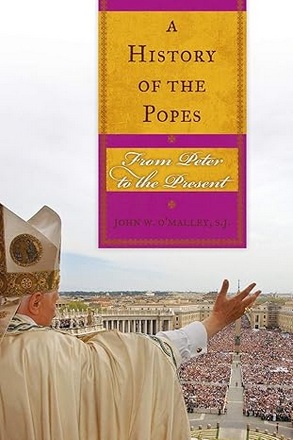
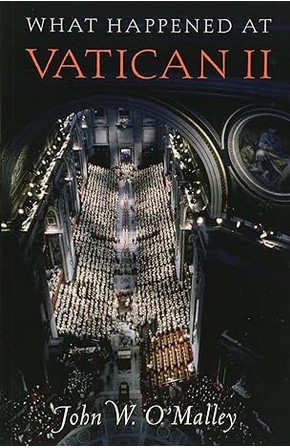
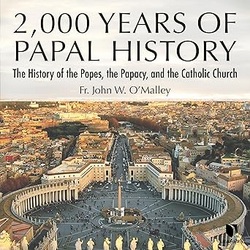
We used John O’Malley’s history of the popes as a primary source for the papacies of the popes from Trent to Vatican II, and this and many other books on these councils were included in our book reviews of the resources for the study of these important councils that define both Christianity and modern Catholicism.
Book Reviews, Reform Councils of Trent and Vatican II, and Vatican I
http://www.seekingvirtueandwisdom.com/book-reviews-reform-councils-of-trent-and-vatican-ii/
https://youtu.be/cuKVG24Bf78
[1] John O’Malley, “Trent, What Happened at the Council” (Cambridge, Massachusetts, The Belknap Press of Harvard University Press, 2013). For granular footnotes, see our blog on the Council of Trent.
[2] John O’Malley, A History of the Popes, From Peter to the Present (New York: Sheed and Ward, 2010), Chapter 22, The Storm Breaks, pp. 219-229 and John O’Malley, What Happened At Vatican II (Cambridge: Belknap Press of Oxford University Press, 2008), Chapter 2, The Long Nineteenth Century, p. 54.
[3] John O’Malley, A History of the Popes, Chapter 23, Pius VII: Bowed Down and Raised Up, pp. 231-238.
[4] John O’Malley, A History of the Popes, Chapter 24, Beleaguered, Infallible, and Prisoner Again, pp. 239-242.
[5] John O’Malley, A History of the Popes, Chapter 24, Beleaguered, Infallible, and Prisoner Again, pp. 241-250 and https://en.wikipedia.org/wiki/Papal_infallibility
[6] John O’Malley, A History of the Popes, From Peter to the Present, Chapter 25, Leo XIII: Searching for Solutions, pp. 251-260 and https://en.wikipedia.org/wiki/Pope_Leo_I and https://en.wikipedia.org/wiki/Pope_Leo_XIII and https://en.wikipedia.org/wiki/Rerum_novarum and John O’Malley, What Happened At Vatican II, Chapter 2, The Long Nineteenth Century, pp. 62-64,71 and https://en.wikipedia.org/wiki/Four_Freedoms
[7] John O’Malley, Trent, What Happened at the Council, pp.248-275.
[8] John O’Malley, A History of the Popes, Chapter 26, Pius X: Confronting Modern Culture, pp. 261-268 and John O’Malley, What Happened At Vatican II, Chapter 2, The Long Nineteenth Century, p. 74.
[9] https://en.wikipedia.org/wiki/World_War_I
[10] https://en.wikipedia.org/wiki/List_of_German_monarchs_in_1918
[11] John O’Malley, A History of the Popes, Chapter 27, War, Peace, Fascism, pp. 271-278.

Be the first to comment