How did the post-Trent popes differ from earlier popes?
Were some popes overzealous?
Was the papal succession nearly interrupted during the French Revolution and by Napoleon?
How did the Catholic Church deal with science and the Enlightenment?
Why did Pope Pius VI negotiate a Concordat with Napoleon? Why did Emperor Napoleon crown himself?
YouTube video for this blog: https://youtu.be/XkmuUvrDWNg
CHALLENGES FACED BY THE CATHOLIC CHURCH AFTER THE COUNCIL OF TRENT
When we learned that the new American pope chose to be named Pope Leo XIV, signaling his respect for the nineteenth-century Pope Leo XIII, we wanted to provide a short biography of this past pope in context of the history of the Church. Like in many human endeavors, many of these popes took one step backward for every two steps forward, so we reflected both on how the nineteenth and early twentieth century popes drew from the outdated policies of their predecessors, as well as how they prepared the Catholic Church for her evolving role in the modern world.
Council of Trent, The Reform Council Foreshadowing Vatican II
http://www.seekingvirtueandwisdom.com/council-of-trent-the-reform-council-foreshadowing-vatican-ii/
https://youtu.be/Thq1blvzWHs
Quoting our author, John O’Malley: After the Council of Trent, the implementation of the decrees “of Trent became an ongoing part of the pope’s job description.” The Church “tried to strengthen the authority of bishops, and in its wake a generation of strong bishops appeared, led by Charles Borromeo.” Popes were more careful in their appointment of bishops. “A devout personal life was now the ideal that prelates, including the popes, wanted to project. To have fathered illegitimate children began to impede advancement in an ecclesiastical career,” and if children were born, “they were not publicly acknowledged nor were they loaded with favors.”
Although Rome and the Papal states enjoyed stability and security, there followed a century of wars of religion that tore Europe apart:
- Charles V and the Smalkaldic League.
- Thirty Years War.
- Wars of Religion in France.
Plus, the Ottoman Turks were a continual threat.
POPE PIUS V, THE ZEALOUS PRIESTLY POPE
Pope Pius V was selected because he had a zealous and unblemished reputation, and sought to effect reform in every sphere, beginning with Rome. “Even as pope, he lived as an austere Dominican friar and was the first pope of the era to project an image of himself as a priest rather than as a sovereign.” A millennium after St Ambrose, St Jerome, St Augustine, and St Gregory lived, he declared that St Thomas Aquinas was the fifth Doctor of the Church.
His zeal could be counter-productive: he excommunicated Queen Elizabeth of England, which led to further estrangement and increased persecution of Catholics. Under his papacy, the number of those accused and sentenced by the Roman Inquisition soared.
Pope Pius V successfully rallied Spain and Venice to ally with him in a Holy League against the Turks, winning a brilliant naval victory at Lepanto over the Turkish fleet, stopping the Turkish naval domination of the Mediterranean Sea. In 1712, he was the only pope from this era to be canonized.
POPE GREGORY XIII AND POPE SIXTUS V
Pope Gregory XIII zealously continued the reforms of the Council of Trent and sought to spread Catholicism by the sword, encouraging Philip II of Spain to invade England, supporting his campaigns in the Low Countries, and subsidizing the French military campaigns against the Protestant Huguenots. He also supported educating priests in Rome and elsewhere, mostly in Jesuit schools.
The pontificate of Pope Sixtus V lasted only five years. He was an effective administrator of Rome and the Papal States, founded the Vatican Press, supported scholarship, and overhauled the Curia to make it more responsive.[1]
THE PAPACY SETTLES INTO A FRAGILE PROSPERITY
On the surface, the papacy and the Catholic Church appeared to thrive over the next two centuries, but problems were developing that would challenge the church.
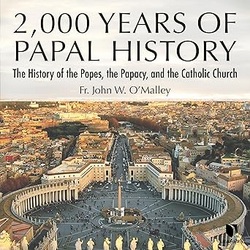
John O’Malley summarizes the positive: “The Papal States,” “secure from foreign aggression, produced a decent revenue. The Turkish threat had somewhat abated and calls for crusades against the infidel diminished. The church at large had recovered confidence after the trauma of the Reformation and had even reclaimed some areas formerly Protestant or in danger of becoming Protestant. Missionaries in Spanish and Portuguese America and even in Asia seemed to be making progress.”
However, the institution of the papacy fell into a comfortable mediocrity. The kings of France and Spain and the German emperor continued to interfere in the appointment of church offices and in the selection of the pope.
After the Reformation, educated laymen doubted whether the Church was the guardian of true belief, since both Catholics and Protestants claimed they were the true Christians, and that their opponents were heretics. Before the Reformation, theology and philosophy were virtually indistinguishable, and the scholastic St Thomas Aquinas was a leading philosopher. But Protestants rebelled against both the Catholic Church and scholasticism.
This doubt encouraged the rise of the Enlightenment, which valued faith over reason. The French Enlightenment, led by the philosopher Voltaire, was rabidly anticlerical, anti-Christian, and anti-Catholic. Religion and monarchy were accused of shackling the human spirit. Reason sought to replace tradition.
Inspired by the American experiment, freedom of religion and freedom of the press were sought for all citizens. Modernists sought liberty, equality, and fraternity, the catchwords of the coming revolution. As for Voltaire’s opinion of the Catholic Church, he proclaimed: “Obliterate the dreadful thing!” “Let Reason reign supreme, let dogma disappear!”
St John Chrysostom, Voltaire, and Leibniz Ask: Why Would a Loving God Permit Earthquakes?
https://seekingvirtueandwisdom.com/st-john-chrysostom-voltaire-and-leibniz-ask-why-would-a-loving-god-permit-earthquakes/
https://youtu.be/e7FaAqnOwto
Historically, the science of Aristotle was based more on observation than experimentation. The Greek philosopher Ptolemy proposed a geocentric universe, with the Earth at the center, with the Sun and the Moon, the other planets, and the stars revolving around it. Copernicus and Galileo, using the new telescope, sought to prove that the universe was heliocentric, where the planets revolved around the sun, and many planets, including Earth, had moons that revolved around them.
The fortunes of the Jesuit Order, which was established during the Reformation to be the pope’s spiritual warriors to defend and, if possible, expand the Catholic faith, waxed and waned. Many popes encouraged the Jesuits in their missions, both to Protestants and as missionaries in foreign lands. Since they became prolific fundraisers to support their schools, hospitals, and missions, many kings thought that the Jesuit order was wealthy, becoming envious of their perceived wealth. On the eve of the French Revolution, Pope Clement XIV bowed to intense political pressure and abolished the Jesuit Order, enabling the monarchs to seize their assets for themselves. In one fell swoop, the assets of over eight hundred schools and colleges were seized, and many of them were closed.
History of the Jesuits From Ignatius Loyola Through Pope Francis, the First Jesuit Pope
http://www.seekingvirtueandwisdom.com/history-of-the-jesuits/
https://youtu.be/16HRnyenOVc
THE STORM BREAKS: FRENCH REVOLUTION TARGETS THE CATHOLIC CHURCH
John O’Malley proclaims: “In 1789, the French Revolution broke out. It changed everything. Pope Pius VI’s other problems suddenly seemed trivial in comparison.”
Although Pope Pius VI was hostile to the French Revolution, he initially was unsure how to respond. John O’Malley writes: “He held off from a confrontation even after” the revolutionaries “reorganized the French Church. But when an oath of allegiance to the new regime was demanded of the clergy, he denounced the document, suspended all bishops and priests who took the oath, and condemned the Declaration of the Rights of Man.”
O’Malley continues: “Things were going from bad to worse. To save itself from bankruptcy, the new government in France confiscated the entire property of the French church and began a massive sell-off of church property, not only sacred vessels, paintings, and furnishings, but also real estate. Churches were sacked; some were left in ruins.”
O’Malley rues: “Many bishops and priests courageously refused to take the oath and, as the Revolution devolved into ever more radical excesses, recalcitrant clergy were guillotined or drowned in punishment for their treason. Thousands upon thousands of clergy fled the country.”
“Liberty, Equality, Fraternity, the battle-cry of the Revolution, became anathema to devout Catholics, and to no one more anathema than to the pope.”
O’Malley recounts more disastrous events. “In 1796, French troops under the command of Napoleon Bonaparte,” who was not yet the supreme ruler of France, “invaded Italy. When Pius VI refused to rescind his condemnation of the Civil Constitution, they marched on the Papal States and defeated the papal army.” The papacy was compelled to pay a huge indemnity, gave Napoleon many works of art and manuscripts, and “then issued a letter recognizing the legitimacy of the French Republic and telling Catholics to be loyal to it.”
O’Malley recounts yet more disastrous events. “When in the next year, a riot broke out in Rome during which a French general was killed, the French occupied Rome and proclaimed the establishment of the Roman Republic. When Pius VI refused to renounce his headship of the Papal States, the French declared him deposed” and forced him into a monastery.
Later, the French transferred him to a French citadel close to Avignon in France. Pope Pius VI died six weeks later, at the age of eighty-two. The local clergy had bowed to the pressure and signed the oath, and now they refused him a Christian burial. O’Malley writes: “His death was recorded in the town hall of Valence simply as that of ‘Citizen Brashci. Occupation: pontiff.’”[2]
POPE PIUS VII NEGOTIATES WITH NAPOLEON
Would the papacy survive these trials? Many wondered. In the year Pope Pius VI died, Napoleon was named First Consul; Napoleon was now the effective dictator of France. In short order, he defeated the Austrians, gaining control over Northern Italy. The papal enclave selected the politically astute Pope Pius VII, who assumed the name of his predecessor to indicate he would continue his policies. One of his first actions was to appoint the equally politically astute Cardinal Ercole Consalvi, who proposed his ascension in the conclave, as his papal Secretary of State.
Pope Pius VII had previously been a Benedictine monk, was both deeply religious and cheerful, and had an inquisitive mind and a love of learning. In addition to reading and teaching theology and philosophy, including the writings of the Church Fathers, he also read the works of the Enlightenment Philosophers, though he did not always agree with them.
John O’Malley writes: “Pope Pius VII’s long pontificate falls into two clearly distinct phases: 1800-1814, dominated by Napoleon; and 1814-1823, given to rebuilding the church after decades of devastation.”
“Pope Pius VII was a realist who knew he had to negotiate with Napoleon. The First Consul was also a realist, and he knew that most of the inhabitants of France were Catholic, some of them more fervent than ever in reaction to the excesses of the Republic. He needed the church as badly as the church needed him.”
O’Malley continues: “As an indication of goodwill, Napoleon allowed the body of Pope Pius VI to be taken back to Rome for proper burial.” Napoleon indicated that “if the pope were reasonable,” “France and the church could be reconciled.”
Negotiations for a Concordat between France and the Pope dragged on for thirteen months and over two dozen drafts. O’Malley writes: “Pope Pius VII and” his secretary of state “Consalvi stalled for time, intent on getting out of Napoleon every concession they could. The delay drove Napoleon crazy. He threw tantrums. He threatened to become a Protestant. He threatened to have his troops march on Rome. But finally, on July 15, 1801, the concordat was signed.”
What were the terms of the concordat? Although it acknowledged that most French were Catholics, there was freedom of religion, and Catholicism was not the state religion of France. O’Malley notes: “The buildings and real estate seized from the church during the Revolution were to remain in the hands of the new owners, but cathedrals and churches needed for worship were put at the disposal of clergy as needed. The clergy, who must swear to uphold the government, were paid by the state, which is the first time in history for such a provision.” It reaffirmed that “the state had the right to nominate bishops, subject to the approval of the papacy.”
The dioceses were redrawn to match the departments of the Republic, so there would be only sixty bishops, rather than the 133 dioceses in pre-Revolutionary France. All bishops were asked to resign, but in the end, this was beneficial to the Catholic Church, since the majority of the new bishops were vigorously Ultramontane, or beyond the Alpine mountains. This shifted the primary loyalty of the French bishops from the Gallican Church to the Pope.
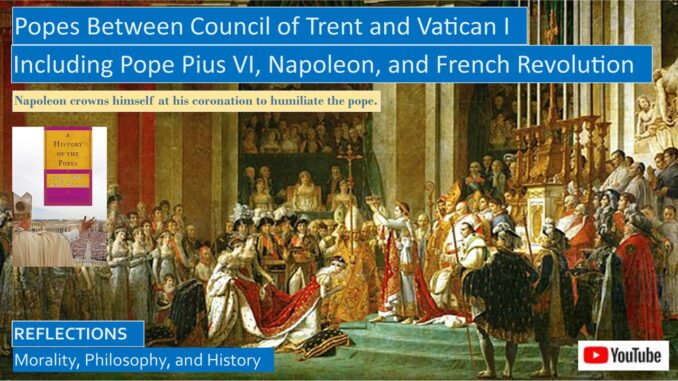
O’Malley states that several years later, “In 1804, the French Senate declared Napoleon Emperor of the French. To solemnize the ceremony, Napoleon invited Pope Pius VII to Paris. Would Napoleon’s chaplain, as Pope Pius VII was derisively called, accept? Cardinals objected, but Pius accepted. If Napoleon wanted to use the occasion to humiliate the pope, he failed miserably. Enthusiastic crowds greeted the pope as he moved along his way, to Napoleon’s great chagrin.”
A millennium previously, Pope Leo III may have surprised Charlemagne when he crowned him emperor, binding his fortunes closer to the papacy. But Napoleon did not want to appear subservient to the pope, so he snatched the crown from his hand and crowned himself.
But Napoleon was envious of the popularity of the pope. Napoleon complained, “Nobody thought of the pope when he was in Rome. Nobody cared for what he did. But my coronation and his appearance in Paris made him important.”
Napoleon had his revenge the next year when French troops invaded Rome and placed the pope under house arrest in his palace. O’Malley writes: “The French annexed the rest of the Papal States. Finally, on June 10, 1809, Pope Pius VII excommunicated Napoleon. When Napoleon heard the news, he ordered that the ‘raving lunatic’ be locked up.”
French troops promptly seized the Pope and Consalvi, sequestering them from the rest of the world first in northern Italy, then in France, close to Paris, for five years, until Napoleon’s abdication in 1814, after most of the French Army perished in the Russian snow and cold when retreating from Moscow.
O’Malley writes about the next chapter of history. “The Congress of Vienna met for nine months, 1814-1815, to set things back to where they ought to be. All European states, great and small, that legally existed before the Revolution were invited to participate. Consalvi represented Rome and conducted himself admirably.” “The major powers” “set the pace, and they restored the legitimate monarchs everywhere, including the Papal States and even in France. The ideals of the French Revolution were now officially repressed.”
John O’Malley, who is a Jesuit priest, writes: “Within a few months of returning to Rome in 1814, Pope Pius VII reinstated the Jesuits, or Society of Jesus, worldwide.” “The Jesuits bit by bit attracted recruits in most countries of Europe and, though they never recovered their old buildings and real estate, they began to build new edifices for their new ministries. Their recovery helped stimulate the recovery of other orders” that had been decimated during the turmoil.
History of the Jesuits From Ignatius Loyola Through Pope Francis, the First Jesuit Pope
http://www.seekingvirtueandwisdom.com/history-of-the-jesuits/
https://youtu.be/16HRnyenOVc
During the remaining eight years of his pontificate, Pope Pius VII and Consalvi negotiated concordats with both Catholic and Protestant states. They attempted to modernize the administration and economic management of the Papal States, with modest success. But like much of Europe, the citizens of the Papal States did not forget the brief time when they were independent from the papal government.[3]
THREE POPES PRECEDING POPE PIUS XI AND VATICAN I
The reactionary clique in the next conclave selected Pope Leo XII, who reigned as pope for only six years during 1823-1829. Initially, he fired Consalvi, but after his intransigent attitude towards other heads of state backfired, he was compelled to rehire Consalvi, who then passed away in 1824. Pope Leo XII turned the Papal States into a police state, and he put Jews back into the ghetto, ruling that Jews could not own real estate. His successor, Pope Pius VIII, only reigned for twenty months; he was unable to quell the unrest in the Papal States.
The conclave, which lasted for two months before selecting the next pope, was split between zealots and moderates. The zealots selected a monk from the strict Camaldolese order as Pope Gregory XVI. O’Malley comments: “The new pope never compromised the austere lifestyle he learned as a young monk and was exemplarily devout. But his vision was small and, in some regards, obscurantist. As pope, for instance, he banned railroads in the Papal States as hellish,” which is a play on words in French.
To an extent, Pope Gregory XVI exhibited the trait the popes before the Second Vatican council displayed: they would either make two steps forward and one step back, or one step forward and two steps back. Pope Gregory XVI condemned the slave trade, but not slavery itself, and he greatly encouraged the missionary activity of the religious orders, appointing two hundred missionary bishops.
Before he was crowned pope, a rebellion broke out in Bologna, spreading through the Papal States. The papal army could not quench the rebellion; they relied on Austrian troops to put down the rebellion. Austrian and French troops were invited to keep the peace, remaining in Rome for eight years.
John O’Malley emphasized that for Pope Gregory XVI, “the culprit responsible for the” “general depravity of the times was ‘the terrible conspiracy of impious men,’ as he said in his first encyclical, Mirari Vos, issued in 1832 shortly after the rebellion was quelled.”
According to Pope Gregory XVI: “Among the false ideas that the ‘shameless lovers of liberty’ spread were:
- Freedom of conscience,
- Freedom of speech,
- Freedom of the press,
- And the Separation of Church and State.
The solution to these evils was the inculcation of obedience to legitimate princes.”
The presence of foreign troops bottled up the revolutionary fervor of his disenchanted subjects. But in 1845, the year before he died, there were several uprisings. O’Malley writes: “Conspiratorial societies operated almost openly. The papal police were impotent to disband them, partly because the police were themselves often sympathetic with their cause.”[4]
We will also reflect on brief biographies of the remaining popes through the two Great Wars in the twentieth century:
- Pope Pius IX, who called the First Vatican Council.
- Pope Leo XIII, who issued the influential encyclical Rerum Novarum, on Labor and Capital, that encouraged the Catholic Social Justice movement.
- Pope Pius X, the reactionary pope who encouraged greater piety among the faithful.
- Popes Benedict XV and Pope Pius XI, who guided the Catholic Church during the trying times of World Wars I and II.
Each of these popes prepared the church for the Second Vatican Council in their own way.
Pope Pius IX, 1848 Revolutions and First Vatican Council
https://seekingvirtueandwisdom.com/pope-pius-ix-1848-revolutions-and-first-vatican-council/
Pope Leo XIII: Catholic Social Justice and Rerum Novarum, Confronting the Modern World
https://seekingvirtueandwisdom.com/pope-leo-xiii-catholic-social-justice-and-rerum-novarum-confronting-the-modern-world/
Pope Pius X, Promoting Piety, Rejecting Modernism
https://seekingvirtueandwisdom.com/pope-pius-x-promoting-piety-rejecting-modernism/
Pope Benedict XV and Pope Pius XI: Confronting World War I and World War II, and Fascism
https://seekingvirtueandwisdom.com/pope-benedict-xv-and-pope-pius-xi-confronting-world-war-i-and-world-war-ii-and-fascism/
We also reflected on David Kertzer’s biographies and histories of Pope Pius XI and Pope Pius XII, the two popes who guided the Catholic Church during the perilous Second World War. Pope Pius XI also negotiated the Lateran Treaty with Mussolini that regularized relations between the Vatican and the Italian state, a treaty that is still in force today.
Mussolini’s Fascist Regime and the Catholic Church
http://www.seekingvirtueandwisdom.com/mussolinis-fascist-regime-and-the-catholic-church/
https://youtu.be/LvNynEdZFuM
After Pope Francis opened the Vatican archives for the wartime years, David Kertzer updated his biography and history of Pope Pius XII during the Second World War.
Pope Pius XXII: Back Channel Between Hitler and the Pope
https://seekingvirtueandwisdom.com/world-war-ii-back-channel-between-hitler-and-pope-pius-xii/
https://youtu.be/6xdxvchkWyY
Pope Pius XII, Wartime Pope, Axis Powers March Across Europe
https://seekingvirtueandwisdom.com/pope-pius-xii-wartime-pope-axis-powers-march-across-europe/
https://youtu.be/L1bkOQNrlzg
Pope Pius XII, Wartime Pope, Allied Powers Turn the Tide of War
https://seekingvirtueandwisdom.com/pope-pius-xii-wartime-pope-allied-powers-turn-the-tide-of-war/
https://youtu.be/pjMa3JdjW48
Pope Pius XII, Wartime Pope, Could the Pope Have Done More To Save the Jews?
https://seekingvirtueandwisdom.com/pope-pius-xii-wartime-pope-could-the-pope-have-done-more-to-save-the-jews/
https://youtu.be/ONnAcLLBNog
The Second Vatican Council is unimaginable without the experiences of the Catholic Church as it survived World War II. These experiences led it to embrace the American form of democracy and freedom of religion, and to restate the Catholic faith of Trent in a positive manner, seeking dialogue with all Christians and also with all faith traditions.
What Happened at Vatican II, Embracing Democracy and Modernity
http://www.seekingvirtueandwisdom.com/what-happened-at-vatican-ii-embracing-democracy-and-modernity/
https://youtu.be/vHtYu6UtiuE
Vatican II Decree on Freedom of Religion, Embracing Democracy, Rejecting Fascism
http://www.seekingvirtueandwisdom.com/vatican-ii-decree-on-freedom-of-religion-embracing-democracy-rejecting-fascism/
https://youtu.be/i_zGeTW9QMI
Pope John XXIII Opening Address to Vatican II, and Yves Congar, True and False Reform, Conclusion
https://seekingvirtueandwisdom.com/pope-john-xxiii-opening-address-to-vatican-ii-and-yves-congar-true-and-false-reform-conclusion/
https://youtu.be/ALZozpbSrM4
Council of Trent, The Reform Council Foreshadowing Vatican II
http://www.seekingvirtueandwisdom.com/council-of-trent-the-reform-council-foreshadowing-vatican-ii/
https://youtu.be/Thq1blvzWHs
DISCUSSING THE SOURCES
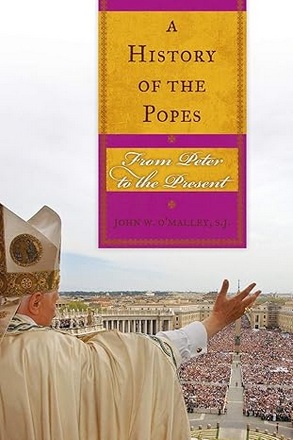
The Jesuit priest and professor John O’Malley specialized in the study of the Council of Trent and the First and Second Vatican Councils. When the Catholic publishing house, Now You Know Media, now known as Learn25, asked him to record a series of lectures on these councils. When he was finished, they also asked him to record a series of lectures on the history of the papacy. His lecture notes formed the foundation for his book on papal history. He is an excellent writer, and this book is geared towards educating the layman on this history, and all his books are easily accessible to laymen. John O’Malley is one of our favorite authors. His book on the history of Vatican II includes a chapter on the long nineteenth century, which covers this same period.
Plus, we have a separate video of book reviews of the many sources for our reflections of the Councils of Trent, the First Vatican Council, and the Second Vatican Council.
Book Reviews, Reform Councils of Trent and Vatican II, and Vatican I
http://www.seekingvirtueandwisdom.com/book-reviews-reform-councils-of-trent-and-vatican-ii/
https://youtu.be/cuKVG24Bf78
[1] John O’Malley, A History of the Popes, From Peter to the Present (New York: Sheed and Ward, 2010), Chapter 21, The New Rome, pp. 209-218.
[2] John O’Malley, A History of the Popes, Chapter 22, The Storm Breaks, pp. 219-229 and John O’Malley, What Happened At Vatican II (Cambridge: Belknap Press of Oxford University Press, 2008), Chapter 2, The Long Nineteenth Century, p. 54.
[3] John O’Malley, A History of the Popes, Chapter 23, Pius VII: Bowed Down and Raised Up, pp. 231-238.
[4] John O’Malley, A History of the Popes, Chapter 24, Beleaguered, Infallible, and Prisoner Again, pp. 239-242.

2 Trackbacks / Pingbacks