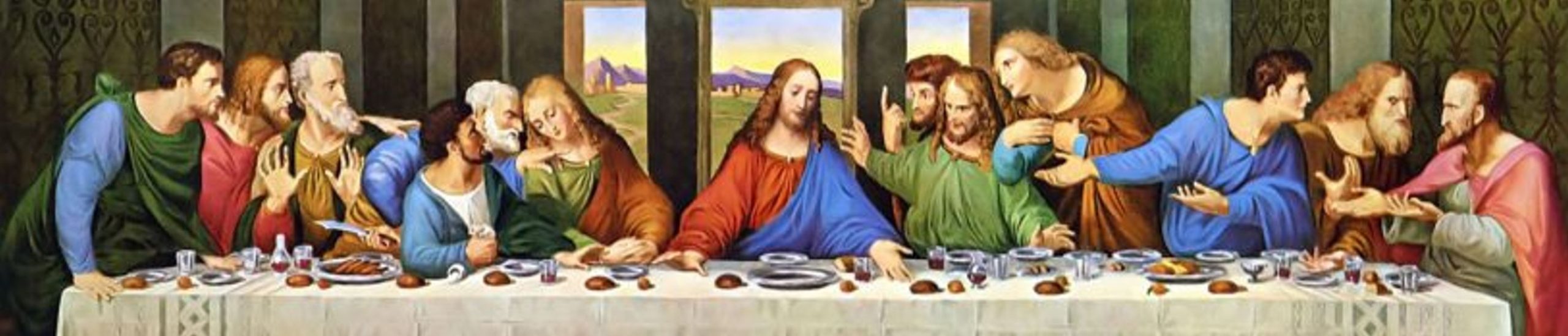

Who is Pope Leo XIV? Is he truly an American pope, or is he a Peruvian pope, or both? What is his background?
Does he plan to continue the legacy of Pope Leo XIII? Does he plan to continue the legacy of the Second Vatican Council and Pope Francis?
Will Pope Leo XIV continue the Catholic emphasis on social justice introduced by Rerum Novarum? Will he support DEI and Black Lives Matter policies?
Does Pope Leo XIV plan to continue Pope Francis’ preferential option for the poor? Or will he emphasize traditional displays of piety? Or both?
YouTube video for this blog: https://youtu.be/wSns5VGhtRk
INITIAL HOMILIES AND ADDRESSES BY POPE LEO XIV
Who is Pope Leo XIV? Although the American media has celebrated him as the first American-born pope, Peruvians also claim him as one of their own, as he is a naturalized citizen of Peru. Born in Chicago with a mixed Latin American and Creole heritage, he attended high school and college in Chicago, earned a doctorate in canon law in Rome, and joined the Augustinian order. He served as a missionary priest in Peru for over a decade, then was elected prior general overseeing the Order of St Augustine for over another decade, served as a bishop in Peru for eight years, and in 2023 was appointed as prefect of the Dicastery of Bishops in Rome, and was made cardinal, conferring with Pope Francis often on the appointment of bishops and cardinals. He was chosen to continue the policies of Pope Francis.
Cardinal Robert Francis Prevost chose the name of Pope Leo XIV in honor of the memories of Pope Leo XIII.[1] Who was Pope Leo XIII? He reigned for a lengthy pontificate of twenty-five years and committed the Catholic Church to a doctrine of social justice in his ground-breaking encyclical Rerum Novarum. He supported the rights of workers to a fair wage, union membership, and safe working conditions, affirming the dignity of the poor and working classes, while opposing the excesses of both radical socialism and capitalism. While supporting social justice and concern for the impoverished working class, he also encouraged spiritual and conservative reforms, such as promoting the rosary and Mariology, or veneration of the Virgin Mary.[2] This encyclical was affirmed to be a central part of the Catholic spiritual identity by Pope Pius XI’s Quadragesimo Anno on its fortieth anniversary in 1931, and further encyclicals by Pope John XXIII in 1961, who called the Second Vatical Council into session, and by Pope John Paul II’s Centesimos Annus on its hundredth anniversary.[3]
Cardinal Prevost was close to Pope Francis and has committed to furthering his agenda and legacy. We previously reflected on his autobiography, and his encyclicals Gaudete et Exsultate, On the Call to Holiness in Today’s World and Fratelli Tutti, On the Call to Holiness in Today’s World, and will soon reflect on his encyclical Evangelii Gaudium, On the Proclamation of the Gospel in Today’s World, that Pope Leo XIV stated explicitly that he supported.
Pope Francis’ Autobiography: Be Compassionate to the Poor and Marginalized
https://seekingvirtueandwisdom.com/pope-francis-autobiography/
https://youtu.be/6QDyiu3wwbc
Pope Francis Mentions Abortion in Gaudete et Exsultate, On the Call to Holiness in Today’s World, With a Prayer From Pope Benedict
http://www.seekingvirtueandwisdom.com/pope-francis-mentions-abortion-in-gaudete-et-exsultate-with-a-prayer-from-pope-benedict/
https://youtu.be/jF-fsMvYsak
Pope Francis Encyclical, Fratelli Tutti, On Fraternity and Social Friendship
https://seekingvirtueandwisdom.com/pope-francis-encyclical-fratelli-tutti-on-fraternity-and-social-friendship/
https://youtu.be/WmT12-PFrt8
What can we expect from the papacy of Pope Leo XIV? Why not allow this new pope to speak for himself? We will then repeat extended excerpts from his first pronouncements, including his first Mass the first Friday he was pope, his address to his fellow cardinals, plus his message from his first Sunday mass. If you wish to read his complete address, our blog has footnotes for our sources, plus our blog will include in italics what we excluded from the YouTube video.
Leo spoke briefly in English before his Friday homily, saying:
“I want to repeat the words from the Responsorial Psalm: ‘I will sing a new song to the Lord, because He has done marvels,’ and indeed, not just with me but with all of us.
“My brother Cardinals, as we celebrate this morning, I invite you to reflect on the marvels the Lord has done, the blessings that the Lord continues to pour out on all of us through the Ministry of Peter.
“You have called me to carry that cross, and to carry out that mission, and I know I can rely on each and every one of you to walk with me, as we continue as a Church, as a community of friends of Jesus, as believers, to announce the Good News, to announce the Gospel.”
FRIDAY HOMILY: JESUS ASKS, WHO DO PEOPLE SAY THAT THE SON OF MAN IS?
Shortly after his election, Pope Leo XIV delivered a Friday homily:[4]
“You are the Christ, the Son of the living God” (Mt 16:16). In these words, Peter, asked by the Master, together with the other disciples, about his faith in him, expressed the patrimony that the Church, through the apostolic succession, has preserved, deepened and handed on for two thousand years.
Jesus is the Christ, the Son of the living God: the one Savior, who alone reveals the face of the Father.
In him, God, in order to make himself close and accessible to men and women, revealed himself to us in the trusting eyes of a child, in the lively mind of a young person and in the mature features of a man (cf. Gaudium et Spes, 22), finally appearing to his disciples after the resurrection with his glorious body.”
“Jesus showed us a model of human holiness that we can all imitate, together with the promise of an eternal destiny that transcends all our limits and abilities.”
Peter, in his response, understands both of these things: the gift of God and the path to follow in order to allow himself to be changed by that gift. They are two inseparable aspects of salvation entrusted to the Church to be proclaimed for the good of the human race. Indeed, they are entrusted to us, who were chosen by him before we were formed in our mothers’ wombs (cf. Jer 1:5), reborn in the waters of Baptism and, surpassing our limitations and with no merit of our own, brought here and sent forth from here, so that the Gospel might be proclaimed to every creature (cf. Mk 16:15).
In a particular way, God has called me by your election to succeed the Prince of the Apostles, and has entrusted this treasure to me so that, with his help, I may be its faithful administrator (cf. 1 Cor 4:2) for the sake of the entire mystical Body of the Church. He has done so in order that she may be ever more fully a city set on a hill (cf. Rev 21:10), an Ark of Salvation sailing through the waters of history and a beacon that illuminates the dark nights of this world. And this, not so much through the magnificence of her structures or the grandeur of her buildings – like the monuments among which we find ourselves – but rather through the holiness of her members. For we are the people whom God has chosen as his own, so that we may declare the wonderful deeds of him who called us out of darkness into his marvelous light (cf. 1 Pet 2:9).
“Peter, however, makes his profession of faith in reply to a specific question: ‘Who do people say that the Son of Man is?’ (Mt 16:13). The question is not insignificant. It concerns an essential aspect of our ministry, namely, the world in which we live, with its limitations and its potential, its questions and its convictions.”
“Who do people say that the Son of Man is?” If we reflect on the scene we are considering, we might find two possible answers, which characterize two different attitudes.”
Pope Leo XIV continues: “First, there is the world’s response. Matthew tells us that this conversation between Jesus and his disciples takes place in the beautiful town of Caesarea Philippi, filled with luxurious palaces, set in a magnificent natural landscape at the foot of Mount Hermon, but also a place of cruel power plays and the scene of betrayals and infidelity. This setting speaks to us of a world that considers Jesus a completely insignificant person, at best someone with an unusual and striking way of speaking and acting. And so, once his presence becomes irksome because of his demands for honesty and his stern moral requirements, this “world” will not hesitate to reject and eliminate him.”
How much of this is a subtle reference to current conditions, to the excesses of the Trump administration in particular? Does his mention of luxurious palaces bring to mind the ostentatiously gaudy Trump Tower in New York, or his Mar-a-Lago Country Club? When he discusses cruel power plays, scenes of betrayals and infidelities, does he have in mind the infamous Atlantic article that speculates that in the Trump Administration’s treatment of the poor and immigrants, that the Cruelty is the Point?[5]
Should Christians be known for their cruelty, or for their compassion? Should we be cruel in our dealings with minorities, the poverty-stricken, and the immigrant, or should we Err on the Side of Compassion? This was the belief of the founder of Promise Keepers, Coach McCartney. We pray that those currently leading this important ministry do not stray from these ideals.
Promise Keepers: Black Lives Matter To These Evangelical Leaders
http://www.seekingvirtueandwisdom.com/promise-keepers-black-lives-matter-to-these-evangelical-leaders/
https://youtu.be/02MWE1ANlWo
Pope Leo XIV continues: “Then there is the other possible response to Jesus’ question: that of ordinary people. For them, the Nazarene Jesus is not a charlatan, but an upright man, one who has courage, who speaks well and says the right things, like other great prophets in the history of Israel. That is why they follow him, at least for as long as they can do so without too much risk or inconvenience. Yet to them he is only a man, and therefore, in times of danger, during his passion, they too abandon him and depart disappointed.”
Again, relating this to current events, could Donald Trump be considered a charlatan and con man? Is Trump the opposite of the upright man with courage, who speaks well and says the right things? Or is Trump corrupting the compassion in Christians’ hearts, replacing it with needless cruelty? Is Trump corrupting Christianity itself in the hearts of many of our believers?
Why Did Trump Win? What Should Democrats Do Now?
https://seekingvirtueandwisdom.com/why-did-trump-win-what-should-democrats-do-now/
https://youtu.be/xbtOf4ICxUk
Russell Moore, previously a prominent leader of the Southern Baptist Convention and current editor of Christianity Today, tells us: “Multiple pastors have told me essentially the same story about quoting the Sermon on the Mount parenthetically in their preaching, to turn the other cheek, and afterwards have someone come up after and to ask: ‘Where did you get those liberal talking points?’
And what was alarming to me is that in most of these scenarios, when the pastor would say: ‘I am literally quoting Jesus Christ,’ the response would not be: ‘I apologize.’
The response would be: “Yes, but that doesn’t work anymore. That’s weak.’ And when we get to the point where the teachings of Jesus himself are seen as subversive to us, then we’re in a crisis.”[6]
RELEVANCE OF CHRISTIANITY TODAY
Pope Leo XIV notes: “What is striking about these two attitudes is their relevance today. They embody notions that we could easily find on the lips of many men and women in our own time, even if, while essentially identical, they are expressed in different language.”
“Even today, there are many settings in which the Christian faith is considered absurd, meant for the weak and unintelligent. Settings where other securities are preferred, like technology, money, success, power, or pleasure.”
This is as true, perhaps truer, in the Trump administration, as it has been true for all of recorded human history. Particularly today, when those who show Christian compassion towards the poor, disadvantaged, and the immigrant are seen as weak and irrelevant, truly absurd.
Before he was elected pope, Cardinal Prevost expressed his support of gun control and opposed Trump’s immigration policies, as well as rejecting JD Vance’s claim that St Thomas Aquinas teaches us that we should love our family and immediate neighbors before we love our more distant neighbors. Christian Love exhorts us to love all our neighbors as ourselves.[7]
We will quote from NCR, or the National Catholic Reporter: “The internet has been buzzing since Vice President JD Vance said during a Fox News interview on Jan. 29, ‘There is a Christian concept that you love your family and then you love your neighbor, and then you love your community, and then you love your fellow citizens, and then after that, prioritize the rest of the world. A lot of the far left has completely inverted that.’”
“The online debate has been split on whether this sentiment is biblical or not. Many Christians have rushed to defend this hierarchy, citing 1 Timothy 5:8: ‘Anyone who does not provide for their relatives, and especially for their own household, has denied the faith and is worse than an unbeliever.’”
“The point wasn’t about setting limits on love. It was about breaking them down: taking the gospel beyond familiar spaces and into contested ones.” “The real question is not whether love begins at home. It’s what we do with it: how far we are willing to change ourselves and the world around us.”
NCR continues: “Vance’s argument echoes a medieval concept known as ordo amoris: the order of charity, often attributed to St. Thomas Aquinas. The idea is that love must be ranked, that a person rightly prioritizes their affections, with family on top. In some ways, it sounds practical, even reasonable. Love is not meant to be an abstraction, floating in ideals without real world engagement.”
“But the problem with this hierarchy is that it feeds the myth that some people are more deserving of our care than others. It’s a framework that makes sense in a world governed by scarcity and fear, where protection comes at the expense of others. But Jesus never speaks of love as something to be rationed. He speaks of love as abundance: a table where there is enough for everyone.”
Since we let Pope Leo XIV to speak for himself, so we should extend the same courtesy to St Thomas Aquinas. In his Summa Theologica, he responds to many questions Christians ask about love, or charity, and whether there is an order in charity.[8] We plan to reflect on whether JD Vance is misquoting St Thomas Aquinas. This section should be easily understood.
NCR: “Today, too, there are many settings in which Jesus, although appreciated as a man, is reduced to a kind of charismatic leader or superman. This is true not only among non-believers but also among many baptized Christians, who thus end up living, at this level, in a state of practical atheism.”
Apostles at ascension, expecting deliverance from Rome, and today’s prosperity gospel
NCR, Pope Leo XIV: “This is the world that has been entrusted to us, a world in which, as Pope Francis taught us so many times, we are called to bear witness to our joyful faith in Jesus the Savior. Therefore, it is essential that we too repeat, with Peter: “You are the Christ, the Son of the living God” (Mt 16:16).
“It is essential to do this, first of all, in our personal relationship with the Lord, in our commitment to a daily journey of conversion. Then, to do so as a Church, experiencing together our fidelity to the Lord and bringing the Good News to all (cf. Lumen Gentium, 1).”
I say this first of all to myself, as the Successor of Peter, as I begin my mission as Bishop of Rome and, according to the well-known expression of Saint Ignatius of Antioch, am called to preside in charity over the universal Church (cf. Letter to the Romans, Prologue). Saint Ignatius, who was led in chains to this city, the place of his impending sacrifice, wrote to the Christians there: “Then I will truly be a disciple of Jesus Christ, when the world no longer sees my body” (Letter to the Romans, IV, 1). Ignatius was speaking about being devoured by wild beasts in the arena – and so it happened – but his words apply more generally to an indispensable commitment for all those in the Church who exercise a ministry of authority. It is to move aside so that Christ may remain, to make oneself small so that he may be known and glorified (cf. Jn 3:30), to spend oneself to the utmost so that all may have the opportunity to know and love him.”[9]
Pope Leo XIV continues his homily: “These are contexts where it is not easy to preach the Gospel and bear witness to its truth, where believers are mocked, opposed, despised or at best tolerated and pitied. Yet, precisely for this reason, they are the places where our missionary outreach is desperately needed. A lack of faith is often tragically accompanied by the loss of meaning in life, the neglect of mercy, appalling violations of human dignity, the crisis of the family and so many other wounds that afflict our society.”
“May God grant me this grace, today and always, through the loving intercession of Mary, Mother of the Church.”
In his address to the College of Cardinals on the first Saturday of his pontificate, Pope Leo XIV clarifies that he intends to continue down the path set by both the Second Vatican Council and the pontificate of Pope Francis:[10]
Saturday, 10 May 2025, Dear Brother Cardinals,
I greet all of you with gratitude for this meeting and for the days that preceded it. Days that were sad because of the loss of the Holy Father Pope Francis and demanding due to the responsibilities we confronted together, yet at the same time, in accordance with the promise Jesus himself made to us, days rich in grace and consolation in the Spirit (cf. Jn 14:25-27).
You, dear Cardinals, are the closest collaborators of the Pope. This has proved a great comfort to me in accepting a yoke clearly far beyond my own limited powers, as it would be for any of us. Your presence reminds me that the Lord, who has entrusted me with this mission, will not leave me alone in bearing its responsibility. I know, before all else, that I can always count on his help, the help of the Lord, and through his grace and providence, on your closeness and that of so many of our brothers and sisters throughout the world who believe in God, love the Church and support the Vicar of Christ by their prayers and good works.
I thank the Dean of the College of Cardinals, Cardinal Giovanni Battista Re – who deserves applause, at least once, if not more – whose wisdom, the fruit of a long life and many years of faithful service to the Apostolic See, has helped us greatly during this time. I thank the Camerlengo of the Holy Roman Church, Cardinal Kevin Joseph Farrell – I believe he is present today – for the important and demanding work that he has done throughout the period of the Vacant See and for the convocation of the Conclave. My thoughts also go to our brother Cardinals who, for reasons of health, were unable to be present, and I join you in embracing them in communion of affection and prayer.
At this moment, both sad and joyful, providentially bathed in the light of Easter, I would like all of us to see the passing of our beloved Holy Father Pope Francis and the Conclave as a paschal event, a stage in that long exodus through which the Lord continues to guide us towards the fullness of life. In this perspective, we entrust to the “merciful Father and God of all consolation” (2 Cor 1:3) the soul of the late Pontiff and also the future of the Church.
Beginning with Saint Peter and up to myself, his unworthy Successor, the Pope has been a humble servant of God and of his brothers and sisters, and nothing more than this. It has been clearly seen in the example of so many of my Predecessors, and most recently by Pope Francis himself, with his example of complete dedication to service and to sober simplicity of life, his abandonment to God throughout his ministry and his serene trust at the moment of his return to the Father’s house. Let us take up this precious legacy and continue on the journey, inspired by the same hope that is born of faith.
It is the Risen Lord, present among us, who protects and guides the Church, and continues to fill her with hope through the love “poured into our hearts through the Holy Spirit who has been given to us” (Rom 5:5). It is up to us to be docile listeners to his voice and faithful ministers of his plan of salvation, mindful that God loves to communicate himself, not in the roar of thunder and earthquakes, but in the “whisper of a gentle breeze” (1 Kings 19:12) or, as some translate it, in a “sound of sheer silence.” It is this essential and important encounter to which we must guide and accompany all the holy People of God entrusted to our care.
In these days, we have been able to see the beauty and feel the strength of this immense community, which with such affection and devotion has greeted and mourned its Shepherd, accompanying him with faith and prayer at the time of his final encounter with the Lord. We have seen the true grandeur of the Church, which is alive in the rich variety of her members in union with her one Head, Christ, “the shepherd and guardian” (1 Peter 2:25) of our souls. She is the womb from which we were born and at the same time the flock (cf. Jn 21:15-17), the field (cf. Mk 4:1-20) entrusted to us to protect and cultivate, to nourish with the sacraments of salvation and to make fruitful by our sowing the seed of the Word, so that, steadfast in one accord and enthusiastic in mission, she may press forward, like the Israelites in the desert, in the shadow of the cloud and in the light of God’s fire (cf. Ex 13:21).
Pope Leo XIV: “In this regard, I would like us to renew together today our complete commitment to the path that the universal Church has now followed for decades in the wake of the Second Vatican Council. Pope Francis masterfully and concretely set this forth in the Apostolic Exhortation Evangelii Gaudium,” including the missionary role of the church, attention to true worship and piety, loving care for the poor and rejected, and courageous dialogue with the contemporary world.
His actual text reads: “I would like to highlight several fundamental points from Evangelii Gaudium: the return to the primacy of Christ in proclamation (cf. No. 11); the missionary conversion of the entire Christian community (cf. No. 9); growth in collegiality and synodality (cf. No. 33); attention to the sensus fidei (cf. Nos. 119-120), especially in its most authentic and inclusive forms, such as popular piety (cf. No. 123); loving care for the least and the rejected (cf. No. 53); courageous and trusting dialogue with the contemporary world in its various components and realities (cf. No. 84; Second Vatican Council, Pastoral Constitution Gaudium et Spes, 1-2).”
These are evangelical principles that have always inspired and guided the life and activity of God’s Family. In these values, the merciful face of the Father has been revealed and continues to be revealed in his incarnate Son, the ultimate hope of all who sincerely seek truth, justice, peace and fraternity (cf. Benedict XVI, Spe Salvi, 2; Francis, Spes Non Confundit, 3).
“Sensing myself called to continue in this same path, I chose to take the name Leo XIV. There are different reasons for this, but mainly because Pope Leo XIII in his historic Encyclical Rerum Novarum addressed the social question in the context of the first great industrial revolution. In our own day, the Church offers to everyone the treasury of her social teaching in response to another industrial revolution and to developments in the field of artificial intelligence that pose new challenges for the defense of human dignity, justice and labor.”
Dear brothers, I would like to conclude the first part of our meeting by making my own – and proposing to you as well – the hope that Saint Paul VI expressed at the inauguration of his Petrine Ministry in 1963: “May it pass over the whole world like a great flame of faith and love kindled in all men and women of good will. May it shed light on paths of mutual cooperation and bless humanity abundantly, now and always, with the very strength of God, without whose help nothing is valid, nothing is holy” (Message Qui Fausto Die addressed to the entire human family, 22 June 1963).
May these also be our sentiments, to be translated into prayer and commitment, with the Lord’s help. Thank you!
Let us conclude with the closing of Pope Leo XIV’s brief comments in his first Sunday homily:
Dear brothers and sisters, these are the first words spoken by the risen Christ, the Good Shepherd who laid down His life for God’s flock. I would like this greeting of peace to resound in your hearts, in your families, among all people, wherever they may be, in every nation and throughout the world. Peace be with you!
It is the peace of the risen Christ. A peace that is unarmed and disarming, humble and persevering. A peace that comes from God, the God who loves us all, unconditionally.
We can still hear the faint yet ever courageous voice of Pope Francis as he blessed Rome, the Pope who blessed Rome, who gave his blessing to the world, the whole world, on the morning of Easter. Allow me to extend that same blessing: God loves us, God loves you all, and evil will not prevail! All of us are in God’s hands. So, let us move forward, without fear, together, hand in hand with God and with one another other! We are followers of Christ. Christ goes before us. The world needs his light. Humanity needs him as the bridge that can lead us to God and his love. Help us, one and all, to build bridges through dialogue and encounter, joining together as one people, always at peace. Thank you, Pope Francis!
I also thank my brother Cardinals, who have chosen me to be the Successor of Peter and to walk together with you as a Church, united, ever pursuing peace and justice, ever seeking to act as men and women faithful to Jesus Christ, in order to proclaim the Gospel without fear, to be missionaries.
I am an Augustinian, a son of Saint Augustine, who once said, “With you I am a Christian, and for you I am a bishop.” In this sense, all of us can journey together toward the homeland that God has prepared for us.
“A special greeting to the Church of Rome! Together, we must look for ways to be a missionary Church, a Church that builds bridges and encourages dialogue, a Church ever open to welcoming, like this Square with its open arms, all those who are in need of our charity, our presence, our readiness to dialogue and our love.”[11]
[1] https://en.wikipedia.org/wiki/Pope_Leo_XIV
[2] https://en.wikipedia.org/wiki/Pope_Leo_XIII
[3] https://en.wikipedia.org/wiki/Rerum_novarum
[4] https://www.npr.org/2025/05/09/g-s1-65311/read-pope-leo-xivs-first-homily-as-pope
[5] https://www.theatlantic.com/ideas/archive/2018/10/the-cruelty-is-the-point/572104/
[6] https://www.npr.org/2023/08/05/1192374014/russell-moore-on-altar-call-for-evangelical-america
[7] https://www.nbcnews.com/politics/politics-news/pope-leo-social-media-posts-vance-rcna205677
[8] https://www.newadvent.org/summa/3026.htm
[9] https://www.ncronline.org/opinion/guest-voices/jd-vance-wrong-jesus-doesnt-ask-us-rank-our-love-others. Also, this is confirmed by: https://www.wordonfire.org/articles/first-love-locally-jd-vance-and-ordo-amoris/
[10] https://www.vatican.va/content/leo-xiv/en/speeches/2025/may/documents/20250510-collegio-cardinalizio.html
[11] https://www.vaticannews.va/en/pope/news/2025-05/pope-leo-xvi-peace-be-with-you-first-words.html

5 Trackbacks / Pingbacks