Early Church Writing

St Irenaeus On Heresies, Eusebius and Modern Scholars, and Catholic Catechism

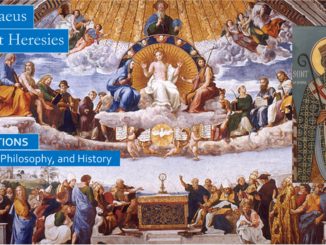
Eusebius explains, “Irenaeus, whose name means ‘peaceable’ and who by temperament was a peacemaker, pleased and negotiated for the peace of the churches.” There was a dispute between Bishop Viktor of Rome and the Asian dioceses over the length of a church fast, he was threatening excommunication over this dispute. Irenaeus interceded, arguing that “the dispute is not only about the day, but also about the actual character of the fast.” He pointed out the variations were differences in practice extending back to their forefathers. Although they had their differences, “they all lived in peace with one another, and so do we: the divergences in the fast emphasizes the unanimity of the faith.” […]

Abortion

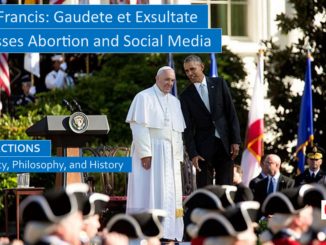
Pope Francis Mentions Abortion in Gaudete et Exsultate, With a Prayer From Pope Benedict

Our defense of the innocent unborn needs to be clear, firm and passionate, for at stake is the dignity of a human life, which is always sacred and demands love for each person, regardless of his or her stage of development.”

Equally sacred, however, are the lives of the poor, those already born, the destitute, the abandoned and the underprivileged, the vulnerable infirm and elderly exposed to covert euthanasia, the victims of human trafficking, new forms of slavery, and every form of rejection.  We cannot uphold an ideal of holiness that would ignore injustice in a world where some revel, spend with abandon and live only for the latest consumer goods, even as others look on from afar, living their entire lives in abject poverty. […]

History

History of the Jesuits

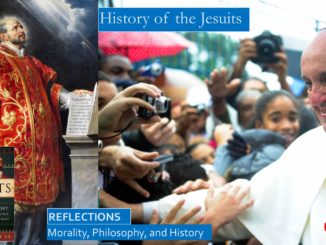
The Jesuits shares with the medieval orders the vows of poverty, chastity, and obedience, but in addition the Jesuits take a fourth vow. O’Malley emphasizes this fourth vow is not a vow of loyalty to the pope, as many think it, but rather the fourth vow is a vow to go on “mission anywhere in the world, to be ready to travel among the Turks, or to the New World, or to the Lutherans, or to any others whether infidels or faithful.” They looked to the pope to send them out on mission, or to the superior general of the Jesuit order. The Jesuits also differed from the older religious orders in that they did not wear a distinctive habit, they did not give up their family name, and they were not be required to meet for group prayer several times a day.

The Jesuits started a modern ministry, the RETREAT, based on Loyola’s major work, the Spiritual Exercises. Weekend retreats today are common, Jesuit retreats can be longer, and are times of self-reflection similar to Loyola’s time of self-reflection when he asked for God’s guidance. Many in the sixteenth century criticized these retreats for under emphasizing the sacramental and penitential life and over emphasizing the direct communication of the individual believer with God, which many felt was a false mysticism. Indeed, Loyola’s Constitutions, the rule for Jesuits, does not prescribe penances or austerities for the brothers. […]
Biblical Interpretation

Biblical Interpretation in the Catholic Church, the 1994 Pontifical Biblical Commission Decree

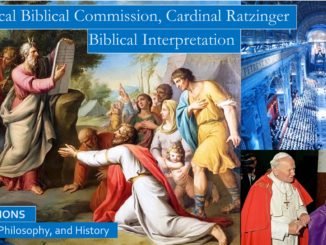
Historically, the Catholic Church has defended itself from attacks, both real and imagined, from enemies of the faith, and this defensiveness also extended to Biblical studies. The twentieth century saw a relaxing of this defensiveness, culminating in the decree Dei Verbum pronounced by Vatican II, encouraging Catholic scholars to use more modern methods of interpreting the Scriptures, under the guidance of the Vatican office, the Pontifical Biblical Commission. […]