Summary of Papacies Between Trent and Vatican II. How Did These Popes Prepare the Way for Vatican II?
History

Summary of Papacies Between Trent and Vatican II. How Did These Popes Prepare the Way for Vatican II?

How did the Catholic Church survive the French Revolution, the conquests of Napoleon, and the Revolutions of 1848? Was the Second Vatican Council a continuation of Vatican I? Was Pope Leo XIII, who issued Rerum Novarum, the social justice encyclical that sympathized with the working man, a conservative or a […]
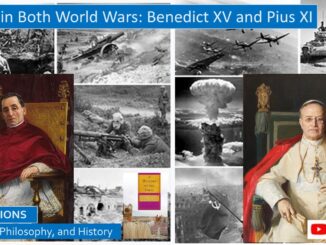
Pope Benedict XV and Pope Pius XI: Confronting World War I and World War II, and Fascism
History

Pope Benedict XV and Pope Pius XI: Confronting World War I and World War II, and Fascism

Mussolini signaled in a speech that he was open to negotiating the Roman question. Mussolini was not a practicing Catholic and was famously a serial philanderer. Like Napoleon before him, Mussolini realized that it was in his political interest to settle this issue and regularize the status of the Vatican City.
O’Malley writes: “The most momentous aspect of the Lateran Agreements was the establishment of the Vatican City as a fully independent and sovereign state, with its own postal service, police force, full diplomatic corps, and so forth. The Italian state agreed never to interfere in the free functioning of Vatican City and ensured full and safe access to it by anyone the papacy wanted to receive. The papacy agreed never to try directly or indirectly to reestablish the Papal States, and it relinquished in perpetuity all claim to the city of Rome.”
The Vatican was paid a generous indemnity for the loss of this territory, and the state would pay an annual stipend for the upkeep of historical monuments. In addition to the 103 acres in Vatican City, the pope could also use several churches and castles traditionally at the church’s disposal. […]

Summary of Mere Christianity, WWII Ecumenical Broadcast: Morality, Not Polemics
CS Lewis

Summary of CS Lewis’ Mere Christianity, WWII Ecumenical Broadcast: Morality Not Polemics

Many scholars speculate on whether CS Lewis was inspired by the writings of Richard Baxter, a Puritan and prolific author who first coined the phrase “Mere Christianity.” Baxter lived during the intense religious struggle in the late 1600’s, a century after Henry VIII split from the Catholic Church to form the Anglican Church. Baxter was appointed to the royal chaplaincy, but he left his post after the passage of the Act of Uniformity in 1662, which required that all pastors exclusively use the Book of Common Prayer and be ordained as Anglican ministers. Baxter was reluctant to adopt a denomination, proclaiming that “I am a Christian, a MEER CHRISTIAN, of no other religion,” and “I am against all sects and dividing parties.” He did not want to identify either with Catholics, or Anglicans, or Presbyterians. […]

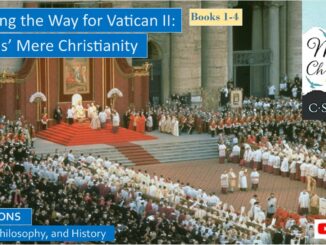
Preparing the Way for Vatican II: CS Lewis' Mere Christianity
CS Lewis

Preparing the Way for Vatican II: CS Lewis’ Mere Christianity

CS Lewis did not wave the flag of ecumenicism, attending this conference or that on interfaith dialogues, but instead prepares the way, saying that what denominational creed you profess is less important than whether you truly believe the core Christian teaching of the two-fold Love of God and neighbor. This was the key change wrought by Vatican II, no longer did the Catholic Church believe you needed to be Catholic to be saved. Likewise, CS Lewis is against the notion that Catholics cannot be saved. […]

History

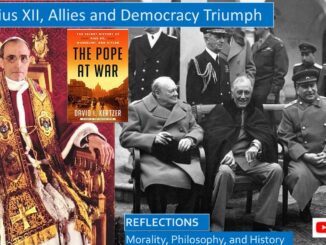
Pope Pius XII, Wartime Pope, Allied Powers Turn the Tide of War

When do the Italians first realize that Mussolini and Hitler might possibly lose the war? Our beloved author gives us a hint exactly halfway through his book, The Pope At War, when, “late on the night of October 22, 1942, wave after wave of British bombers swooped below the clouds over Genoa, Italy, and released hundreds of bombs.” Later, Milan and Turin would be bombed. Soon after, Rommel’s Afrika Corps would be defeated, and American soldiers waded ashore in North Africa in Operation Torch. […]

History

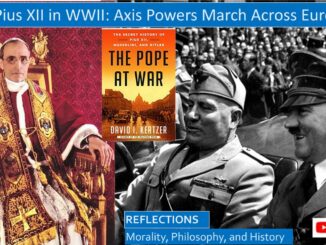
Pope Pius XII, Wartime Pope, Axis Powers March Across Europe

The complete archives of Pope Pius XII were opened in 2019, then were closed for Covid, and our favorite author David Kertzer was waiting on the steps for the archives to open so he could begin his next enthralling book, The Pope at War, filling in much detail on the years of the war. Maybe he should have titled the book, The Pope Behind Enemy Lines During WWII, but he did not ask me.

Cardinal Pacelli, former Nuncio, or ambassador to Nazi Germany, was crowned Pope Pius XII, taking the same name to signal that no major changes were planned in his papacy, mere months before World War II erupted in Poland. […]

Five Minute History

How Did Confessing Christians Tolerate Hitler? Excerpts From Post-War Interviews

The war softened the hearts of many Germans. One German remembers shopping during the time of the brutal Allied bombing of Berlin, the “shopkeeper was talking to another customer whom she knew and said, ‘This is the punishment for what we’ve done to the Jews.’ And she dared to say that much, although I was a stranger in her shop.” […]

Five Minute History

WWII Lessons: What Happens When Politicians Promote Violence? Comparing Mussolini and Hitler to Trump

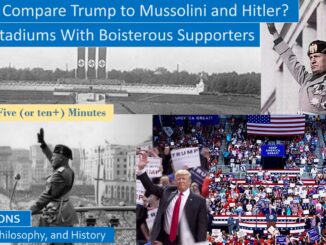
The Fascist movements in Italy and Germany came to power with assistance by large gangs of fascist thugs who bullied, beat up, and sometimes murdered their opponents. These fascist thugs were drawn from the millions of veterans of the bloody fighting in the tranches of World War I. After assuming dictatorial powers Mussolini promised the Pope that he would reign in his thugs, but this was a promise he never fully kept, in part because these fascist gangs were hard to control, in part because he wanted to remind the Pope who was really in charge, who alone could rein in the gangs. […]

Five Minute History

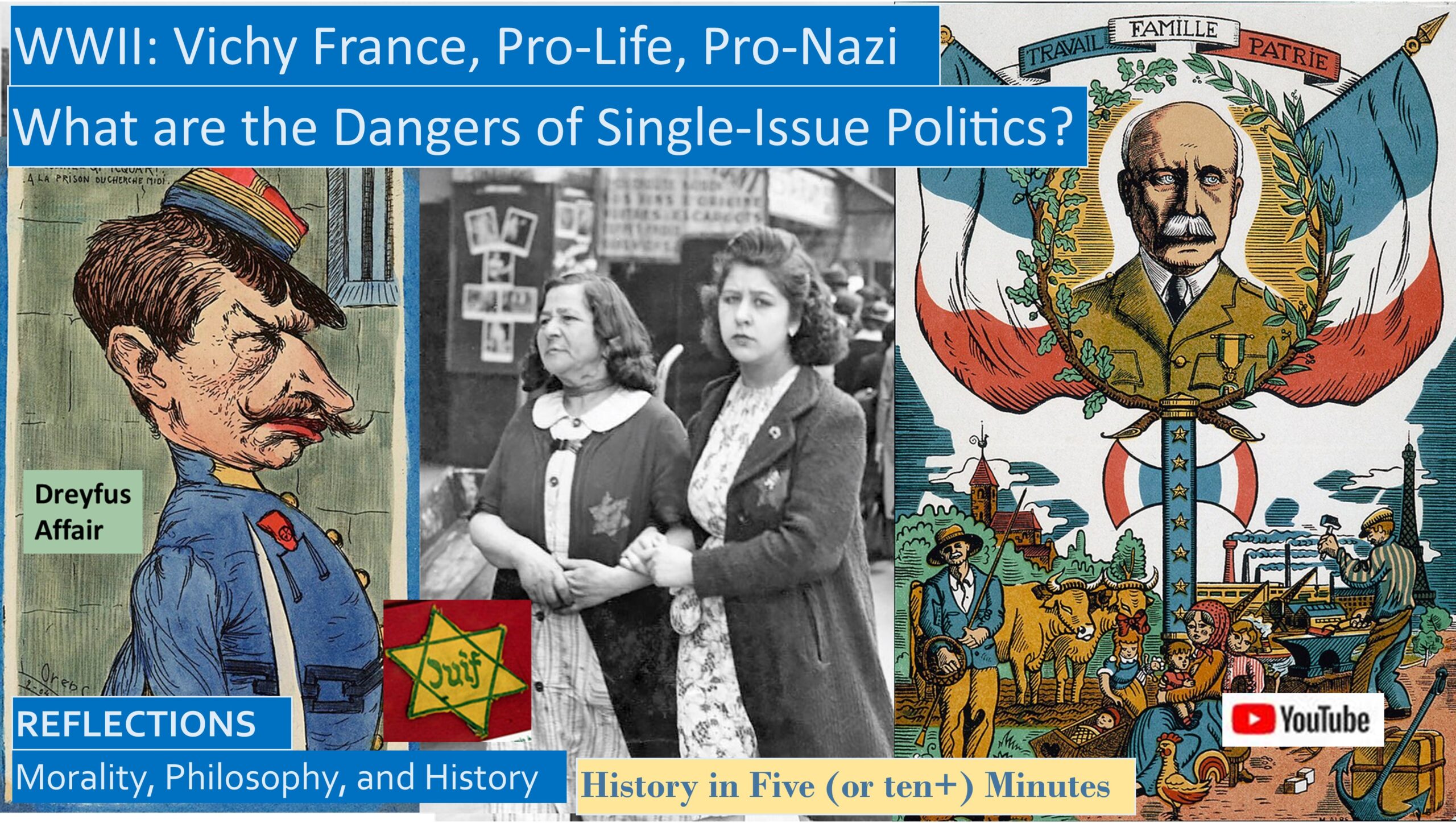
Christians Surviving Fascism in World War II: What are the Dangers of Single-Issue Politics in Vichy France?

The danger of such a narrow view of the single issue politics of abortion is apparent when we review the history of the only anti-abortion, pro-Catholic regime in France after the French Revolution, the fascist regime of Vichy France that collaborated with the conquering Nazis. The leaders of this pro-Catholic Vichy regime were also deeply anti-Semitic and cooperated with the Germans to persecute the Jews from the earliest days of the regime. The Vichy regime was also deeply xenophobic in its immigration policies. Communism was the mortal enemy of the Christian faith; many Catholics saw fascists as allies in their struggles against communism. […]