Roman Emperors before Marcus Aurelius
Greek and Roman History

Roman Emperors Before Marcus Aurelius

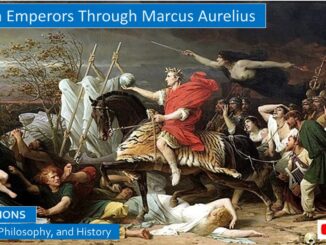
Hadrian’s peace policy was controversial, he abandoned Trajan’s conquests in Dacian Romania and Parthian Persia to concentrate on consolidating the Roman Empire. The problem was that the Roman Empire needed continual expansion, including war booty and slaves, to fund the empire and feed the growing populace of Rome. This policy certainly did not prevent future conflict with Parthian Persia.
Historians debate whether Hadrian’s defensive posture was wise. Were there prosperous provinces left to conquer on the frontiers? On the other hand, the successful expansion of the empire by the Byzantine Emperor Justinian several centuries later nearly bankrupted his Empire. […]
Ordinary Life for Romans Under Stoic Emperor Marcus Aurelius
History

Ordinary Life for Romans Under Stoic Emperor Marcus Aurelius

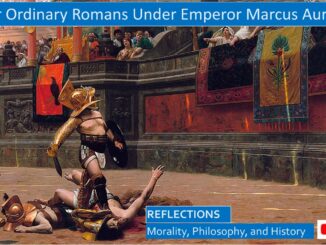
Professor Aldrete in his Wondrium lecture on the History of the Ancient World points out that the ancient historians and sources are silent on what life was like for the many farmers who labored in obscurity, that these ancient histories are really histories of political leaders and city dwellers. For every person who lived in the city in much of the ancient world, eight or nine lived on a family farm. The ratio differed around Rome, about a quarter of the people nearby lived in the city. Most people never traveled more than twenty miles from home, never saw a king, never read a book, or heard a philosopher speak. Most people living on farms did not even know the name of the Roman Emperor, and life went on as before no matter who was emperor. […]

Ancient Warrior Culture - Ancient Greece, Rome, Israel
History

Ancient Warrior Societies, Blog 3, Warfare in the Old Testament

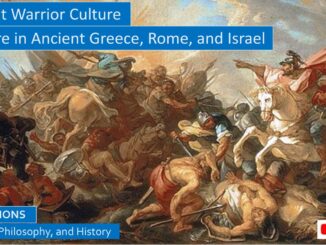
Warfare is mentioned over three hundred times in the Old Testament, swords four hundred times. Ancient Israel was caught in many of the ancient wars since it was in the cross-roads of trade routes between Mesopotamia and Egypt. Since Judah was mountainous, its armies relied heavily on infantry, but the Bible mentions that King Ahab of the Northern Kingdom had chariots, and that he was felled by arrow probably shot by a composite bow. Assyria and Babylon had cavalry archers on horseback, but not Egypt or Israel. An Israeli chariot had three horses pulling three men, a driver with a spear, an archer, and a shield bearer. We know from our Sunday School stores King David slew Goliath with a sling, but the ancient slings were not the puny toys we imagine, the sling in the ancient world was a deadly combat weapon. A skilled slinger could sling a rock over 120 miles per hour, faster than the fastest fast ball. […]

Ancient Warrior Culture - Ancient Greece, Rome, Israel
History

Ancient Warrior Societies, Blog 2, Ancient Greek and Roman Armies and Navies

The Greek innovation to ancient warfare was their hoplite warrior phalanx, a formation eight to ten rows of a hundred or more warriors, sometimes extending a quarter of a mile. The shields of the front row would interlock, and the entire formation would press upon the enemy, the soldiers would first throw their spears then jab with their swords from behind their shields, strictly maintaining their position. This required training and practice, the Athenians expected their nobles to drill during the year, the Spartans had a year-round military the practiced year-round. […]

Benefits and Detriments of Slavery in the Deep South
Civil Rights

Benefits and Detriments of Slavery in the Deep South

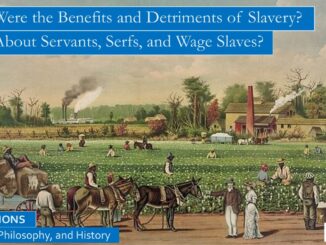
There was one very real benefit of slavery to the enslaved in the Deep South. Before the Civil War, slaves were far less likely to be lynched or killed than were freed slaves after the war. The reason for this was simple: it is illegal to damage someone’s property, and slaves were extremely valuable. Slaves were the most valuable asset class in America before the Civil War. Before the Civil War, a slave was worth as much as an economy car is worth today. […]

Summary Three Generations Black Leaders
Civil Rights

Three Generations of Leading Black Leaders: Frederick Douglass, Booker T Washington, and WEB Du Bois

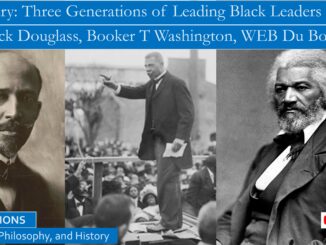
Who do we consider to be the leaders of the first three generations of black leaders? Frederick Douglass, first generation black leader, abolitionist writer and orator, who was born a slave and escaped to freedom; Booker T Washington, educator, second generation black leader, who was born a slave, was freed when the Civil War ended; and WEB Du Bois, third generation black leader, civil rights activist, author and scholar, who was born free in Massachusetts after the Civil War, chose to attend college in the Deep South, and was co-founder of the NAACP. […]

Civil War and Reconstruction

Why Were Union Soldiers in the Civil War Willing to Fight to Preserve the Union?

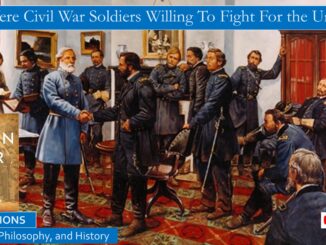
Professor Gallagher opens his book on the Union War, “The loyal American citizenry fought a war that also killed slavery. In a conflict that stretched across four years and claimed more than 800,000 US casualties, the nation experienced huge swings of civilian and military morale before crushing Confederate resistance. Union always remained the paramount goal, a fact clearly expressed by Abraham Lincoln in speeches and other statements designed to garner the widest popular support for the war effort.” […]

Civil Rights

History of History of WEB Dubois’ Black Reconstruction, Challenging Lost Cause Myth and Dunning School

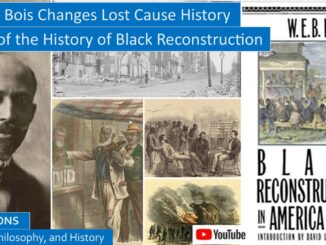
The established dogma was that the Reconstruction Era following the Civil War was a dark period in American history, where black rule bred corruption and unwanted federal interference in the governments of the Deep South. WEB Du Bois counters by claiming that the Jim Crow Redemptionist Era following Reconstruction was the dark era when blacks lost the right to vote and any semblance of due process and fair play, that many blacks were, in effect, re-enslaved in a more brutal segregationist society, and that the Reconstruction was a time of greater democracy where the civil rights and liberties of all races and classes were respected. […]

Civil Rights

Was the Rough Rider President Theodore Roosevelt a Proponent of Civil Rights?

Theodore Roosevelt was not a man bound by class, which can be seen in the composition of the Rough Rider volunteer regiment unit he organized to fight in the Spanish American War. The newspaper publicity hyping his heroic charge leading his Rough Rider regiment up San Juan Hill made him a household name, eventually propelling him to the Presidency.
Roosevelt, like his distant cousin Franklin, was a member of the patrician class, which meant that, of course, he attended Harvard University. After serving in the New York State Legislature, Roosevelt was devastated when both his beautiful young wife Alice and his mother passed away on the same day, just two days after the birth of his daughter, also named Alice. For solace, he purchased a cattle ranch in North Dakota, developing many friendships among the rough riding cowboys in this western state. His rough rider recruits were an unlikely mix of wealthy blue-blooded aristocrats and rough and ready cowboys from the Badlands.
Roosevelt’s Rough Riders were not the only regiment charging up San Juan Hill, history books often do not mention the role of the colored regiment Buffalo soldiers in the Spanish-American War. During the war Roosevelt was chided for fraternizing with the enlisted men, this criticism makes more sense if he fraternized with both his Rough Riders and the Buffalo soldiers, which have an interesting history of their own. […]

Civil Rights

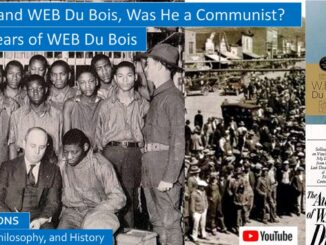
Was WEB Du Bois a Communist? The Later Years of WEB Du Bois

Was WEB Du Bois a communist? The answer is YES: When he turned 93, he joined and paid his dues to the CPUSA, Communist Party. Most people are born in the first chapters of their autobiography; but no, WEB Du Bois, being ever the contrarian, chooses to extol the virtues of communism in the opening chapters. Personally, I am quite angry with him, why did he do that? It is political poison for a black leader to announce he is a communist, and now I must explain it. We will reflect on his growing embrace of communism over the course of his life. […]