
Was Ulysses S Grant an abolitionist? Did the family of his future wife, Julia Dent, support slavery and the Confederacy?
Why did Ulysses S Grant vote for James Buchanan, the Democratic Candidate, in the 1856 Presidential Campaign? Who did Grant vote for President in the election of 1860, shortly before the Civil War?
Why were the federal forces overrun by the surprise Confederate attack on the first day of the Battle of Shiloh? Why were the Confederate forces surprised by the Union offensive on the second day of the Battle of Shiloh? Why were the Confederates ultimately defeated?
What lessons did General Grant learn from his hard-fought victory at the bloody Battle of Shiloh?
YouTube video for this reflection: https://youtu.be/v5rrY7Agi68
DID SLAVERY AND THE MEXICAN-AMERICAN WAR CAUSE THE CIVIL WAR?
We prefer not to focus on the various battles of the Civil War, but rather on what they teach us about the character of those who fought these challenging wars, and how they affected our common history. The Battle of Shiloh, which was one of the early battles of the Civil War before most of the soldiers were battle-hardened, reveals why General Ulysses S Grant was perhaps the greatest general of the Civil War, both tactically and strategically.
Those who fought the Civil War grew up in the America of Andrew Jackson, when the giants of the second generation of American leaders fought to hold the United States together, great orators like Henry Clay and Daniel Webster who would inspire later Union soldiers to fight to preserve the Union. These were the years when the slave-owning Southern President threatened to deploy federal troops to prevent the secession of South Carolina over tariffs during the Nullification Crisis in the 1830s.
Why Were Union Soldiers in the Civil War Willing to Fight to Preserve the Union?
https://seekingvirtueandwisdom.com/why-were-union-soldiers-in-the-civil-war-willing-to-fight-to-preserve-the-union/
https://youtu.be/0aak9Mtt0eI
Northern schoolchildren memorized portions of Webster’s patriotic speeches, which helps to explain why Union soldiers were so willing to fight to preserve the Union.
Why Were Union Soldiers in the Civil War Willing to Fight to Preserve the Union?
https://seekingvirtueandwisdom.com/why-were-union-soldiers-in-the-civil-war-willing-to-fight-to-preserve-the-union/
https://youtu.be/0aak9Mtt0eI
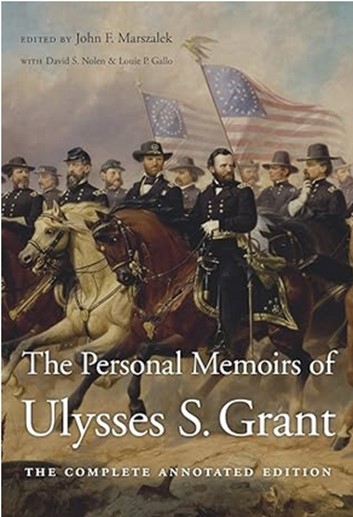
Jesse Grant enrolled his son in the West Point Military Academy as he may not have had the funds to pay for tuition elsewhere. At West Point, Ulysses met many of the Union and Confederate generals who fought in the Civil War. These generals fought in the same federal army in the Mexican-American War, provoked by the Democratic President James K Polk, that added California, Texas, and the other southwestern states to the United States. Many historians, as well as Grant, argue that this war was a cause of the bloody Civil War two decades later. In many ways, this war influenced the tactics and policies of the Civil War.
The loyalties of many families were split in pre-Civil War America, including families of many leaders on both sides. Grant was no exception: his family were solid abolitionists who supported the Union, while the family of Julia Dent, his new bride, owned slaves and were sympathetic to the Confederacy. When they married shortly after the Mexican-American War, Grant’s parents did not attend their wedding held at the Dent Plantation, close to his military base. Later, during the first year of the Civil War, many of the Dent slaves escaped.[1]
Early Life and Career of Ulysses S Grant Through His Service in the Mexican American War
https://seekingvirtueandwisdom.com/early-life-and-career-of-ulysses-s-grant-through-his-service-in-the-mexican-american-war/
https://youtu.be/TJlh1D77wyA
After the Mexican-American War, the thousands of miners who flocked to the California Gold Rush challenged the law and order of the new American territory. Grant’s regiment was ordered to California to help maintain order, but since Julia was pregnant, he had to leave her behind, as the overland passage across Panama was challenging. Grant started drinking to alleviate the boredom and loneliness he felt. Although his commanding officer did not court-martial him, he was persuaded to resign from the army to return home to his Julia. During the war, Julia sometimes traveled so she could be close to him.
Ulysses Grant was a kind-hearted and naïve man, and this trait often hurt him in his pocketbook. The seven years he spent in civilian life were years of struggle: at one time, he was reduced to selling firewood in the streets of St Louis. At another time, a business partner stole the modern equivalent of tens of thousands of dollars from him. At another time, his small family lived in a humble, rudely built homestead while he tried his hand at farming on the Dent property. The Dents gave them a slave, but Grant was reluctant to coerce him to work productively, choosing to emancipate his instead. Finally, he was able to gain a modicum of financial success when he worked as a store clerk at a family business operated by his younger brothers just before the outbreak of the Civil War.[2]
PRESIDENTS BETWEEN JAMES POLK AND ABRAHAM LINCOLN
Although the Presidency of James Polk, a Tennessee Democrat and slaveholder, greatly expanded the territory of the United States, making westward expansion possible by solidifying its Oregon border with Canada and paving the way to statehood for Texas, California, and the southwestern states in-between,[3] the Mexican-American War that guaranteed this expansion was controversial. Polk lived up to his electoral promise to be a one-term president, and the Whig candidate General Zachary Taylor won the next election. When Taylor died sixteen months after his election,[4] the Whig Vice-President Millard Fillmore served out his term.[5]
There was a three-way contest in the Presidential Election of 1856 between the Democrat James Buchanan, John Fremont of the newly formed Republican Party, and Millard Fillmore, running for reelection, nominated by the Know-Nothing Party and what remained of the Whig Party. Formerly a national party, the Whig party disintegrated over the issue of slavery and the violence sparked by the Kansas-Nebraska Act. Buchanan honored his pledge to serve only one term.[6]
In 1860, the Democratic Party split into two factions over the issue of slavery. There was a four-way contest in the Presidential Election of 1860 between the Southern Democratic candidate endorsed by Buchanan, John Breckinridge, the Democratic Party candidate Stephen Douglas, John Bell of the Constitutional Union Party, and Abraham Lincoln of the Republican Party. Douglas only carried his home state of Illinois; three border states supported Bell; the Southern states voted for Breckinridge; and the Northern states voted for Abraham Lincoln, who won a majority of the electoral college votes. Reacting to Lincoln’s election, South Carolina seceded from the Union in late December, followed by six other Confederate states that seceded in February, before Lincoln’s Inauguration in March 1865.[7]
Afterwards, Buchanan retired to his home in Lancaster, Pennsylvania, supporting the Union efforts during the war, although he did not support the Emancipation Proclamation. In 1866, after the war, Buchanan published his memoirs extolling the many accomplishments of his administration.
Most historians rank James Buchanan and his predecessor, Franklin Pierce, as two of the worst presidents for their support of the South, and for their failure to resolve the conflicts that would lead to the Civil War. Historians especially criticize Buchanan for his passivity and failure to prevent the Southern states from seceding when he was a lame-duck President.[8]
But if the Confederacy had won the Civil War, or if the Northern Democrats led by former General McClellan had won the 1864 Presidential Election and negotiated a truce with the Confederacy, James Buchanan’s reputation would likely have survived on the strength of the other accomplishments of his administration. What is astounding about James Buchanan is that he was perhaps one of the most qualified candidates to win the Presidency, while Lincoln was one of the least qualified candidates, based on their prior political experience. Before winning the Presidency, Lincoln served eight years as a state legislator and only one term of in the US House of Representatives during the Mexican-American War. In contrast, Buchanan had three decades of national political experience, serving in both the House and the Senate, serving Polk as Secretary of State, and serving as a diplomat first to Russia, then to England, shortly before being elected as President.[9]
HOW DID GRANT VOTE IN THE PRESIDENTIAL ELECTIONS OF 1856 AND 1860?
In 1856, the Republican Party was a new party, having been only recently formed. After the Whig Party disintegrated, many Whigs joined the new Republican Party, including Lincoln, but others joined the short-lived Know-Nothing Party, an anti-immigration party.
Ulysses Grant remembers the political climate: “Up to the Mexican war, there were but a few out and out abolitionists, men who carried their hostility to slavery into all elections.” “They were noisy but not numerous. But the great majority of people in the North” “were opposed to slavery.” Northerners “did not hold the states where slavery existed responsible for it; and believed that protection should be given to the right of property in slaves until some satisfactory way could be reached to get rid of the institution. Opposition to slavery was not a creed of either political party.”
Why did Grant vote for Buchanan in 1856? He explains in his memoirs, written after the Civil War and his Presidency: “I preferred the success of a candidate whose election would prevent or postpone secession, which would cause the country to plunge into a war the end of which no man could foretell. With a Democrat elected by the unanimous vote of the Slave States, there could be no pretext for secession for four years. I very much hoped that the passions of the people would subside in that time, and the catastrophe could be averted altogether; if it was not, I believed the country would be better prepared to receive the shock and to resist it.”
Grant continued: “I therefore voted for James Buchanan for President. Four years later, the Republican Party was successful in electing its candidate to the Presidency. The civilized world has learned the consequences. Four million human beings held as chattels have been liberated; the ballot has been given to them; the free schools of the country have been opened to their children.”
Grant remembers that in 1860, “the election was really between Mr Breckinridge and Mr Lincoln, between minority rule and rule by the majority. I wanted to see Mr Lincoln elected. Excitement ran high, and torchlight processions enlivened the scene in the generally quiet streets of Galena,” Illinois.
After the election, nobody knew for sure if the Southern states would carry out their threat to secede, and the newly elected Southern members of Congress proceeded to Washington. Grant remembers: “It was very much discussed whether the South would carry out its threat to secede and set up a separate government, the cornerstone of which was the ‘Divine’ institution of slavery.”[10]
Indeed, the declarations of each Confederate secession convention proclaimed that the Civil War was indeed fought to preserve the institution of slavery.
We Fought the Civil War to Preserve Slavery, Confederate Leaders Proclaimed
https://seekingvirtueandwisdom.com/we-fought-the-civil-war-to-preserve-slavery-confederate-leaders-proclaimed/
https://youtu.be/vBt81M6EWk0
ULYSSES S GRANT VOLUNTEERS TO LEAD IN THE UNION ARMY
Ulysses S Grant immediately volunteered to serve as an officer in the Union Army after Lincoln asked for 75,000 volunteers to serve in the Union Army for ninety days after South Carolina fired on Fort Sumter, starting the Civil War. Several months later, Lincoln called for 300,000 men to serve for three years.
However, many Union officers were not eager to enlist Grant at a rank that his West Point credentials called for. General McClellan initially denied him a commission. But his skill at drilling the volunteer regiments that volunteered was quickly noticed. Partially through connections, partially through reputation, and partially through luck, he was promoted from colonel to brigadier general when Lincoln created six brigadier generals for his home state of Illinois. He was promoted without having fought a single battle. Although he received a vast pay increase with this promotion, Grant had to borrow to buy an appropriate military uniform and a horse.
Just as propitious was Grant’s new friendship with the pallid young lawyer John Rawlins, whose impassioned speeches at recruiting meetings won him over. Although he had little direct military experience, he was an excellent choice as his chief of staff in the Army, and he would help counter Grant’s loneliness when he spent months battling the enemy away from his family.
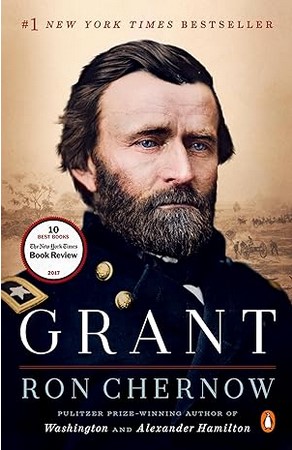
Grant’s biographer, Ron Chernow, recounts: “Rawlin’s family history with alcohol abuse gave him a special insight into Grant’s drinking troubles, making it an all-consuming preoccupation. Before joining his staff, he extracted a pledge from Grant that he would not touch a drop of liquor until the war ended, and he would monitor this vow with Old Testament fervor, carrying on a lonely, one-man crusade to keep Grant sober.”
To a certain extent, Rawlins replaced Julia in the quest to keep him from demon rum. Chernow continues: “That Grant agreed to this deal shows his strong willingness to confront his drinking problem. The mission perfectly suited Rawlins’ zealous nature. With Grant’s consent, he laid down draconian rules to curb drinking, forbidding the open use of liquor at headquarters.”
Who was really the boss? Chernow notes: “Such was the influence of John Rawlins over Grant that some observers would later exaggerate or misinterpret the nature of his power, attributing to him the military acumen that properly belonged to Grant. He had excellent common sense and swiftly grasped the basic principles of warfare, especially the need to concentrate forces instead of spreading them too thinly.” But Grant was always the true military genius.[11]
GRANT SHOWS HE IS A FIGHTING GENERAL WHO WINS BATTLES
Ulysses S Grant believed in striking swiftly when the timing was right. He initially was prevented from attacking the Confederates by the overly cautious General Fremont, who had served as the Military General of California in the Mexican-American War. When Lincoln removed Fremont from command, Grant was free to attack and win the Battle of Belmont. When he proposed to General Halleck in Washington, DC, a plan to attack Fort Henry on the Tennessee River, a tributary of the Mississippi, Halleck initially rebuffed him, but relented after General McClellan approved the plan. Grant first captured Fort Henry, and then the more heavily defended Fort Donelson, capturing a Confederate Army of 12,000, the first major Union victory of the war, earning a promotion by Lincoln to Major General.[12]
Control of the Mississippi River basin was a key part of the Anaconda Plan: If the gunboats of the Union Army could control this mighty river, the Confederacy would be split in two, separating the men and resources of Texas from the other Confederate states.
Grant recounts that before the Battle of Belmont, the twenty-thousand soldiers under his command were “under good drill and ready to meet any equal body of men who, like themselves, had not yet been in an engagement. They were growing impatient at lying idle so long, almost in hearing of the guns of the enemy they had volunteered to fight against.”
In the Battle of Belmont, his men came under fire for the first time in their lives while fighting among the timber in the marshy ground. Grant remembers that the battle was “growing fiercer and fiercer, for about four hours, the enemy being forced back gradually until he was driven into his camp. Early in this engagement, my horse was shot under me, but I got another from one of my staff and kept well up with the advance until the river was reached.”[13]
Unlike World War I, but like the Napoleonic Wars, in the Civil War the officers fought close to their men, as the communications technology was not sufficiently advanced that generals could direct the battle safely in the rear out of harm’s way.
Grant remembers that, on the Tennessee River, was “Fort Heiman and Fort Henry, and on the Cumberland River was Fort Donelson,” both tributaries of the Mississippi River. “At these points, the two rivers approached within eleven miles of each other.” “These positions were of immense importance to the enemy, and of course correspondingly important for us.” “Fort Donelson was the gateway to Nashville, Tennessee, a place of great military and political importance, and to a rich country extending far east in Kentucky.”
The Confederates abandoned Fort Heiman and evacuated most of their men from Fort Henry to Fort Donelson, leaving only about a hundred soldiers to man the guns to cover their withdrawal.[14]
Grant recalls, “I was very impatient to get to Fort Donelson because I knew the importance of the place to the enemy and supposed he would reinforce it rapidly. I felt that fifteen thousand men on the 8th would be more effective than fifty thousand men a month later.”
Fort Donelson was attacked by gunboats and by soldiers on land, and both sides suffered losses in several days of fighting. We will not worry about the details of the battle. Instead, we are interested in learning how Grant’s fighting spirit and his unflappable tactical sense helped win many battles.
Grant recalls: “Some of our men are pretty badly demoralized, but the enemy must be more so, for he has attempted to force his way out” of the fort, “but has fallen back: the one who attacks first now will be victorious and the enemy will have to be in a hurry if he gets ahead of me.” “I was determined to make the assault at once on our left.”[15]
Grant had caught Lincoln’s eye as a general who was a fighter who could confront the Confederates and win. But his decisive victories upstaged both General George McClellan and General Halleck. Halleck accused Grant of insubordination, falsely accused him of drinking, and accused him of refusing to report his troop strength to headquarters. Grant protested that he was innocent, that he communicated his troop strength regularly as requested. However, it was later discovered that a rebel spy had not forwarded Grant’s telegrams to Halleck. Halleck, with McClellan’s approval, had Grant demoted and detained while his case was being investigated.
Grant objected, “This is no time for red tape! This is a time for war. Halleck has arrested me for a breach of red tape.” Secretary of War Stanton and Lincoln made sure that Grant was exonerated, released, and promptly restored to his command, reassigning McClellan and Halleck to other positions. They both now knew that Lincoln and Stanton would protect Grant from further humiliation.[16]
UNION ARMY RETREATS ON THE FIRST DAY OF THE BATTLE OF SHILOH
The Battle of Shiloh was another turning point early in the Civil War. Although it was a Union victory, the public was shocked at the number of casualties: out of 67,000 men, the Union Army suffered 13,000 casualties, including 1,700 deaths. Proportionally, the Confederate Army fared worse: out of 45,000 men, they suffered 11,000 casualties, also including about 1,700 dead. More soldiers died at the Battle of Shiloh than during the Revolutionary War, the War of 1812, and the Mexican-American War combined.
On the first day, the Confederates struck with an overly hasty offensive before Union Army reinforcements arrived. But Grant stayed cool, refusing to be discouraged. Realizing that the Confederate forces were overextended, he rallied his troops early the next day, pushing back and defeating the rebels.[17]
Grant, in his Memoirs, understates how the Confederates completely surprised the Union forces. Chernow notes: Union “soldiers narrated a different tale. At six on Sunday morning, April 6, rebel soldiers burst from the woods near Shiloh Church, whooping with demonic fury. Clad in Confederate gray or butternut brown, they surged forward in three neatly formed lines, hollering with raw gusto as their bands beat out ‘Dixie.’ Not until 8 AM” “did General Tecumseh Sherman fathom the magnitude of the attack.” But “he rose to the occasion in spectacular fashion and prepared his entire division to meet the enemy.”
Chernow continues: “That morning, Grant was enjoying an early breakfast when he detected the distant boom of cannon.” “He hastily arose, saying to his staff officers, ‘Gentlemen, the ball is in motion; let us be off.’” But order broke down among the “rebel soldiers who stormed into abandoned Union camps and stopped to plunder booty, botching their advantage.”[18]
Why was the Union Army unprepared for the Confederate surprise attack on the first day of the Battle of Shiloh? The weeks Grant spent detained in the brig were weeks he was not preparing his soldiers for battle. There were reports of unusual Confederate activity, so perhaps Grant had grown over-confident after his early victories capturing Fort Henry and Fort Donelson.
Dr Wikipedia cites other biographers who state that Grant had wanted to attack the Confederate forces earlier, but that General Halleck ordered him to wait until General Buell’s forces arrived as reinforcements. Two of these biographers are listed in Chernow’s biography; perhaps he demurs in this detail.[19]
On the first day of the battle, Grant suffered a painful injury. Grant remembers, “I was very much injured by my horse falling with me, and on me, while I was trying to get to the front where firing had been heard. The night was one of impenetrable darkness, with rain pouring down in torrents; nothing was visible to the eye except as revealed by the frequent flashes of lightning.” “On the way back to the boat, my horse’s feet slipped from under him, and he fell with my leg under his body. The extreme softness of the ground, from the excessive rains of the few preceding days, no doubt saved me from severe injury and protracted lameness. As it was, my ankle was very much injured, so much so that my boot had to be cut off. For two or three days after, I was unable to walk except with crutches.”
On that first day, the flanks of the Union Army were guarded by overflowing creeks. This, Grant recalls that the Confederate “enemy was compelled to attack directly in front. This he did with great vigor, inflicting heavy losses on the National side, but suffering much heavier on his own. The Confederate assaults were made with such a disregard of losses on their side that our line of tents soon fell into their hands.” “Many efforts were made by the enemy to turn our right flank, where Sherman was posted, but every effort was repulsed with heavy loss.” “When the firing ceased at night, the National line was all of a mile in rear of the position that they had occupied in the morning.”
Grant kept his cool under fire and temporary reverses. He recalls: “There was no hour during the day when there was not heavy firing and generally hard fighting at some point on the line, but seldom at all points at the same time. It was a case of Southern dash against Northern pluck and endurance.” The whole first day he “continually passed from one part of the field to another, giving directions to division commanders,” knowing that he need not stay long to direct his trusty associate General Sherman.
General Sherman also suffered wounds: he “was shot twice, once in the hand, once in the shoulder, the ball cutting his coat and making a slight wound, and a third ball passed through his hat. In addition, he had several of his horses shot during the day.”
But on the Confederate side, General Albert Sidney Johnson lost his life that first day, prompting his second-in-command, PGT Beauregard, to assume command of the Confederate forces. This surely affected Confederate morale, as the Confederate leadership and common soldiers pinned great hopes on the abilities of this inspirational Southern general.
Grant remembered: “Three of the five divisions engaged on the first day were entirely raw, and many of the men had only recently received their arms,” and scarcely knew how to use them. “Their officers were equally ignorant of their duties. Under these circumstances, it is not astonishing that many of the regiments broke at the first fire.” Grant knew that many of those “who fled panic-stricken at the first whistle of bullets and shells at Shiloh” would prove themselves in later battles. Many of those who fled had only recently learned how to shoot their rifles.
How did Grant deal with those soldiers who fled the field? He recalls: “The nature of this battle was such that cavalry could not be used in front; I therefore formed ours into line in the rear, to stop stragglers, of whom there were many. When there would be enough of them to make a show, and after they had recovered from their fright, they would be sent to reinforce some part of the line which needed support, without regard to their companies, regiments, or brigades.”
REPELLING THE CONFEDERATES ON THE SECOND DAY OF THE BATTLE OF SHILOH
Not only was General Grant cool under fire amidst battle, but he also had an uncanny ability to read the true state of the battlefield. After the fighting on the first day, General Wallace arrived with five thousand fresh troops, in addition to the arrival of General Buell’s troops during the first day’s fighting. Grant senses that while the Confederate forces were overextended, his Union forces were “nearly doubled in numbers and efficiency.”
Grant remembers: “So confident was I before firing had ceased that first day that the next day would bring victory to our arms if we could only take the initiative, that I visited each division commander in person before any reinforcement had reached the field. I directed them to throw out heavy lines of skirmishers in the morning as soon as they could see, and push them forward until they found the enemy, following with their entire divisions in supporting distance, and to engage the enemy as soon as found.”
But that night was a miserable night. The only consolation was that both armies were exposed to the horrible weather. Grant remembers, “During the night, rain fell in torrents and our troops were exposed to the storm without shelter. I made my headquarters under a tree.” “My ankle was so much swollen” “and painful that I could get no rest.”
He tried to get some sleep in a log-house used as a hospital. Grant remembers: “All night, wounded men were being brought in, their wounds dressed, a leg or an arm amputated as the case might require, and everything being done to save life or alleviate suffering. The sight was more unendurable than encountering the enemy’s fire, so I returned to my tree in the rain.”
During the night, Grant remembers that the Confederates “fell back so far to get the shelter of our tents during the rain, and also to get away from the shells that were dropped upon them by the Union gunboats every fifteen minutes during the night,” which was a deadly precipitation the Union armies did not have to face.
Soon after 4 AM the next morning, each of the Union armies formed on the long Union line. Because of his bum ankle, Grant had to be lifted onto his horse. Morale soared among the Union forces, as Grant’s optimism had infected his entire army as they fought and slogged through another rainy day. Grant proudly recalls: “On this second day, everything was favorable to the Union side. We had now become the attacking party. The enemy was driven back all day, as we had the day before, until finally he beat a precipitate retreat,” all the way to where the battle had started the previous day.[20] Grant led his army in pursuit, making sure that their advance was neither too rapid nor too timid.
AFTER THE BATTLE OF SHILOH
After the end of the battle, Grant remembers: “After the rain of the night before and the frequent and heavy rains for some days previous, the roads were almost impassable. The enemy, carrying his artillery and supply train over them in his retreat, made them still worse for the troops following. I wanted to pursue, but had not the heart to order the men who had fought desperately for two days, lying in the mud and rain whenever not fighting, to pursue.”
Why was Lincoln not angry at Grant for not pursuing the enemy to destroy them? Perhaps because this was in the Western theater of war, which meant there were fewer war correspondents filing reports than in the East. Maybe Lincoln did not realize that Grant abandoned the pursuit. All the same, this victory proved that Grant performed well under pressure, did not allow temporary reverses to discourage him, and was aggressive on the battlefield, bringing the fight to the enemy. Grant and Sherman were truly generals who could fight and win.
Grant recalls: “Shiloh was the severest battle fought in the West during the war.” “I saw an open field, in our possession on the second day, over which the Confederates had made repeated charges the day before, so covered with dead that it would have been possible to walk across the clearing, in any direction, stepping on dead bodies, without a foot touching the ground.” On the edge of the fields, bushes ten feet high were pierced by bullets, “the smaller bushes were all cut down.”[21]
LESSONS LEARNED FROM THE BATTLE OF SHILOH
Chernow recounts: “Before Shiloh, Grant had nursed hopes for a titanic battle that would triumphantly crush the rebellion. Now, stunned by the combative spirit of his foes, he knew there would be many more bloodbaths in a long, grinding war of attrition. This began a conversion to a theory of total warfare in which all of southern society would have to be defeated.”
Chernow continues: “For Grant, Shiloh represented a personal victory. He had rescued his army from his own errors, showing a gumption and an audacity that altered the battle’s course. He had shown coolness under fire and a willingness to take monumental gambles. The battle also instilled lasting confidence in the Army of the Tennessee, shattering anew the fighting mystique of rebel soldiers.”[22]
SUCCEEDING REFLECTIONS ON THE LIFE OF ULYSSES S GRANT
General Grant showed the same resourcefulness, tactical genius, and bravery when, on July 4th, 1863, he captured and defeated a large Confederate Army at Vicksburg, giving the Union control over the entire Mississippi River, cutting the Confederacy in two. On that same day, General Meade defeated Robert E Lee at the bloody Battle of Gettysburg. After some months, Grant was promoted to lead all the Union armies, leading to the victory and the Confederate surrender at Appomattox.
Siege of Vicksburg: Ordinary Union Soldiers and Generals Grant and Sherman Recount the Struggle
https://seekingvirtueandwisdom.com/siege-of-vicksburg-ordinary-union-soldiers-and-generals-grant-and-sherman-recount-the-struggle/
https://youtu.be/U6KNO6IkVQs
Gettysburg: Ordinary Soldiers and Generals Pickett and Longstreet Remember the Bloody Charges
https://seekingvirtueandwisdom.com/gettysburg-ordinary-soldiers-and-generals-pickett-and-longstreet-remember-the-bloody-charges/
https://youtu.be/ibTm3l-C8VQ
Robert E Lee Surrendering to Grant at Appomattox, Ending the American Civil War
https://seekingvirtueandwisdom.com/surrender-at-appomattox-courthouse-ending-the-american-civil-war/
https://youtu.be/_Dr7qia6XkQ
Although I was not planning to reflect on the battles of the Civil War, I changed my mind when I discovered how many paintings and lithograph prints were made of the battles and soldiers of the Civil War. However, we were more interested in the politics and consequences of the war than the tactics of each individual battle.
Civil War Through Paintings
https://youtu.be/2hoBOSOBUP8
After the Civil War, the Union Army once again posted soldiers on the Texas border, but this time the United States was guarding the independence of Mexico against the meddling of France and an Austrian Prince.
The South was unrepentant: few Southerners respected the civil rights of and due process under the law for the newly freed black slaves. The Northern Congressmen put the South under military rule, and Union soldiers guaranteed the civil rights of the freed black slaves. Murders and crimes that could not be prosecuted in local Southern courts were tried in federal courts. But, after the Panic of 1873, a deep five-year economic depression sapped Northern patience. Popular opinion turned against perpetually stationing federal troops in the Southern states to enforce the civil rights laws.
General Grant’s Memoirs, Civil War Diplomacy, Post-War Events in Mexico and Santo Domingo
https://seekingvirtueandwisdom.com/general-grants-memoirs-civil-war-diplomacy-post-war-events-in-mexico-and-santo-domingo/
https://youtu.be/14xYWgYmb10
General Grant Supporting Civil Rights and Reconstruction After the Civil War, and His Conflicts with Andrew Johnson
https://seekingvirtueandwisdom.com/general-grant-supporting-civil-rights-and-reconstruction-after-the-civil-war-and-his-conflicts-with-andrew-johnson/
https://youtu.be/9OJnW4hAizI
President Ulysses S Grant, First Term, Defeating the KKK, Fighting for Civil Rights
https://seekingvirtueandwisdom.com/president-ulysses-s-grant-first-term-battling-the-kkk-fighting-for-civil-rights/
https://youtu.be/-Ta7nzfdAmw
President Ulysses S Grant, Panic of 1873, White Supremacy Triumphs, and Gilded Age Corruption During his Second Term
https://seekingvirtueandwisdom.com/president-ulysses-s-grant-white-supremacy-triumphs-and-gilded-age-corruption-during-his-second-term/
https://youtu.be/vJb4VlkZrqI
We also reflected on Grant’s Indian policies and Custer’s defeat at the Battle of Little Big Horn at the end of his second term.
The Presidential Election of 1876 was contested, the white supremacist Democratic Party intimidated colored voters and nearly stole the election. Under the Compromise of 1877, the Republican Presidential Candidate was chosen by the Electoral College, and in exchange federal troops were withdrawn from the former Confederate states. The Reconstruction Era ended, and the Jim Crow and Redemption Era began, leading to the stripping away of most civil rights for blacks in the South.
President Ulysses Grant’s Indian Policy, and Custer’s Defeat at the Battle of Little Bighorn
https://wp.me/pachSU-1hN
https://seekingvirtueandwisdom.com/president-grants-indian-policy-and-custers-battle-of-little-bighorn/
https://youtu.be/e3o94piy3rQ
After Grant: Southern Redemption and Jim Crow, Reconstruction Ends after Contested 1876 Election
https://seekingvirtueandwisdom.com/redemption-era-of-jim-crow-reconstruction-ends-after-contested-1876-election/
https://youtu.be/fal-lg4pUrw
1876 Contested Presidential Election: Precedent for January 6th Fake Elector Scheme?
https://seekingvirtueandwisdom.com/1876-contested-presidential-election-precedent-for-january-6th-elector-scheme/
https://youtu.be/Ny0iyVYatB4
[1] Ron Chernow, Grant (New York: Penguin Books, 2017), Chapter 7, The Quiet Man, p. 133.
[1] https://en.wikipedia.org/wiki/Ulysses_S._Grant
[2] https://en.wikipedia.org/wiki/Ulysses_S._Grant
[3] https://en.wikipedia.org/wiki/James_K._Polk
[4] https://en.wikipedia.org/wiki/Zachary_Taylor
[5] https://en.wikipedia.org/wiki/Millard_Fillmore
[6] https://en.wikipedia.org/wiki/James_Buchanan and https://en.wikipedia.org/wiki/1856_United_States_presidential_election
[7] https://en.wikipedia.org/wiki/1860_United_States_presidential_election and https://en.wikipedia.org/wiki/Abraham_Lincoln
[8] https://en.wikipedia.org/wiki/James_Buchanan
[9] https://en.wikipedia.org/wiki/James_Buchanan and https://en.wikipedia.org/wiki/Abraham_Lincoln
[10] The Personal Memoirs of Ulysses S Grant (Cambridge, Massachusetts: Belknap Press of Harvard University Press, 2017, 1885), Chapter 16, Resignation, Private Life, The Coming Crisis, pp. 149-152.
[11] Ron Chernow, Grant, Chapter 7, The Quiet Man, pp. 141-152.
[12] https://en.wikipedia.org/wiki/Ulysses_S._Grant
[13] The Personal Memoirs of Ulysses S Grant, Chapter 20, General Fremont in Command, Battle of Belmont, pp. 190-193.
[14] The Personal Memoirs of Ulysses S Grant, Chapter 21, General Halleck in Command, Capture of Fort Henry, pp. 199-205.
[15] The Personal Memoirs of Ulysses S Grant, Chapter 22, Investment of Fort Donelson, Surrender of the Fort, pp. 208-213.
[16] Ron Chernow, Grant, Chapter 9, Dynamo, pp. 189-194.
[17] https://en.wikipedia.org/wiki/Battle_of_Shiloh and Ron Chernow, Grant, Chapter 10, A Glittering Lie, p. 206.
[18] Ron Chernow, Grant, Chapter 10, A Glittering Lie, pp. 199-200.
[19] https://en.wikipedia.org/wiki/Ulysses_S._Grant footnote 118, citing McFeely 1981, pp. 111–112; Groom 2012, p. 63; White 2016, p. 211. McFeely and White are both mentioned in Chernow’s biography.
[20] The Personal Memoirs of Ulysses S Grant, Chapter 24, Confederate Attack at Shiloh, Retreat and Defeat of the Confederates, pp. 228-239.
[21] The Personal Memoirs of Ulysses S Grant, Chapter 25, Retreat of the Confederates, Remarks on Shiloh, pp. 241-243.
[22] Ron Chernow, Grant, Chapter 10, A Glittering Lie, p. 207.

Be the first to comment