Protestantism, Catholicism, Orthodoxy, and Judaism: Which Is True
christianity

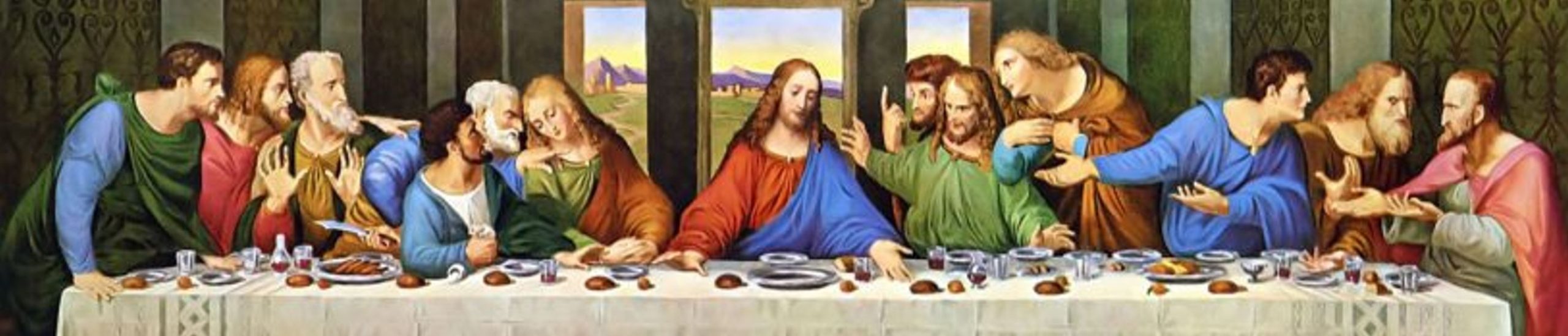
Protestantism, Catholicism, Orthodoxy, and Judaism: Which Is True?

We agree with CS Lewis when, in his Preface to Mere Christianity, he states that “the reader should be warned that I offer no help to anyone who is hesitating between two Christian denominations. You will not learn from me whether you ought to become an Anglican, a Methodist, a Presbyterian, or a Roman Catholic.” CS Lewis compares his Mere Christianity to a central hall opening up to many rooms, representative of the various denominations, saying that this hall is a place to wait while you try the different doors.
CS Lewis continues: “There is no mystery of my own position. I am a very ordinary layman of the Church of England, not especially high, nor especially low, nor especially anything else.” […]

Homosexuality, the Bible, and the Church: The Zondervan Debates
christianity

Homosexuality, the Bible, and the Church: The Zondervan Debates

For better or worse, most of us choose our intimate partners, and build our world around that choice. If a homosexual couple is accepted by the clergy of your church, what good can come from telling them they are going to burn in hell if they do not repent? We are only responsible for our own personal salvation, it is not our job, particularly if we are laymen, to speculate on whether our neighbor will be saved. That is between them and Jesus, and nobody else.
My goal is not to change your mind about homosexuality. My goal is: If you do not accept that it is possible to be both a Christian and homosexual, that you will refrain from telling them they are damned to burn in hell, but would instead refer them to an Episcopalian Church, or other church where they would be welcome.
Jesus will judge us all in front of the great IMAX theater in the sky, where we will need to account for the decisions we made in our lives as they are displayed on that screen forty feet wide and forty feet tall. Jesus is the judge; we should not seek to do his job. Instead, we work out our own salvation, judging our own actions rather than our neighbors’. […]

Plato’s Republic, Book 1, Reflecting on Old Age, Morality, and Justice
Aging

Plato’s Republic, Book 1, On Aging and Morality, a Better Word for Justice

Reading Robin Waterfield’s translation was like breathing fresh alpine air. When I thought that Plato’s Republic was about justice, I reasoned that this was because Socrates sought to train Athenians to be better citizens in a direct democracy, a skill that would not be needed in the later totalitarian Roman Empire. But Robin Waterfield’s translation of the Republic makes more sense and is more in line with Stoic and Christian moral values. I demur from the conventional scholarly opinion that who the translator is does not matter. […]

Paul Tournier, Christian Psychologist on Marriage and Widows in Old Age and Retirement
Aging

Paul Tournier, Christian Psychologist on Marriage and Widows in Old Age and Retirement

What is the ideal, according to Paul Tournier? “Growing old together, husband and wife can come to know a love which is, in a way, a prefiguration of heaven, for it is less tumultuous than the love of youth, being less directed towards selfish pleasure-seeking, and because a slow advance in mutual comprehension permits more authentic communication.” […]

Joys of Successful Aging, by Evangelical George Sweeting, Moody Bible Institute
Aging

Joys of Successful Aging, by Evangelical George Sweeting, Moody Bible Institute

George Sweeting writes: “Age adds maturity and richness to life. Age smooths the rough edges of life and adds gentleness and compassion. They say: ‘The older the violin, the sweeter the music.’ Some speak of seniors as ancient, faded, frail, shriveled, senile, withered, wrinkled, and worthless!” I prefer to say seniors are “experienced, dependable, mature, patient, seasoned, steady, wise, tested, survivor, and veteran!” […]

Opposing Suicide: According to the Bible, Catholic Catechism, and St Augustine’s City of God
Command 6 Do Not Murder

Opposing Suicide: Biblical Exhortations, Catholic Catechism, and St Augustine’s City of God

CCC 2281. “Suicide contradicts the natural inclination of the human being to preserve and perpetuate his life. It is gravely contrary to the just love of self. It likewise offends love of neighbor because it unjustly breaks the ties of solidarity with family, nation, and other human societies to which we continue to have obligations. Suicide is contrary to love for the living God.” […]

Why Are Dementia Patients Who Wander So Drawn to Water? Why Do They Drown?
Dementia and Alzheimers Disease

Why Are Wandering Dementia Patients Drawn to Water? Why Do They Drown?

The biggest objection property managers and association boards raised against performing health and wellness checks on their owners and residents is they are not nursing homes: they do not want to be held responsible for the welfare of their owners and residents. But even if they wanted to, they cannot take on the responsibility of care. Instead, they should call the police and request that they conduct a health and wellness check. They should inform the police about the possible foreclosure of a dementia patient, as this will better enable them to receive any care they may need. Any known family members must also be informed.
Alternatively, or additionally, they can request that the Broward County Council of Aging, or an appropriate local agency, refer the case to a professional. The Alzheimer’s Association 24/7 support hotline at 800-272-3900 is also an excellent resource. […]

The Decalogue in the Torah and the Book of Legends, Do Not Steal
Command 7 Do Not Steal

The Decalogue in the Torah and the Book of Legends, Do Not Steal

The rabbis in the Book of Legends, which are moral excerpts from the Talmud, teach that there are four kinds of men:
The average man, like those in Sodom, who says, “Mine is mine, and your is yours.”
The ignorant man who says, “Mine is yours, and yours is mine.”
The pious man who says, “Mine is yours, and yours is yours.”
The wicked man who says, “Yours is mine, and mine is mine.” […]

Epictetus, Eminent Roman Stoic Philosopher, on Living Well, Dying Well, and Opposing Suicide
Aging

Epictetus, Eminent Roman Stoic Philosopher, on Living Well, Dying Well, and Opposing Suicide

Is it wise to complain? Epictetus observes: “If someone dies young, he blames the gods because he is being taken before his time. If someone lingers on into extreme old age, he too blames the gods.” “Despite this, at the approach of death, he wants to stay alive; he sends for the doctors and begs him to do all he can.” “It is quite remarkable to see how people want neither to live nor to die.”
“Is health good and illness bad? No, man. What, then? Health managed well is good, but when badly managed, it is bad.”
Epictetus points out: “If you look at yourself in isolation, it is natural for you to live to an old age, to be rich, to be healthy. But if you look at yourself as a human being and as part of some whole, for the sake of that whole, it may be appropriate for you to be ill, or risk your life at sea, or be poor, or die young. Why get angry then?” “What is a human being? A part of a city made up of gods and human beings,” “a small copy of the universal city.” […]

Doris Day, Que Sera Sera, Que Sepa Sepa
Aging

Doris Day, Everyone’s Girl Next Door: Que Será, Será? Que Sepa, Sepa?

Doris Kappelhoff was born in 1922, she was both a leading movie star and singer from the 1940’s through the early 1960’s, when many movies were musicals. In her youth she was hoping to be a dancer, but when she broke her leg when the car she was riding in collided with a freight train, she instead became a singer. She started singing in the hospital out of boredom, and since her voice was so clear her mother enrolled her in voice lessons.
In the late thirties Doris began her career as a big band singer, recording more than six hundred songs. Early in her career she adopted the stage name of Doris Day, inspired by the song Day After Day, as her original surname was too long to fit on marquees. She made her film debut in 1948, starring in dozens of movies with many leading men of Hollywood, many of them romantic comedies, including Rock Hudson, Jimmy Stewart, Clark Gable, Ronald Reagan, Cary Grant, David Niven, and many others.
Her public persona was the virtuous girl next door, so she declined the leading role in the Graduate. In that movie, the role of the randy mother-in-law went to Ann Bancroft, who seduced her future son-in-law, Dustin Hoffman. What was not explored in the movie was what the family holiday dinners were like after he married her daughter. Doris Day was not willing to transition to the Free Love climate of the Sixties, which quickly ended her movie and recording careers. […]