

Roman Stoic Philosopher Seneca on Aging, Retirement, and Death
Aging

Roman Stoic Philosopher Seneca on Old Age and Retirement

Seneca faces old age and death as only a Stoic could. “Old age is a time of life that is weary rather than crushed.” Nevertheless, I am thankful, “for age has not damaged my mind, though I feel its effects on my constitution. Only my vices” “have reached senility; my mind is strong,” “it is alert,” “it declares that old age is when it blooms.” “My mind bids me to consider how much this peace of mind and moderation of character I owe to wisdom and how much to my time of life; it bids me to distinguish carefully what I cannot do and what I do not want to do.” “There is only one chain that binds us to life, and that is the love of life.” […]
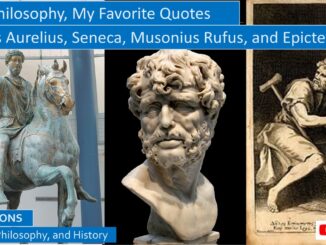
Major Roman Stoic Philosophers, My Favorite Maxims: Epictetus, Rufus, Seneca & Marcus Aurelius
Philosophy

Major Roman Stoic Philosophers, My Favorite Maxims: Epictetus, Rufus, Seneca & Marcus Aurelius

Many of the writings of the Stoics sound like passages from the Pauline Epistles. Indeed, Seneca was a contemporary of St Paul. There are epistles written between them, though nearly all scholars think they are spurious. Was St Paul inspired by the Stoic writings of Seneca? Although the Jewish rabbinic tradition was the primary source of inspiration for the Epistles and the Gospels, stoicism was an important secondary influence. In particular, stoicism deeply influenced the desert monastic tradition, which in turn influenced medieval monasticism. […]

Prayer of St Franics and Brother Giles SMALL
Lives of Saints

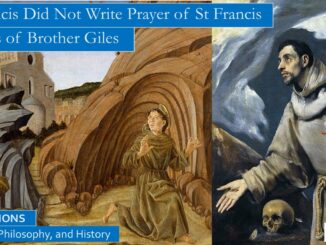
Who Was the Author of the Prayer of St Francis? Sayings of Brother Giles

We can say definitely that the Prayer of St Francis was not actually written by St Francis, it first appeared in the December 1912 issue of the French Catholic publication, La Clochette. Quite likely it was penned by the founding editor, Father Esther Bouquerel. Around 1918, it was printed without attribution on the back side of a holy card with a painting of St Francis. Someone then reprinted it in an English translation in 1927, innocently misattributing it to St Francis. Archbishop Francis Spellman printed millions of copies of the prayer during World War II, and it was read into the Congressional Record. […]