Roman Emperors before Marcus Aurelius
Greek and Roman History

Roman Emperors Before Marcus Aurelius

Hadrian’s peace policy was controversial, he abandoned Trajan’s conquests in Dacian Romania and Parthian Persia to concentrate on consolidating the Roman Empire. The problem was that the Roman Empire needed continual expansion, including war booty and slaves, to fund the empire and feed the growing populace of Rome. This policy certainly did not prevent future conflict with Parthian Persia.
Historians debate whether Hadrian’s defensive posture was wise. Were there prosperous provinces left to conquer on the frontiers? On the other hand, the successful expansion of the empire by the Byzantine Emperor Justinian several centuries later nearly bankrupted his Empire. […]
Ordinary Life for Romans Under Stoic Emperor Marcus Aurelius
History

Ordinary Life for Romans Under Stoic Emperor Marcus Aurelius

Professor Aldrete in his Wondrium lecture on the History of the Ancient World points out that the ancient historians and sources are silent on what life was like for the many farmers who labored in obscurity, that these ancient histories are really histories of political leaders and city dwellers. For every person who lived in the city in much of the ancient world, eight or nine lived on a family farm. The ratio differed around Rome, about a quarter of the people nearby lived in the city. Most people never traveled more than twenty miles from home, never saw a king, never read a book, or heard a philosopher speak. Most people living on farms did not even know the name of the Roman Emperor, and life went on as before no matter who was emperor. […]

Xenophon’s Cyropaedia, Moral Sayings of Cyrus the Great, King of Persia
Greek Philosophy

Xenophon’s Cyropaedia, Moral Sayings of Cyrus the Great, King of Persia

Was Xenophon’s Cyrus the source of Benjamin Franklin’s response to the question of what sort of government the delegates of the Constitutional Convention had created: “A republic, if you can keep it.” Xenophon’s Cyrus the Great observes, “It is a great work to found an empire, but a far greater work to keep it. To seize it may the fruit of daring and daring only, but to hold it is impossible without self-restraint and self-command and endless care.” […]

Biblical Interpretation

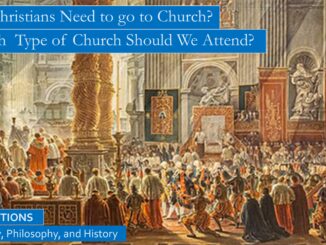
Do Christians Need To Go To Church? Which Type of Church Should You Attend?

St Augustine’s memorable reflection on our question appear in his Confessions, which is really one of the first testimonials. St Augustine tells us the story of Victorinus, a philosopher who studies the Gospels and the Church Fathers but declines to attend services, asking “Do the walls of the Church make you a Christian?” Victorinus was a learned man, an erudite pagan Platonic philosopher, the Word of the Lord spoke directly to him from the page, perhaps he felt intellectually superior to many simple Christians he knew.

In the words of St Augustine, in his studies Victorinus became “resolute, he was seized by the fear that Christ might deny him before the holy angels if he was too faint-hearted to acknowledge Christ before men, and he felt himself guilty of a great crime in being ashamed of the sacraments instituted by the Word of God in his lowly state.” […]

Facism

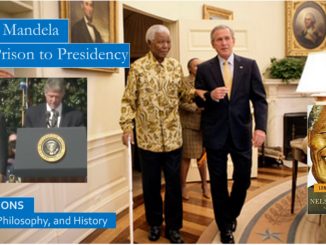
Mandela Talking with the Enemy and Freedom, Blog 4

This chapter Mandela titles “Talking with the enemy.” Indeed, the ruling National Party was starting to realize that majority rule was inevitable. They were coming under increasing political and financial pressure, new sanctions were imposed by the UN, US, and other countries, more companies closed their operations in South Africa, banks and investors decreased their holdings in the country, ANC acts of sabotage increased, protests and riots and bloodshed on both sides kept increasing, the days of apartheid were numbered. […]

Facism

Mandela, Decades Spent In Prison, blog 3

Prison made Mandela a living martyr. Mandela had the good fortune to be the first military director of the ANC just as it started its campaign of sabotage, which meant he was that rarest of generals, the general who had no blood on his hands. His blood free hands allowed him to successfully make the transition to majority rule after apartheid was abandoned.
Mandela was a stoic. He echoes Epictetus when he writes, “prison and the authorities conspire to rob each man of his dignity. No man or institution can rob me of my dignity because I refuse to part with it for any price or pressure. I never seriously considered the possibility that I would not emerge from prison one day.” […]

Morality

Philokalia, On the Character of Men and the Virtuous Life

What is our most precious possession? “A virtuous way of life, conforming to God’s will, surpasses all wealth. When you reflect on this and keep in your mind constantly, you will not grumble, whine or blame anyone, but will thank God for everything, seeing that those who rely on repute and riches are worse off than yourself.”(4) “The more frugal a man’s life, the happier he is, for he is not troubled by a host of cares.” We should seek the prosperity that fills our soul rather than our pocket, for chasing after new cars and castles and country clubs will only add to the cares of this world. Should we pray to God to fill our pockets, and should we complain to God when our pockets are not filled, complaining how our prayers are never answered? Should our prayers be a shopping list we hand to God? Thieves can steal our wealth, but never our virtue. Here the Philokalia teaches that we should never consider it a loss when we lose our children, our money, or our possessions, but be thankful for all the God has loaned to us for our use, realizing it could be taken away at any time. […]

Philosophy

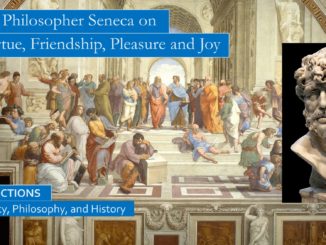
Seneca, Moral Epistles, Blog 7, Precious Stoic Nuggets of Wisdom

Seneca tells us that “we Stoics believe that pleasure is a vice.” Like the Church Fathers, Seneca reminds us that we need to overcome many years past of bad habits with many future years of living a godly life. “We are fettered and weakened by many vices; we have wallowed in them for a long time and it is hard for us to be cleansed.”
Seneca asks, “Why does folly hold us with such an insistent grasp? Primarily because we do not combat our vices strongly enough, we do not struggle towards salvation with all our might, we do not trust and drink in the words of the wise with open hearts,” we are not serious in our struggle against our vices, our efforts at living a godly life are but trifles. […]

Philosophy

Seneca, Moral Epistles, Blog 6, Stoicism and the Golden Rule

Seneca warns us not “to trust the countenances of those whom we meet.” Men may appear to be kind smiling kind in their appearances but often men possess souls of brutal beasts in their hearts. The difference is beasts may attack you when they first encounter you from fear or hunger, but once your paths depart beasts will usually not pursue you further. Men, however, scheme and often delight in destroying one another, making each other’s lives miserable. […]

Philosophy

Seneca, Stoic Philosopher, Moral Epistles, Blog 5, On the Benefits of Friends and Keeping Score

Seneca says, “Let us avoid being ungrateful, not for the sake of others but for our own sakes.” Likewise, Seneca warns, “evil drinks the largest portion of her own poison.” “When we do wrong, only the least portion flows back upon our neighbor, the worst and densest portion blows back, troubling us instead.” “The ungrateful man tortures and torments himself; he hates his gifts for he must return the favor, he tries to belittle their value, but when he does this he hurts himself instead. What is more wretched than the man who forgets his benefits and clings to his injuries?” […]