Homosexuality, the Bible, and the Church: The Zondervan Debates
christianity

Homosexuality, the Bible, and the Church: The Zondervan Debates

For better or worse, most of us choose our intimate partners, and build our world around that choice. If a homosexual couple is accepted by the clergy of your church, what good can come from telling them they are going to burn in hell if they do not repent? We are only responsible for our own personal salvation, it is not our job, particularly if we are laymen, to speculate on whether our neighbor will be saved. That is between them and Jesus, and nobody else.
My goal is not to change your mind about homosexuality. My goal is: If you do not accept that it is possible to be both a Christian and homosexual, that you will refrain from telling them they are damned to burn in hell, but would instead refer them to an Episcopalian Church, or other church where they would be welcome.
Jesus will judge us all in front of the great IMAX theater in the sky, where we will need to account for the decisions we made in our lives as they are displayed on that screen forty feet wide and forty feet tall. Jesus is the judge; we should not seek to do his job. Instead, we work out our own salvation, judging our own actions rather than our neighbors’. […]
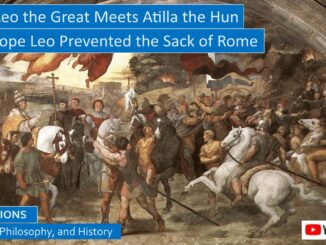
Pope Leo the Great, Confronting Attila the Hun, and His Role in Fourth Ecumenical Council of Chalcedon
Catholic Middle Ages and Beyond

Pope Leo the Great, Confronting Attila the Hun, and His Role in the Fourth Ecumenical Council of Chalcedon

As Pope Benedict XVI writes: “The times in which Pope Leo lived were very difficult: constant barbarian invasions, the gradual weakening of imperial authority in the West, and the long, drawn-out social crisis forced the Bishop of Rome” “to play an important role in both civil and political events.”
“In a period of profound crisis, Leo the Great knew how to make himself close to the people and the faithful with his pastoral action and his preaching. He enlivened charity in a Rome tried by famines, an influx of refugees, injustice, and poverty. He opposed pagan superstitions and actions of Manichaean groups. He associated the liturgy with the daily life of Christians.” […]

Roman Stoic Philosopher Cicero on Aging and Death
Philosophy

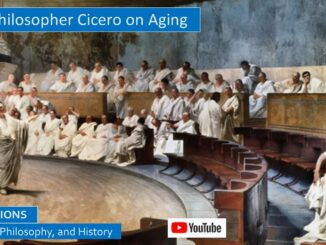
Roman Stoic Philosopher and Politician Cicero on Aging and Death

Cicero advises us: “Enjoy the blessing of strength while you have it, and have no regrets when it has gone, any more than young men should regret the end of boyhood, or those approaching middle age lament the passing of youth. Life’s course is invariable: nature has one path only, and you cannot travel along it more than once. Every stage of life has its own characteristics: boys are feeble, youths in their prime are aggressive, middle-aged men are dignified, while the elderly are mature. Each of these qualities is ordained by nature for harvesting in due season.”
Cicero continues: “Age must be overcome; its faults need vigilant resistance. We must combat them as we should fight a disease: following a fixed regime, exercising in moderation, and consuming enough food and drink to strengthen” but not too much. “The mind and spirit need even more attention than the body, for old age easily extinguishes them, like lamps” with too little oil. […]

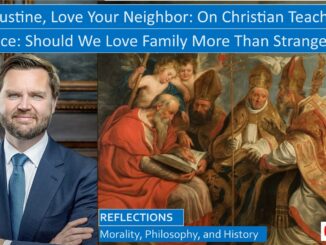
St Augustine’s On Christian Teaching and JD Vance, Order of Love
Politics

St Augustine’s On Christian Teaching and JD Vance, Order of Love

St Augustine clearly teaches us: “All people should be loved equally. But you cannot do good to all people equally, so you should take particular thought for those who, as if by lot, happen to be particularly close to you in terms of place, time, or any other circumstances.”
St Augustine explains further: “Suppose you have plenty of something which had to be given to someone in need but could not be given to two people, and you met two people,” you could flip a coin for who would receive it. But if one of them was a relative, Jesus would not object if you benefited him. In other words, if your children are starving, you need not share what little food you have with strangers.
Should we love everyone, even our enemies? Definitely, Christians are exhorted to love their enemies. As St Augustine teaches us: “We do not fear our enemies, for they do not take away from us what we love, but we pity them, for they hate us all the more because they are separated from the one we love,” since they are separated from God. […]

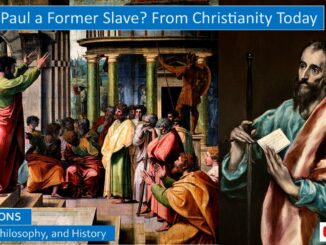
Was St Paul a Former Slave
Biblical Interpretation

Was St Paul a Former Slave? Were His Parents Enslaved by the Romans?

Our authors in Christianity Today note that several prominent Biblical scholars in past 150 years have speculated that Paul’s parents were enslaved, perhaps in “the uprising in 4 BC, when Varus, Roman governor of Syria, burned entire cities and crucified 2,000 people. In Galilean cities like Sepphoris, Josephus wrote in Antiquities of the Jews, ‘troops made its inhabitants slaves.’” Furthermore, in St Jerome’s commentary on Philemon, written around the end of the fourth century, likely using Origen’s commentary as a source, states St Paul’s parents were Gischala in Judea, and were among the Jews exiled to Tarsus by the Romans. A few centuries later, St Photius, the scholarly bishop of Constantinople, confirms this, adding that St Paul was born to enslaved parents in Tarsus. These ancient sources are highly regarded by modern scholars. […]

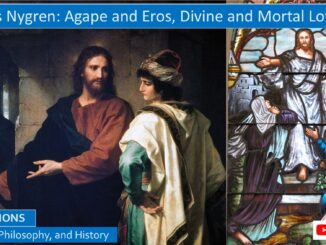
Anders Nygren, On Christian Agape-Love and Eros-Love in Gospels and Pauline Epistles
Biblical Interpretation

Anders Nygren, On Christian Agape-Love and Eros-Love in Gospels and Pauline Epistles

Anders Nygren emphasizes that “Old Testament piety with its devotion to the Law was by no means the external legalism it is often assumed to have been. There was an inward bond that held the godly man to the Law. The righteous felt no sense of external compulsion when confronted by the Law, but a sense of inner solidarity with it. Its observance gave him value and made him acceptable to God. His prevailing mood was expressed in Psalm 1,” the Psalm that sings of Law as Gospel. […]

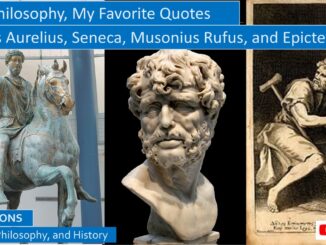
Major Roman Stoic Philosophers, My Favorite Maxims: Epictetus, Rufus, Seneca & Marcus Aurelius
Philosophy

Major Roman Stoic Philosophers, My Favorite Maxims: Epictetus, Rufus, Seneca & Marcus Aurelius

Many of the writings of the Stoics sound like passages from the Pauline Epistles. Indeed, Seneca was a contemporary of St Paul. There are epistles written between them, though nearly all scholars think they are spurious. Was St Paul inspired by the Stoic writings of Seneca? Although the Jewish rabbinic tradition was the primary source of inspiration for the Epistles and the Gospels, stoicism was an important secondary influence. In particular, stoicism deeply influenced the desert monastic tradition, which in turn influenced medieval monasticism. […]

Biblical Interpretation

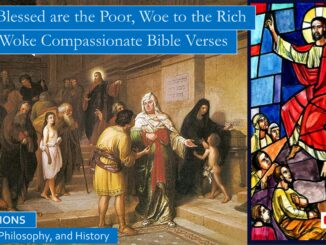
Blessed Are the Poor, Woe to the Rich, and Other Woke Compassionate Bible Verses

Among the Church Fathers, St Ambrose teaches us,
“Blessed are the poor. Not all the poor are blessed, for poverty is neutral. The poor can be either good or evil,” unless he is the blessed pauper described by Proverbs 19:22, “’A righteous poor man is better than a rich liar.’ Blessed is the poor man in whom the prince of this world finds nothing. Blessed is the poor man who is like that poor Man who, although he was rich, became poor for our sake,” […]

Evagrios the Solitary

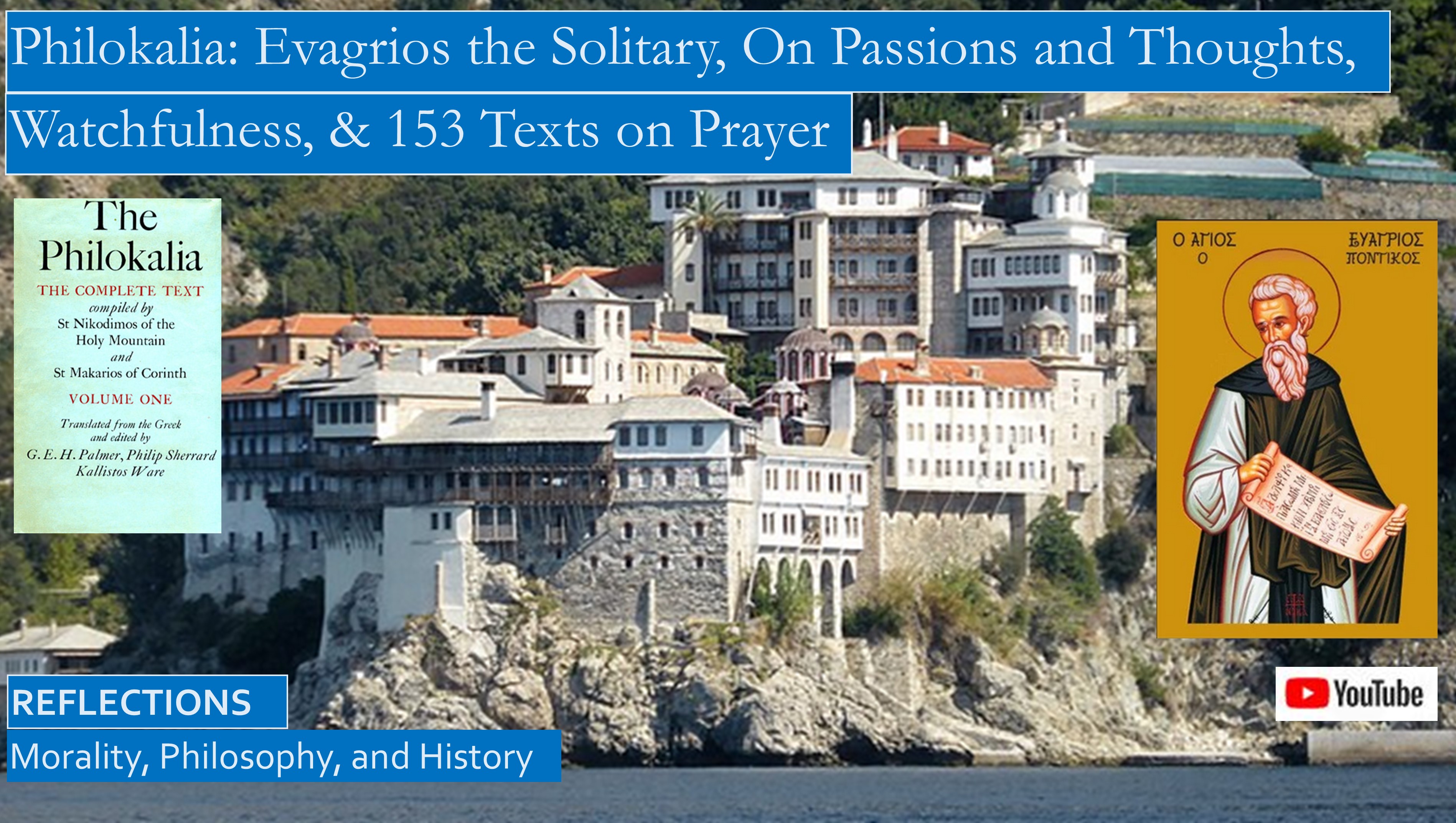
Evagrios the Solitary, 153 Texts On Prayer

Evagrios compares the persistence of prayer to the seven years of labor by Jacob to gain the hand of Rachel, his gazelle, for Jacob so loved Rachel that the seven years he labored for her hand seemed to him to be but a day. On his wedding night Leah, her sister, was substituted for Rachel, and Jacob labored yet another seven years for the hand of Rachel. […]