History

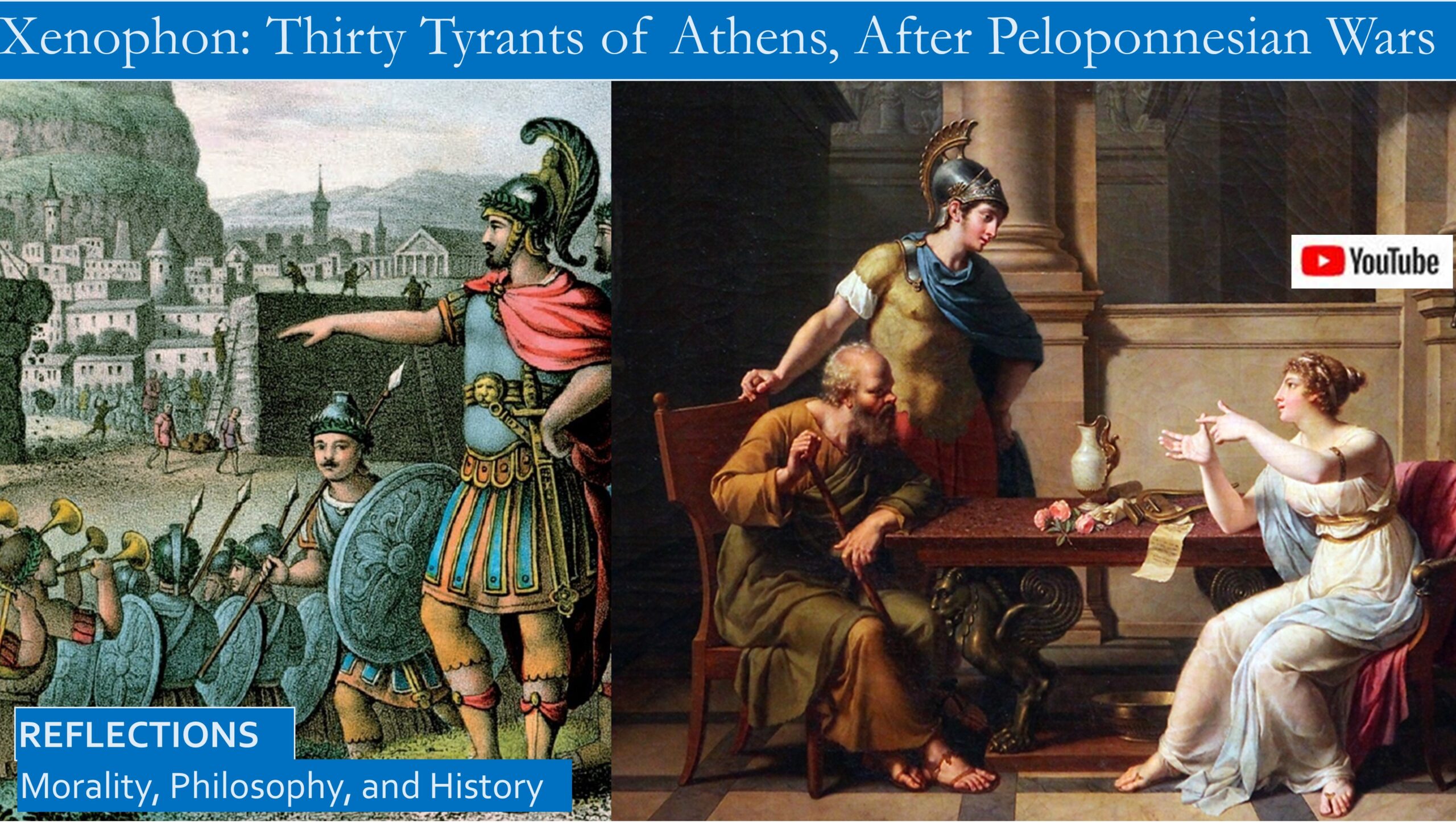
Thirty Tyrants Ruling Athens After Spartan Victory in the Peloponnesian Wars

After the end of the Peloponnesian Wars, the victorious Spartan commander Lysander insisted that, as part of the terms of peace, the Athenians set up an aristocracy under the rule of the Thirty Tyrants. Although the previous tyrants in the sixth century BC were benevolent tyrants, the Thirty were Tyrants of the worst kind, dominated by the vicious Critias, a tyranny that quickly descended into an orgy of bloodshed directed first against their enemies, and then against their fellow aristocrats so they could seize their property. This misrule preceded the reestablishment of the Radical Democracy of Athens, and the events of the Thirty Tyrants cast a long shadow over Athenian history and the Platonic dialogues. […]
Greek and Roman History

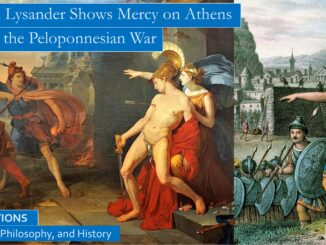
Spartan Lysander Shows Mercy on Athens, Ending the Peloponnesian Wars

Lysander was appointed as the Spartan naval commander near the end of the war. He was both an effective military leader and an able diplomat, negotiating Persian assistance from Cyrus the Younger in building and funding the fleet of triremes that would check Alcibiades and the generals who succeeded him, eventually winning the Peloponnesian Wars. We will consult Plutarch’s Life of Lysander, and also Thucydides and Xenophon, since Thucydides’ history ends soon after the Oligarchic coup, where it is picked up by Xenophon. […]

Greek and Roman History

Comeback of Alcibiades in Peloponnesian War, according to Plutarch, Thucydides, and Xenophon

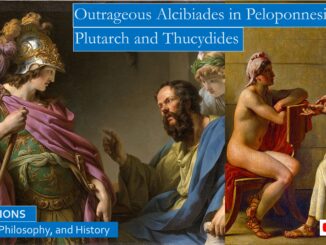
Thucydides quotes the comic playwrights who say that regarding Alcibiades, the Athenians Love Him, Hate Him, and Can’t Do Without Him. During the war, he first advises the Athenians, then the Spartans, then the Persians, then he advises and leads the Athenians again, and everyone who takes his advice is successful in the war, but he manages to irritate so many Greeks and, after the war ends, is eventually slain by the Persians and Spartans. […]

Greek and Roman History

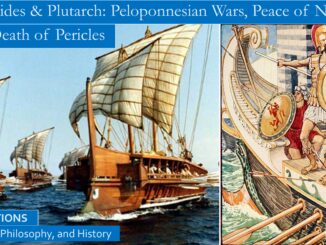
From the Death of Pericles to the Peace of Nicias, Peloponnesian War, Thucydides and Plutarch

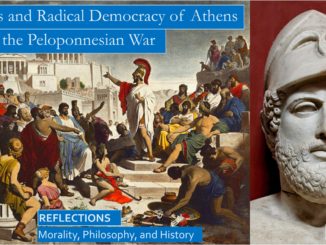
After the death of Pericles, no popular leader arose that was able to dominate the Assembly like Pericles, which meant that it was impossible to follow a consistently stable wartime policy. Instead, Thucydides described a series of orators call demagogues. Pericles was the last Assembly orator who was also a general, he was elected to be a general for a dozen yearlong terms, in this war generals had to fight long campaigns and we unable to constantly address the Assembly, which led to the rise of the demagogue orators, who were often more interested in promoting polices that were popular with the people, and themselves, rather than promoting policies that would benefit the state. […]

AntiSemitism

Our Reflections on Morality, Philosophy, and History: Ancient and Modern Classics

To a Stoic Philosopher, the question of Theodicy, or why God permits bad things to happen to good people, why God permits suffering, is simply absurd. The fact is, we do suffer, we will face injustices, we will suffer illnesses and death, and the rain falls on both the good man and the bad man. God will not shield us from suffering and injustice, but God will provide us with the strength to endure the challenges of this life. […]

Epicurean Philosophy

Epicurus, Aristippus, and Lucretius: History of Epicurean Philosophy

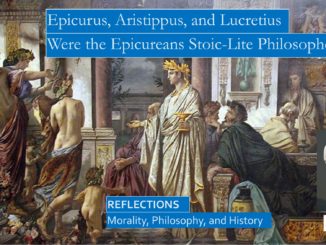
Was Epicureanism a cult? Or perhaps we should ask, was Epicureanism like a philosophical fraternity? One prominent scholar, AA Long, suggests that Epicurus’ school of philosophy was more a philosophical community centering on personal friendship than it was a formal school of philosophy. Many ancient philosophers wrote about the virtues of friendship, but the virtues of friendship are core to the Epicurean experience, and the Epicureans sought pleasure through their friendships. This community was egalitarian, it was one of the few in ancient world that admitted women and slaves, and in his letters, Epicurus expresses deep affection for his friends and followers. AA Long says this, “those who committed themselves to Epicurus we not so much students ‘reading for a course’ as men and women dedicated to a certain style of life.” […]

Greek and Roman History

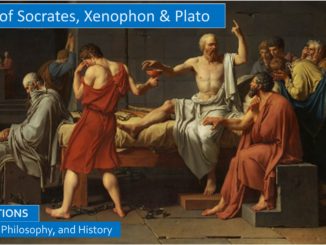
Pondering the Death of Socrates in Xenophon, Plato, and Aristophanes

These works on the trial and execution of Socrates by Xenophon and Plato testify to their anger at the citizens of Athens for condemning their gadfly teacher and friend. Xenophon and Plato also show their anger at Socrates for the hubris and arrogance displayed in full force in his trial speech and his sentencing speech. They want to remind us that just as the Homeric heroes of the battle of Troy showed their hubris at the battlefield, so too did their hero Socrates show hubris in the public courtroom of Athens. […]

Philosophy

Socrates, Aristophanes and The Clouds, Capitol Riots, Georgia, and the Big Lie

Many millennia ago there was another injustice when a five-hundred person jury convicted Socrates to death, and in his trial Socrates felt compelled to protest to the jurors that he was not the same Socrates as the miscreant Socrates lampooned by the Athenian comedian Aristophanes in his play “The Clouds.” […]