
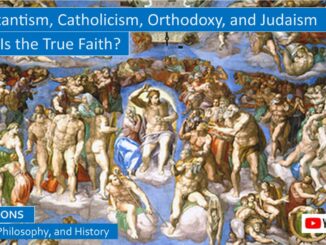
Protestantism, Catholicism, Orthodoxy, and Judaism: Which Is True
christianity

Protestantism, Catholicism, Orthodoxy, and Judaism: Which Is True?

We agree with CS Lewis when, in his Preface to Mere Christianity, he states that “the reader should be warned that I offer no help to anyone who is hesitating between two Christian denominations. You will not learn from me whether you ought to become an Anglican, a Methodist, a Presbyterian, or a Roman Catholic.” CS Lewis compares his Mere Christianity to a central hall opening up to many rooms, representative of the various denominations, saying that this hall is a place to wait while you try the different doors.
CS Lewis continues: “There is no mystery of my own position. I am a very ordinary layman of the Church of England, not especially high, nor especially low, nor especially anything else.” […]
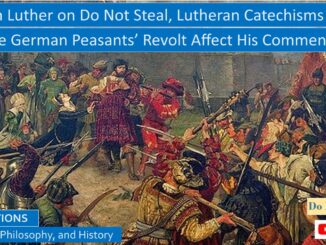
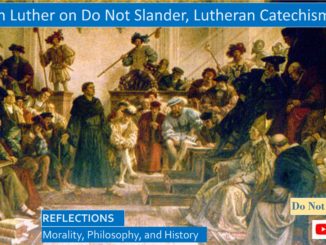
Martin Luther, Do Not Steal, Lutheran Catechisms, and German Peasants' Revolt
Command 7 Do Not Steal

Martin Luther, Do Not Steal, Lutheran Catechisms, and German Peasants’ Revolt

Luther concludes by restating the positive and negative forms of the commandment, noting that tolerating theft by others by doing nothing also is a moral violation. “On one hand, we are forbidden to do our neighbor any injury or wrong in any way imaginable, whether by damaging, withholding, or interfering with his possession and property. We are not even to consent to or permit such a thing but are rather to avert and prevent it. On the other hand, we are commanded to promote and further our neighbor’s interests, and when he suffers want, we are to help, share, and lend to both friends and foes.” […]

Command 8 Do Not Bear False Witness

Martin Luther on Do Not Bear False Witness Against Your Neighbor

Luther starts his Large Catechism commentary on this commandment memorably, “Besides our own body, our wife or husband, and our temporal property, we have one more treasure which is indispensable to us, namely, our honor and good name, for it is intolerable to live among men in public disgrace and contempt.” Our reputation is our most precious possession, more important than baubles and gold, every man wants “to maintain his self-respect before his wife, children, servants, and neighbors.” […]