Epictetus, Eminent Roman Stoic Philosopher, on Living Well, Dying Well, and Opposing Suicide
Aging

Epictetus, Eminent Roman Stoic Philosopher, on Living Well, Dying Well, and Opposing Suicide

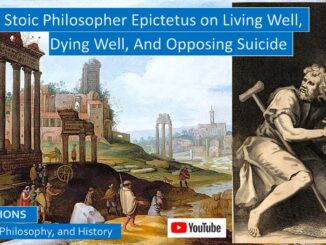
Is it wise to complain? Epictetus observes: “If someone dies young, he blames the gods because he is being taken before his time. If someone lingers on into extreme old age, he too blames the gods.” “Despite this, at the approach of death, he wants to stay alive; he sends for the doctors and begs him to do all he can.” “It is quite remarkable to see how people want neither to live nor to die.”
“Is health good and illness bad? No, man. What, then? Health managed well is good, but when badly managed, it is bad.”
Epictetus points out: “If you look at yourself in isolation, it is natural for you to live to an old age, to be rich, to be healthy. But if you look at yourself as a human being and as part of some whole, for the sake of that whole, it may be appropriate for you to be ill, or risk your life at sea, or be poor, or die young. Why get angry then?” “What is a human being? A part of a city made up of gods and human beings,” “a small copy of the universal city.” […]
St Neilos the Ascetic, Philokalia
Morality

St Neilos on Ascetic Discourses in the Philokalia

St Neilos contrasts the holy men “who live for the soul alone, turning away from the body and its wants,” the holy men who have no need to flatter the wealthy because they live simply, to those of us who, “instead of courageously struggling against our difficulties, come fawning to the wealthy, like puppies wagging their tails in the hope of being tossed a bare bone or some crumbs. To get what we want, we can them benefactors and protectors of Christians, attributing every virtue to them, even though they may be utterly wicked.” […]

Catholic Middle Ages and Beyond

Dark Night of the Soul, by St John of the Cross, and Mystical Theology of Pseudo-Dionysus

What is the Dark Night of the Soul? Many are misled into thinking that the dark night of the soul is a dark place, but St John of the Cross views the dark night of the soul not from his mortal perspective, but from perspective of the eternal, the unknowing, where light we cannot perceive is so luminous that we see it as darkness, this Mystical Theology he draws from the poetry of Dionysius. […]

Catholic Middle Ages and Beyond

St John of the Cross, Dark Night of the Soul, Seven Capital Sins and Best Type of Close Friend

Before you can truly deepen your interior life of prayer and communion with God, you must first purify your soul by combating your spiritual capital vices, strengthening your inner virtues, which are revealed by how you think of your neighbor, what you say about your neighbor, how you act towards your neighbor, and how eagerly you seek to forgive and overlook the shortcomings of your neighbor. […]