Catholic Popes from Trent to French Revolution and Napoleon to Vatican I
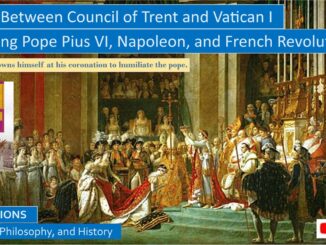
Negotiations for a Concordat between France and the Pope dragged on for thirteen months and over two dozen drafts. O’Malley writes: “Pope Pius VII and” his secretary of state “Consalvi stalled for time, intent on getting out of Napoleon every concession they could. The delay drove Napoleon crazy. He threw tantrums. He threatened to become a Protestant. He threatened to have his troops march on Rome. But finally, on July 15, 1801, the concordat was signed.”
What were the terms of the concordat? Although it acknowledged that most French were Catholics, there was freedom of religion, and Catholicism was not the state religion of France. O’Malley notes: “The buildings and real estate seized from the church during the Revolution were to remain in the hands of the new owners, but cathedrals and churches needed for worship were put at the disposal of clergy as needed. The clergy, who must swear to uphold the government, were paid by the state, which is the first time in history for such a provision.” It reaffirmed that “the state had the right to nominate bishops, subject to the approval of the papacy.” […]