Popes Between Trent and Vatican I, Including Napoleon, the French Revolution, and Pope Pius VI
History

Catholic Popes from Trent to French Revolution and Napoleon to Vatican I

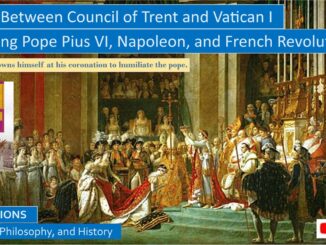
Negotiations for a Concordat between France and the Pope dragged on for thirteen months and over two dozen drafts. O’Malley writes: “Pope Pius VII and” his secretary of state “Consalvi stalled for time, intent on getting out of Napoleon every concession they could. The delay drove Napoleon crazy. He threw tantrums. He threatened to become a Protestant. He threatened to have his troops march on Rome. But finally, on July 15, 1801, the concordat was signed.”
What were the terms of the concordat? Although it acknowledged that most French were Catholics, there was freedom of religion, and Catholicism was not the state religion of France. O’Malley notes: “The buildings and real estate seized from the church during the Revolution were to remain in the hands of the new owners, but cathedrals and churches needed for worship were put at the disposal of clergy as needed. The clergy, who must swear to uphold the government, were paid by the state, which is the first time in history for such a provision.” It reaffirmed that “the state had the right to nominate bishops, subject to the approval of the papacy.” […]
History

History of the Jesuits

The Jesuits shares with the medieval orders the vows of poverty, chastity, and obedience, but in addition the Jesuits take a fourth vow. O’Malley emphasizes this fourth vow is not a vow of loyalty to the pope, as many think it, but rather the fourth vow is a vow to go on “mission anywhere in the world, to be ready to travel among the Turks, or to the New World, or to the Lutherans, or to any others whether infidels or faithful.” They looked to the pope to send them out on mission, or to the superior general of the Jesuit order. The Jesuits also differed from the older religious orders in that they did not wear a distinctive habit, they did not give up their family name, and they were not be required to meet for group prayer several times a day.

The Jesuits started a modern ministry, the RETREAT, based on Loyola’s major work, the Spiritual Exercises. Weekend retreats today are common, Jesuit retreats can be longer, and are times of self-reflection similar to Loyola’s time of self-reflection when he asked for God’s guidance. Many in the sixteenth century criticized these retreats for under emphasizing the sacramental and penitential life and over emphasizing the direct communication of the individual believer with God, which many felt was a false mysticism. Indeed, Loyola’s Constitutions, the rule for Jesuits, does not prescribe penances or austerities for the brothers. […]