Homosexuality, the Bible, and the Church: The Zondervan Debates
christianity

Homosexuality, the Bible, and the Church: The Zondervan Debates

For better or worse, most of us choose our intimate partners, and build our world around that choice. If a homosexual couple is accepted by the clergy of your church, what good can come from telling them they are going to burn in hell if they do not repent? We are only responsible for our own personal salvation, it is not our job, particularly if we are laymen, to speculate on whether our neighbor will be saved. That is between them and Jesus, and nobody else.
My goal is not to change your mind about homosexuality. My goal is: If you do not accept that it is possible to be both a Christian and homosexual, that you will refrain from telling them they are damned to burn in hell, but would instead refer them to an Episcopalian Church, or other church where they would be welcome.
Jesus will judge us all in front of the great IMAX theater in the sky, where we will need to account for the decisions we made in our lives as they are displayed on that screen forty feet wide and forty feet tall. Jesus is the judge; we should not seek to do his job. Instead, we work out our own salvation, judging our own actions rather than our neighbors’. […]
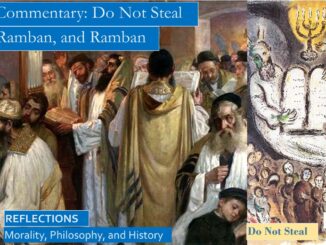
The Decalogue in the Torah and the Book of Legends, Do Not Steal
Command 7 Do Not Steal

The Decalogue in the Torah and the Book of Legends, Do Not Steal

The rabbis in the Book of Legends, which are moral excerpts from the Talmud, teach that there are four kinds of men:
The average man, like those in Sodom, who says, “Mine is mine, and your is yours.”
The ignorant man who says, “Mine is yours, and yours is mine.”
The pious man who says, “Mine is yours, and yours is yours.”
The wicked man who says, “Yours is mine, and mine is mine.” […]

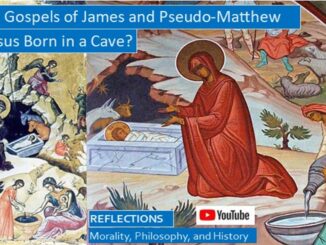
Did May Give Birth to Jesus in a Cave With a Midwife? Infancy Gospels of James and Pseudo-Matthew
Bible Stories and Parables

Did Mary Give Birth to Jesus in a Cave With a Midwife? Infancy Gospels of James and Pseudo-Matthew

The Infancy Gospel of James was well known by the early Church Fathers, especially Origen, and possibly Clement of Alexandria. Although this infancy narrative was condemned by Pope Innocent I in 405 and was considered apocryphal by the Gelasian Decree around the year 500, it was one source of the early church tradition of the perpetual virginity of the Virgin Mary, Theotokos, Mother of God. It was especially treasured by the faithful in both the ancient and medieval worlds. St Jerome even speculated that Joseph was also perpetually virgin, and that the Hebrew word translated as his sons were actually his cousins.
Should we reject the Infancy Gospel of James as apocryphal? Would it be fair to label them as heretical? Although this infancy gospel contains many fanciful stories, there are no obviously heretical teachings, nor are the actions by anyone in the Holy Family morally or doctrinally objectionable. Rather, they are similar to the many Jewish midrash Talmudic stories, many of which are similarly fantastic, but are instead cherished for their moral teachings. Indeed, they wouldn’t be midrash if they weren’t improbable. […]

Biblical Interpretation

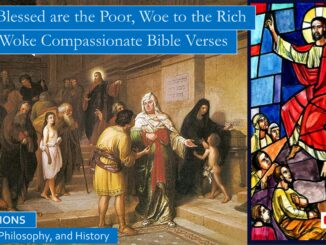
Blessed Are the Poor, Woe to the Rich, and Other Woke Compassionate Bible Verses

Among the Church Fathers, St Ambrose teaches us,
“Blessed are the poor. Not all the poor are blessed, for poverty is neutral. The poor can be either good or evil,” unless he is the blessed pauper described by Proverbs 19:22, “’A righteous poor man is better than a rich liar.’ Blessed is the poor man in whom the prince of this world finds nothing. Blessed is the poor man who is like that poor Man who, although he was rich, became poor for our sake,” […]

Book Reviews and Miscellaneous

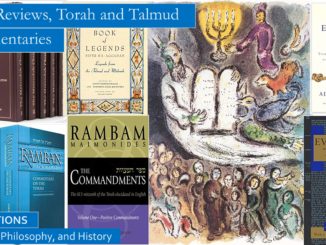
Book Reviews, Commentaries of Torah and Talmud, Medieval Rabbis and Modern Rabbis and Scholars

We encourage Christians to study the moral lessons of the Torah, we do not hold to the dual-covenant belief that the laws in the Torah have been superseded. St Irenaeus in his influential work, On Heresies, teaches us that the moral laws of the Torah are still binding on Christians, and that the dietary and festival laws that have been superseded can be read as teaching moral lessons allegorically. […]

Five Miniute Theology

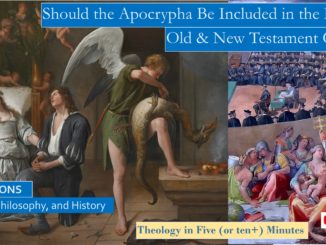
Should the Books of the Apocrypha Be Included In the Bible?

The Church Fathers differed on what should be included in the Old Testament canon, St Jerome, who had updated the Latin translation of Scriptures in the Vulgate, preferred a narrow canon including only the Hebrew books of the Jewish canon. St Augustine preferred the wider canon which included the deutero-canonical books written in Greek, which are called the Apocrypha by Protestants. St Jerome and St Augustine were contemporaries, they often corresponded with each other. […]

Command 8 Do Not Bear False Witness

The Decalogue in the Torah, Blog 6, Do Not Bear False Witness Against Your Neighbor

A common misconception is that this Commandment only forbids us to lie. However, this Mitzvah goes deeper. Not only should we not destroy the reputation of our neighbor, we should also guard the reputation of our neighbor like we should build a parapet on our roof. Not only does this Mitzvah forbid us to lie, it also forbids us from telling the truth in a mean and heartless and cruel manner. […]

Command 9&10 Do Not Envy

The Decalogue in the Torah, Blog 5, Coveting Tempts You To Harm Your Neighbor

Why does Rambam list these Mitzvoth thus? Is it because Exodus precedes Deuteronomy? This is not a good answer, for when studying Torah we should always favor the interpretation that draws us to Love Adonoy more intensely. Maybe Rambam is suggesting that coveting followed quickly by trying to buy your neighbor’s possessions is bad enough, but laying awake at night desiring and dreaming of your neighbor’s property is far worse. Coveting is perverse idolatry. Coveting counts here for coveting, the looking and the desiring, always precedes adultery. […]

Command 9&10 Do Not Envy

The Decalogue in the Torah, Blog 4, Coveting: The Sin That Leads To Many Other Sins

The Mitzvah against coveting appears in slightly different form in Exodus and Deuteronomy. In Exodus you are forbidden to covet your neighbor’s house, and you are forbidden to covet his wife. In Deuteronomy you are forbidden to covet your neighbor’s wife, and are forbidden to desire his house. In Deuteronomy you cannot covet his field, and in both versions you cannot covet or desire his slaves, his ox, his donkey, or anything else that is his neighbor. If the tablets were written today, your neighbor’s car would probably be on the list. Ramban suggests that coveting your neighbor’s wife is listed first in Deuteronomy because it is the greatest sin of all. Coveting your neighbor’s husband is just as much a sin. […]