Did Rome Fall, or Evolve to Barbarian Kingdoms? Sack of Rome, and Attila the Hun’s Invasions
Greek and Roman History

Did Rome Fall, or Evolve Into the Barbarian Kingdoms? Sacks of Rome, and Attila the Hun’s Invasions

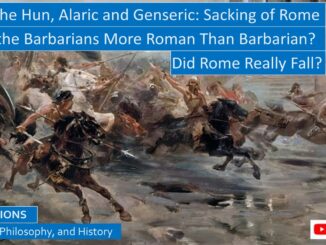
Peter Brown contends: “The Roman Empire was not violently breached by barbarian “invasions.” Rather, between AD 200 and 400, the frontier itself changed. From being a defensive region, which kept Romans and barbarians apart, it had become, instead, an extensive middle ground, in which roman and barbarian societies were drawn together. And after AD 400, it was the barbarians and no longer the Romans who became the dominant partners in the middle ground.” Indeed, after AD 400 barbarian tribes served in the army of the Huns, and barbarians from most of the tribes, including the Huns, served in the Roman armies. […]
Apeleius Golden Ass
Literature and Myths

Metamorphosis of Apuleius, the Golden Ass, Possible Inspiration for Pinocchio

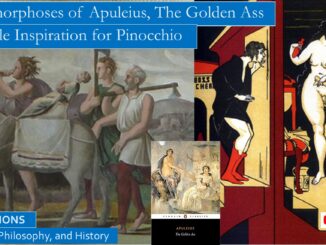
The basic plot of the book is our young man Lucius spies a witch who has learned to transform herself into various types of birds. When she is gone, he tries out the same potions, but by grabbing the wrong flask, he is turned into a donkey, not a talking donkey, but a braying donkey who has kept his human intelligence and human tastes. Though there are scattered penitential regrets, mostly our donkey is able to spy on the crimes and indiscretions of both robbers and cheating lovers to provide the reader with many titillating tales. In the final chapter, the goddess Isis appears to him in a dream, telling him what he needs to do to be transformed back into a human. […]

Erasmus In Praise of Folly
Catholic Middle Ages and Beyond

Erasmus, Luther’s Predecessor, The Praise of Folly

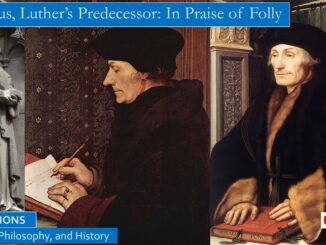
Folly reminds us of the tension between the vulgar and the devout. “The pious, since they aim primarily at what is almost alien to the crass senses, are numbed and stunned by the sensual. In contrast, the ordinary person gravitates towards them.” Thus, many negligent people value bodily sensations such as “sex, love of food, sleep, anger, pride, and envy. The pious wage a constant war against these urges, whereas the vulgar crowd considers that without them life has no real existence.” […]